
business
Siding Installation Companies: Launch Your Siding Business

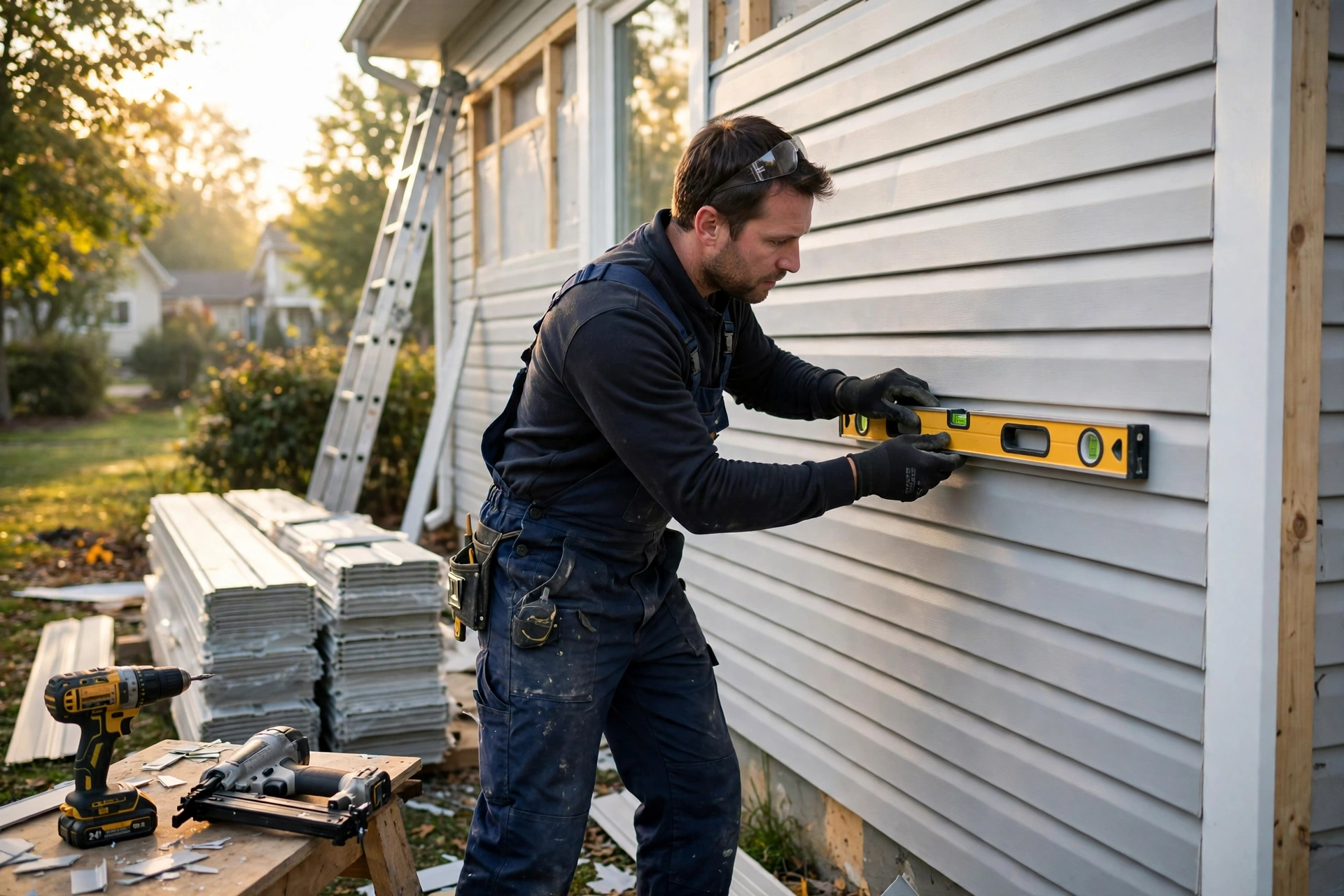
Every street has houses whose siding is faded, cracked or leaking heat. Homeowners notice it every time they pull into the driveway, and sooner or later they pay someone to fix it. That steady, visible demand is exactly why siding installation companies are one of the most reliable trades for a hands-on person who wants to run their own business. You do not need a degree, a shopfront or a huge loan. You need solid practical skills, the right tools, a clear pricing system and a steady way to win local jobs.
This guide walks you through launching a siding-installation business from scratch: the skills to learn, the materials to master, the licences to check, the insurance to carry, the equipment to buy, how to price a job so it pays, and how to win your first customers. Follow the steps in order and you can be quoting real jobs within a few weeks.
Step 1: Learn the Trade Before You Sell It
Nobody hires a siding installer who has never hung a panel. Before you take a single booking, you need real hands-on skill. The core skills are measuring a wall accurately, removing old siding without damaging the structure underneath, fitting house wrap and flashing, cutting panels cleanly, nailing with the right gap for expansion, and finishing corners, soffits and fascia neatly.
The fastest way to learn is to work for an established crew. Spend three to six months with local siding installation companies or an exterior remodelling firm and you will learn more than any video course can teach: how a wall is really prepped, how water is kept out at windows and doors, and how a crew paces a full-house job. Pay attention to the estimating side too — watch how the boss measures a house, works out materials and writes the quote.
If you cannot get a crew job straight away, take a short siding or exterior cladding course at a trade college, then practise on a garden shed, your own house or a small paid job for a neighbour at cost price. Photograph everything. Those first photos become your portfolio.
Also learn the materials. Vinyl, fibre cement, engineered wood, metal and cedar each behave differently, and each has its own price point. A customer who asks about a fibre-cement finish expects you to know how it differs from vinyl — in looks, in fitting method and in cost. That knowledge is what turns a labourer into a trusted adviser.
Step 2: Choose Your Services and Your First Materials
A new siding-installation business should not try to do everything. Pick a tight menu of services you can deliver well, then widen it as you grow. A sensible starting menu is:
- Vinyl siding installation — the most common residential job
- Fibre-cement siding installation — a premium, durable option
- Siding repairs — replacing cracked, warped or storm-damaged panels
- Soffit and fascia installation — the finishing work that completes a job
- Trim, corner posts and J-channel work — the details customers judge you on
- Storm-damage siding replacement — insurance work that keeps crews busy after bad weather
Material choice shapes your pricing. The vinyl siding installation cost for a standard two-storey house is usually far lower than a fibre-cement job, and customers need to hear that honestly before they choose. Keep a small sample board in your van — a vinyl panel, a fibre-cement board, an engineered-wood sample and a metal trim piece — so a customer can see and touch the options at the first visit.
Talk to two or three local building-supply merchants early. Ask about trade accounts, delivery times and bulk prices for panels, house wrap, flashing, starter strips and fasteners. A merchant who delivers reliably is worth more than one who is slightly cheaper but late. When you understand the siding installation cost from your supplier, you can quote with confidence instead of guessing.
Step 3: Write Your Plan Before You Spend a Pound
Every successful siding company starts with a written plan, even a simple one. Write down your services, your prices, your target customers and your monthly costs. A one-page plan that you actually follow beats a forty-page document that sits in a drawer. Include your startup budget, the jobs you need each month to break even, and the date you want your first paying job.
Your plan should also name your niche. Will you focus on vinyl replacements for family homes, or on premium fibre-cement work for larger properties? Will you take insurance repair work, or stick to full-house installs? A clear niche makes your marketing sharper and your estimating faster, because you learn one kind of job deeply instead of five kinds shallowly.
Set a simple rule for growth in the plan: add one new service only when the current ones run smoothly. New owners who offer everything on day one usually deliver nothing well. Master vinyl first, add fibre cement second, and add repairs and storm work once your crew and your cash flow can handle them.
Step 4: Register the Business and Check Licences
Treat this as a real business from day one. Register as a sole trader or form a limited company, register for tax, open a separate business bank account and keep business money apart from household money. A simple bookkeeping app and a folder for every receipt will save you hours at tax time.
Licensing depends on where you work. Many areas need a general contractor licence or a home-improvement licence before you can pull permits, and some require a speciality siding or exterior-cladding licence. Call your local licensing office and your city or county clerk before your first job and ask in plain words what a siding installer needs. Get the answer in writing if you can.
Experienced siding installation contractors will tell you the same thing: permits and paperwork feel slow, but a job stopped halfway by an inspector costs far more than a phone call made in advance. Build permit checks into your quoting process so every job starts clean. If a job needs a permit, say so in the quote and explain the timeline — customers respect honesty about delays far more than surprises.
Step 5: Insure the Business Properly
Siding work happens at height, with power tools, on other people’s homes. Insurance is not optional. At minimum you need general liability cover for damage to a customer’s property — a dropped panel through a window, water getting in behind a badly flashed corner — and cover for your tools and vehicle. If you hire anyone, even for a day, you need workers’ compensation or employers’ liability cover as well.
Get three quotes and read what each one actually covers. The cheapest policy often excludes the exact risks you face, such as work above a certain height or damage caused by water ingress. Ask the insurer in plain words whether siding installation is covered, including removal of old siding and work on ladders and scaffolding.
Keep your certificates in the van and in your quote pack. Many homeowners ask to see proof of insurance before they sign, and the siding companies that show it without being asked win trust faster. A certificate that costs a few hundred a year can be the difference between winning a £15,000 job and losing it.
Step 6: Buy the Right Tools and Equipment
Good siding work needs the right kit, but you do not need to buy everything on day one. Start with the essentials and add specialist tools from job profit, not from a loan taken before your first customer. Your starter kit should include:
- A reliable work van or truck with a roof rack or trailer for long panels
- A sturdy extension ladder and a pump-jack or scaffold system for safe work at height
- A circular saw with a fine-tooth blade and a good pair of tin snips for clean cuts
- An aluminium bending brake for shaping trim and flashing on site
- A coil nailer or hammer, chalk line, tape measure and a long spirit level
- Safety gear: harness, hard hat, safety glasses, gloves and dust masks
Buy quality on the tools you use every day and save money on the ones you use once a month. A bending brake that folds clean trim pays for itself in a single job; a cheap ladder that wobbles costs you a customer and possibly a hospital visit. Check second-hand markets for a van and scaffolding, but buy cutting tools and safety gear new.
Set up a simple system for keeping tools ready: a checklist taped inside the van door, blades and nails restocked every Friday, and a quick clean-down at the end of each job. Crews that arrive organised finish faster, and finishing faster is pure profit on fixed-price work.

Step 7: Price Every Job So It Pays
Pricing is where most beginners go wrong. Charge too little and you will be busy but broke; charge too much and the phone stays quiet. Price by the job, not by the hour, because customers prefer a fixed quote — but work out that fixed quote from real numbers, not a guess.
Start with materials. Measure the walls properly, add ten per cent for cuts and waste, and price panels, wrap, flashing, trim and fasteners from your supplier’s trade price. Then add labour: how many days will the job take your crew, including removal of the old siding and the final clean-up? Then add your overheads — fuel, insurance, tool wear, advertising — and a profit margin of at least twenty per cent. If the number feels uncomfortable to say out loud, practise saying it until it does not.
Customers will compare quotes, so help them compare fairly. The siding cost per square foot varies widely with material: vinyl is the budget option, fibre cement sits in the middle, and premium boards and cedar cost far more. When you quote, show the material clearly and explain what the price includes — removal, wrap, flashing, trim, disposal and clean-up — so a cheaper rival quote that leaves those out does not look like a better deal.
Learn the numbers for your area. The fiber cement siding cost for a typical family home is usually double the vinyl figure, and the james hardie siding cost is a useful benchmark because customers often ask for that brand by name. When you can talk confidently about the vinyl siding cost per square foot and the siding cost per square foot for each material, customers stop haggling and start trusting you. Always put the quote in writing, with the material, the scope and the payment schedule spelled out, and never start work without a signed agreement and a deposit.
Step 8: Win Your First Customers
Your first jobs will come from people who already know you, so tell everyone. Neighbours, friends, family, the builders’ merchant counter, local estate agents and landlords — anyone who owns or manages houses. Offer a fair introductory rate for your first three bookings in exchange for an honest review and before-and-after photos you can share. Those photos are your marketing for the next year.
Set up the basics fast: a simple one-page website with your services, your service area and a photo gallery; a Google Business Profile so nearby homeowners find you when they search for siding installation services; and a Facebook page where you post a finished job every week. Ask every happy customer for a review on the day the job finishes, while the result is fresh in their mind.
Leaflets still work for this trade, because the problem is visible from the street. Put a neat leaflet through doors on streets where the siding looks tired, and always include a photo of your best finished job. Follow up every enquiry within a few hours — the siding installation companies that reply first usually win the job, because homeowners often book the first professional who calls back.
Step 9: Quote, Contract and Care for the Customer
A professional quote is a sales tool, not just a price. Visit the house, measure every wall, look at the existing siding, check for rot or damp underneath, and note access problems such as steep slopes or narrow side passages. Then send a written quote within 48 hours with the material, the colour, the scope, the start date and the payment terms. Slow quotes lose jobs.
Use a simple written contract for every job. It should state the material and colour, the areas to be covered, what happens to the old siding, who supplies scaffolding if needed, the payment schedule and what happens if hidden damage is found once the old siding comes off. A clear contract protects you and reassures the customer — it is a sign of a serious company, not a sign of distrust.
Customer care continues after the last panel goes on. Walk the job with the homeowner, point out the finished details, hand over care instructions and warranty paperwork, and sweep the garden properly. A tidy finish and a short follow-up call a week later turn one job into referrals. The best siding companies grow on word of mouth, and word of mouth is earned at the clean-up stage as much as at the installation stage.
Step 10: Grow the Company Step by Step
Once you have a steady flow of jobs, growth becomes a choice rather than a scramble. You can add services your customers already ask for, such as guttering, soffits, window trims and insulation upgrades behind the siding. Each new service uses skills and equipment you partly own already, so the extra cost is small.
Hire carefully. Your first helper should be someone you trust on a ladder and in front of a customer. Train them to your standard, pay fairly and keep them busy — a good installer who leaves takes your reputation with them. When you need a second crew, promote from within if you can; a lead installer who learned your way of working is worth more than a stranger with a longer CV.
Keep your numbers visible. Track every job’s material cost, labour days and profit, and review the figures monthly. If vinyl jobs earn better than fibre-cement jobs once you count the extra days, adjust your prices or your marketing. The siding companies that last are the ones that know their numbers, not the ones that simply work the hardest.
What Siding Installers Earn
Earnings in this trade depend on your speed, your pricing and your area, but the shape is clear. A solo installer working on small repair and replacement jobs can earn a solid skilled-trades income, while a two-person crew doing full-house installs earns far more per week because a whole house is worth several thousand in labour alone. What siding installers earn rises sharply once you can quote, manage and finish a full house without supervision.
Your hourly rate is only half the story. The real money is in the margin on materials, the speed of a practised crew and the repeat work from happy customers. A crew that finishes a house in four days instead of six earns the same fee for less labour, and a customer who recommends you to two neighbours is worth more than any advert.
Expect the first year to be the hardest. You will spend time learning, quoting jobs you do not win and fixing mistakes at your own cost. Keep your overheads low, keep a cash buffer for quiet winter weeks, and reinvest profit in better tools and a better van before you spend it on yourself. By the second year, a well-run siding company with a full order book and a good local reputation can support its owner comfortably and fund a small crew.
6 Mistakes New Siding Companies Make
- Quoting without measuring properly. A quote based on a guess from the pavement always goes wrong. Measure every wall, allow for waste and check what is underneath the old siding before you name a price.
- Nailing panels too tightly. Siding needs room to expand and contract with temperature. Panels nailed hard against the wall will buckle in summer heat, and the repair comes out of your pocket.
- Skipping house wrap and flashing. The panels are the visible part, but the wrap and flashing keep water out. Cutting corners here causes damp, rot and angry customers a year later.
- Under-pricing to win work. A job priced below cost does not build a business; it builds a debt. Know your numbers, charge a fair price and let the cheapest rival take the jobs that lose money.
- Ignoring the clean-up. Nails, offcuts and old panels left in a garden undo a perfect installation in the customer’s mind. Budget clean-up time into every quote and leave the property tidier than you found it.
- No follow-up after the job. A customer you never call again will forget you by the time their neighbour asks for a recommendation. A short thank-you message and a request for a review take five minutes and pay for years.
Frequently Asked Questions
How much does vinyl siding cost per square foot?
Installed vinyl usually runs between $3 and $8 per square foot, depending on the panel quality, the size of the house and the labour rates in your area. That figure normally covers the panels, house wrap, trim and fitting, but check whether removal of the old siding and disposal are included before you compare quotes. Premium vinyl with insulation backing costs more, while basic hollow vinyl is the cheapest option.
What is the average siding installation cost for a house?
The siding installation cost for a typical family home usually runs from $8,000 to $25,000, with vinyl at the lower end and fibre cement or cedar at the upper end. The vinyl siding installation cost is the lowest of the common materials, which is why most first-time customers choose it. Always get at least three written quotes and compare the scope, not just the headline price.
Do I need a licence to start a siding company?
It depends on where you work. Many areas require a general contractor licence or a home-improvement licence, and some require a speciality siding licence before you can pull permits. Call your local licensing office before your first job, get the answer in writing, and build permit checks into your quoting process so no job gets stopped halfway.
How long does it take to install siding on a house?
A two-person crew usually needs three to five days for a standard family home, including removal of the old siding and the final clean-up. Larger houses, complex shapes and premium materials such as fibre cement take longer, and bad weather can add days. Give the customer a realistic date range rather than a single optimistic day, and keep them updated if the schedule slips.
What is the siding repair cost for a few damaged panels?
The siding repair cost for a small patch — a few cracked or warped panels — usually runs from $200 to $600, depending on the material and how easy the panels are to match. That cost rises sharply if the damage hides rot or water damage underneath, so always inspect behind the damaged panels and tell the customer what you find before you quote the repair.
What is the fiber cement siding cost compared with vinyl?
That cost is usually about double the vinyl figure for the same house, because the boards cost more and take longer to cut and fit. The james hardie siding cost is the benchmark most customers know, since that brand dominates the fibre-cement market. Fibre cement lasts longer, holds paint better and resists fire and insects, so many homeowners accept the higher price for the longer life.
How do I find reliable siding installation contractors?
Ask neighbours and local builders’ merchants for names, check online reviews and the company’s photo gallery, and confirm licences and insurance before anyone climbs a ladder. Reliable contractors visit the house, measure properly, send a written quote within a few days and explain the material and the scope clearly. Be wary of any contractor who quotes from the pavement, demands full payment upfront or cannot show proof of insurance.
Which siding installation services should a new company offer first?
Start with the two jobs every neighbourhood needs: vinyl siding installation and small siding repairs. Those two services teach you measuring, cutting, flashing and customer care on manageable jobs, and they generate the before-and-after photos your marketing needs. Add fibre cement, soffits and storm-damage work only when the first two run smoothly and your cash flow can fund the extra tools.
Final Word
A siding-installation business rewards practical people who show up, measure properly and finish tidy. The work is visible from the street, the demand repeats every year, and a good reputation travels fast between neighbours. Start small, learn one material deeply, price every job honestly and follow up every customer. Pick one step from this guide and do it today — practise on your own house, write your one-page plan or price your first three services. A siding company is built one straight, level panel at a time, and the first one is the hardest to hang. After that, the work starts to find you.

Solar Panel Installation Business Plan: A Launch Guide

Window Installation Cost Per Window: Launch Your Business

Siding Installation Companies: Launch Your Siding Business

Patio Installation Services: Start Your Own Patio Business

Deck Building Services: Run Your Own Deck Building Business

Tile Installation Services: Start Your Own Tiling Business

Smooth Walls, Steady Pay: How to Start a Drywall Business

Open for Business: How to Start a Garage Door Business

Subfloor to Booked Solid: How to Start a Flooring Business

Arc to Income: How to Start a Welding Business

How to Repurpose Blog Content for Social Media Without Starting From Scratch

How to Get More Clients for Your Business: Simple Ways That Actually Work

How to Create a Small Business Content Marketing Plan That Actually Gets Results

How to Write a Simple Business Plan for Your Small Business: A Practical Guide That Gets You Started

How to Write a Professional Business Email That Gets a Reply

Branding Tips for Small Businesses: A Simple Guide That Makes You Memorable
How to Handle Customer Complaints in a Small Business: A Calm, Practical Guide That Turns Problems Into Loyalty
How to Create a Content Calendar for a Small Business
How to Set Up a Simple Referral Program for Your Small Business: A Beginner’s Guide That Brings in New Customers

How to Set SMART Goals for a Small Business: A Practical Guide That Actually Works
Solar Panel Installation Business Plan: A Launch Guide
Window Installation Cost Per Window: Launch Your Business
Siding Installation Companies: Launch Your Siding Business
Patio Installation Services: Start Your Own Patio Business
Deck Building Services: Run Your Own Deck Building Business
Tile Installation Services: Start Your Own Tiling Business
Smooth Walls, Steady Pay: How to Start a Drywall Business
Open for Business: How to Start a Garage Door Business
Subfloor to Booked Solid: How to Start a Flooring Business
Arc to Income: How to Start a Welding Business

 entertainment1 year ago
PYT Telegram: A Complete Guide to Understanding, Using, and Maximizing It

 entertainment1 year ago
OnionFlix: Everything You Need to Know About This Streaming Website
- education1 year ago
How to Become a Software Engineer: A Complete Guide
- entertainment10 months ago
Brainrot Memes: The Unhinged Humor of the Internet Generation





