others
Dough Moulding Compound (DMC): Uses, Properties, and Applications

Introduction to Dough Moulding Compound (DMC)
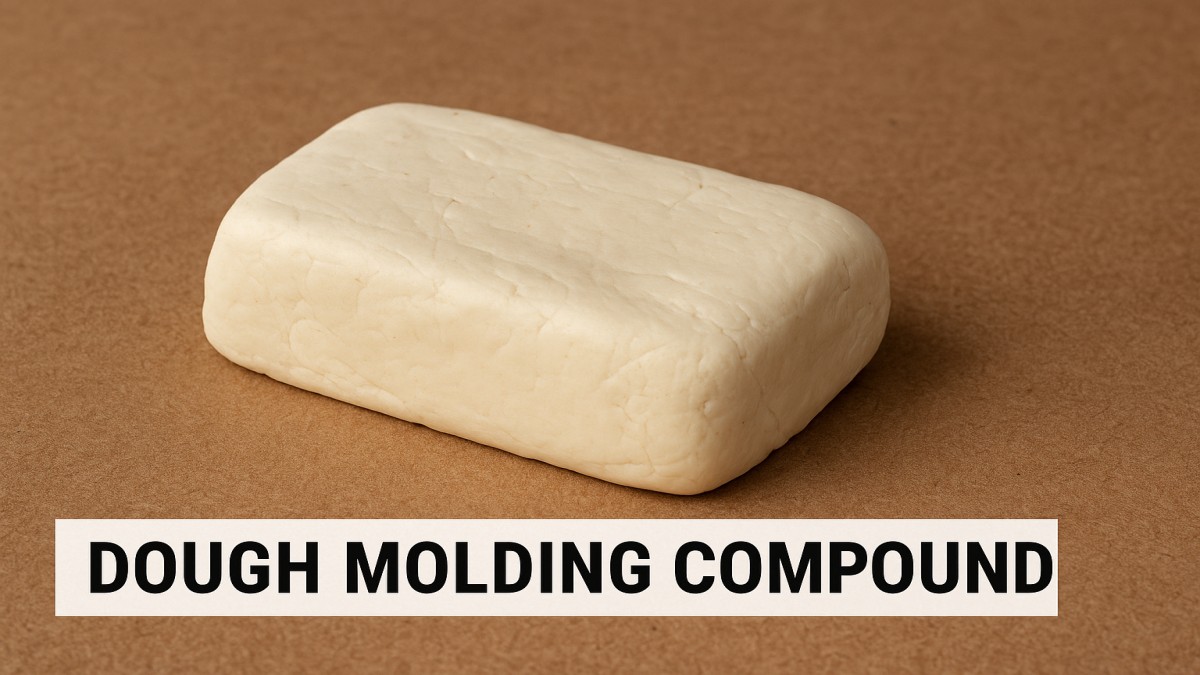
Dough Moulding Compound, often referred to as DMC, is a ready-to-mould composite material widely used in different industries for producing strong, durable, and lightweight components. It combines resins, fillers, and fibers to create a material that offers both versatility and performance. Thanks to its adaptability, DMC has gained popularity in automotive, electrical, and construction applications.
Composition of Dough Moulding Compound
The performance of DMC comes from its unique composition:
Resin Base
Typically, unsaturated polyester resin serves as the backbone of DMC, providing flexibility, chemical resistance, and durability.
Fillers and Additives
Calcium carbonate and other fillers improve bulk, reduce costs, and enhance performance. Additives like pigments, lubricants, and stabilizers are also included to optimize processing and final product quality.
Reinforcement Fibers
Glass fibers are commonly added to strengthen the compound, ensuring high mechanical performance and stability.
Properties of DMC
DMC offers a balanced set of properties that make it highly desirable:
Mechanical Properties
- High tensile and flexural strength
- Good impact resistance
- Dimensional stability
Electrical Properties
- Excellent insulation
- Arc resistance
- Low shrinkage during processing
Thermal Properties
- Heat resistance
- Flame retardant capabilities
- Low thermal conductivity
Manufacturing Process of DMC
The production of DMC involves several stages:
Preparation of the Compound
Raw materials (resin, fillers, fibers) are blended into a thick, dough-like consistency.
Moulding Techniques
Compression moulding and injection moulding are the most common methods, where the material is shaped into desired parts under heat and pressure.
Curing and Finishing
The moulded part is cured to harden, then finished with trimming, painting, or polishing for its final use.
Advantages of Using DMC
- Lightweight yet strong – ideal for replacing metals.
- Cost-effective – cheaper than many alternative materials.
- Design versatility – allows complex shapes and fine details.
- Corrosion resistance – unlike metals, it does not rust.
Limitations of DMC
- Not suitable for extreme mechanical loads compared to metals.
- Processing requires controlled conditions to avoid defects.
Applications of Dough Moulding Compound
Automotive Industry
Used for body panels, bumpers, and engine components.
Electrical and Electronic Applications
Switches, connectors, and insulation components rely on DMC’s dielectric properties.
Construction Materials
Bathroom fittings, water tanks, and roofing materials benefit from its durability.
Consumer Products
Kitchen appliances, handles, and casings are often moulded from DMC.
DMC vs. Other Composite Materials
DMC vs. BMC (Bulk Moulding Compound)
- DMC is dough-like, while BMC has a thicker consistency.
- DMC is preferred for smaller, intricate components.
DMC vs. SMC (Sheet Moulding Compound)
- DMC comes in bulk dough form, whereas SMC is pre-shaped into sheets.
- SMC suits larger structures, while DMC works best for precision moulding.
Environmental Aspects of DMC
While DMC is durable, it faces challenges in terms of sustainability. Recycling options are limited, but ongoing research focuses on developing eco-friendlier resin systems and reusable composites.
Future of DMC in Industries
With industries moving toward lightweight, high-strength, and cost-effective solutions, DMC continues to evolve. Innovations in resin chemistry, improved recycling techniques, and increased demand in the electric vehicle sector are expected to expand its applications further.
Conclusion
Dough Moulding Compound has become a cornerstone in modern manufacturing, offering a blend of strength, affordability, and versatility. While it has certain limitations, its advantages far outweigh them, making it an indispensable material in industries ranging from automotive to electronics. As innovation drives sustainability and performance improvements, DMC’s future looks even more promising.
FAQs
1. What is the difference between DMC and BMC?
DMC has a dough-like consistency and is better for precision parts, while BMC is more paste-like and used for bulk applications.
2. Is DMC eco-friendly?
Currently, recycling options are limited, but efforts are being made to develop sustainable alternatives.
3. Can DMC be recycled?
Direct recycling is difficult, but research is underway for reusing and repurposing DMC-based components.
4. Where is DMC most commonly used?
It is widely used in automotive, electrical, and construction sectors.
5. How does DMC compare with metals in applications?
While not as strong as metals in extreme conditions, DMC offers lightweight, corrosion-resistant, and cost-effective alternatives.

Freelance Jobs for Beginners USA (Start with No Experience)

Side Hustle Ideas from Home USA (No Experience Needed) – Beginner’s Guide

Online Jobs from Home USA (Daily Pay) – Start Earning Instantly

Beton Celular Autoclavizat: The Future of Lightweight, Eco-Friendly Construction

Goblets: A Timeless Symbol of Elegance and Celebration

AI Tools for Making Money Online Free (Best 2026 Guide)

Passive Income Apps USA Free: Earn Money Effortlessly in 2026

How to Earn Money from Home Without Investment

ChatGPT Alternatives Free No Login (2026 Guide)

Everything You Need to Know About Koeas

Ishraq Time in Delhi: What It Is, When It Happens, and Why It Matters
Beton Celular Autoclavizat: The Future of Lightweight, Eco-Friendly Construction

Read OPM Manga Online: Where and How to Enjoy One Punch Man Legally

Technisches Gymnasium: Your Gateway to Engineering and Technology

Why Every Small Business Needs a Digital Marketing Agency
Goblets: A Timeless Symbol of Elegance and Celebration

Gold Shower: Nature’s Cascading Yellow Wonder

The Indian Bow: A Legacy of Precision, Power, and Tradition

Robert Provost: A Life of Leadership, Community, and Vision

Are Political Donations Tax Deductible?
Freelance Jobs for Beginners USA (Start with No Experience)
Side Hustle Ideas from Home USA (No Experience Needed) – Beginner’s Guide
Online Jobs from Home USA (Daily Pay) – Start Earning Instantly
Beton Celular Autoclavizat: The Future of Lightweight, Eco-Friendly Construction
Goblets: A Timeless Symbol of Elegance and Celebration
AI Tools for Making Money Online Free (Best 2026 Guide)
Passive Income Apps USA Free: Earn Money Effortlessly in 2026
How to Earn Money from Home Without Investment
ChatGPT Alternatives Free No Login (2026 Guide)
Everything You Need to Know About Koeas

 entertainment7 months ago
PYT Telegram: A Complete Guide to Understanding, Using, and Maximizing It

 entertainment7 months ago
OnionFlix: Everything You Need to Know About This Streaming Website
- others6 months ago
Nook vs Kindle: Which E-Reader Is Right for You?
- gaming7 months ago
Melisandre: The Enigmatic Priestess of Game of Thrones