business
Customer Retention Framework: Complete Guide to Keeping Customers Longer in 2026

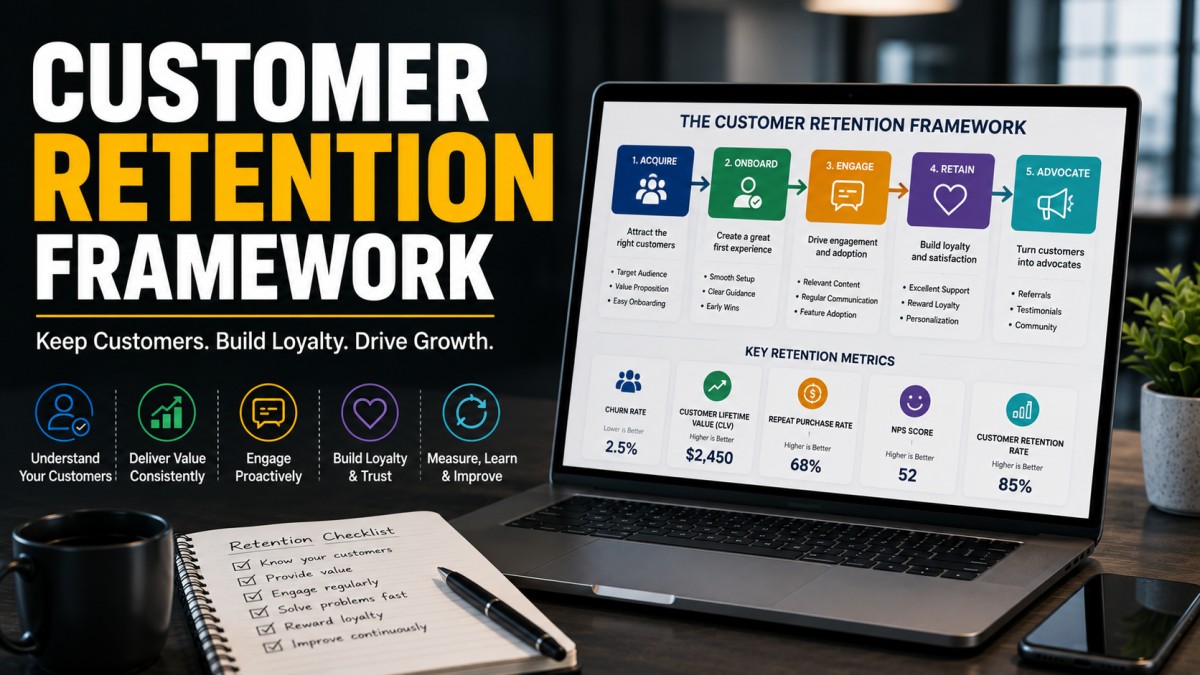
Growing a business isn’t only about attracting new customers. Long-term success depends on how well you keep the customers you already have. Many companies spend thousands of dollars on advertising but overlook customer loyalty, which leads to higher churn and slower growth. That’s why building a customer retention framework has become essential for businesses in 2026.
A strong customer retention framework helps companies improve customer satisfaction, increase repeat purchases, and generate predictable revenue. Whether you run a SaaS business, an online store, a subscription platform, or a service-based company, having a structured retention strategy keeps customers engaged long after their first purchase.
The businesses that consistently focus on customer retention usually experience stronger growth and lower marketing costs over time.
Customer Retention Framework: Why It Matters for Business Growth
Understanding a customer retention framework begins with recognizing the true value of existing customers. Acquiring a new customer often costs much more than keeping an existing one, making retention one of the highest-return business strategies.
The growing popularity of customer retention framework strategies comes from businesses realizing that loyal customers buy more frequently, recommend products to others, and stay with a brand for years. Instead of constantly replacing lost customers, companies can build sustainable growth by strengthening customer relationships.
Retention is no longer just a support function—it has become a core business strategy.
Step 1: Create a Strong Onboarding Experience
The customer journey begins immediately after purchase.
An effective onboarding process should include:
- Welcome emails.
- Product setup guides.
- Video tutorials.
- Quick-start resources.
- Helpful support links.
A positive first impression increases long-term loyalty.
Step 2: Deliver Consistent Customer Support
Customers expect quick and helpful assistance.
Businesses should provide:
- Live chat.
- Email support.
- Self-service knowledge base.
- Frequently asked questions.
Fast support builds trust and confidence.
Step 3: Understand Customer Needs
Every customer has different goals.
Businesses should collect insights through:
- Customer surveys.
- Feedback forms.
- Product reviews.
- Support conversations.
Listening carefully helps improve products and services.
Step 4: Personalize the Customer Experience
One of the most valuable parts of a customer retention framework is personalization.
Businesses can personalize:
- Product recommendations.
- Email campaigns.
- Offers.
- Customer success messages.
Relevant communication keeps customers engaged.
Step 5: Deliver Ongoing Value
Customers continue paying when they continue receiving value.
Ways to increase value include:
- Product updates.
- Educational content.
- Exclusive resources.
- New features.
Consistent improvements encourage long-term retention.
Step 6: Monitor Customer Behavior
Tracking customer activity helps identify early warning signs.
Useful metrics include:
- Login frequency.
- Purchase activity.
- Feature usage.
- Engagement levels.
Businesses can proactively assist customers before they leave.
Step 7: Reward Customer Loyalty
Loyal customers deserve recognition.
Reward ideas include:
- Discount programs.
- Referral rewards.
- VIP memberships.
- Early feature access.
Simple incentives strengthen long-term relationships.
Common Customer Retention Mistakes
Many businesses struggle because they:
- Ignore customer feedback.
- Provide slow support.
- Stop communicating after the sale.
- Fail to improve products.
- Focus only on acquiring new customers.
Retention requires continuous attention.
Best Practices for Building a Retention Strategy
Successful companies usually:
- Improve onboarding.
- Respond quickly to customer issues.
- Analyze customer feedback.
- Personalize communication.
- Reward loyal customers.
- Measure customer satisfaction.
- Monitor retention metrics.
- Continuously improve customer experience.
Small improvements often produce significant long-term results.
Benefits of a Customer Retention Framework
Businesses with strong retention strategies often experience:
- Higher recurring revenue.
- Increased customer lifetime value.
- Lower marketing costs.
- Better customer satisfaction.
- Stronger brand loyalty.
Retained customers often become your most valuable marketing asset.
Future of Customer Retention
Customer retention continues evolving through:
- AI-powered personalization.
- Predictive customer analytics.
- Automated engagement campaigns.
- Smart customer success platforms.
- Behavioral insights.
Technology is making retention strategies more effective than ever.
Conclusion
Implementing a customer retention framework is one of the smartest investments a business can make.
By improving onboarding, delivering outstanding customer support, understanding customer needs, personalizing communication, and consistently providing value, businesses can reduce customer churn while increasing long-term revenue. Retention is not just about preventing cancellations—it is about creating meaningful customer experiences that encourage loyalty.
For businesses serving customers in the USA, a well-designed retention framework will remain one of the strongest drivers of sustainable growth in 2026.
FAQs
1. What is a customer retention framework?
It is a structured process businesses use to keep customers satisfied and encourage long-term loyalty.
2. Why is customer retention important?
It increases recurring revenue while reducing customer acquisition costs.
3. What is the first step in a retention framework?
Creating a smooth onboarding experience.
4. How does personalization improve retention?
It makes customers feel valued through relevant communication and recommendations.
5. Why should businesses collect customer feedback?
Feedback identifies problems and helps improve products and services.

Consultative Selling Techniques: A Complete Guide to Building Customer Trust in 2026

Sales Objection Handling: A Complete Guide to Closing More Deals in 2026

Customer Closing Techniques: A Complete Guide to Converting Prospects into Buyers (2026)

Customer Conversion Process: A Complete Guide to Turning Visitors into Loyal Customers (2026)

Sales Funnel Examples: A Complete Guide to Converting More Customers (2026)

Lead Qualification Framework: A Complete Guide to Finding High-Quality Customers (2026)

Website Credibility Factors: A Complete Guide to Building Trust Online (2026)

Online Reputation Monitoring: A Complete Guide to Protecting Your Brand in 2026

Customer Testimonial Strategy: A Complete Guide to Building Trust and Increasing Sales (2026)

Business Storytelling Framework: A Complete Guide to Building Strong Brand Connections (2026)
Consultative Selling Techniques: A Complete Guide to Building Customer Trust in 2026
Sales Objection Handling: A Complete Guide to Closing More Deals in 2026
Customer Closing Techniques: A Complete Guide to Converting Prospects into Buyers (2026)
Customer Conversion Process: A Complete Guide to Turning Visitors into Loyal Customers (2026)
Sales Funnel Examples: A Complete Guide to Converting More Customers (2026)
Lead Qualification Framework: A Complete Guide to Finding High-Quality Customers (2026)
Website Credibility Factors: A Complete Guide to Building Trust Online (2026)
Online Reputation Monitoring: A Complete Guide to Protecting Your Brand in 2026
Customer Testimonial Strategy: A Complete Guide to Building Trust and Increasing Sales (2026)
Business Storytelling Framework: A Complete Guide to Building Strong Brand Connections (2026)

 entertainment1 year ago
PYT Telegram: A Complete Guide to Understanding, Using, and Maximizing It

 entertainment1 year ago
OnionFlix: Everything You Need to Know About This Streaming Website
- education1 year ago
How to Become a Software Engineer: A Complete Guide
- others1 year ago
Nook vs Kindle: Which E-Reader Is Right for You?