business
Sales Objection Handling: A Complete Guide to Closing More Deals in 2026

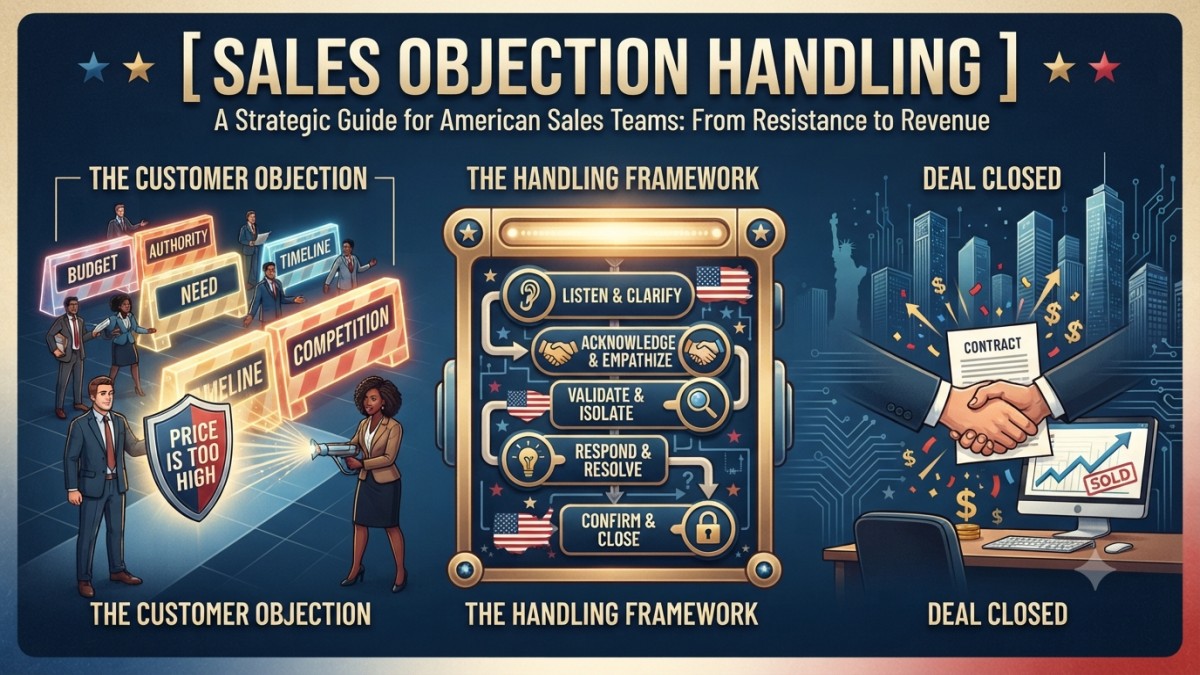
Every salesperson eventually hears the words, “It’s too expensive,” “I need more time,” or “I’m not sure.” These objections are a natural part of the buying process, but they do not always mean the customer is saying no. That is why sales objection handling has become one of the most valuable skills for business owners, entrepreneurs, consultants, and sales professionals across the USA.
Learning sales objection handling allows businesses to understand customer concerns, answer questions confidently, and move prospects closer to making a purchase. Instead of arguing with customers, successful sales teams use objections as opportunities to build trust and provide clarity. Whether you sell products, software, professional services, or digital solutions, handling objections correctly can dramatically improve your conversion rates.
The good news is that objection handling is a skill anyone can develop through practice and preparation.
Sales Objection Handling: Why Customer Objections Can Increase Sales
A strong sales objection handling strategy starts with understanding that objections often signal genuine interest. Most customers ask questions because they want reassurance before making an important decision.
The increasing importance of sales objection handling reflects modern buying behavior. Customers have access to more information than ever before, which means they compare multiple options before purchasing. Businesses that answer objections professionally often earn more trust than competitors who avoid difficult conversations.
Listening carefully is often more valuable than speaking quickly.
Listen Before Responding
The first rule of objection handling is to listen completely.
Allow customers to explain:
- Their concerns.
- Their expectations.
- Their questions.
- Their hesitation.
Interrupting too early often creates misunderstanding.
Stay Calm and Professional
Never become defensive.
Instead:
- Remain respectful.
- Show empathy.
- Thank customers for sharing concerns.
- Keep your tone positive.
Professional responses build confidence.
Identify the Real Objection
Sometimes the first objection is not the real issue.
For example:
- “It’s too expensive” may actually mean they don’t understand the value.
- “I need more time” may mean they lack confidence.
- “I’ll think about it” may indicate unanswered questions.
Asking follow-up questions helps uncover the true concern.
Focus on Value Instead of Price
One important part of sales objection handling is shifting the conversation toward value.
Explain:
- Long-term benefits.
- Time savings.
- Cost reductions.
- Business improvements.
- Return on investment.
Customers often pay more when they clearly understand the value.
Use Customer Success Stories
Social proof reduces uncertainty.
Share:
- Testimonials.
- Case studies.
- Client success stories.
- Real results.
Hearing about similar customers builds trust.
Answer Questions Honestly
Never exaggerate or make unrealistic promises.
Instead:
- Provide accurate information.
- Admit limitations when necessary.
- Explain how your solution fits customer needs.
Honesty strengthens long-term relationships.
Confirm Customer Understanding
After answering objections, ask questions such as:
- Does that answer your concern?
- Is there anything else you’re unsure about?
- Would you like me to explain this further?
Clarification prevents confusion.
Ask for the Sale Again
Once objections have been addressed, confidently move forward.
Examples include:
- Shall we get started today?
- Would you like to move ahead?
- Can we finalize everything now?
Many sales are lost simply because businesses never ask again.
Common Sales Objections
Businesses frequently hear:
- It’s too expensive.
- I need approval.
- I’m comparing other options.
- I don’t need it right now.
- I’m not ready.
Preparing answers in advance improves confidence.
Tips for Better Sales Objection Handling
Successful sales professionals often:
- Listen carefully.
- Stay patient.
- Ask thoughtful questions.
- Explain value clearly.
- Build trust consistently.
- Follow up professionally.
Preparation leads to stronger conversations.
Benefits of Effective Objection Handling
Improving objection handling helps increase:
- Sales conversions.
- Customer trust.
- Closing rates.
- Customer satisfaction.
- Business reputation.
- Long-term relationships.
Strong communication improves every stage of the sales process.
Future of Sales Objection Handling
Modern businesses increasingly use:
- AI-powered sales insights.
- Customer behavior analytics.
- CRM automation.
- Personalized recommendations.
- Sales coaching tools.
Technology improves efficiency, but genuine communication remains the foundation of successful selling.
Conclusion
Mastering sales objection handling helps businesses convert hesitant prospects into confident customers by addressing concerns with honesty, professionalism, and empathy.
By listening carefully, identifying real objections, focusing on value, sharing customer success stories, answering questions transparently, confirming understanding, and confidently asking for the sale again, businesses create stronger customer relationships and improve long-term revenue.
For businesses across the USA, effective objection handling remains one of the most valuable sales skills in 2026.
FAQs
1. What is sales objection handling?
It is the process of addressing customer concerns before closing a sale.
2. Why do customers raise objections?
Most objections come from uncertainty, questions, or a need for reassurance.
3. Should salespeople argue with customers?
No. Professional listening and clear explanations work much better.
4. What is the most common sales objection?
Price is one of the most common concerns, but it is often connected to perceived value.
5. How can businesses improve objection handling?
Practice active listening, prepare answers, and focus on customer needs.

Consultative Selling Techniques: A Complete Guide to Building Customer Trust in 2026

Sales Objection Handling: A Complete Guide to Closing More Deals in 2026

Customer Closing Techniques: A Complete Guide to Converting Prospects into Buyers (2026)

Customer Conversion Process: A Complete Guide to Turning Visitors into Loyal Customers (2026)

Sales Funnel Examples: A Complete Guide to Converting More Customers (2026)

Lead Qualification Framework: A Complete Guide to Finding High-Quality Customers (2026)

Website Credibility Factors: A Complete Guide to Building Trust Online (2026)

Online Reputation Monitoring: A Complete Guide to Protecting Your Brand in 2026

Customer Testimonial Strategy: A Complete Guide to Building Trust and Increasing Sales (2026)

Business Storytelling Framework: A Complete Guide to Building Strong Brand Connections (2026)
Consultative Selling Techniques: A Complete Guide to Building Customer Trust in 2026
Sales Objection Handling: A Complete Guide to Closing More Deals in 2026
Customer Closing Techniques: A Complete Guide to Converting Prospects into Buyers (2026)
Customer Conversion Process: A Complete Guide to Turning Visitors into Loyal Customers (2026)
Sales Funnel Examples: A Complete Guide to Converting More Customers (2026)
Lead Qualification Framework: A Complete Guide to Finding High-Quality Customers (2026)
Website Credibility Factors: A Complete Guide to Building Trust Online (2026)
Online Reputation Monitoring: A Complete Guide to Protecting Your Brand in 2026
Customer Testimonial Strategy: A Complete Guide to Building Trust and Increasing Sales (2026)
Business Storytelling Framework: A Complete Guide to Building Strong Brand Connections (2026)

 entertainment1 year ago
PYT Telegram: A Complete Guide to Understanding, Using, and Maximizing It

 entertainment1 year ago
OnionFlix: Everything You Need to Know About This Streaming Website
- education1 year ago
How to Become a Software Engineer: A Complete Guide
- others11 months ago
Nook vs Kindle: Which E-Reader Is Right for You?