
business
How to Start a House Cleaning Business: Simple Steps That Win Your First Clients


A house cleaning business is one of the simplest businesses to start: low startup costs, no shop needed, and customers who book again every week. If you want to know how to start a house cleaning business, this guide walks you through the whole process in plain words — choosing your services, working out the costs, sorting the paperwork, pricing your work, and finding your first regular clients.
1. Decide What Kind of House Cleaning Business to Start
Not all cleaning work is the same, and your choice shapes everything else — your equipment, your prices, and your customers.
- Regular home cleaning — weekly or fortnightly cleans for busy families. Steady work, and the easiest place to start.
- Deep cleans — one-off spring cleans, move-in cleans, and end-of-tenancy cleans. Higher pay per job, and a good way to win regular clients.
- Commercial cleaning — offices, shops, and restaurants, usually cleaned outside working hours. Bigger contracts, but more competition and stricter requirements.
- Specialist cleaning — carpet cleaning, window cleaning, or post-renovation cleans. Higher rates, but you need specific equipment and skills.
You can learn how to start a cleaning business from scratch with just basic supplies and a phone, so start with one type of cleaning. You can always add more services once you have regular clients and a routine.
2. Write a Simple Cleaning Business Plan
A cleaning business plan does not need to be a fifty-page document. One page is enough to start:
- Your services — what you clean, and what you do not (for example, no exterior work).
- Your area — the towns or neighbourhoods you will cover. Keep travel short at first.
- Your customers — busy families, landlords, offices, or Airbnb hosts.
- Your prices — your hourly rate and your flat rates for common jobs.
- Your costs — equipment, supplies, insurance, and transport.
- Your goal — for example, five regular weekly clients in the first three months.
Before you buy anything, learn how to create a budget for a small business so your first months stay in the black. A short written plan keeps you focused, and it is also what a bank will ask for if you ever need funding.
3. How Much Does It Cost to Start a Cleaning Business?
How much does it cost to start a cleaning business? Less than most businesses — often a few hundred in your local currency:
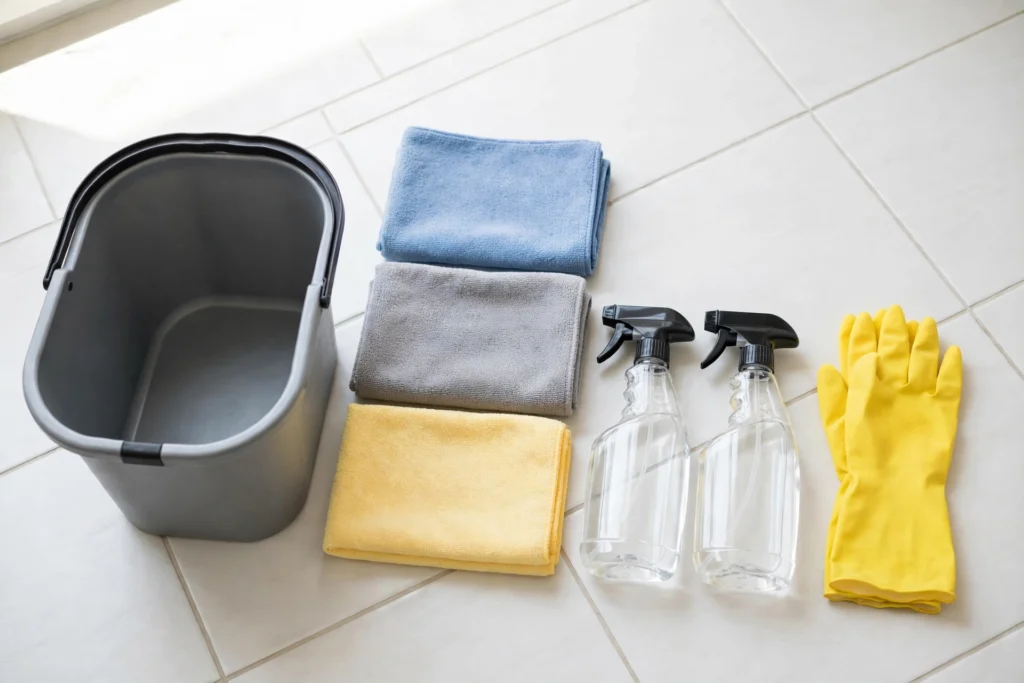
- Basic supplies — cloths, mops, buckets, spray bottles, and cleaning products.
- A vacuum cleaner — a reliable one, since you will use it every day.
- Transport — a car, or a bike plus a trolley for very local work.
- Insurance — public liability cover, which most commercial clients will ask to see.
- A phone and a simple booking system — even a shared calendar and a messaging app will do at first.
You do not need a shop, a van, or fancy branding on day one. Buy the essentials, earn your first income, and upgrade from profit.
4. Sort the Legal Basics
Before your first job, sort the paperwork. The exact rules depend on your country, so check your local official guidance, but the usual steps are:
- Register your business — as a sole trader or a company. If you have not done this yet, read our guide on how to register a small business.
- Check licence rules — most places need no special cleaning licence, but some cities require a general business licence, and commercial contracts may ask for proof of registration.
- Get cover in place — good insurance protects you if you damage something or a client is injured. Public liability cover is the minimum; add cover for your equipment if you can.
- Check tax rules — register for tax, keep receipts for every expense, and set aside a share of each payment for your tax bill.
- Write simple terms — cancellation policy, payment terms, and what happens if a client is not happy. A short written agreement avoids most arguments.
5. How to Price Cleaning Services
How to price cleaning services is the question new cleaners get wrong most often. Price too low and you work hard for nothing; price too high and nobody books.
- Check local rates first. Look at what other cleaners in your area charge per hour, and price near the middle — not the cheapest.
- Charge by the hour for regular cleans, and by the job for deep cleans and end-of-tenancy work.
- Count your real costs. Your rate must cover supplies, travel, insurance, and tax — not just your time.
- Raise prices as you get busy. When you have a waiting list, your prices are too low.
- Be clear in writing. Give every client a written quote before the first clean, so there are no surprises.
6. How to Get Cleaning Clients
How to get cleaning clients is mostly about trust — people let you into their homes, so they need to feel safe with you:
- Start with people you know. Friends, family, and neighbours are your first clients and your first reviews.
- List on local platforms. Cleaning marketplaces and local service directories bring bookings while you build a name.
- Ask for reviews after every job. A dozen honest five-star reviews will do more than any advert.
- Leaflet your target streets. A simple flyer with your services, prices, and a phone number still works for local cleaning.
- Partner with estate agents and landlords. They need reliable cleaners for end-of-tenancy work and recommend the ones who turn up on time.
- Offer a first-clean discount. A small discount on the first clean turns a curious caller into a regular.
7. Simple Ways to Market Your Cleaning Business
Once you have a few clients, keep the pipeline full with simple, low-cost marketing:
- Before-and-after photos (with the client’s permission) on social media — cleaning results are naturally visual and share well.
- A Google Business Profile so local searches for “cleaner near me” find you.
- A referral reward — a free clean or a discount for clients who send you a new customer.
- Seasonal offers — spring cleans, pre-Christmas cleans, and back-to-school deep cleans.
- Consistent branding — the same name, colours, and phone number everywhere, from your flyer to your profile picture.
The cheapest marketing is a happy customer. Learn how to keep customers coming back and your diary fills itself — a client who books every week is worth far more than ten one-off jobs.
8. Keep Clients Coming Back
Winning a client is only half the job — keeping them is where the money is:
- Turn up on time, every time. Reliability is the number one reason clients stay.
- Clean to a checklist. A short written checklist per home means nothing is missed, even if a different cleaner covers.
- Communicate. A quick message before you arrive and a note after you finish makes clients feel looked after.
- Handle complaints fast. If something is missed, go back and fix it the same day. One honest fix keeps a client; one ignored complaint loses them and their neighbours.
Frequently Asked Questions
Do I need experience to start a house cleaning business?
No formal experience is needed. You need to clean well, be reliable, and learn as you go. Many successful cleaners started by cleaning for friends and family.
How much can a house cleaning business earn?
It depends on your rates, your hours, and your area. A solo cleaner with a full book of regular clients can earn a solid full-time income; adding staff and commercial contracts raises it further.
Do I need a licence to start a house cleaning business?
Usually no special cleaning licence is needed, but you may need a general business licence and you should always check your local rules. Commercial clients often ask for proof of registration.
What insurance do I need for a cleaning business?
At minimum, public liability insurance. If you hire staff, you will also need employer cover in most countries, and cover for your equipment is worth considering.
How do I find my first cleaning clients?
Start with your own network, list on local service platforms, leaflet your neighbourhood, and ask every happy client for a review and a referral.
Final Thoughts
Learning how to start a house cleaning business comes down to the basics: show up, clean well, and treat people fairly. Keep your costs low, price honestly, and look after every client like they are your only one — and the regular bookings will follow.

How to Start a House Cleaning Business: Simple Steps That Win Your First Clients

How to Pay Employees in Your Small Business: Simple Steps That Get It Right

How to Do Market Research for Small Business: Simple Steps That Find Your Customers

How to Start a Tutoring Business: Simple Steps That Turn Your Knowledge Into Income

How to Create a Digital Product to Sell: A Simple Guide for Small Business Beginners

Christmas Marketing Ideas for Small Businesses: Simple Ways to Win Festive Customers

Benefit of Sole Proprietorship: Simple Advantages That Make Starting Easy

Grant Funding for Small Businesses: A Simple Guide to Finding and Winning Grants

Business Loans for New Business: A Simple Guide That Gets You Funded

Small Business Content Calendar: A Simple Guide That Keeps Your Posts on Track

How to Repurpose Blog Content for Social Media Without Starting From Scratch

How to Write a Simple Business Plan for Your Small Business: A Practical Guide That Gets You Started

How to Create a Small Business Content Marketing Plan That Actually Gets Results
How to Handle Customer Complaints in a Small Business: A Calm, Practical Guide That Turns Problems Into Loyalty
How to Create a Content Calendar for a Small Business

How to Write a Professional Business Email That Gets a Reply

How to Set SMART Goals for a Small Business: A Practical Guide That Actually Works
How to Set Up a Simple Referral Program for Your Small Business: A Beginner’s Guide That Brings in New Customers
How to Write a Business Proposal for Your Small Business: A Simple Guide That Wins Clients

How to Get More Clients for Your Business: Simple Ways That Actually Work
How to Start a House Cleaning Business: Simple Steps That Win Your First Clients
How to Pay Employees in Your Small Business: Simple Steps That Get It Right
How to Do Market Research for Small Business: Simple Steps That Find Your Customers
How to Start a Tutoring Business: Simple Steps That Turn Your Knowledge Into Income
How to Create a Digital Product to Sell: A Simple Guide for Small Business Beginners
Christmas Marketing Ideas for Small Businesses: Simple Ways to Win Festive Customers
Benefit of Sole Proprietorship: Simple Advantages That Make Starting Easy
Grant Funding for Small Businesses: A Simple Guide to Finding and Winning Grants
Business Loans for New Business: A Simple Guide That Gets You Funded
Small Business Content Calendar: A Simple Guide That Keeps Your Posts on Track

 entertainment1 year ago
PYT Telegram: A Complete Guide to Understanding, Using, and Maximizing It

 entertainment1 year ago
OnionFlix: Everything You Need to Know About This Streaming Website
- education1 year ago
How to Become a Software Engineer: A Complete Guide
- others1 year ago
Nook vs Kindle: Which E-Reader Is Right for You?





