
business
Open for Business: How to Start a Garage Door Business

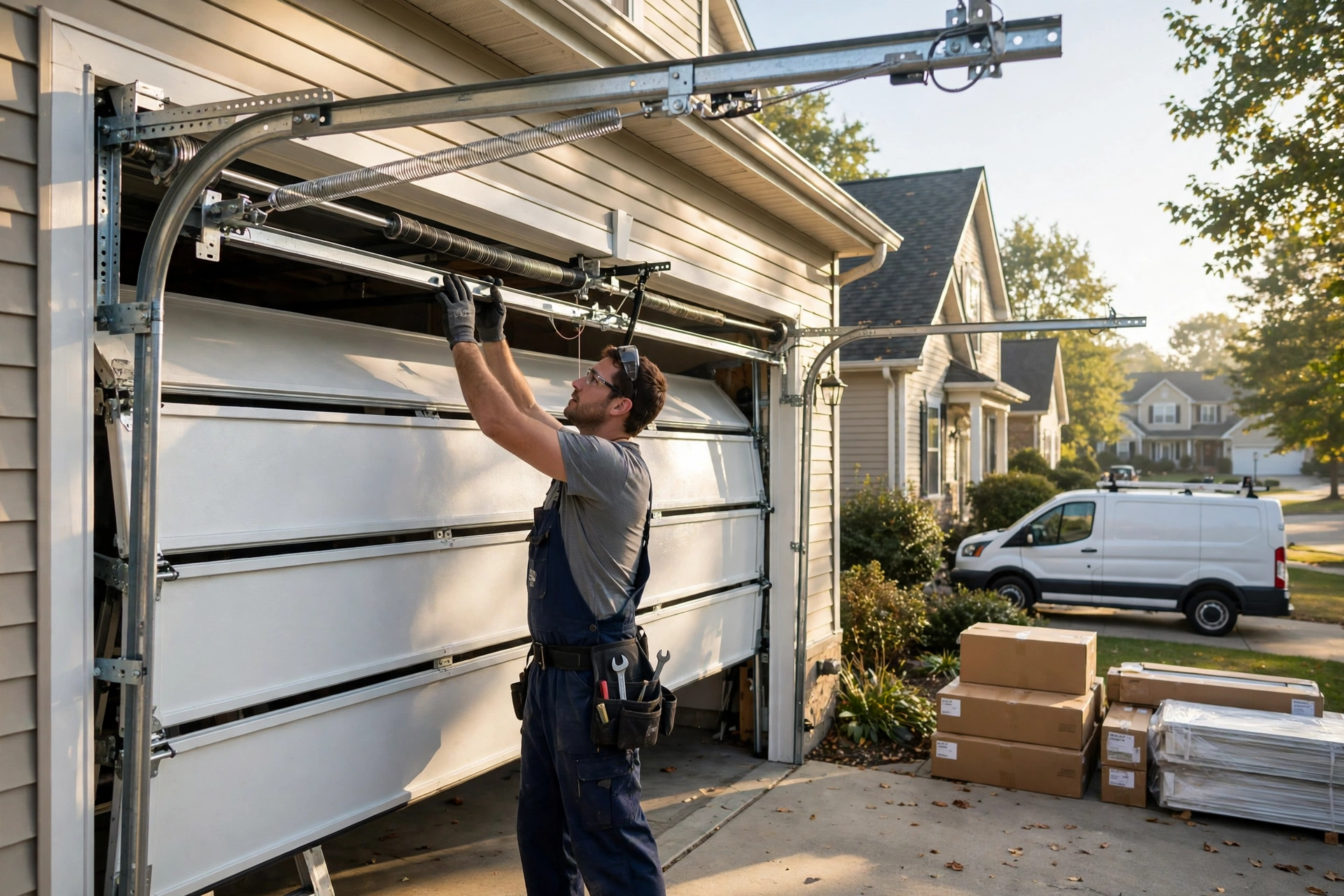
Every street in every town has dozens of garage doors, and every single one of them will break, wear out or need replacing sooner or later. Springs snap without warning, openers die in the middle of winter, rollers grind themselves to dust, and a dented panel makes the whole house look tired. That steady stream of unavoidable repair and replacement work is exactly why learning how to start a garage door business is such a solid move for a skilled tradesperson who wants to work for themselves.
A garage door outfit is a proper service business: low overheads, no shopfront needed, most jobs finished in a day, and customers who pay on the spot because a door that will not close is a security problem, not a nice-to-have. You can start solo from a van, add a helper when the diary fills up, and grow into installation contracts with builders and property managers. This guide walks through the whole launch, from learning the trade to pricing, tools, marketing and your first paying customers.
Why a Garage Door Business Works
Garage doors are one of the few home systems that homeowners cannot ignore and cannot easily fix themselves. A broken spring stores enough energy to seriously injure someone, and a misaligned track can drop a 100-kilo door without warning, so most people call a professional rather than risk a DIY repair. That fear of injury is, bluntly, your best marketing: customers want a trained person, they want it fixed today, and they will pay a fair price for speed and safety.
The work also repeats. A household that calls you for an emergency repair often becomes a customer for life: you service the door once a year, replace the opener a few years later, and eventually fit a brand-new door. Add landlords, letting agents and small builders to that list and you have a diary that fills itself if you answer the phone and turn up on time. Few trades offer that mix of urgent demand, repeat work and low startup cost.
Step 1 — Learn the Trade Before You Sell It
Do not take paying jobs until you can diagnose a door safely. The core skills are not complicated, but they are specific: balancing a door, setting torsion and extension springs, aligning tracks, wiring openers and safety sensors, and spotting a worn cable before it snaps. The safest way to learn is working for an established installer for six to twelve months. You will see every common fault, learn how long jobs really take, and build the muscle memory that keeps you safe around high-tension springs.
If a job is not available, combine a short trade course with supervised practice. Some manufacturers run installer training for their own door systems, and industry associations publish technical guides and safety standards. Whichever route you take, practise spring work under supervision first. A torsion spring mistake is the one error in this trade that can put you in hospital, so treat every spring as loaded until you have proved otherwise.
Becoming a garage door technician through a proper apprenticeship or a year on the tools also teaches you the commercial side: how quotes are built, which parts fail most often, and what customers actually complain about. That knowledge is worth more than any logo. That year on the tools is the cheapest possible education in how to start a garage door business, because you learn the costs, the customers and the common faults before your own money is at risk.
Step 2 — Pick Your Lane: Repair, Install or Both
A new garage door business can work in three lanes, and choosing one first keeps your startup costs down.
Emergency repair is the fastest way to cash flow. Broken springs, snapped cables, dead openers and doors off their tracks are urgent jobs, and customers rarely haggle when their garage will not shut. You need a well-stocked van, a fast response time and a clear call-out fee. Most solo operators start here.
New installations pay more per job but need more capital. A single sectional door plus opener can cost you several hundred pounds in parts alone, and you will need supplier accounts and a way to carry large panels. The margin is better, the work is more satisfying, and a good installation earns referrals for years. The garage door replacement cost on a standard double door is a far bigger ticket than any repair, which is why installation work rewards careful measuring and clear quotes.
Maintenance and servicing sits between the two: an annual safety check, lubrication, balance test and sensor alignment. It is low-stress work that keeps your name in front of past customers and fills quiet weeks.
Start with repair, add servicing as a subscription-style offer, and move into installations once you have supplier terms and a helper. Trying to do all three from day one spreads your money and your attention too thin.
Step 3 — Write Your Garage Door Business Plan
Every serious launch starts with a written garage door business plan, even if it is only five pages. The plan forces you to answer the questions that sink new tradespeople: who are your customers, what will you charge, what will it cost, and how many jobs a week keep the lights on.
Start with your service area. Draw a circle on the map that you can cross in 30 minutes and list the households inside it. Then research the competition: how many installers already serve that area, what they charge for a call-out, and what their reviews complain about. If every competitor is booked two weeks out, demand is strong. If three firms are fighting over the same small town, pick a neighbouring area or a niche such as commercial work.
Your plan should also cover your offer. Will you do residential only, or add commercial work later? Will you sell doors from one manufacturer or several? What is your call-out fee, your hourly rate, and your minimum charge? Write down your startup budget too: van, tools, insurance, website, workwear and your first stock of springs, cables, rollers and openers. Most solo launches land between £5,000 and £15,000 if you buy a used van.
Finally, set targets you can measure. Aim for a number of completed jobs per week, a target average invoice, and a review count after three months. A plan you never look at is useless, so review it monthly and change the numbers when reality disagrees with them. A second look at that plan every quarter keeps the business honest.
Step 4 — Register, Licence and Insure the Business
Get the paperwork right before your first paying job. Register as a sole trader or form a limited company, get a tax number, open a business bank account, and keep business money separate from personal money from day one. Your accountant will thank you, and so will you at tax time.
Licensing depends on where you work. Some areas require a general contractor licence, others ask for a home-improvement licence, and a few regulate only commercial work. Check with your local council or licensing authority before you advertise. If you fit openers, check whether electrical work needs a separate qualification in your area, and if you handle refrigerants on any related work, that is a separate ticket entirely.
Insurance is non-negotiable. At minimum you need public liability cover, because a dropped door can damage a car, a wall or a person. Add tool cover, commercial vehicle insurance and, once you hire, employer’s liability. Arrange insurance for your garage door business before you touch a customer’s door, not after the first accident. Keep your certificates in the van and on your phone, because commercial clients and letting agents will ask to see them.
Step 5 — Price Your Work So You Actually Profit
Pricing is where new garage door owners lose money. The fix is simple: price from your real costs, not from what the cheapest competitor charges. Add up your van, fuel, insurance, tools, parts, phone, marketing and the wage you need to take home, then divide by the hours you can actually bill. That hourly cost is your floor. Every quote must sit above it.
Learn the going rates for the jobs you will quote most. The garage door repair cost for a standard call-out usually breaks into a call-out fee plus parts and labour: a cable replacement is a small job, a spring replacement is a mid-range one, and a full opener replacement sits higher. Keep a simple price list for the common jobs so the garage door repair cost you quote on the phone matches the invoice at the door. Check what local competitors charge, then position yourself fairly — not the cheapest, but the one who answers, turns up and guarantees the work.
The garage door installation cost for a new door is a bigger quote and a bigger decision for the customer, so break it down clearly: door, opener, tracks and hardware, removal of the old door, labour and disposal. Customers accept a higher price when they can see what they are paying for. Remember that the garage door installation cost also covers making good the opening and testing the safety sensors, so never quote it as parts only. The same honesty works for the garage door opener installation cost, which varies a lot between a basic chain drive and a quiet belt drive with battery backup and smart controls. Quote the opener, the rail, the safety sensors and the programming as separate lines, and the customer can choose the level they want. Customers often ask about the garage door opener installation cost before anything else, so keep a clear starting price for a standard chain drive and a separate price for a quiet belt drive.
Replacement work has its own numbers. The garage door replacement cost depends on the door material, size, insulation and opener, so always measure on site before you quote. Never price a replacement from a photo: a non-standard opening, a low ceiling or a rotten lintel can change the job completely. Measure twice, quote once, and put the quote in writing with a clear expiry date.
Step 6 — Buy the Tools, Van and Van Stock
Your van is your workshop, so choose reliability over looks. A medium panel van with roof bars and internal racking will carry a sectional door, a ladder and your stock. Fit shelving for parts, a secure box for power tools, and a simple inventory system so you know what is on board. A tidy van also sells: customers judge your work by your vehicle before you touch their door.
The tool list is short but specific. You need winding bars and a proper spring kit, a cordless drill and impact driver, socket and spanner sets, a level, a tape measure, a multimeter for opener diagnostics, cable cutters, locking pliers and a sturdy ladder. Buy quality on the tools you use every day and budget versions of the rest. Cheap winding bars are a false economy.
Van stock is what makes you fast. Carry the common torsion and extension springs, cables, rollers, hinges, brackets, a couple of popular openers, safety sensors, remotes and keypads. A job you finish in one visit earns a five-star review; a job that needs a second visit because you had no spring earns a shrug. Track what you use each week and top up on Friday so Monday starts full.

Step 7 — Build Your Brand and Your Google Business Profile
People choose a garage door engineer the same way they choose a plumber: they search on their phone, read reviews, and call the business that looks trustworthy. Your Google Business Profile is therefore your most important marketing asset, and it is free. Fill in every field: services, service area, hours, photos of real work, and a clear description of what you do. Ask every happy customer for a review before you leave their driveway, while the fixed door is still in front of them.
Your website can be simple: one page per service, clear prices or price ranges, your service area, and a phone number at the top of every page. Add photos of your own installations, not stock images from a manufacturer, because customers can tell the difference. Keep the design clean and make sure the phone number works as a tap-to-call button on mobile.
Branding matters more than most tradespeople expect. A consistent name, logo, van livery and uniform make a one-person business look established. Keep the name simple and descriptive, and check that the matching domain and social media handles are free before you print anything. A memorable name plus a van that is seen around town every day is advertising you only pay for once.
Step 8 — Win Your First Ten Customers
Your first ten customers will almost all come from people who already know you or from local visibility, so work both channels hard. Tell everyone you know what you do now: friends, family, neighbours, the staff at the builders’ merchant, the letting agent down the road. Most tradespeople are embarrassed to ask for work; the ones who ask get it.
Local visibility is the second channel. Join local business groups, sponsor a youth sports team, leave a neat flyer with the estate agents, and answer every enquiry within the hour. Speed wins jobs in this trade, because a customer with a stuck door calls three firms and hires the first one that picks up. Set your phone to ring loud during working hours and return missed calls within ten minutes.
Offer a small incentive for the first month, such as a free safety check with every repair, to get people talking. Then follow up every completed job with a short thank-you message and a polite request for a review. Ten reviews on your profile will put you ahead of most local competitors, and each review makes the next customer easier to win.
Step 9 — Add Commercial Garage Door Services
Once residential work is steady, commercial garage door services are the natural next step and the most profitable one. Warehouses, workshops, fire stations, car dealerships and storage units all use large sectional or roller doors, and they need maintenance contracts, not one-off fixes. A single service contract can be worth a dozen residential jobs, and the work is usually scheduled in advance, which smooths your diary.
Commercial work needs a higher standard of paperwork. Clients will ask for risk assessments, method statements, insurance certificates and proof of training before you start. Keep those documents ready and you will win work that less organised competitors cannot even quote for. You will also need bigger tools, heavier springs and sometimes a second pair of hands, so price accordingly and do not rush into jobs your van cannot carry.
Start with the small commercial jobs: a shop shutter, a small warehouse door, a car park barrier. Learn the hardware, build a relationship with the facilities manager, and the maintenance contract usually follows. Commercial clients who trust you rarely switch suppliers, because a broken warehouse door stops their whole operation.
Step 10 — Hire, Train and Grow
Growth in this trade means hiring, and hiring means systems. Before you take on a helper, write down how you do things: how you answer the phone, how you quote, how you balance a door, how you leave a site. A one-page checklist per job type is enough. Without it, every new hire does the job differently and your reviews will show it.
Pay attention to what the market pays. The garage door installer salary for an employed technician varies by region and experience, but knowing the range helps you set a fair wage for a helper and a fair day rate if you ever subcontract. A good technician who can diagnose, quote and finish jobs alone is worth more than the average, so pay for skill and keep the best people by giving them a van, a phone and a share of the jobs they bring in.
Grow in small steps. Add a second van when the first is booked two weeks ahead, not before. Add an apprentice when you are turning down work, not when you are quiet. And keep doing the work yourself for as long as you enjoy it — the owner who still fits doors understands the business better than the owner who only reads the reports.
How Much Can a Garage Door Repair Business Make?
A solo garage door repair business lives or dies on its average invoice and its number of jobs. A realistic week for an established solo operator is 15 to 25 completed jobs, mixing quick repairs with a few installations. At an average invoice of £150 to £350, that is a healthy turnover before costs, and the margins are good because parts are a modest share of the price and there is no shop rent.
The numbers improve sharply once you add installations and maintenance contracts. An installation day can bring in several times a repair day, and a service round of annual checks fills the quiet winter weeks. The operators who earn the most are not the cheapest; they are the ones with the best reviews, the fastest response and the clearest guarantees. The garage door installer salary benchmark also tells you what a good technician costs to keep, so budget for it before you hire.
Your own earnings depend on your area, your prices and how many hours you work, so treat any income claim with caution. Build your forecast from your own quotes and your own diary, not from a stranger’s video. A firm that answers the phone, turns up on time and guarantees its work can support a good living within two years, but it is a trade business, not a lottery ticket.
7 Mistakes New Owners Make
- Under-pricing to win work. The cheapest quote wins the job and loses the money. Price from your costs, add a margin, and let the bargain hunters go elsewhere.
- Skipping insurance. One dropped door can wipe out a year of profit. Get cover before your first job, not after your first claim.
- Working on springs without training. Torsion springs store lethal energy. If you have not been trained, do not touch them until you have.
- No call-out fee. Free call-outs attract time-wasters. A modest fee filters serious customers and pays for your fuel.
- Forgetting to ask for reviews. Customers rarely leave reviews unprompted. Ask at the door, while the job is fresh.
- Buying a cheap van. A van off the road is a week with no income. Spend more on reliability than on looks.
- Quoting from photos. Always measure on site for installations and replacements. A wrong measurement costs you the profit on the whole job.
Frequently Asked Questions
How much does it cost to start a garage door business?
A lean solo launch usually costs between £5,000 and £15,000, including a used van, tools, initial stock, insurance and a basic website. The biggest single cost is the van, so buy reliability over appearance and keep a cash buffer for the first three months.
Do I need a licence to start a garage door business?
It depends on your area. Most places require a general business registration, and some require a contractor or home-improvement licence. Check with your local council before advertising, and confirm whether opener wiring needs a separate electrical qualification where you work.
How do I find my first customers?
Start with your own network, then build local visibility: a complete Google Business Profile, reviews from every happy customer, flyers with estate and letting agents, and a phone answered within minutes. In this trade the first firm to pick up usually wins the job.
What is the most profitable part of the trade?
Installations and commercial maintenance contracts pay the best per day, while emergency repairs pay the best per hour. The strongest businesses mix all three: repairs for cash flow, installations for margin, and contracts for predictable income.
How long does it take to learn garage door repair?
Most people can handle basic repairs after a few months of supervised work, and feel confident across the trade after a year on the tools. Spring work should only be done after proper training, because it is the most dangerous part of the job.
Should I offer 24-hour emergency call-outs?
Only when you can staff them. A 24-hour promise you cannot keep damages your reviews. Start with extended hours, such as 7am to 8pm, and add a genuine emergency service once you have a second technician or an on-call rota.
What is a fair call-out fee?
It depends on your area and your costs, but it should cover fuel, time and the diagnostic visit even if the customer declines the repair. State it clearly on your website and when you answer the phone, so there are no arguments at the door.
Final Word
There is nothing glamorous about a garage door, and that is exactly the point. It is essential, it breaks, and somebody has to fix it — and that somebody can be you. Learn the trade properly, respect the springs, price from your real costs, answer the phone fast and ask every happy customer for a review. Do those five things well and you will know how to start a garage door business the way that lasts: one fixed door, one happy customer and one five-star review at a time.

Smooth Walls, Steady Pay: How to Start a Drywall Business

Open for Business: How to Start a Garage Door Business

Subfloor to Booked Solid: How to Start a Flooring Business

Arc to Income: How to Start a Welding Business

Keys to the Trade: How to Start a Locksmith Business

First Pour to Full Crew: How to Start a Concrete Business

Sparks to Success: How to Start an Electrical Business

Cool Air, Warm Profits: How to Start an HVAC Business

Wrenches to Wealth: How to Start a Plumbing Business

Shingles to Success: How to Start a Roofing Business

How to Repurpose Blog Content for Social Media Without Starting From Scratch

How to Get More Clients for Your Business: Simple Ways That Actually Work

How to Write a Simple Business Plan for Your Small Business: A Practical Guide That Gets You Started

How to Create a Small Business Content Marketing Plan That Actually Gets Results
How to Create a Content Calendar for a Small Business

How to Write a Professional Business Email That Gets a Reply
How to Handle Customer Complaints in a Small Business: A Calm, Practical Guide That Turns Problems Into Loyalty

Branding Tips for Small Businesses: A Simple Guide That Makes You Memorable
How to Set Up a Simple Referral Program for Your Small Business: A Beginner’s Guide That Brings in New Customers

How to Set SMART Goals for a Small Business: A Practical Guide That Actually Works
Smooth Walls, Steady Pay: How to Start a Drywall Business
Open for Business: How to Start a Garage Door Business
Subfloor to Booked Solid: How to Start a Flooring Business
Arc to Income: How to Start a Welding Business
Keys to the Trade: How to Start a Locksmith Business
First Pour to Full Crew: How to Start a Concrete Business
Sparks to Success: How to Start an Electrical Business
Cool Air, Warm Profits: How to Start an HVAC Business
Wrenches to Wealth: How to Start a Plumbing Business
Shingles to Success: How to Start a Roofing Business

 entertainment1 year ago
PYT Telegram: A Complete Guide to Understanding, Using, and Maximizing It

 entertainment1 year ago
OnionFlix: Everything You Need to Know About This Streaming Website
- education1 year ago
How to Become a Software Engineer: A Complete Guide
- entertainment10 months ago
Brainrot Memes: The Unhinged Humor of the Internet Generation





