
business
Shingles to Success: How to Start a Roofing Business

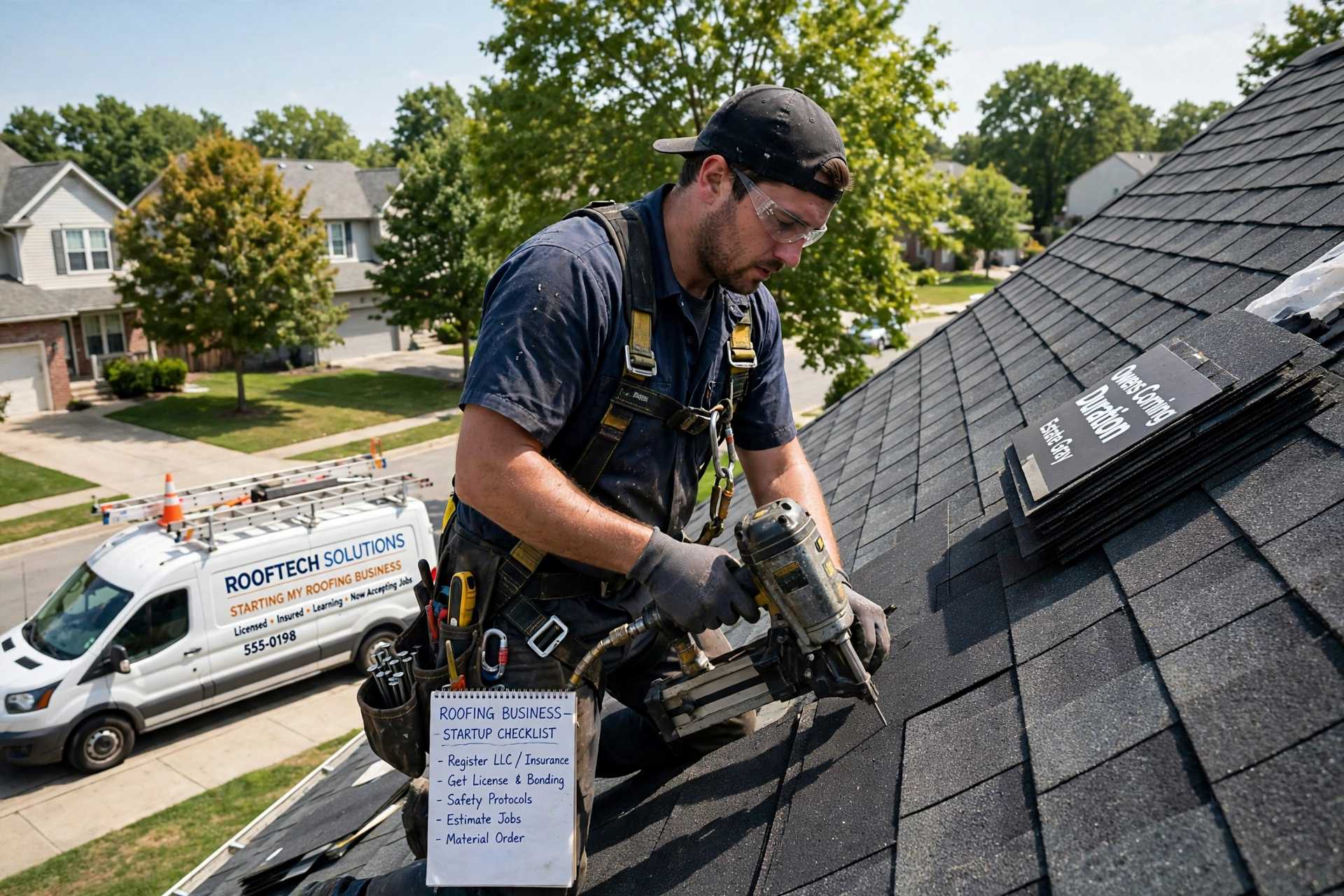
Roofing is one of the steadiest trades in the home services world. Every house needs a roof, every roof wears out, and storms keep roofers busy all year round. If you already know your way around a ladder and a nail gun, learning how to start a roofing business could be the step that turns your trade skills into real income of your own.
A roofing business is not the cheapest service business to start — the insurance costs more than in most trades, and the safety rules are stricter. But the ticket sizes are bigger too: a single roof replacement can be worth more than a month of small cleaning or mowing jobs. This guide walks you through the whole process in order, from learning the trade to winning your first paying customers.
Step 1: Learn the Trade Before You Launch
Roofing is not a trade you can fake. Before you think about customers, you need to know how a roof actually goes together: tearing off old shingles, laying underlayment, flashing valleys and chimneys, and nailing shingles so they survive the next storm.
If you have already worked on a roofing crew, you have a head start. If not, spend at least a season working for an established roofer. You will learn the pace of the work, how a crew is organised, and which mistakes cost money. Trade school or an apprenticeship is another good route, and it looks strong when you later apply for a roofing contractor license.
While you learn, pay attention to the business side too. Watch how your boss prices a job, where the materials come from, and how long a typical roof takes. That knowledge is worth more than any course when you start your own company.
Step 2: Write a Roofing Business Plan
Every serious business starts on paper. A roofing business plan does not need to be a 40-page document, but it should answer the important questions: what services will you offer, who are your customers, what will you charge, and what will it cost you to start?
Start with your services. Will you focus on repairs, full replacements, or both? Repairs bring fast cash and repeat customers; replacements bring the big paydays. Many new roofers start with repairs and small re-roofing jobs, then move into full replacements as their crew and reputation grow.
Next, work out your startup costs honestly. A reliable work truck or van, ladders, a roofing nailer, safety harnesses, and your first insurance payment can easily add up to $10,000–$25,000, even before you buy materials for your first job. Your roofing business plan should also include a marketing budget — even a small one — because a new roofing company with no customers earns nothing.
Finally, set a simple financial target for your first year: how many jobs per month, at what average price, will cover your costs and pay you a wage? If the numbers do not work on paper, adjust the plan before you spend a dollar.
Step 3: Choose a Name and Register Your Roofing Company
The paperwork is the part most people skip when they think about how to start a roofing company — but it comes before the first job. A good name is short, easy to remember, and clearly about roofing. The best roofing company names tell people what you do in two or three words — think Summit Roofing, Ironclad Roofing Co. or Blue Ridge Roofers. Avoid names that are hard to spell or sound like a joke; short roofing company names also work better on a van, a quote and a website, and your name will be on all three.
Check that the name is free in your state and that the matching domain name and social media handles are available. You will want a simple website early, even a one-page site with your services, your phone number and a few photos of your work.
Then register the business. Most roofers choose an LLC because it protects your personal assets if something goes wrong on a job. Register with your state, get a tax ID number, and open a separate business bank account. Mixing business money with personal money is one of the fastest ways to get into trouble.
This step is also where you decide the structure of your new roofing company: will you work alone, hire one helper, or build a small crew? Starting solo keeps costs low, but roofing is heavy two-person work — most owners hire at least one experienced helper for their first jobs.
Step 4: Get Your Roofing Contractor License
Licensing is the gate that catches many new roofers. A roofing contractor license is required in many states, and the rules change completely depending on where you work. Some states issue a dedicated roofing license, others cover roofing under a general contractor license, and a few leave it to cities and counties.
Check your state contractor board’s website first and find out exactly what you need: an exam, proof of experience, a surety bond, or all three. The exam usually covers building codes, safety rules and business law, so do not walk in unprepared — study the materials or take a prep course.
In states with no state-level license, you will still need local permits and registrations. Never skip this step: working without the right roofing contractor license can mean fines, losing the job, and no insurance cover if something goes wrong.
Keep your license documents organised from day one. You will need them for insurance applications, supplier credit accounts and council permits, and customers increasingly ask to see them before they hire you.
Step 5: Sort Out Roofing Business Insurance
Roofing business insurance is more expensive than insurance for most other trades — and for good reason. Working at height carries real risk, and one bad fall or one leaking roof can cost tens of thousands. Skipping insurance is not an option; it is the thing that keeps one accident from ending your business.
At minimum, you need general liability insurance that covers height work — check the policy carefully, because some cheap policies exclude work above a certain height. You also need workers’ compensation insurance as soon as you hire anyone, and commercial vehicle insurance for your work truck.
Ask your insurer about a few extras: tools and equipment cover, so a stolen nailer does not stop your week, and completed-operations cover, which protects you if a roof you installed develops a problem months later. Get quotes from at least three brokers who specialise in trades insurance; the price differences can be large.
Tell customers you are insured and show proof on your quotes. Homeowners worry about roofers who work without cover, and being properly insured is one of the easiest ways to win trust against cheaper, uninsured competitors.
Step 6: Buy the Right Equipment
You do not need a warehouse full of gear to start, but roofing has a few essentials you cannot work without. The core kit is a roofing nailer (pneumatic or cordless), a sturdy extension ladder and a roof ladder, a full safety harness with anchor points, a chalk line, a roofing hammer, utility knives, and a tape measure.
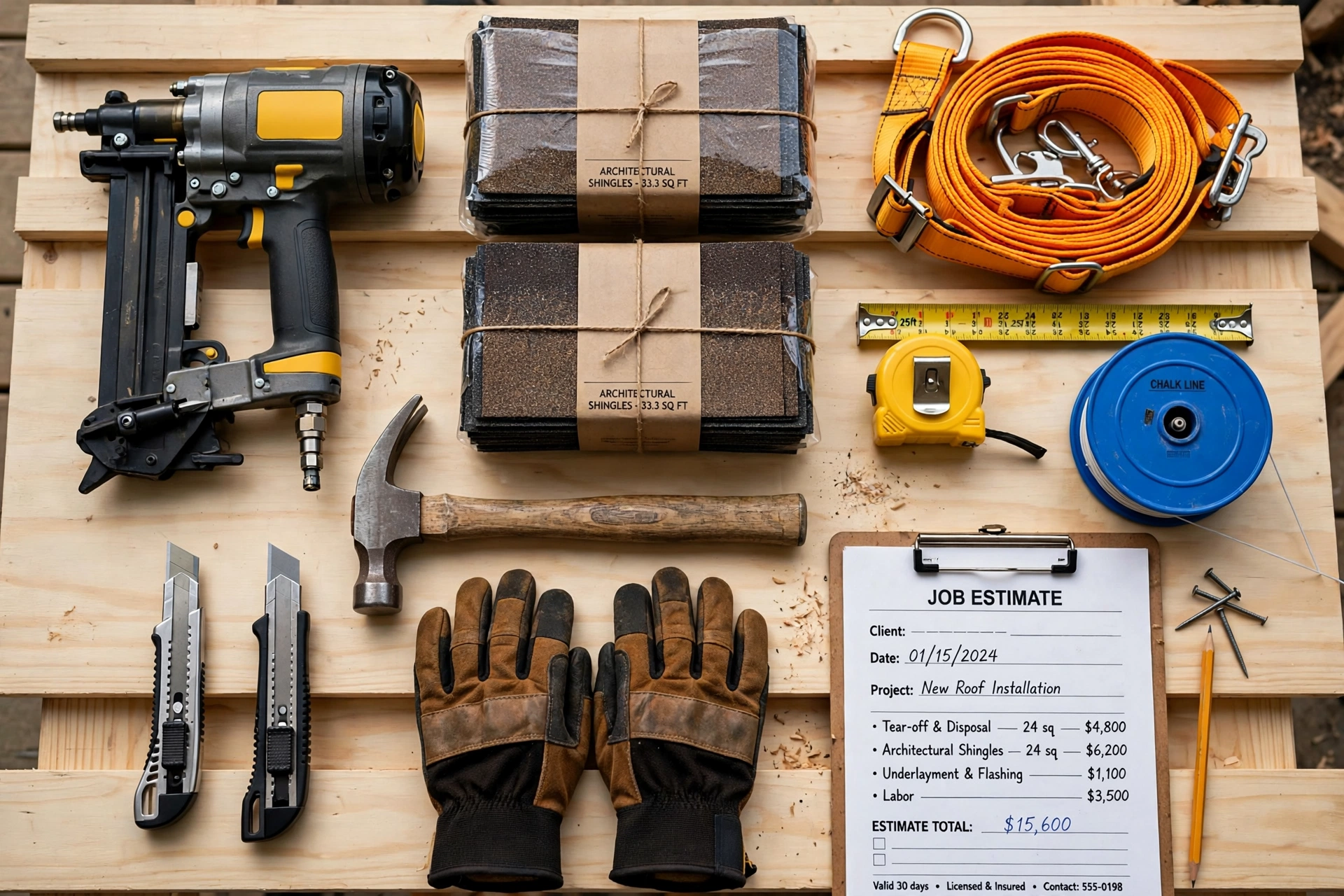
Buy quality on the safety gear and the nailer; these are the tools you use every day, and a failing harness or a jamming nailer costs you time and safety. Ladders, tarps and hand tools can be bought second-hand if they are in good condition.
You also need a reliable vehicle. A pickup truck or van with a ladder rack is the standard choice. It carries your tools, your materials, and — just as importantly — it is a moving advert for your business when it is clean and sign-written.
Finally, open a credit account with a local roofing supplier. Suppliers offer trade pricing, deliver materials to site, and will often give a new roofing business 30-day payment terms once they trust you. That breathing room on materials makes a real difference in your first months.
Step 7: Price Your Jobs So You Actually Profit
Pricing is where new roofers lose money most often. The trick is to price every job from its real costs, not from a guess or from whatever the cheapest competitor charges.
Learn the key numbers in roofing pricing. Roofers usually price by the square — one square is 100 square feet of roof area. Your price per square must cover materials, labour, disposal of the old roof, insurance, fuel and your own wage, with profit left over. If any of those are missing from your quote, you are paying for the job yourself.
Customers will ask you one question more than any other: how much does a new roof cost? A straight answer builds trust. Explain that how much does a new roof cost depends on the size of the roof, the material, the pitch, and the condition of the decking underneath. A small asphalt shingle roof might cost $8,000–$12,000, while a large or complex roof can run to $20,000 or more.
The same honesty applies to roof replacement cost. When you quote a roof replacement cost, break it down for the customer: tear-off and disposal, underlayment and flashing, shingles, and labour. Homeowners who see the breakdown argue less about the total, and they remember you as the roofer who explained things clearly.
Set your prices, write them down, and stick to them. Discounting every job to win work trains customers to expect cheap prices and leaves you with no margin when a job runs long.
Step 8: Choose Your Services — Residential or Commercial
Most new roofing businesses start with homes, but it helps to decide your direction early. Residential roofing services are the natural starting point: roof repairs, shingle replacements and storm-damage work for homeowners. The jobs are smaller, the customers decide quickly, and good work leads to referrals from neighbours.
Residential roofing services also have a steady pipeline. Roofs age on a schedule, storms damage them without warning, and homeowners sell houses — all of which create work. A homeowner who trusts you with a repair today is the same person who calls you for a full replacement in two years.
Commercial roofing services are a different game: bigger roofs, flat or low-slope systems, longer sales cycles, and contracts rather than one-off jobs. The pay is higher, but so are the demands — you need a bigger crew, more insurance, and the ability to work around a business that stays open while you roof it.
A smart path is to master residential work first, build a crew and a reputation, then add commercial roofing services once you have the team and the cash flow to handle bigger projects. Some roofers stay residential forever and do very well; the choice is yours, but make it deliberately.
Step 9: Find Your First Customers
A new roofing company with no customers is just an expensive hobby. Your first jobs will almost always come from people who already know you — so tell everyone you are in business: friends, family, neighbours, your old crew, the staff at the building supply store.
Then build the basics of local marketing. Claim and complete your Google Business Profile, because roofer near me searches send most local roofing enquiries. Ask every happy customer for a Google review; five strong reviews beat a hundred pounds of advertising in the early days.
Local advertising still works for roofers: a sign-written van, yard signs on finished jobs (with the homeowner’s permission), and flyers in the neighbourhoods where you have just finished a roof. Knock on doors after a storm — politely, and only to offer a free roof inspection — and you will find homeowners who genuinely need help.
Finally, build relationships with estate agents, property managers and insurance adjusters. They see damaged roofs every week, and a roofer they trust gets the call first.
Step 10: Deliver Great Work and Grow Steadily
The roofing trade runs on reputation. One leaking roof or one messy job site can undo months of good work, while one delighted customer can send you five neighbours.
Keep your job sites tidy, protect the customer’s garden and driveway, and clean up properly every day. Take before-and-after photos of every job and ask permission to share them; they are your best marketing material and they cost nothing.
Follow up after every job. A quick call a week later to check the roof is fine shows customers you care, and it is the moment to ask for a review or a referral. Then keep in touch — a simple reminder each autumn about a free gutter and roof check keeps your name in front of past customers when the next job comes up.
As work grows, hire carefully. One reliable, experienced roofer is worth three cheap helpers. Train your crew properly on safety, pay them fairly, and your roofing business will grow on the back of people who want to stay.
Mistakes New Roofers Should Avoid
- Starting without a license or insurance. It saves money for a month and can cost you the business in a day.
- Under-pricing every job. Winning work at a loss is not winning. Price from your real costs.
- Skipping the safety gear. A harness feels slow until the day it saves you. Use it on every roof, every time.
- Taking on a job you cannot finish. A roof you cannot complete on schedule damages your name more than turning the job down.
- Ignoring the paperwork. Quotes, contracts, permits and invoices are part of the job, not a distraction from it.
- Forgetting to ask for reviews. Happy customers rarely leave reviews on their own. Ask, every single time.
Frequently Asked Questions
How much money do I need to start a roofing business?
Most new roofers need $10,000–$25,000 to start, assuming they already own a suitable vehicle. The biggest costs are insurance, tools and safety gear, and your first month of running costs. Starting with repairs before moving into full replacements keeps the startup bill lower.
Do I need experience before learning how to start a roofing business?
Yes — real roofing experience matters more than anything else in this trade. Work for an established roofer for at least a season, or complete an apprenticeship, before you take on paying customers. Your customers are trusting you with the most expensive part of their home.
How long does it take to get a roofing contractor license?
It depends on your state. Some licenses take a few weeks if you already have the experience; others need months of documented work plus an exam. Check your state contractor board early, because licensing is often the slowest step in the whole process.
What is a typical roof replacement cost for a homeowner?
For an average single-family home with asphalt shingles, a typical roof replacement cost is $8,000–$15,000. Larger homes, steeper roofs, premium materials like metal or tile, and damaged decking all push the price up. Always give a written, itemised quote so the homeowner can see exactly what they are paying for.
Is a roofing business profitable?
It can be, because the jobs are large and the demand is constant — every roof eventually needs repair or replacement. Profit depends on pricing your jobs properly, keeping your crew busy, and avoiding costly mistakes like under-quoting or rework. Roofers who track their numbers carefully do well; roofers who guess their prices usually struggle.
Final Word
Learning how to start a roofing business is really about doing the unglamorous steps in the right order: learn the trade, write a plan, get licensed and insured, buy solid equipment, price honestly, and look after every customer. Anyone researching how to start a roofing company should remember that the licence and the insurance come before the ladder. Do those things well, and the roofs — and the referrals — will keep coming.
Roofing is hard, physical work at height in all weathers. But for a roofer who runs the business side as carefully as the trade side, it is one of the most reliable ways to build a business of your own.

Shingles to Success: How to Start a Roofing Business

Posts, Panels and Profit: How to Start a Fencing Business

First Cut, Full Crew: How to Start a Tree Trimming Business

Ladder to Lights: How to Start a Christmas Light Business

Clear Water, Steady Pay: Starting a Pool Cleaning Business

Green Thumb to Paycheck: Starting a Landscaping Business

Turn Winter Into Income: How to Start a Snow Removal Business

How to Start a Handyman Business: Simple Steps That Turn Your Skills Into Income

How to Start a Moving Company: Simple Steps That Win Your First Jobs

How to Start a Junk Removal Business: A Simple Step-by-Step Guide

How to Repurpose Blog Content for Social Media Without Starting From Scratch

How to Write a Simple Business Plan for Your Small Business: A Practical Guide That Gets You Started

How to Create a Small Business Content Marketing Plan That Actually Gets Results

How to Get More Clients for Your Business: Simple Ways That Actually Work
How to Create a Content Calendar for a Small Business

How to Write a Professional Business Email That Gets a Reply
How to Handle Customer Complaints in a Small Business: A Calm, Practical Guide That Turns Problems Into Loyalty

Branding Tips for Small Businesses: A Simple Guide That Makes You Memorable
How to Set Up a Simple Referral Program for Your Small Business: A Beginner’s Guide That Brings in New Customers

How to Set SMART Goals for a Small Business: A Practical Guide That Actually Works
Shingles to Success: How to Start a Roofing Business
Posts, Panels and Profit: How to Start a Fencing Business
First Cut, Full Crew: How to Start a Tree Trimming Business
Ladder to Lights: How to Start a Christmas Light Business
Clear Water, Steady Pay: Starting a Pool Cleaning Business
Green Thumb to Paycheck: Starting a Landscaping Business
Turn Winter Into Income: How to Start a Snow Removal Business
How to Start a Handyman Business: Simple Steps That Turn Your Skills Into Income
How to Start a Moving Company: Simple Steps That Win Your First Jobs
How to Start a Junk Removal Business: A Simple Step-by-Step Guide

 entertainment1 year ago
PYT Telegram: A Complete Guide to Understanding, Using, and Maximizing It

 entertainment1 year ago
OnionFlix: Everything You Need to Know About This Streaming Website
- education1 year ago
How to Become a Software Engineer: A Complete Guide
- entertainment10 months ago
Brainrot Memes: The Unhinged Humor of the Internet Generation





