
business
Clear Water, Steady Pay: Starting a Pool Cleaning Business

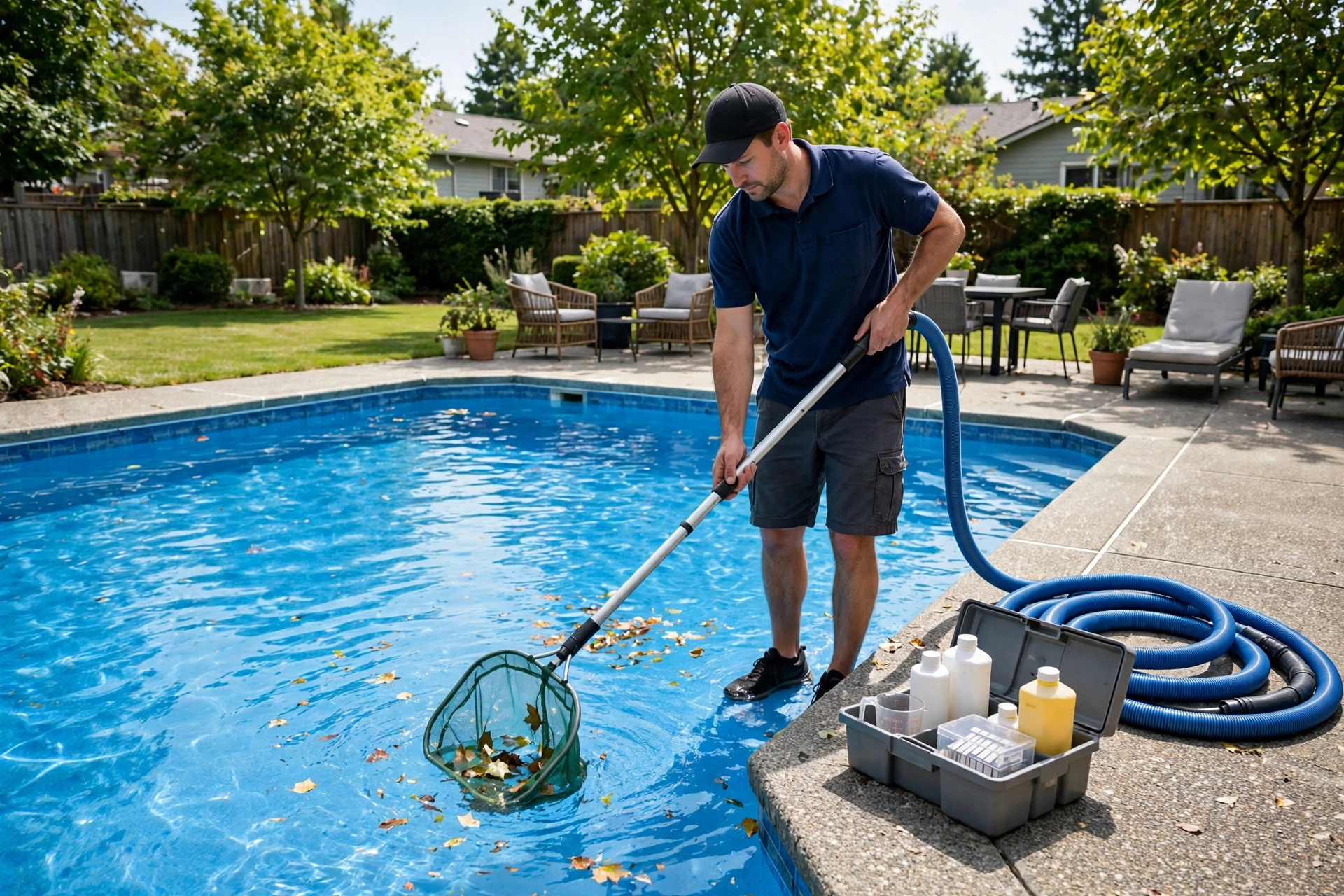
A swimming pool looks simple from the deck: clear blue water, a clean floor, a pump humming quietly in the background. Keeping it that way every single week is real, skilled work — and it is work that pool owners happily pay someone else to do. If you like being outdoors, working with your hands and building a business one loyal customer at a time, starting a pool cleaning business is one of the most practical service businesses you can launch.
The barrier to entry is low. You do not need a shop, a degree or a large team. A reliable vehicle, a basic kit of tools, some training in water chemistry and a tight weekly route are enough to start earning. The customers are sticky too: once a pool owner trusts you with their water, they rarely switch, and they pay you every week, all season long.
This guide explains how to start a pool cleaning business, walking through the whole process from learning water chemistry to winning your first route of regular customers. It follows the same steps that working pool professionals use, and it covers the parts beginners usually skip — licensing, insurance and pricing — before they become expensive problems.
Step 1: Learn Water Chemistry Before You Touch a Pool
Your customers are not paying you to skim leaves. They are paying you to keep their water safe to swim in. That means learning the three C’s of pool care: circulation, cleaning and chemistry.
Water chemistry is the skill that separates a professional from someone with a net. You need to understand pH, chlorine levels, alkalinity and calcium hardness, and how they interact. Get one of them wrong and the water turns cloudy, the plaster stains, or swimmers get irritated eyes and skin. Get them right and the pool stays crystal clear with very little drama.
The standard credential is the Certified Pool & Spa Operator (CPO) course from the Pool & Hot Tub Alliance. It is a 16-hour course, usually spread over two days or taken online plus a one-day class, and it stays valid for five years. It covers water chemistry, filtration, safety and the rules for public and commercial pools. In some US states, the person servicing a public pool must hold a certification like this, so check the rules where you plan to work.
Do the training before you buy equipment. It changes what you buy, because you will understand which items belong on your pool cleaning equipment list — and which ones are marketing.
Step 2: Check the Pool Cleaning Business License Rules Where You Work
One of the most common questions new owners ask is whether they need a pool cleaning business license. In most of the United States, the honest answer is: not for the cleaning itself. Cleaning a pool, testing the water and adding chemicals generally does not require a contractor’s license.
The license question starts when you touch the equipment. Installing, replacing or modifying a pump, heater, filter or anything permanently attached to the pool is construction work in many states, and that usually needs a license. Florida, for example, is clear that cleaning a pool in a way that does not affect its structure or equipment needs no license, while installing or replacing equipment does. California and Arizona have their own contractor board rules, and some cities add a local business license on top.
So before your first job, call your state licensing board and your city or county office and ask exactly what a residential pool service needs where you work. Write down who you spoke to and what they said. If you plan to do repairs later, find out which license that work needs now, so you can plan for it instead of discovering the rule after you have already quoted the job.
Step 3: Write a Simple Pool Cleaning Business Plan
A pool cleaning business plan does not need to be a forty-page document. One or two pages are enough to start, as long as they answer the questions that actually decide whether the business works.
Start with your service area. Pool cleaning is a route business: ten pools on one street beat twenty pools spread across a whole city, because driving time is unpaid time. Pick one or two neighbourhoods with plenty of backyard pools and build density there first.
Then define your services and your prices. Will you offer weekly service only, or also one-off cleans, filter cleans, green-pool recoveries and seasonal openings and closings? Decide your weekly capacity too — how many pools you can honestly service in a week without rushing the chemistry.
Finally, set a simple money target: how many weekly accounts you need to cover your costs and pay yourself. That number becomes your first real goal, and every marketing decision after this should be judged against it. A plan you actually use beats a perfect plan you never open.
Step 4: Register the Business and Pick a Name
Once the plan is clear, make the business legal. Choose a business structure — most solo pool cleaners start as a sole proprietorship or a single-member LLC — register your business name, and get a free EIN from the IRS if you need one. Open a separate business bank account on day one. Mixing personal and business money is the most common bookkeeping mess in every small trade, not just pool work.
Pick a name that is simple, local and easy to remember. It should say what you do and where you do it, and it should be easy to spell over the phone. Check that the name is free as a domain and on the social profiles you plan to use, then register it. A clean, professional name on the side of a van and on a uniform builds trust before you ever touch a pool.
Step 5: Get Pool Cleaning Business Insurance
Pool cleaning business insurance is not optional, even for a one-person operation. You work on someone’s property, around water, chemicals and electrical equipment. One accident — a chemical spill on a deck, a scratched liner, a pump damaged during a clean — can cost far more than a year’s premiums.
At minimum, get general liability insurance. It covers damage to a customer’s property and injuries caused by your work. Many commercial clients, hotels and homeowners’ associations will ask for proof of coverage before they let you on site, so having it also wins you work. Add commercial auto insurance for the vehicle you use on the route, and workers’ compensation the moment you hire help.
Get quotes from two or three insurers and compare what is actually covered, not just the price. Ask specifically about chemical handling and damage to customer property. Insurance medians for pool cleaners run around $95 a month for general liability, but your price depends on where you work and what you cover.
Step 6: Buy Your Equipment
You can start with a surprisingly small kit. The essentials are a telescopic pole, a leaf net, a pool brush, a vacuum head and hose, a water test kit, and a safe way to store and carry chemicals. Buy commercial-grade tools once instead of homeowner-grade tools twice: the cheap pole that bends on the third job is not a saving.
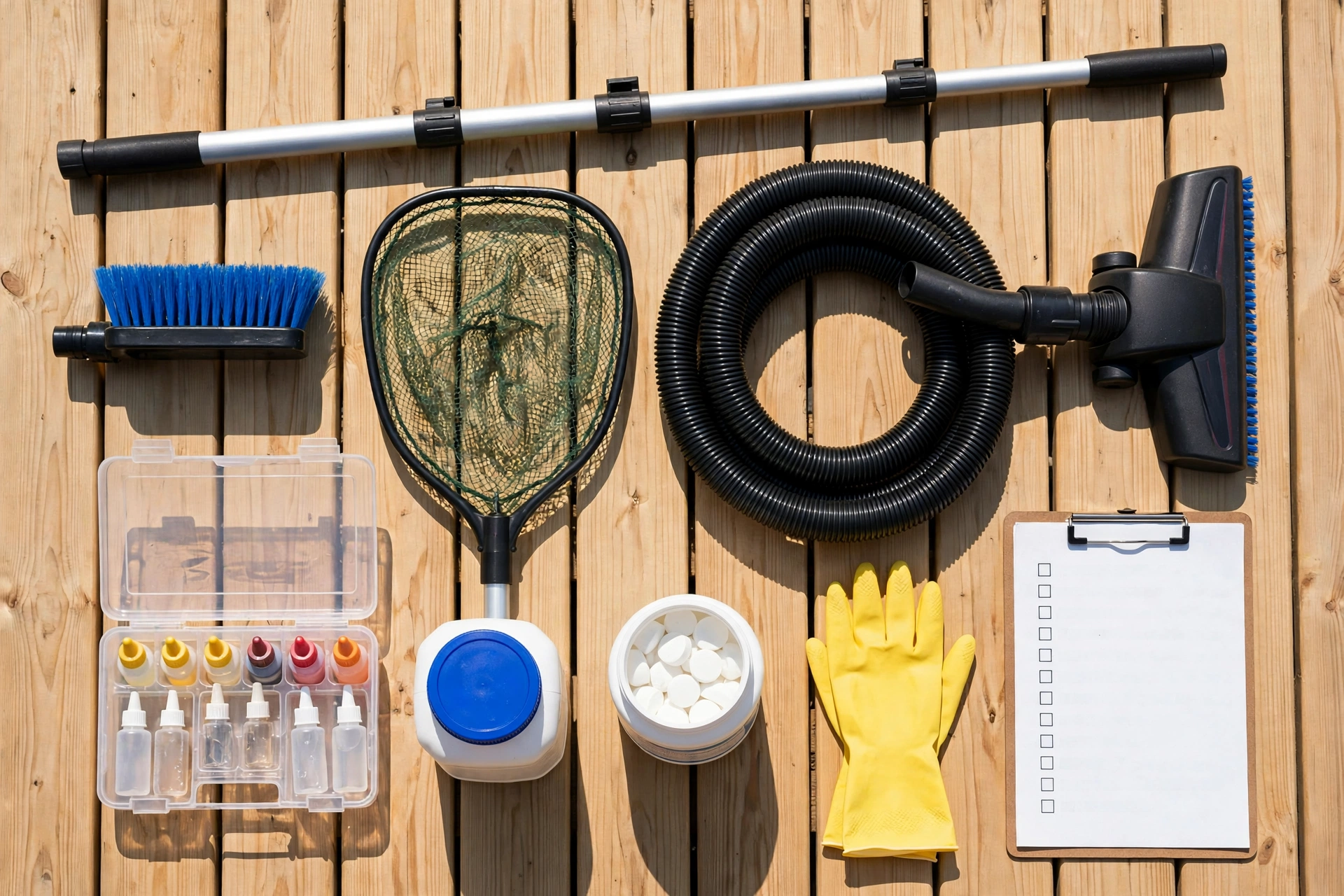
A good pool cleaning equipment list for a starter kit looks like this: telescopic pole and attachments, leaf skimmer net, wall and floor brush, manual vacuum head with hose, a reliable test kit with fresh reagents, chemical storage that meets local rules, gloves and safety glasses, and a clipboard or app for route notes. Add a small leaf blower for the deck and a spare test kit in the truck, because the day your only kit breaks is the day you have twelve pools to test.
Keep the kit organised in the vehicle. Every minute spent hunting for a brush is a minute of route time wasted, and a tidy, professional-looking setup reassures customers who watch you work.
Step 7: Set Your Prices and Packages
Pricing is where most new pool cleaners undercharge. The mistake is pricing by the hour you spend at the pool and forgetting the drive time, the chemicals, the wear on the vehicle and the empty weeks in the off-season. Price the weekly service so the whole route pays, not just the hour at the water.
Start by working out your real costs per pool: chemicals, fuel, vehicle wear, insurance and your own time, including driving between stops. Then look at what other local services charge. In the United States, monthly pool maintenance commonly runs $80 to $150 a month for a standard weekly visit, with one-off deep cleans and first-time cleans much higher, and openings and closings higher still. Your area may differ, so quote against local competitors, not against a national average.
Offer simple packages: a weekly service plan as the base, plus add-ons like filter cleans, green-pool recovery and seasonal opening and closing. Packages make your prices easy to understand, and they make it easy for a customer to say yes without a long negotiation. Put the price in writing before the first visit, and review it once a year — chemical and fuel costs move, and your prices should move with them.
Step 8: Build a Tight Weekly Route
A pool service business lives or dies on route density. Every pool you add in the same neighbourhood makes the whole route more profitable, because the drive between jobs shrinks. Ten pools on one street are worth more than twenty pools scattered across town.
Plan the route like a delivery run. Group customers by area and by day, and keep the order fixed so customers know when to expect you. A consistent day and time builds trust: the pool owner sees the same van, on the same day, every week, and that reliability is what keeps them from shopping around.
Use simple software or even a paper system at first, but track everything: the chemical readings at each pool, what you added, what you noticed, and when the filter was last cleaned. Those notes are what let you spot a problem early — a pump losing pressure, a heater acting up — and flag it to the customer before it becomes an emergency. That kind of attention is exactly what turns a weekly cleaner into the person a customer recommends to their neighbours.
Step 9: Win Your First Customers
Your first ten customers are the hardest. Start close to home, in the neighbourhoods you chose in your plan, and work every free channel before you spend money on ads.
Knock on doors in streets with visible pools, leave a simple flyer with your number and your weekly price, and ask every happy customer for a referral. Claim a Google Business Profile with real photos of your work, and ask customers to leave honest reviews. Join local community groups and neighbourhood pages, and answer pool questions helpfully — people hire the person they already trust.
Local partnerships help too. Pool supply shops, real estate agents and property managers all meet pool owners before you do. Offer them a simple referral arrangement and make it easy for them to recommend you. And remember: the same rules that apply to starting a pool cleaning business apply to how to start a pool service business of any kind — the route, the reputation and the referrals are the business.
Step 10: Grow Into Repairs, Openings and Commercial Work
Once the weekly route is full, growth comes from adding services, not just adding pools. The most natural next step is repairs and maintenance: replacing pumps, fixing leaks, repairing cleaners and upgrading filters. This is also where the license rules from Step 2 come back, so get the right license or partner with a licensed contractor before you quote repair work.
Seasonal work adds income too. Opening pools in spring and closing them in autumn are bigger jobs with bigger tickets, and customers who trust your weekly service will ask you first. Hot tubs and spas are another natural add-on, since the chemistry skills transfer directly.
The biggest step up is commercial pool cleaning: hotels, apartment complexes, gyms and homeowners’ associations. Commercial accounts pay more and sign contracts, but they demand proof of insurance, certified staff and careful chemical logs. Win them only when your systems are ready. When they are, one commercial contract can be worth a dozen residential pools, and it fills the quiet weeks in a way residential work never will.
Mistakes to Avoid
The most common mistake is skipping the training and learning water chemistry on customers’ pools. A green pool or a stained finish costs far more to fix than the course ever would.
The second is underpricing. If your weekly price does not cover chemicals, fuel, insurance and your time, every new customer makes you poorer. Raise prices early, in small steps, and explain what the service includes.
The third is taking pools too far apart. A scattered route eats your day in driving and leaves no time to do the work well. Say no to the pool across town until you have density near it.
The fourth is ignoring the paperwork. No insurance, no written prices, no chemical logs — that is how a small dispute becomes a big problem. Keep the business side as tidy as the pools.
And finally, do not grow too fast. Hiring help before your route can pay for it, or taking on commercial accounts before your systems are ready, can sink a business that was doing fine. Grow the route first, then grow the team.
Frequently Asked Questions
How much does it cost to start a pool cleaning business?
Most solo starters begin with a few thousand dollars: training and certification, basic tools and chemicals, insurance, business registration and a reliable vehicle. Starting part-time while keeping another income is a common and sensible way to begin, because the route builds gradually.
Do I need experience to start?
No previous pool experience is required, but training is essential. The CPO course teaches the water chemistry and safety rules that customers rely on. Many successful owners started with no pool background and learned the trade through the course and their first season on the route.
How many pools can one person service in a week?
A solo operator typically services 40 to 60 pools a week once the route is tight and efficient, depending on pool size, travel time and the services included. Start with 10 to 20 and grow steadily rather than overloading the first month.
Is pool cleaning seasonal?
Residential demand is seasonal in colder climates, with winter bringing fewer visits, while warm regions like Florida, Arizona and Texas offer year-round work. Commercial pool cleaning, openings, closings and repair work all help smooth out the quiet months.
What is the most profitable part of the business?
The weekly route is the steady base, but repairs, green-pool recoveries, openings and closings, and commercial accounts carry the highest margins. The route gives you the customers; the extra services give you the profit.
Final Word
Starting a pool cleaning business is not a get-rich-quick idea. It is a steady, outdoor, skill-based trade that rewards reliability: the same pools, the same day, every week, done properly. That is the real answer to how to start a pool cleaning business — learn the chemistry, sort out the license and insurance before your first job, write a simple plan, buy good tools once, price the work honestly and build the route street by street.
Do that, and the business grows the way good service businesses always grow — one happy pool owner telling the next one. Your first splash is the hardest part. After that, it is just a matter of keeping the water clear and showing up on time.

Ladder to Lights: How to Start a Christmas Light Business

Clear Water, Steady Pay: Starting a Pool Cleaning Business

Green Thumb to Paycheck: Starting a Landscaping Business

Turn Winter Into Income: How to Start a Snow Removal Business

How to Start a Handyman Business: Simple Steps That Turn Your Skills Into Income

How to Start a Moving Company: Simple Steps That Win Your First Jobs

How to Start a Junk Removal Business: A Simple Step-by-Step Guide

How to Start a Pest Control Business: Simple Steps That Win Your First Customers

How to Start a Carpet Cleaning Business: Simple Steps

How to Start a Gutter Cleaning Business: Simple Steps That Turn Your Ladder Into Income

How to Repurpose Blog Content for Social Media Without Starting From Scratch

How to Write a Simple Business Plan for Your Small Business: A Practical Guide That Gets You Started

How to Create a Small Business Content Marketing Plan That Actually Gets Results

How to Get More Clients for Your Business: Simple Ways That Actually Work

How to Write a Professional Business Email That Gets a Reply
How to Handle Customer Complaints in a Small Business: A Calm, Practical Guide That Turns Problems Into Loyalty
How to Create a Content Calendar for a Small Business

Branding Tips for Small Businesses: A Simple Guide That Makes You Memorable
How to Set Up a Simple Referral Program for Your Small Business: A Beginner’s Guide That Brings in New Customers

How to Set SMART Goals for a Small Business: A Practical Guide That Actually Works
Ladder to Lights: How to Start a Christmas Light Business
Clear Water, Steady Pay: Starting a Pool Cleaning Business
Green Thumb to Paycheck: Starting a Landscaping Business
Turn Winter Into Income: How to Start a Snow Removal Business
How to Start a Handyman Business: Simple Steps That Turn Your Skills Into Income
How to Start a Moving Company: Simple Steps That Win Your First Jobs
How to Start a Junk Removal Business: A Simple Step-by-Step Guide
How to Start a Pest Control Business: Simple Steps That Win Your First Customers
How to Start a Carpet Cleaning Business: Simple Steps
How to Start a Gutter Cleaning Business: Simple Steps That Turn Your Ladder Into Income

 entertainment1 year ago
PYT Telegram: A Complete Guide to Understanding, Using, and Maximizing It

 entertainment1 year ago
OnionFlix: Everything You Need to Know About This Streaming Website
- education1 year ago
How to Become a Software Engineer: A Complete Guide
- entertainment10 months ago
Brainrot Memes: The Unhinged Humor of the Internet Generation





