
business
How to Start a Moving Company: Simple Steps That Win Your First Jobs


How to Start a Moving Company: Simple Steps That Win Your First Jobs
Moving is one of those jobs that never goes out of fashion. People change homes, offices shift to new buildings, and students move in and out of flats every year. If you enjoy physical work, meeting new people, and running your own day, learning how to start a moving company is one of the most practical ways to build a service business from scratch. You do not need a shop, a degree, or a huge team. You need a reliable vehicle, the right gear, and a clear plan for winning your first customers.
This guide walks you through the whole process, from the first idea to your first paid job, in simple steps you can follow even if you have never run a business before.
1. Decide What Kind of Moving Company You Want to Run
Before you buy anything, decide what kind of mover you want to be. Starting a moving company looks different depending on the customers you serve. Some movers only handle local house moves within one town. Others focus on office moves, student moves, or single-item deliveries such as sofas and pianos.
A local residential mover is the simplest place to begin. Jobs are short, customers are easy to find, and you can start with one van and a helper. A commercial moving company, on the other hand, moves offices, shops, and warehouses. Those jobs pay more, but they usually need a bigger team, evening or weekend work, and more careful planning around desks, computers, and stock.
Pick one lane to start. You can always add new services later, once your name is known and your diary is full.
2. Learn How the Moving Business Actually Works
Spend a week learning before you spend any money. Watch how local movers price jobs, what they include in a quote, and what customers complain about in online reviews. The most common complaints are late arrivals, damaged furniture, and surprise charges. If you solve those three problems, you will already stand out.
Talk to people who have hired movers recently and ask what they liked and what frustrated them. That simple research teaches you more than any course. It also shows you the price range in your area, so you do not quote too low and work for nothing, or too high and win no jobs.
3. Write a Simple Moving Company Business Plan
Every serious business starts with a plan, and your moving company business plan does not need to be long. One page is enough if it answers the right questions: who are your customers, what services will you offer, what will you charge, and how will people find you?
Write down your start-up costs, your monthly costs, and how many jobs you need each month to cover them. Set a goal for your first three months, such as ten jobs a month, and list three ways you will find customers. A written plan keeps you honest. When a shiny new van or an expensive advert tempts you, the plan reminds you what actually matters.
4. Do Market Research Before You Spend a Rupee
You need to know whether your town has room for one more mover. Learning how to do market research for small business is simple: search online for movers in your area, count them, read their reviews, and note their prices. If every mover is booked weeks ahead, demand is strong. If five movers are all offering discounts, the market is crowded and you will need a clear difference, such as same-day service or careful handling of fragile items.
Check which areas have the most house sales and new flats. Estate agents, property websites, and local Facebook groups all show where people are moving. That is where your first customers live.
5. Choose a Business Name People Can Remember
Your name should say what you do and be easy to spell over the phone. Short names work best. Avoid clever spellings that customers cannot find on Google. Before you print anything, check that the name is free on Google, on social media, and as a domain name.
A good name also helps with word of mouth. When a happy customer tells a neighbour, “Call the movers who helped us,” the neighbour should be able to find you in seconds.
6. Register Your Business and Sort the Paperwork
Register your business in the way your country or state requires, and open a separate bank account for it. Keeping business money apart from personal money makes tax time simple and shows customers you are professional.
Check which permits apply to moving work in your area. Rules differ by place, so ask your local business office or a small-business adviser rather than guessing. Keep copies of every document in one folder, physical or digital, so you can find them when a customer or an official asks.
7. Get Moving Company Insurance Before Your First Job
One scratched floor or one dropped television can wipe out a month of profit, so moving company insurance is not optional. At minimum, you need cover for goods in transit and public liability, which protects you if a customer’s property is damaged or someone is hurt while you work.
Ask an insurance broker who works with small service businesses for a quote. Compare at least three quotes and read what is actually covered. Tell the insurer the truth about your vehicle, your team size, and the value of goods you carry. Cheap cover that refuses to pay a claim is the most expensive mistake you can make.
8. Choose Your Vehicle: Van, Truck, or Both?
Your vehicle is your workshop. Most beginners start with a large van, which is cheaper to buy, run, and park than a truck. A Luton van with a tail lift is a popular choice because it carries a full one-bedroom flat in one trip.
Buy used but reliable. A cheap vehicle that breaks down on a job day costs you the job, the customer, and your reputation. Get any used van inspected by a mechanic before you pay. As jobs grow, you can add a second van or a small truck, but do not buy a fleet before you have the bookings to fill it.
9. Gather Your Moving Company Equipment
Good moving company equipment saves your back, protects customers’ belongings, and makes every job faster. Start with the basics: moving blankets, stretch wrap, packing tape, mattress covers, a hand truck trolley, a furniture dolly, straps, gloves, and a basic tool kit for taking beds and tables apart.
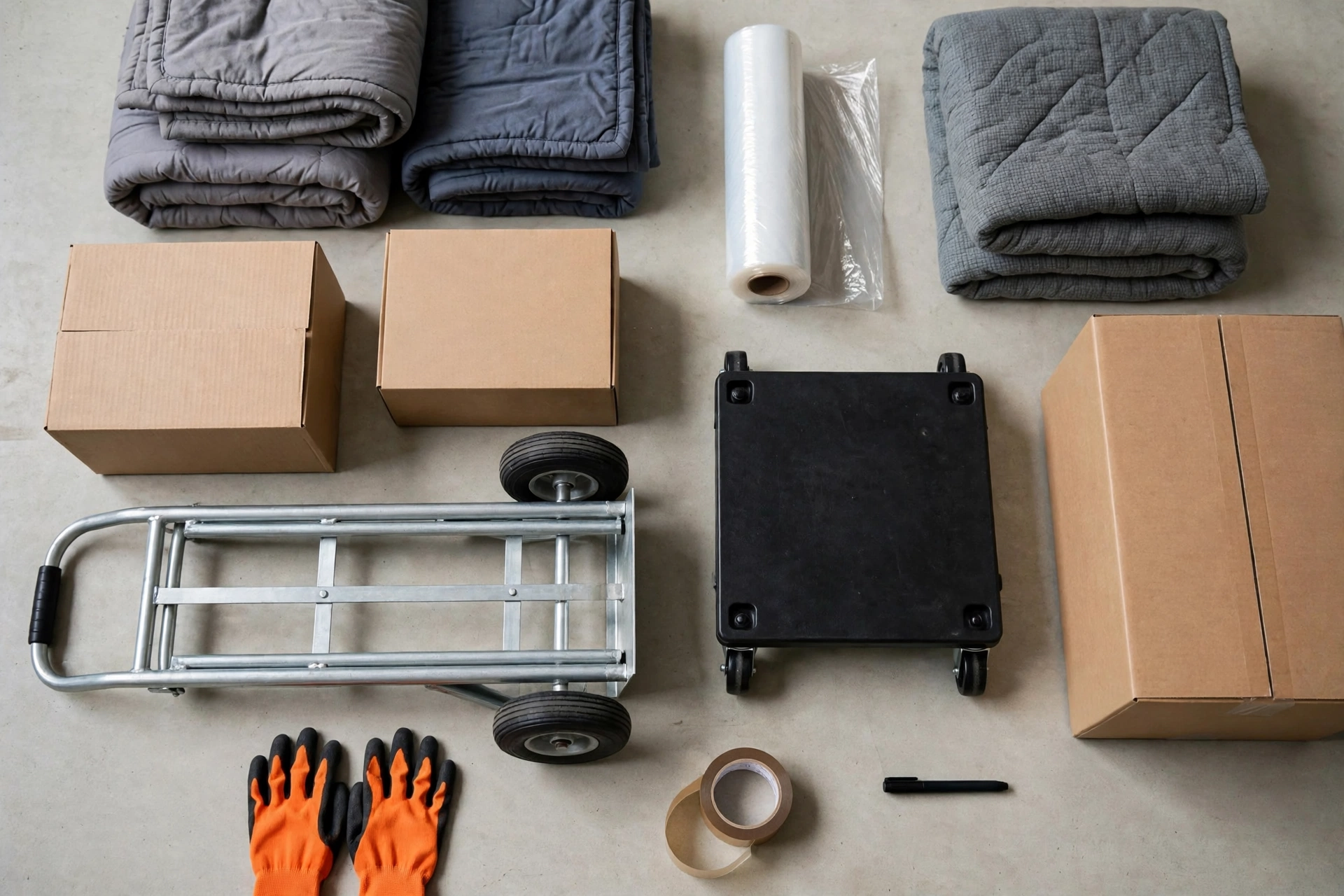
Buy quality blankets and straps first, because cheap ones tear and leave furniture unprotected. Keep a checklist in the van so nothing gets left behind at a customer’s house. Over time you can add specialist items such as piano skates, wardrobe boxes, and stair-climbing trolleys, but the basics will carry your first fifty jobs.
10. Learn How to Price Moving Jobs
Pricing is where many new movers lose money, so learn how to price moving jobs properly from day one. Most local movers charge by the hour, with a minimum of two hours, plus a call-out fee. Others quote a fixed price after a video call or a home visit.
When you quote, count everything: driving time, loading time, stairs, long walks from the van to the door, and heavy or awkward items. A clear written quote protects you and the customer. Never quote a price over the phone for a job you have not seen, unless the customer sends a full video of every room. Surprise items on the day are the fastest way to lose money on a job.
11. Hire Your First Helpers the Right Way
You cannot carry a three-piece sofa alone. Most moves need two people, and bigger jobs need three or four. Start with one reliable helper, paid fairly and on time. If you plan to grow, learn how to pay employees small business owners trust: a simple payroll system, clear paydays, and written agreements about hours and duties.
Train every helper the same way. Show them how to wrap furniture, how to lift safely, how to protect floors, and how to speak politely to customers. Your helpers are your business in the customer’s eyes, so their behaviour matters as much as your own.
12. Build a Simple Brand Customers Trust
People invite movers into their homes, so trust matters more than fancy branding. A clean van, matching shirts, and a simple logo go a long way. Print your phone number clearly on the van, because a parked van is free advertising in every street you work in.
Ask every happy customer for a Google review before you leave their new home. Five honest reviews in your first month are worth more than any paid advert. Reply to every review, good or bad, politely and quickly.
13. Find Your First Customers
Your first jobs will come from people you know. Tell friends, family, neighbours, and local groups that you have started a moving company. Join local Facebook groups and community pages, and answer moving questions helpfully without spamming adverts.
List your business on Google Business Profile, so you appear when someone nearby searches for a mover. Partner with estate agents, storage companies, and cleaning services, who meet people right when they need a mover. Offer a small thank-you discount to anyone who refers a customer, and watch word of mouth do the rest.
14. Consider a Moving Company Franchise Later
Once you have experience, you may hear about a moving company franchise. A franchise gives you a known brand name, training, and booking systems, but it also takes a joining fee and a share of every job. For most beginners, building your own name is cheaper and keeps you in control.
A franchise makes sense only if the brand is strong in your area and the support is genuinely useful. Never sign a franchise agreement without a lawyer reading it first.
15. Deliver a Move Customers Recommend
The job itself is your best marketing. Arrive on time, protect floors and door frames, wrap every item, and work steadily without rushing. At the end, walk through the new home with the customer, check that everything arrived safely, and ask if they are happy.
Small touches win repeat business: a quick message the day before confirming the time, a smile on arrival, and a thank-you note afterwards. Customers remember how a move felt, not just how fast it was.
How to Start a Moving Company When You Have Little Money
Starting a moving company with little money is possible if you keep it simple. Hire a van by the day for your first jobs instead of buying one. Borrow or buy second-hand blankets and trolleys. Do the driving yourself and hire one helper per job. Spend your first profits on better equipment, not on adverts.
The key is to start small and grow from paying customers, not from debt. Each job funds the next step: a better van, a second helper, a simple website. Slow, steady growth beats a big launch that runs out of cash in month two.
Common Mistakes New Movers Make
New movers often underprice jobs to win work, then discover the job took twice as long as expected. Others skip insurance, take cash jobs without records, or promise arrival times they cannot keep. Each of these mistakes is easy to avoid with a written quote, proper cover, and an honest diary.
Another common mistake is saying yes to every job. A piano on the third floor with no lift, a move that needs a vehicle you do not have, or a customer who wants a price you cannot honour are all jobs to decline politely. Turning down the wrong job protects your reputation for the right ones.
Frequently Asked Questions
How much money do I need to start a moving company?
You can start small with a hired van, basic equipment, and insurance for your first jobs, then reinvest your profits. Costs vary by area, but a lean start needs far less than most people expect, because you do not need a shop or stock.
Do I need experience to start a moving company?
You do not need formal experience, but you do need to know how to lift safely, protect furniture, and plan a move. Working a few days with an established mover, or helping friends move, teaches you the practical skills quickly.
How do moving companies find customers?
Most early customers come from Google searches, local groups, estate agents, and referrals from happy customers. A Google Business Profile, honest reviews, and tidy branding bring a steady flow of enquiries once they are in place.
What is the hardest part of running a moving company?
The hardest part is the physical work combined with careful planning: quoting accurately, keeping the diary full, and looking after your team. Good systems for quotes, bookings, and customer messages make all three easier.
Can a moving company grow into a bigger business?
Yes. Many movers start with one van and grow into several vehicles, a storage service, and commercial contracts. Growth comes from reliable service, honest reviews, and reinvesting profits into better vehicles and people.
Final Thoughts
Learning how to start a moving company is really about learning a simple trade well: plan the job, protect the customer’s belongings, arrive on time, and charge a fair price. The business grows one happy customer at a time, and every good move brings the next one closer.
Start with one van, the right equipment, proper cover, and a clear plan. Win your first ten jobs, ask for reviews, and keep improving. That is how a small moving company becomes a trusted local name.

Turn Winter Into Income: How to Start a Snow Removal Business

How to Start a Handyman Business: Simple Steps That Turn Your Skills Into Income

How to Start a Moving Company: Simple Steps That Win Your First Jobs

How to Start a Junk Removal Business: A Simple Step-by-Step Guide

How to Start a Pest Control Business: Simple Steps That Win Your First Customers

How to Start a Carpet Cleaning Business: Simple Steps

How to Start a Gutter Cleaning Business: Simple Steps That Turn Your Ladder Into Income

How to Start a House Painting Business: Simple Steps That Turn Your Painting Skills Into Income

How to Start a Window Cleaning Business: Simple Steps That Turn Your Skills Into Income

How to Start a Pet Grooming Business: Simple Steps That Turn Your Love of Animals Into Income

How to Repurpose Blog Content for Social Media Without Starting From Scratch

How to Write a Simple Business Plan for Your Small Business: A Practical Guide That Gets You Started

How to Create a Small Business Content Marketing Plan That Actually Gets Results

How to Get More Clients for Your Business: Simple Ways That Actually Work
How to Handle Customer Complaints in a Small Business: A Calm, Practical Guide That Turns Problems Into Loyalty
How to Create a Content Calendar for a Small Business

How to Write a Professional Business Email That Gets a Reply
How to Set Up a Simple Referral Program for Your Small Business: A Beginner’s Guide That Brings in New Customers

How to Set SMART Goals for a Small Business: A Practical Guide That Actually Works

Branding Tips for Small Businesses: A Simple Guide That Makes You Memorable
Turn Winter Into Income: How to Start a Snow Removal Business
How to Start a Handyman Business: Simple Steps That Turn Your Skills Into Income
How to Start a Moving Company: Simple Steps That Win Your First Jobs
How to Start a Junk Removal Business: A Simple Step-by-Step Guide
How to Start a Pest Control Business: Simple Steps That Win Your First Customers
How to Start a Carpet Cleaning Business: Simple Steps
How to Start a Gutter Cleaning Business: Simple Steps That Turn Your Ladder Into Income
How to Start a House Painting Business: Simple Steps That Turn Your Painting Skills Into Income
How to Start a Window Cleaning Business: Simple Steps That Turn Your Skills Into Income
How to Start a Pet Grooming Business: Simple Steps That Turn Your Love of Animals Into Income

 entertainment1 year ago
PYT Telegram: A Complete Guide to Understanding, Using, and Maximizing It

 entertainment1 year ago
OnionFlix: Everything You Need to Know About This Streaming Website
- education1 year ago
How to Become a Software Engineer: A Complete Guide
- others1 year ago
Nook vs Kindle: Which E-Reader Is Right for You?





