
business
How to Start a Window Cleaning Business: Simple Steps That Turn Your Skills Into Income

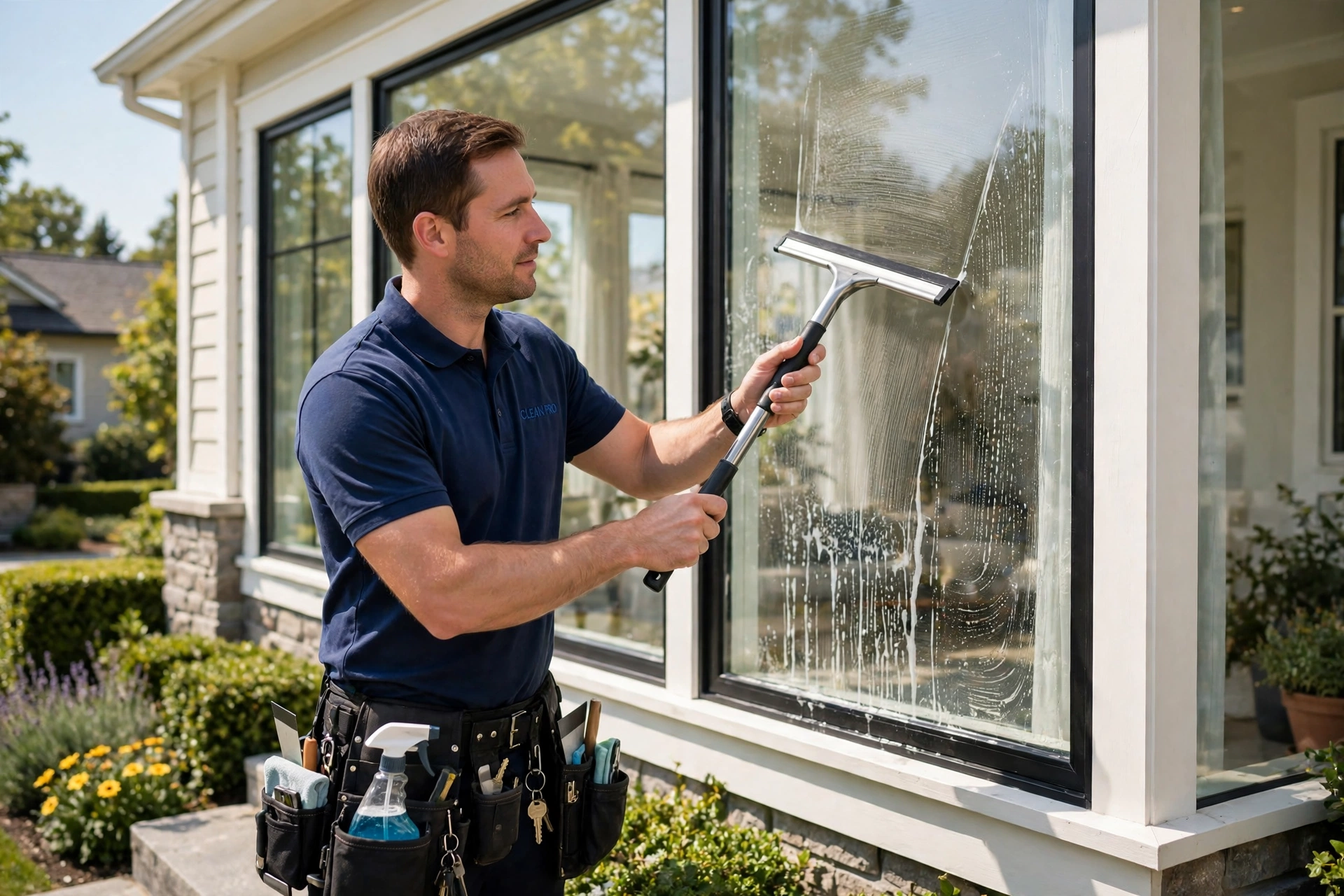
If you like working outdoors, meeting people and seeing instant results from your work, learning how to start a window cleaning business could be the perfect first step into self-employment. Clean windows make homes and shops look brighter, and customers book the same cleaner again and again — which means steady, repeat income from a business you can start with a small budget.
This guide walks you through every step, from planning and naming your business to pricing jobs and keeping customers happy, so you can launch with confidence and grow at your own pace.
Is Window Cleaning a Good Business to Start?
Window cleaning is one of the simplest service businesses to start. Every home, office, shop and restaurant has windows, and most owners would rather pay someone else to clean them. That gives you a huge pool of potential customers in your own neighbourhood.
The work is honest and visible: customers can see the difference straight away, which makes it easy to earn trust and recommendations. Jobs are usually quick, so you can fit several into a day, and most customers want a regular clean every four to eight weeks. That repeat work is what turns a few first jobs into a reliable income.
Before you spend any money, do a little homework. Learning how to do market research for small business owners is simpler than it sounds: walk around your area and count the houses, flats, shops and offices. Look at how many window cleaners already work there, check their prices online, and notice which streets look underserved. A quick search for local cleaners and a look at their reviews will tell you what customers value — reliability, fair prices and streak-free glass. If your area has plenty of homes but only one or two cleaners, you have found a real opening.
What Does It Cost to Start?
One of the best things about this business is the low start-up cost. You can begin with basic tools and a bucket, then upgrade your kit as jobs come in. A realistic starter budget looks like this:
- Squeegee, washer and scraper: a modest amount for good-quality basics
- Bucket, cloths and cleaning solution: a small weekly cost
- Extension pole for upstairs windows: a one-off purchase
- Ladder (if you take on two-storey work): a bigger one-off cost
- Public liability insurance: an annual cost worth every penny
- Flyers and a simple website or social media page: a small amount to get started
Many new cleaners start for well under the cost of a used car, and some start with tools they already own. Keep your receipts from day one and keep business money separate from personal money — good habits now save you headaches later. A simple window cleaning business plan, even one page long, helps you see exactly what you need to spend and when the money should start coming back.
Write a Simple Window Cleaning Business Plan
You do not need a forty-page document. A short window cleaning business plan keeps you focused and shows you are serious if you ever ask a bank or a supplier for help. Cover these points:
- Your services — residential window cleaning for homes, commercial window cleaning for offices and shops, or a mix of all three
- Your area — the streets and neighbourhoods you will cover
- Your prices — what you will charge for a small house, a large house and a shop front
- Your costs — tools, fuel, insurance and advertising
- Your goals — how many regular customers you want in three months, six months and a year
Write the numbers down honestly. If you need twenty regular customers paying a modest amount each to cover your bills, that is your first target. Review the plan every month and adjust it as you learn what works. Planning is not about predicting the future perfectly — it is about knowing your next step.
Choose a Name for Your Business
A good name is easy to remember, easy to spell and clearly says what you do. When you brainstorm window cleaning business names, keep it simple: your town or area plus “Window Cleaning” works well, and adding your own name gives it a personal touch. Examples of the pattern are “Brightview Window Cleaning” or “Riverside Window Cleaners”.
Before you settle on a name, check that no other local cleaner uses it, and see whether the matching social media handle and domain name are free. Avoid names that are hard to pronounce or spell, because customers will need to find you online and recommend you to neighbours. Once you pick a name, use it everywhere — on your van, your flyers, your invoices and your social media pages — so people start to recognise it.
The Equipment You Need
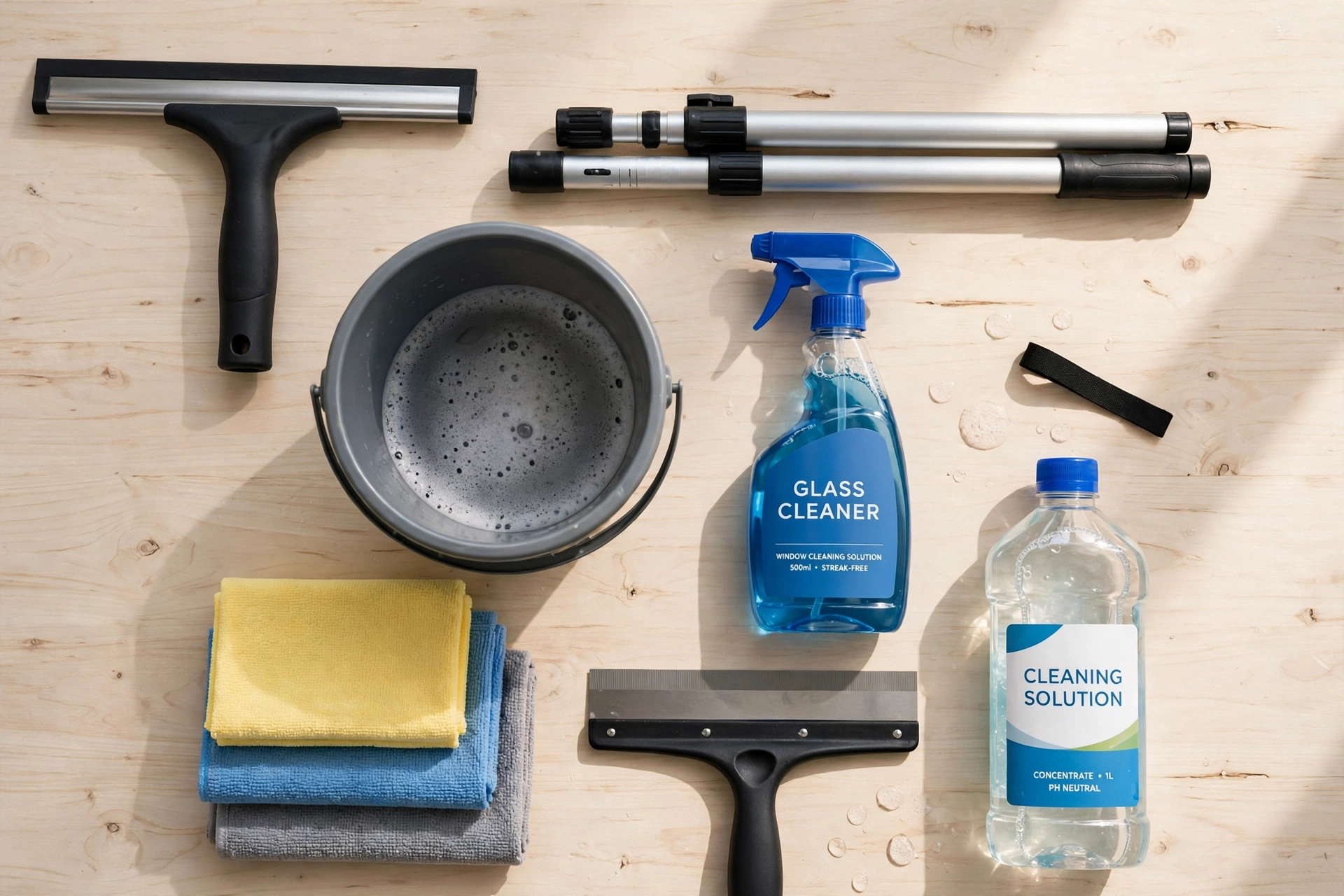
You can start with a basic kit of window cleaning tools and add specialist tools as you take on bigger jobs. The essentials are:
- Squeegee — the main tool; buy a good one with replaceable rubber blades
- Washer (applicator) — applies soapy water to the glass before you squeegee
- Bucket — wide enough to fit your washer
- Microfibre cloths — for detailing edges and wiping frames
- Scraper — removes paint spots, stickers and stubborn marks
- Cleaning solution — a few drops of washing-up liquid in water works well, or use a professional concentrate
- Extension pole — reaches upstairs windows safely from the ground
- Ladder — only if you are trained and comfortable using one
As you grow, you may invest in a water-fed pole system, which uses purified water and lets you clean upstairs windows without a ladder. It costs more upfront, but it is faster and safer, and many customers like it because no chemicals touch their glass. Start simple, earn money, then upgrade — that is the sensible order.
Licences, Insurance and the Legal Basics
In most areas you do not need a special licence to clean windows, but you should check your local council rules before you start, especially if you plan to work on commercial buildings or use a ladder on public pavements. Rules vary, so a quick call to your council or a look at its website is worth the effort.
Insurance is not optional in practice. A window cleaning business insurance policy with public liability cover protects you if you accidentally damage property or someone is hurt while you work. It is affordable for a small business and most commercial customers will ask to see it before they hire you. Keep a copy of your policy on your phone so you can show it on the spot.
You will also need to register as self-employed with the tax authority, keep records of your income and expenses, and set aside money for tax. A simple spreadsheet or a basic accounting app is enough when you are starting out. If you take on staff later, you will need employer’s liability insurance and a proper payroll setup.
How to Price Your Jobs
Pricing is where many new cleaners guess — and guessing usually means charging too little. A fair price covers your time, your travel, your tools and a profit. Common ways to price are:
- Per window — a set amount for each window, with extra for large or awkward ones
- Per house — a flat price based on the size of the property
- Per hour — useful for one-off or very dirty jobs
Visit the property before you quote, or ask for photos, so you know what you are dealing with. A small flat with four windows is a quick job; a large detached house with conservatory glass is not. Be clear about what the price includes — glass only, or frames and sills too — so there are no surprises.
Check what other cleaners in your area charge and position yourself fairly. Being the cheapest is not a good plan: it attracts customers who leave for the next cheap quote. Competing on reliability and quality keeps customers longer.
How to Find Your First Customers
Your first customers are closer than you think. Start with your own street and the streets around it. Knock on doors, introduce yourself and leave a flyer. Many people have never been asked, and a friendly face beats an online advert.
Other ways to find work include:
- Leaflets through letterboxes in your target area
- Local social media groups — post before-and-after photos of your work
- A simple website or business page with your prices, area and contact details
- Asking friends and family to recommend you
- Estate agents and landlords — they often need reliable cleaners for rental properties
- Small shops and cafes — offer a regular weekly clean for their front windows
Every job is a chance to win the next one. Arrive on time, do a careful job, leave the area tidy and ask happy customers to tell their neighbours. Word of mouth is the cheapest advertising you will ever get, and it is also the most trusted.
How to Keep Customers Coming Back
Winning a customer once is good; keeping them for years is what builds a business. Learning how to keep customers coming back comes down to a few simple habits. Turn up when you say you will, every time. Send a short message the day before a clean so customers remember. Do the job properly, including the frames and sills, and check your work before you leave.
Small touches make a big difference: a friendly greeting, a text when the job is done, and a thank-you message after the first clean. If you miss a spot, go back and fix it without fuss — customers forgive mistakes far more easily than they forgive being ignored.
Offer a regular schedule, such as every four or six weeks, and remind customers when their next clean is due. Regular customers mean regular income, and they are far cheaper to keep than new customers are to find.
Hiring Help as You Grow
There comes a point when you have more work than one person can handle. That is a good problem, and it is the right time to think about help. Before you hire, work out what the extra person will earn you: if they can clean three more houses a day, their wages should be covered by that extra income with profit left over.
Understanding how to pay employees small business owners usually start with a simple hourly rate or a day rate, paid weekly or monthly. Keep clear records of hours worked and wages paid, and make sure you follow local rules on minimum wage, tax and holiday pay. A short written agreement protects both sides, even if your first helper is a friend or family member.
Train your helper properly — show them your method for streak-free glass, how to handle customers politely and how to keep the equipment in good condition. Your helper represents your business, so their work should be as good as yours.
Growing Your Business
Once you have a steady round of regular customers, growth becomes a choice rather than a struggle. You can add services your customers already ask for, such as gutter cleaning, conservatory roof cleaning or pressure washing driveways. Each new service uses skills and equipment you partly own already.
You can also grow by covering a wider area, taking on commercial window cleaning contracts with offices and shops, or adding more residential window cleaning rounds in nearby streets, so you can serve more customers each week. Whatever you choose, grow at a pace your cash flow can support — buy new tools from profit, not from debt, wherever possible.
Review your prices once a year. Your costs will rise over time, and loyal customers expect a small increase if the service stays excellent. A short, polite message explaining the change is all it takes.
Frequently Asked Questions
How long does it take to get started?
You can start within a couple of weeks. Buy your basic tools, arrange insurance, register as self-employed, print flyers and start knocking on doors. Most of the time is spent finding your first customers, not setting up the business itself.
Do I need experience to clean windows professionally?
No formal experience is needed. The squeegee technique takes a little practice — try it on your own windows first, watch a few tutorial videos, and your speed and finish will improve quickly. Customers care about the result, not your CV.
How much can you earn from window cleaning?
Earnings depend on your area, your prices and how many regular customers you build. A solo cleaner with a full round of regular homes and a few commercial jobs can earn a solid full-time income, and the work scales well if you hire help later.
Is window cleaning work seasonal?
Demand dips slightly in the coldest winter weeks, but windows get dirty all year round, and many customers keep their regular schedule through winter. Commercial work and indoor glass help fill quieter periods.
What is the hardest part of starting?
Finding the first twenty regular customers takes the most effort. After that, recommendations and repeat bookings do much of the work for you. Be patient for the first two or three months and keep showing up.
Final Thoughts
Learning how to start a window cleaning business is mostly about starting small, doing careful work and showing up reliably. You do not need a big loan, a shop or years of experience — you need decent tools, insurance, a simple plan and the willingness to knock on doors.
Start with your own neighbourhood, build a round of regular customers, and let your reputation grow one clean window at a time. Before long, the business you started with a bucket and a squeegee can become a steady income that fits your life.

How to Start a Window Cleaning Business: Simple Steps That Turn Your Skills Into Income

How to Start a Pet Grooming Business: Simple Steps That Turn Your Love of Animals Into Income

How to Start a Car Detailing Business: Simple Steps That Turn Your Skills Into Income

How to Start a Pressure Washing Business: A Simple Guide That Gets You Your First Customers

How to Start a Lawn Mowing Business: Simple Steps That Turn Mowing Into Income

How to Start a Dog Walking Business: Simple Steps That Turn Walks Into Income

How to Start a House Cleaning Business: Simple Steps That Win Your First Clients

How to Pay Employees in Your Small Business: Simple Steps That Get It Right

How to Do Market Research for Small Business: Simple Steps That Find Your Customers

How to Start a Tutoring Business: Simple Steps That Turn Your Knowledge Into Income

How to Repurpose Blog Content for Social Media Without Starting From Scratch

How to Write a Simple Business Plan for Your Small Business: A Practical Guide That Gets You Started

How to Create a Small Business Content Marketing Plan That Actually Gets Results
How to Handle Customer Complaints in a Small Business: A Calm, Practical Guide That Turns Problems Into Loyalty

How to Get More Clients for Your Business: Simple Ways That Actually Work

How to Write a Professional Business Email That Gets a Reply
How to Create a Content Calendar for a Small Business

How to Set SMART Goals for a Small Business: A Practical Guide That Actually Works
How to Set Up a Simple Referral Program for Your Small Business: A Beginner’s Guide That Brings in New Customers

Branding Tips for Small Businesses: A Simple Guide That Makes You Memorable
How to Start a Window Cleaning Business: Simple Steps That Turn Your Skills Into Income
How to Start a Pet Grooming Business: Simple Steps That Turn Your Love of Animals Into Income
How to Start a Car Detailing Business: Simple Steps That Turn Your Skills Into Income
How to Start a Pressure Washing Business: A Simple Guide That Gets You Your First Customers
How to Start a Lawn Mowing Business: Simple Steps That Turn Mowing Into Income
How to Start a Dog Walking Business: Simple Steps That Turn Walks Into Income
How to Start a House Cleaning Business: Simple Steps That Win Your First Clients
How to Pay Employees in Your Small Business: Simple Steps That Get It Right
How to Do Market Research for Small Business: Simple Steps That Find Your Customers
How to Start a Tutoring Business: Simple Steps That Turn Your Knowledge Into Income

 entertainment1 year ago
PYT Telegram: A Complete Guide to Understanding, Using, and Maximizing It

 entertainment1 year ago
OnionFlix: Everything You Need to Know About This Streaming Website
- education1 year ago
How to Become a Software Engineer: A Complete Guide
- others1 year ago
Nook vs Kindle: Which E-Reader Is Right for You?





