
business
Green Thumb to Paycheck: Starting a Landscaping Business

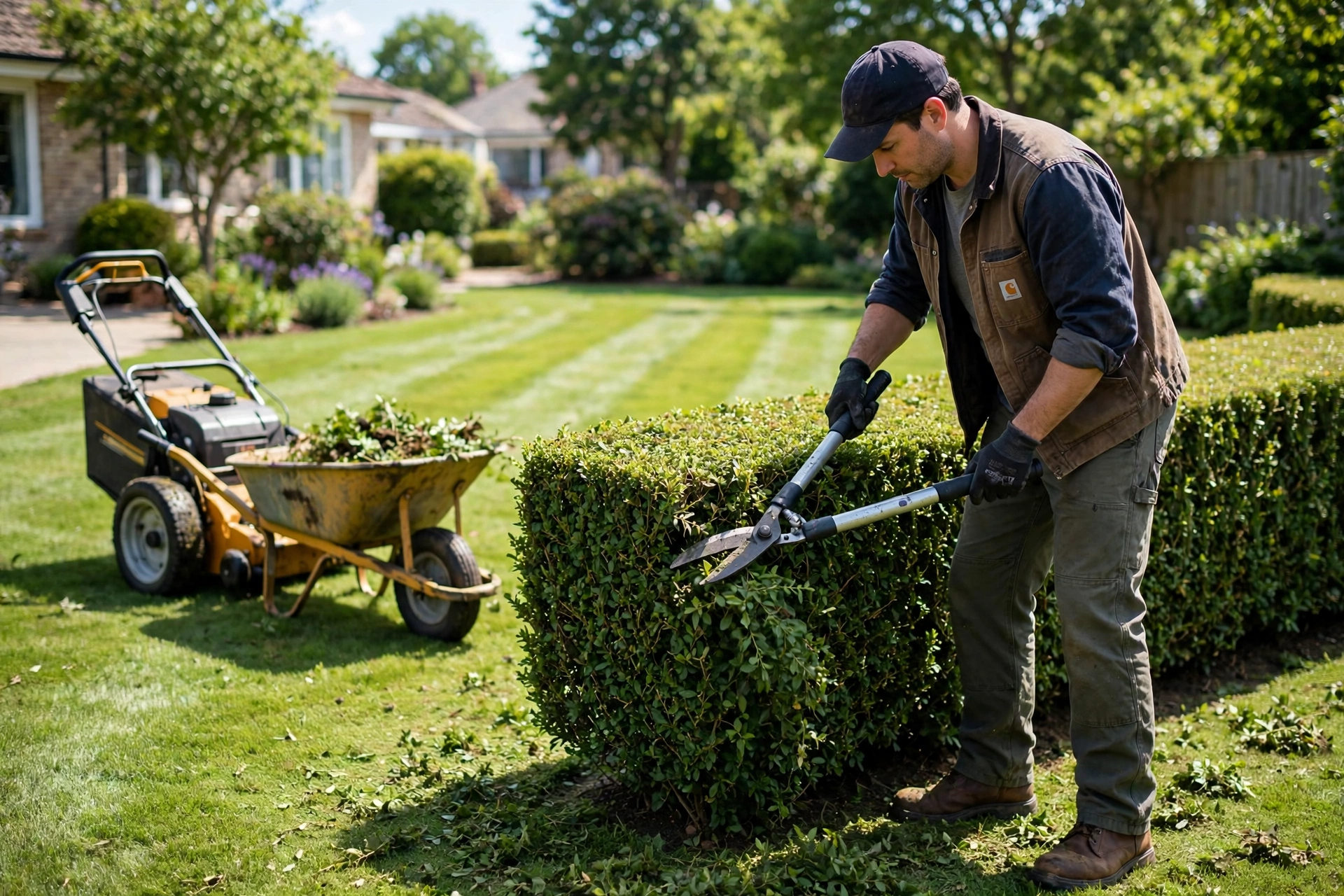
If you enjoy working outdoors, shaping gardens and seeing instant results from your work, starting a landscaping business could be the perfect way to turn that skill into real income. Lawns need mowing every week, hedges need trimming, and homeowners and offices always need someone reliable to keep their outdoor spaces looking good. That steady, repeat demand is what makes this trade such a practical first business.
Starting a landscaping business does not need a big office or a huge team. Most owners begin solo, with a mower, a trimmer and a few local clients, then grow one street at a time. This guide explains how to start a landscaping business in plain language, from choosing your services and writing a plan to pricing jobs and winning your first customers.
1. Pick the Services You Will Offer
Before you buy anything, decide what kind of landscaping work you want to do. The trade covers a wide range, and each lane needs different tools, skills and licences.
- Lawn care and maintenance: mowing, edging, leaf clearing and seasonal clean-ups. The lowest barrier to entry and the easiest way to build weekly recurring income.
- Garden design and planting: beds, borders, shrubs and small trees for homeowners who want a garden that looks designed rather than just tidy.
- Hardscaping: patios, paths, retaining walls and fencing. Higher pay per job, but it needs more skill, heavier tools and often a contractor licence.
- Commercial grounds care: regular maintenance for offices, shops, schools and housing blocks. Bigger contracts and steadier work, but clients expect quotes, invoices and proof of insurance.
Starting with one or two lanes keeps your costs low and your marketing clear. You can always add hardscaping or design work later, once you have the clients and the cash flow to support it.
2. Write a Landscaping Business Plan
A landscaping business plan does not need to be a fifty-page document. One or two pages that answer the basic questions will do: what services you offer, who your customers are, what you charge, what it costs to run, and how many jobs a week you need to break even.
Start with your numbers. List your monthly costs — fuel, insurance, phone, tool repairs and any loan payments — then work out how many jobs at your average price cover them. Most solo operators find that ten to fifteen regular weekly clients pay the bills, and everything after that is profit. Write down your target too: how many clients you want in three months, six months and a year.
Your plan should also name your patch. Landscaping is local work, so pick a few neighbourhoods close to home and aim to be dense there. Five lawns on one street beats five lawns scattered across town, because you spend less time driving and more time earning.
3. Choose a Name for Your Landscaping Business
Good landscaping business names are short, easy to spell and easy to remember. They usually say what you do and where you do it: a local word, a neighbourhood name or a simple promise like “green” or “garden care” works well.
Check three things before you settle on a name from your shortlist of landscaping business names. First, search it online to make sure no other local business already uses it. Second, check that a matching domain name and social media handle are free, even if you only build a simple website later. Third, say it out loud as if you were answering the phone — if it is hard to pronounce or spell over the phone, pick something simpler.
Register the name with your local authority if your area requires it, and keep the branding consistent everywhere: your van, your flyers, your invoices and your Google Business Profile should all carry the same name and phone number.
4. Register the Business and Sort the Licence
The legal setup is straightforward, but it matters. Choose a business structure — most beginners start as a sole trader or form a small limited company — then register with the relevant authority and get a tax number so you can open a business bank account.
A landscaping business license depends on where you live and what you do. Routine mowing and maintenance usually needs only a general business registration, but some places license landscape installation, tree work or pesticide spraying separately. If you plan to apply weed killer or fertiliser for pay, check whether your state or council requires a pesticide applicator certificate first. The same goes for larger hardscaping jobs, which may need a contractor licence above a certain value.
Keep copies of every registration and landscaping business license in one folder, digital and paper. Clients, especially commercial ones, will ask to see them, and having them ready makes you look professional from day one.
5. Get Landscaping Business Insurance
Landscaping business insurance is not optional in practice. You work on other people’s property with blades, heavy machines and chemicals, so one accident — a stone through a window, a damaged sprinkler line, a slip on a wet path — can cost far more than a year’s premium.
At minimum, get general liability cover before your first paid job. It protects you if your work damages a client’s property or injures someone. If you hire help, you will also need workers’ compensation or employer’s liability cover, depending on local law. Many small landscaping businesses pay a few hundred dollars a year for a basic policy, and commercial clients will often ask for proof of cover before they sign a contract.
Read the policy carefully. Check what it excludes — some cheap policies exclude pesticide work or tree felling — and make sure the cover matches the services you actually offer. Update it when you add a service or buy a bigger machine.
6. Build Your Landscaping Equipment List
Your landscaping equipment list should match the services you chose, nothing more. Buying everything at once is the fastest way to burn your budget, so start lean and add tools as the jobs pay for them.
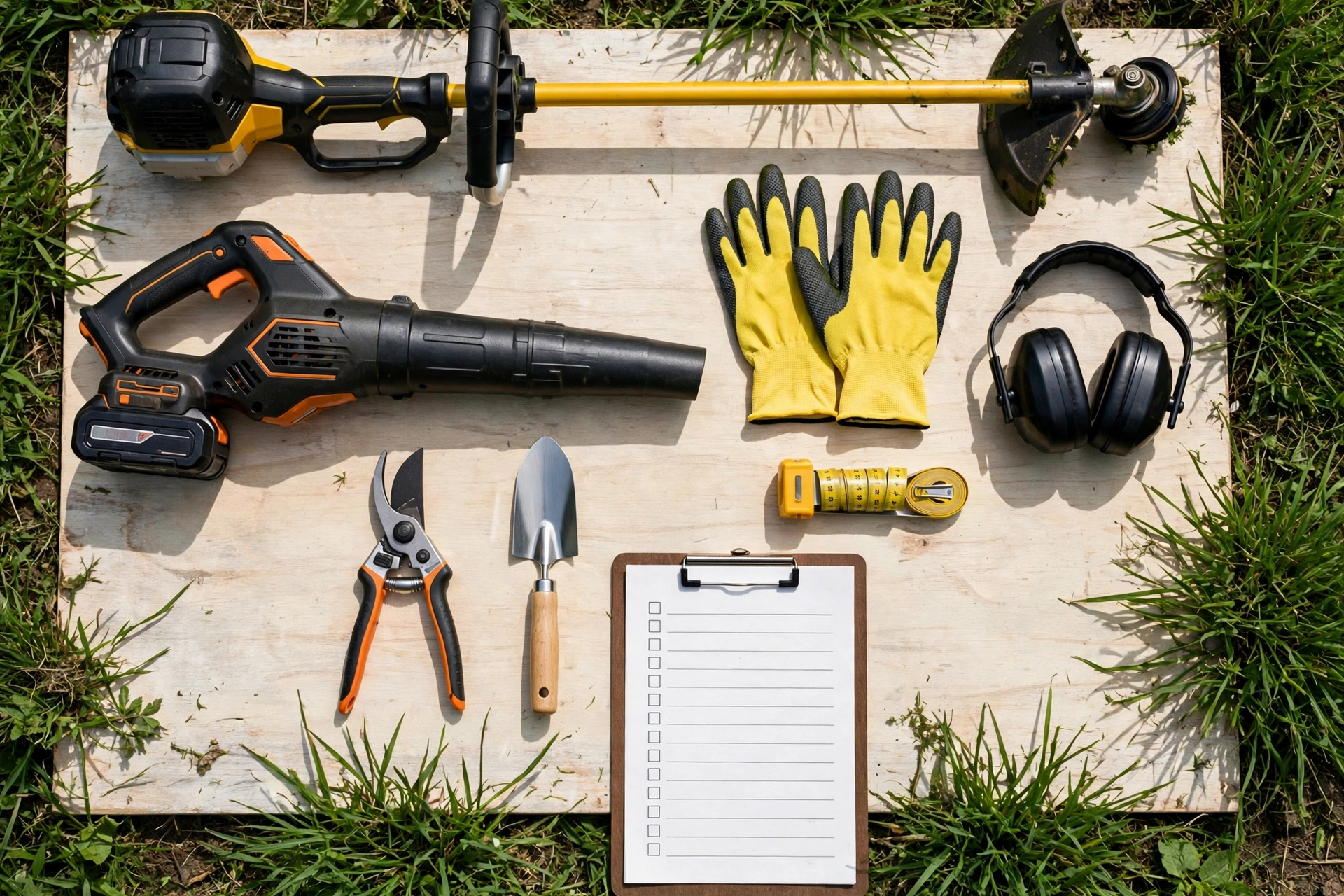
A solid starter kit for lawn care and garden maintenance looks like this:
- Commercial walk-behind mower or ride-on mower for larger lawns
- String trimmer and edger for neat borders
- Leaf blower for quick clean-ups
- Hedge shears or a hedge trimmer
- Pruning shears, hand trowel and spade for planting work
- Wheelbarrow, rake and tarps for moving green waste
- Safety gear: gloves, ear protection, eye protection and sturdy boots
Buy commercial-grade tools from the start if you can. Homeowner-grade machines break fast under daily use, and a broken mower on a busy morning costs you more than the saving was worth. A reliable truck or a trailer to haul the gear is the other big purchase — many beginners start with a used trailer and upgrade later.
Keep the kit clean and sharp. A mower with a dull blade tears grass instead of cutting it, and clients notice the difference.
7. How to Price Landscaping Jobs
Learning how to price landscaping jobs is where many new owners struggle, and it is also where profits are made or lost. Price too low and you work all week for nothing; price too high and the phone stops ringing.
Start by knowing your cost per hour. Add up your monthly costs, divide by the hours you can actually bill, and that is your floor — never quote below it. Then add your profit margin on top. For regular maintenance, most owners charge per visit: a flat rate for a standard lawn, with extra for edging, hedge trimming or waste removal. For one-off projects like a new bed or a patio, quote a fixed project price after visiting the site.
Visit every new job before you quote. Photos hide slopes, access problems and overgrown corners, and a site visit lets you give an accurate price and a professional impression. Put every quote in writing, with the services, the price and how often the work repeats. Clear quotes win trust and stop arguments later.
8. Find Your First Customers
Your first customers are closer than you think. Tell friends, family and neighbours what you are doing, and ask them to pass the word on. A simple flyer through letterboxes in your chosen neighbourhoods still works well for this trade, especially with a clear service list and a phone number in large print.
Claim your Google Business Profile on day one. Most local customers search “landscaper near me” and call the first business with good reviews and photos of real work. Add photos of every job you finish, and ask happy clients to leave a review — five genuine reviews beat a fancy website.
Offer a small incentive for the first booking, like a free hedge trim with the first month of lawn care. The goal is not the discount; it is getting onto the property so the client can see the quality of your work and book you again.
9. Win Commercial Clients
A commercial landscaping business grows differently from a residential one. Offices, retail parks, schools and property managers buy on contract, usually for a full season, and they care about reliability, paperwork and presentation as much as price.
To win these jobs, prepare a short written proposal: your services, your schedule, your insurance details and your price. Visit the site, measure the grounds and note the details — how many beds, how much lawn, where the waste goes. Property managers remember the landscaper who noticed the broken sprinkler head and mentioned it, not the one who sent a generic quote.
Start small: one office block or one shop front is enough for a new commercial landscaping business to prove itself. Do excellent work, invoice on time and keep the site tidy. Commercial clients who trust you will renew the contract and recommend you to other property managers.
10. Hire Help and Pay Your Team
Growth brings a decision every landscaping owner faces: when to hire. The right time is when you are turning down work or finishing days after dark. Hire too early and wages eat your profit; hire too late and tired work loses clients.
Start with part-time or seasonal help for the busy months. Be clear about the job, the hours and the pay from the start, and keep simple written records of hours worked. If you are learning how to pay employees small business owners should know the basics: register as an employer, keep payroll records, pay on the same day each week or month, and set aside money for taxes and insurance before you spend it.
Train new helpers properly, even for simple jobs. Show them how you want a lawn edged, a hedge cut and a site left tidy, and check their work for the first few weeks. Good helpers become crew leaders; bad habits become lost clients.
Mistakes That Slow New Landscapers Down
Most new landscaping businesses fail on avoidable mistakes, not on lack of skill. Under-pricing is the biggest one — a full diary at prices that do not cover costs is worse than a half-full diary at fair prices. Review your prices every season and raise them when your costs rise.
The second mistake is taking every job. Long drives, one-off jobs far from your patch and work you are not equipped for all eat profit. A polite “that is not a service I offer” protects your reputation better than a bad job does.
The third is ignoring the off-season. Winter work slows in many areas, so plan for it: offer leaf clearance and gutter clearing in autumn, snow removal where it applies, and use quiet months for marketing, equipment servicing and booking spring contracts.
Frequently Asked Questions
Is starting a landscaping business profitable?
Yes, it can be. Recurring maintenance work brings steady weekly income, and margins are healthy once your equipment is paid for. Profit depends on your prices, how dense your client route is and how well you control costs like fuel and repairs.
How much does it cost to get going?
A lean lawn-care setup — a used commercial mower, trimmer, blower, hand tools and a trailer — typically costs a few thousand dollars, plus registration and insurance. Design and hardscaping work needs more, so many owners start with maintenance and add services as income grows.
Do I need experience before starting a landscaping business?
Hands-on experience helps a lot, but you do not need a qualification to start with basic lawn care and garden maintenance. Work for another landscaper for a season if you can, learn the tools and the pace of the work, and take short courses for specialist services like pesticide application or tree work.
How do I get clients without a website?
A Google Business Profile, local flyers, word of mouth and a tidy social media page with photos of your work are enough to start. Most landscaping clients choose on reviews, photos and a quick phone call, not on a website.
What is the hardest part of running a landscaping business?
Staying organised: scheduling routes, quoting accurately, keeping equipment running and collecting payments on time. Good habits — a simple booking system, written quotes and a weekly route plan — matter more than fancy tools.
Final Word
This trade rewards people who like honest outdoor work and steady routines. Pick your services, write a simple plan, get licensed and insured, buy only the equipment your first clients need, and price every job to protect your margin. Win your first customers close to home, do excellent work, and let reviews and referrals grow the business one street at a time. That is how to start a landscaping business that lasts: one good job, one happy client and one tidy garden at a time. The gardens will keep growing — make sure your business grows with them.

Ladder to Lights: How to Start a Christmas Light Business

Clear Water, Steady Pay: Starting a Pool Cleaning Business

Green Thumb to Paycheck: Starting a Landscaping Business

Turn Winter Into Income: How to Start a Snow Removal Business

How to Start a Handyman Business: Simple Steps That Turn Your Skills Into Income

How to Start a Moving Company: Simple Steps That Win Your First Jobs

How to Start a Junk Removal Business: A Simple Step-by-Step Guide

How to Start a Pest Control Business: Simple Steps That Win Your First Customers

How to Start a Carpet Cleaning Business: Simple Steps

How to Start a Gutter Cleaning Business: Simple Steps That Turn Your Ladder Into Income

How to Repurpose Blog Content for Social Media Without Starting From Scratch

How to Write a Simple Business Plan for Your Small Business: A Practical Guide That Gets You Started

How to Create a Small Business Content Marketing Plan That Actually Gets Results

How to Get More Clients for Your Business: Simple Ways That Actually Work

How to Write a Professional Business Email That Gets a Reply
How to Handle Customer Complaints in a Small Business: A Calm, Practical Guide That Turns Problems Into Loyalty
How to Create a Content Calendar for a Small Business

Branding Tips for Small Businesses: A Simple Guide That Makes You Memorable
How to Set Up a Simple Referral Program for Your Small Business: A Beginner’s Guide That Brings in New Customers

How to Set SMART Goals for a Small Business: A Practical Guide That Actually Works
Ladder to Lights: How to Start a Christmas Light Business
Clear Water, Steady Pay: Starting a Pool Cleaning Business
Green Thumb to Paycheck: Starting a Landscaping Business
Turn Winter Into Income: How to Start a Snow Removal Business
How to Start a Handyman Business: Simple Steps That Turn Your Skills Into Income
How to Start a Moving Company: Simple Steps That Win Your First Jobs
How to Start a Junk Removal Business: A Simple Step-by-Step Guide
How to Start a Pest Control Business: Simple Steps That Win Your First Customers
How to Start a Carpet Cleaning Business: Simple Steps
How to Start a Gutter Cleaning Business: Simple Steps That Turn Your Ladder Into Income

 entertainment1 year ago
PYT Telegram: A Complete Guide to Understanding, Using, and Maximizing It

 entertainment1 year ago
OnionFlix: Everything You Need to Know About This Streaming Website
- education1 year ago
How to Become a Software Engineer: A Complete Guide
- entertainment10 months ago
Brainrot Memes: The Unhinged Humor of the Internet Generation





