
business
Posts, Panels and Profit: How to Start a Fencing Business

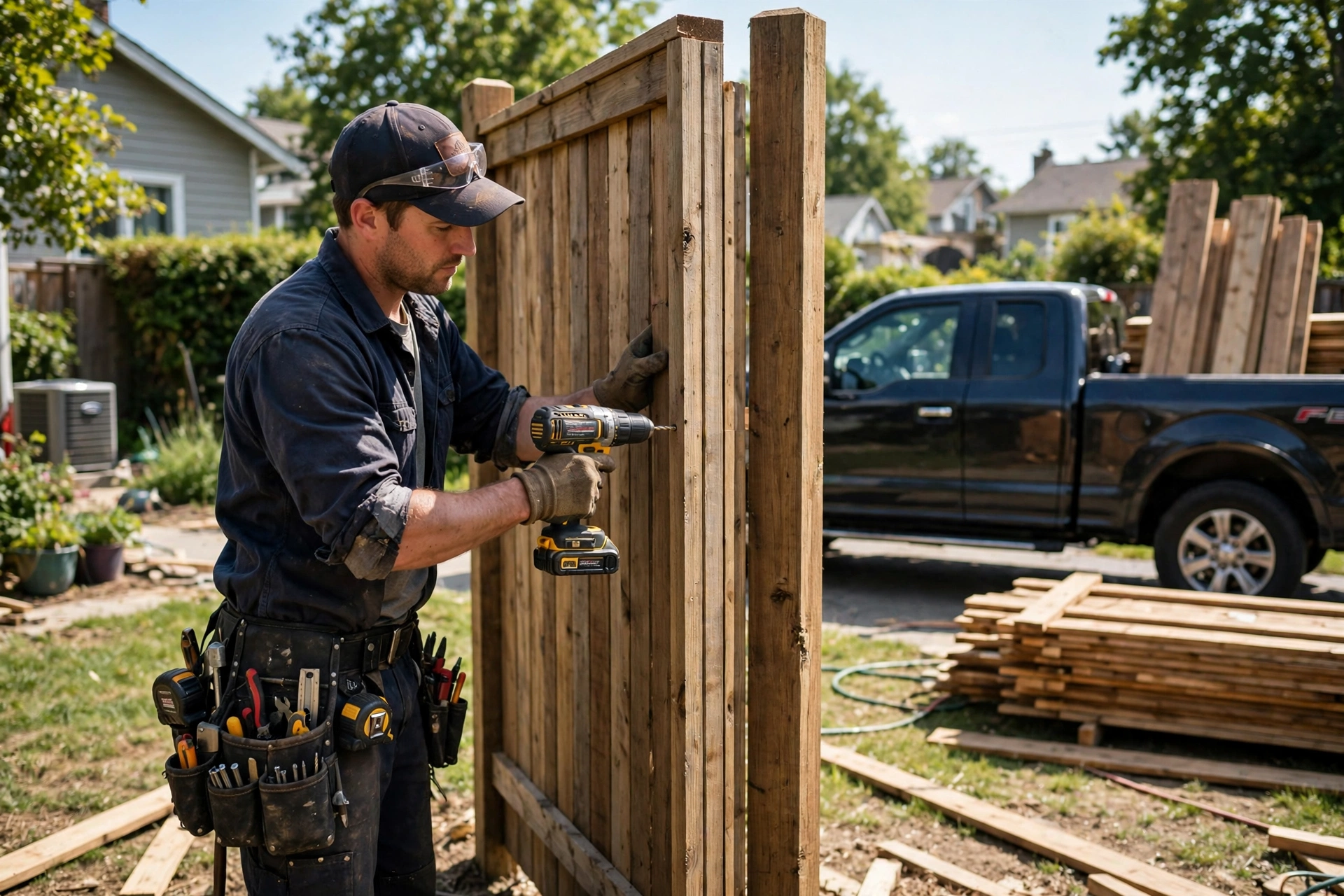
Every street has fences. Some are leaning, some are rotting at the base, and some were never finished in the first place. Behind every one of them is a homeowner who needs help — and that is exactly why learning how to start a fencing business is such a practical way into the trades.
Fencing is honest, visible work. You arrive at a property with posts and panels, and by the end of the day there is a straight, solid fence where there was nothing before. Homeowners can see what they paid for, which makes them happy to recommend you. Demand is steady too: fences wear out, storms knock them down, new houses need boundaries, and businesses need secure perimeters. If you like working outdoors and you are not afraid of digging a few holes, this is a business you can start small and grow one crew at a time.
This guide walks through the whole journey — from choosing a niche and getting licensed to pricing jobs per linear foot and winning your first customers.
Why a Fencing Business Is Worth Starting
A fencing business has three advantages that many other trades do not. First, the startup costs are manageable. A used pickup truck, a set of professional tools, insurance and a licence will get you going — you do not need a workshop, a shopfront or expensive machinery. Second, the work is easy for customers to understand, so quotes are quick and decisions are fast. A homeowner who has just lost a fence panel in a storm does not need a month to think about it. Third, every finished job advertises your work to the whole street. A neat fence with a small sign on it brings enquiries from neighbours for weeks.
The trade also gives you room to grow. You can begin with small residential jobs at weekends, then move into larger garden projects, then take on commercial work for schools, farms and property developers. Many fencing companies start with one person and a van, and within a few years they are running two or three crews. The path is straightforward if you build it on good work, fair pricing and a solid reputation.
Step 1: Choose Your Niche
Before you buy a single post, decide what kind of fencing you want to be known for. Trying to do everything at once spreads you thin and makes marketing harder. Pick one area to start with, get good at it, and add services later.
Residential fence installation is the most common starting point. Homeowners need garden fences replaced, boundaries marked and privacy improved. The jobs are usually small — one or two days — and the customers are easy to reach through local advertising and word of mouth. Wooden fences are the classic choice here, along with vinyl and metal options, and most of your early work will come from this market.
Commercial fence installation is the next level up. Schools, warehouses, farms and building sites need long runs of strong fencing, security gates and access control. The jobs are bigger and the pay is better, but they usually require more paperwork, higher insurance cover and the ability to handle larger crews. Many owners start residential, build a track record, and then move into commercial work once they have the team and the systems to handle it.
Material choice is part of your niche too. Vinyl fence installation is popular with homeowners who want a fence that never needs painting and stays looking smart for years. Chain link fence installation suits schools, sports grounds and industrial sites where security matters more than privacy. Aluminum fence installation is the premium choice for front gardens and pool areas, where people want a fence that looks elegant and lasts. Each material has its own tools, suppliers and installation methods, so learn one properly before you offer all three.
Ask yourself three questions: who lives near you, what fences do they already have, and what is nobody else in your area doing well? If every fencing company in town only does wooden garden fences, there may be an opening in vinyl or commercial work. Your niche is the answer that fits your skills, your local market and the equipment you can afford.
Step 2: Write a Short Business Plan
You do not need a fifty-page document. A short, honest plan on two or three pages is enough — but do write one. It forces you to think through the numbers before you spend money, and it stops you from guessing later.
Start with your services: what will you install, for whom, and in which area? Then list your startup costs: vehicle, tools, insurance, licence fees, a website and your first batch of marketing. Work out what you need to earn each month to cover those costs plus your own living expenses. Then set your prices from your real costs, not from what the last person charged. That discipline is the quiet foundation of how to start a fencing business that survives its first year.
Your plan should also name your first three months of marketing. How will people find you? A Google Business Profile, a simple website, flyers in the neighbourhood and introductions to builders and estate agents are a strong start. Write down how many quotes you need each week to stay busy, and what you will do if the phone goes quiet. A plan is not a prediction — it is a decision about what you will do next when things do not go perfectly.
Step 3: Register Your Company and Sort the Licence
Once your plan is clear, make the business official. Choose a business structure — most solo operators start as a sole trader or form a limited company — and register it with the relevant authority in your country. Open a separate business bank account on the same day, so your business money and personal money never mix. That one habit will save you hours of confusion at tax time.
Next, check whether you need a fence contractor license. The rules vary a lot by state, county and city. Some places require a specialty contractor licence for fencing work, some only require one above a certain job value, and some barely regulate fencing at all. Your state contractor board and your local permitting office can tell you exactly what applies where you work. Do not skip this step: working without a required fence contractor license can mean fines, a job being shut down, or a customer refusing to pay.
Also check whether individual jobs need permits. Many areas require a permit before a fence goes up, and some housing associations have strict rules about height, materials and how close a fence can sit to the boundary. Confirm who pulls the permit — you or the homeowner — and put it in writing on the quote. A five-minute check before you dig is far cheaper than taking a fence down afterwards.
One rule applies almost everywhere in the United States: call 811 before you dig. The national 811 service is a free before-you-dig service, and fence installation is one of the projects it lists. You call a few business days before the job, the utility companies mark their underground lines, and you dig safely. Striking a gas or power line is the kind of mistake that can end a new business on its first week, so make the 811 call part of every single job, without exception.
Step 4: Get Insured Before Your First Job
Insurance is not optional in this trade. You are digging holes, using power tools and working on other people’s property, so things can go wrong even when you are careful. Get cover in place before you quote your first paid job.
At minimum, a new fencing business needs general liability insurance. It protects you if you damage a customer’s property — a cracked driveway, a broken sprinkler line, a fence panel that falls on a neighbour’s car. Many commercial clients and permit offices will ask to see your certificate before they let you on site, so keep a copy ready. If you hire anyone, even for one day, you will usually need workers’ compensation insurance as well, and it is often legally required once you have employees. Add commercial vehicle insurance for your truck, and consider tool cover so a stolen auger or drill does not stop your week.
Shop around and compare at least three quotes. A small fencing operation typically pays somewhere between five hundred and two thousand dollars a year for general liability, depending on location and turnover. That sounds like a lot until you compare it with the cost of one accident. Good insurance also makes you look professional: customers trust a business that takes its responsibilities seriously.
Step 5: Buy the Right Tools and a Work Vehicle
Fencing is a physical trade, and the right tools make the difference between a straight fence and a leaning one. Start with the essentials and add specialist tools as the jobs demand them.
The core kit for a fencing business includes a post-hole auger or a manual post-hole digger, a long spirit level, a string line and stakes for keeping runs straight, a cordless drill and impact driver, a circular saw, a tape measure, and a wheelbarrow and shovel for concrete. A laser level is a worthwhile early upgrade: it makes setting post heights fast and accurate. You will also need safety gear — gloves, eye protection, ear protection and steel-toe boots — because fence work involves heavy lifting, digging and cutting all day.
Your vehicle matters as much as your tools. A pickup truck with a trailer is the classic fencing setup: it carries posts, panels and concrete without fuss. Buy the best used truck you can afford rather than the newest one, and make sure it can tow a trailer safely. Keep it clean and signwritten if you can — a tidy, branded truck is a moving advertisement in every street you park in.

Buy quality tools once rather than cheap tools twice. A professional auger that starts first time on a cold morning is worth more than the money you save on a budget one that lets you down in front of a customer. Keep a simple inventory list, check your tools every Friday, and replace worn blades and bits before they cause a bad cut or a wasted hour.
Step 6: Learn to Price Every Job Properly
Pricing is where new fencing businesses quietly lose money. The trap is quoting a per-foot number you heard somewhere without building it up from your own costs. Price every job from four parts: materials, labour, overhead and profit.
Start by measuring the job properly. Walk the boundary with the customer, check the ground, look for slopes, tree roots, old concrete and access problems. Count the posts, panels and gates, then price the materials from a real supplier quote, not from memory. Add your labour at an honest day rate, then add overhead — fuel, insurance, tool wear, phone and admin — and finally add your profit margin. A fencing business that runs well typically aims for a margin of around thirty per cent on installed work.
One question customers ask on almost every quote is how much does fence installation cost. The honest answer is that it depends on the material, the height and the ground. As a rough guide, an installed wooden garden fence often lands somewhere between fifteen and forty-five dollars per linear foot, while vinyl and aluminium sit higher because the materials cost more and the work is more specialised. Gates are priced per gate, and extras like removing an old fence, hauling waste away, difficult digging or a permit are charged as separate line items. When a customer asks how much does fence installation cost, give them a clear written breakdown instead of a single number — it builds trust and it protects you if the job turns out harder than it looked.
Never quote from a photograph alone, and never let a customer talk you into a price that leaves no margin. A cheap quote that loses money is worse than no job at all. If you are unsure, price the job properly and explain the breakdown; customers who value good work will respect it.
Step 7: Find Reliable Suppliers
A fencing business is only as good as its materials. A warped post or a brittle panel will come back to haunt you, usually in the form of an unhappy customer and a free repair. Find two or three reliable suppliers and build a relationship with them.
Visit local timber yards, fencing wholesalers and builders’ merchants. Compare prices, but compare quality too: check the posts for straightness, look at how the panels are put together, and ask what guarantee the supplier offers. Open a trade account as soon as you can — trade pricing and credit terms make a real difference to your cash flow, especially on bigger jobs where you buy materials before the customer pays you.
For specialist work, you may need dedicated suppliers. Vinyl fence installation uses specific profiles, brackets and caps that a general timber yard may not stock. Chain link fence installation needs the right gauge of wire, tension bars and fittings. Aluminum fence installation usually comes as a kit from a manufacturer, with panels, posts and gates made to order. Learn your suppliers’ lead times so you can promise realistic start dates: telling a customer you will start on Monday when the materials arrive on Friday is a mistake you only want to make once.
Step 8: Win Your First Customers
Your first ten customers will come from people who already know you, or from people who live near your finished jobs. Start close to home and make it easy for people to find you.
Set up a Google Business Profile with real photos of your work, your service area and your phone number, and ask every happy customer for a review. Build a simple website that shows your services, your prices as a guide, and photos of finished fences — including examples of residential fence installation and commercial fence installation, so both kinds of customer can see themselves in your work. Hand out flyers in streets where you have just finished a job, and put a small sign on the fence while you work, with the homeowner’s permission.
Introduce yourself to the people who can send you work again and again: builders, landscapers, estate agents, property managers and garden designers. One builder who trusts you can be worth twenty one-off customers. Offer them a fast, reliable quoting service and a tidy finish, and they will keep calling.
When you are starting out, the question is not just how to start a fence company on paper — it is how to get the phone ringing. The answer is consistent, local, visible marketing: every finished fence is an advert, every happy customer is a salesperson, and every quote you send quickly and professionally is a chance to win work. Answer the phone, turn up when you say you will, and send the quote the same day. In this trade, speed and reliability win more jobs than a fancy logo ever will.
Step 9: Do Great Work and Earn Reviews
The work itself is your best marketing, so treat every job as if the whole street is watching — because it usually is. Keep the site tidy, protect the customer’s lawn and driveway, and leave the garden cleaner than you found it. Small details matter: straight lines, level tops, posts set properly in concrete, and gates that swing smoothly and latch first time.
Talk to the customer during the job. Explain what you are doing, warn them about noise and mess in advance, and tell them straight away if you find a problem — a buried pipe, a rotten old post, a boundary that is not where they thought it was. Customers forgive problems; they do not forgive surprises.
When the job is done, walk the fence with the customer, point out the details, and ask for a review while they are still happy. A Google review with a photo of the finished fence is worth more than any paid advert. Five or ten genuine five-star reviews will put you ahead of most local competitors, and they will keep bringing work long after you have moved on to the next job.
Step 10: Grow From One Crew to a Real Company
Once you are busy most weeks, it is time to think about growth. Knowing how to start a fence company is only half the job; knowing how to grow one without breaking what made it work is the other half. Hire your first helper before you are desperate — a good labourer who learns fast is worth more than a skilled worker with a bad attitude. Train them properly, pay them fairly, and give them responsibility as they prove themselves.
Put simple systems in place. Use a quoting template, a job sheet for every install, and a calendar that shows your booked work weeks ahead. A basic CRM or even a well-kept spreadsheet stops jobs from falling through the cracks. Track your numbers: how many quotes you send, how many you win, and what your average job is worth. If you win fewer than one in three quotes, your pricing or your follow-up needs work.
Then grow in stages. Add a second crew, take on larger commercial fence installation projects, or add a service like gate automation or fence repair. Some fencing companies also add decking or garden rooms, since the same customers need them. Grow at a pace your quality can keep up with — a reputation takes years to build and one bad month to damage.
Mistakes New Fencing Businesses Make
Most fencing businesses fail for avoidable reasons. Here are the ones to watch for.
Skipping the 811 call is the most dangerous mistake. Hitting a utility line can injure someone, stop the job and land you with a bill that wipes out a month of profit. Call before every dig, every time, even for a single post.
Under-pricing is the most common mistake. A low quote feels like a way to win work, but it leaves no room for a bad day, a broken tool or a difficult patch of ground. Price from your real costs and protect your margin.
Ignoring permits and boundaries is another expensive one. A fence built on the wrong line or without a required permit may have to come down. Check the rules and the boundary before you dig, and get it in writing.
Finally, do not take on jobs you cannot finish. Overbooking, saying yes to work outside your skills, or starting a job before the materials arrive all damage your name. It is better to say no, or to give a realistic start date, than to leave a customer with a half-finished fence.
Frequently Asked Questions
How much money do I need to start a fencing business?
Most owners start with somewhere between five thousand and fifty thousand dollars, depending on whether they already own a truck and tools. A lean start — a used truck, essential tools, insurance and a licence — can be done at the lower end. Budget carefully and avoid buying specialist equipment until you have the jobs that need it.
Do I need experience to start a fencing business?
No formal education is required, but hands-on experience helps enormously. If you have never installed a fence, work for an established fencing company for a few months first. You will learn the techniques, the pricing and the mistakes to avoid — and you will get paid while you learn.
How long does it take to install a garden fence?
A typical residential fence installation of around fifty feet takes one to two days for a small crew, once the posts are set. Ground conditions, slopes, old fence removal and the material all affect the time. Concrete needs time to set, so a good installer plans the job in stages rather than rushing it.
Is a fencing business profitable?
Yes, when it is priced properly. Well-run fencing businesses can achieve margins of thirty to forty per cent on installed work. The keys are accurate quoting, reliable suppliers, repeat work from builders and property managers, and a reputation that keeps the phone ringing.
What is the best type of fence to specialise in?
It depends on your local market. Wooden garden fences bring the most residential work, vinyl fence installation suits homeowners who want low maintenance, chain link fence installation is steady commercial work, and aluminum fence installation is a premium service with higher margins. Pick the one with the strongest local demand and the least competition, then add others as you grow.
Final Word
Learning how to start a fencing business is mostly about doing the basics well: pick a niche, get licensed and insured, buy decent tools, price from your real costs, and treat every customer as if their neighbours are watching — because they are. You do not need a big loan or a fancy office. You need a truck, a set of tools, a phone that gets answered and a reputation for fences that stand straight.
Start small, do one good job at a time, and let the work speak for itself. The fence you build this week could be the reason the whole street calls you next month.

Shingles to Success: How to Start a Roofing Business

Posts, Panels and Profit: How to Start a Fencing Business

First Cut, Full Crew: How to Start a Tree Trimming Business

Ladder to Lights: How to Start a Christmas Light Business

Clear Water, Steady Pay: Starting a Pool Cleaning Business

Green Thumb to Paycheck: Starting a Landscaping Business

Turn Winter Into Income: How to Start a Snow Removal Business

How to Start a Handyman Business: Simple Steps That Turn Your Skills Into Income

How to Start a Moving Company: Simple Steps That Win Your First Jobs

How to Start a Junk Removal Business: A Simple Step-by-Step Guide

How to Repurpose Blog Content for Social Media Without Starting From Scratch

How to Write a Simple Business Plan for Your Small Business: A Practical Guide That Gets You Started

How to Get More Clients for Your Business: Simple Ways That Actually Work

How to Create a Small Business Content Marketing Plan That Actually Gets Results
How to Create a Content Calendar for a Small Business

How to Write a Professional Business Email That Gets a Reply
How to Handle Customer Complaints in a Small Business: A Calm, Practical Guide That Turns Problems Into Loyalty

Branding Tips for Small Businesses: A Simple Guide That Makes You Memorable
How to Set Up a Simple Referral Program for Your Small Business: A Beginner’s Guide That Brings in New Customers

How to Set SMART Goals for a Small Business: A Practical Guide That Actually Works
Shingles to Success: How to Start a Roofing Business
Posts, Panels and Profit: How to Start a Fencing Business
First Cut, Full Crew: How to Start a Tree Trimming Business
Ladder to Lights: How to Start a Christmas Light Business
Clear Water, Steady Pay: Starting a Pool Cleaning Business
Green Thumb to Paycheck: Starting a Landscaping Business
Turn Winter Into Income: How to Start a Snow Removal Business
How to Start a Handyman Business: Simple Steps That Turn Your Skills Into Income
How to Start a Moving Company: Simple Steps That Win Your First Jobs
How to Start a Junk Removal Business: A Simple Step-by-Step Guide

 entertainment1 year ago
PYT Telegram: A Complete Guide to Understanding, Using, and Maximizing It

 entertainment1 year ago
OnionFlix: Everything You Need to Know About This Streaming Website
- education1 year ago
How to Become a Software Engineer: A Complete Guide
- entertainment10 months ago
Brainrot Memes: The Unhinged Humor of the Internet Generation





