
business
Wrenches to Wealth: How to Start a Plumbing Business

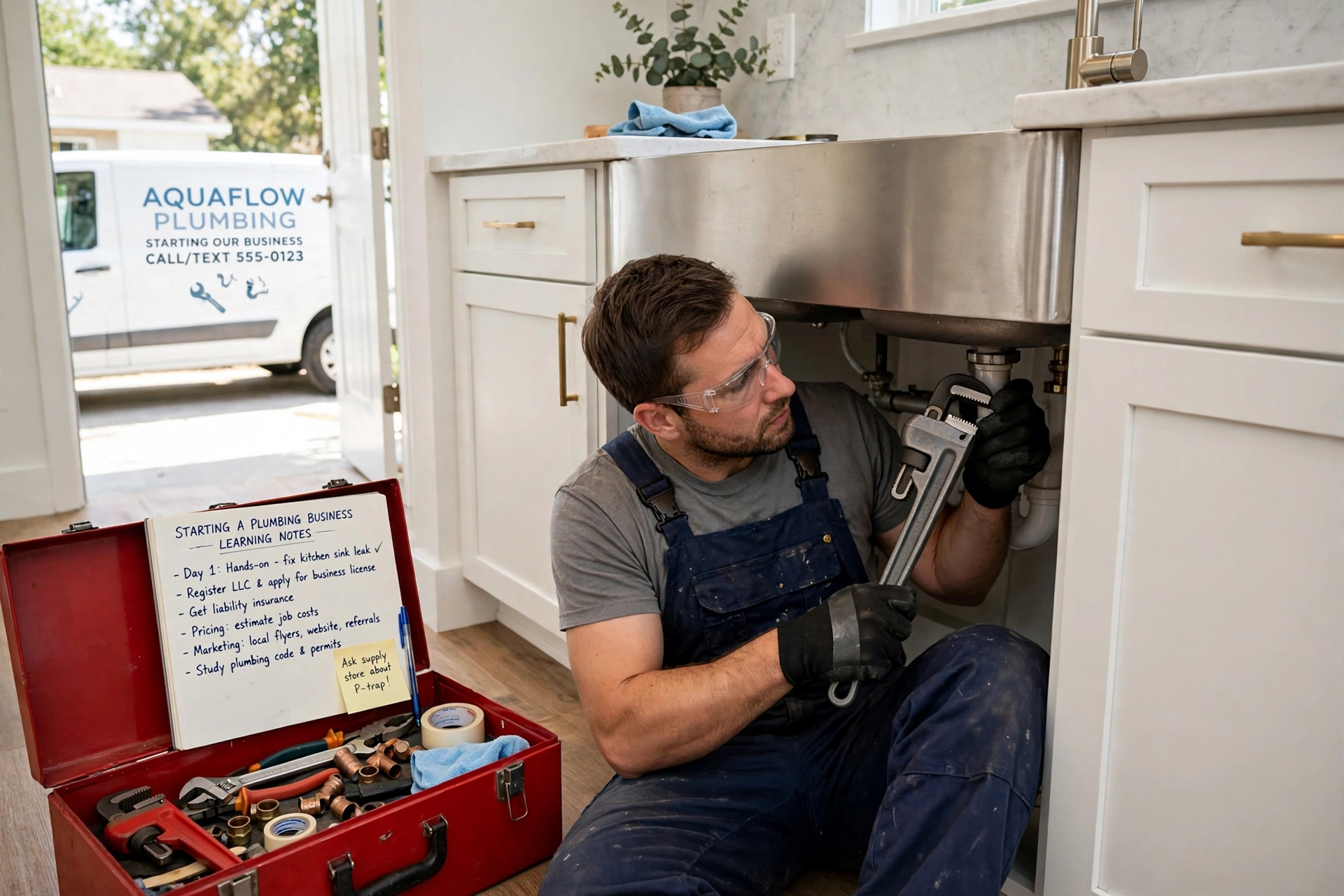
Every home has pipes, taps and drains, and every one of them will need a plumber sooner or later. That is why learning how to start a plumbing business is one of the most reliable ways to turn a trade skill into a steady income. People do not put off a burst pipe or a broken boiler, so a good plumber rarely runs out of work — and a well-run plumbing firm can grow from one van into a crew that serves a whole town.
This guide walks through the whole journey, from training and licences to pricing, marketing and growth. Whether you are a qualified plumber ready to go out on your own, or you are still deciding if the trade is for you, the steps below will show you exactly what to do first, what it costs, and how to win those all-important first jobs.
Step 1: Get the Training and Licence You Need
Plumbing is a licensed trade in most places, and that licence is the foundation of everything else. Before you register a company or buy a van, check what your state or local authority requires. In the United States, most states use a tiered system — apprentice, then journeyman, then master plumber — and you normally need several years of supervised work before you can sit the master exam. In the UK, the route is usually an NVQ Level 2 and Level 3 in Plumbing and Heating, often through an apprenticeship.
A plumbing business license is not a single piece of paper in every region. Some areas licence the business itself, others licence the individual plumber, and many require both, plus permits for specific jobs such as gas work or unvented hot water systems. Gas work is a special case: in the UK you must be Gas Safe registered, and in the US gas fitting usually needs its own endorsement. Never take on gas work without the right registration — it is dangerous and, in many places, illegal.
If you are not licensed yet, plan for the long game. An apprenticeship takes two to five years, but it pays you while you learn, and it is the fastest honest route to running your own firm. If you already hold a journeyman licence, find out exactly what extra hours or exams your state needs before you can trade as a master. Write the requirements down, put the exam dates in your diary, and treat the licence as step one — because no customer should ever hire an unlicensed plumber, and no insurer will cover one either.
Step 2: Pick Your Niche Before You Buy Anything
The biggest mistake new plumbers make is trying to do everything. Residential plumbing services, commercial plumbing services, emergency call-outs, bathroom installations and new-build work are all different businesses with different customers, different equipment and different marketing. Pick one lane to start in, and expand later once the money is coming in.
Residential plumbing services are the natural starting point for most owners. The work is varied — leaking taps, blocked drains, new radiators, water heaters, bathroom refits — and the customers are homeowners who pay quickly and recommend you to neighbours. The jobs are smaller, but they are frequent, and one happy street can fill your diary for months.
Commercial plumbing services pay more per job but come with longer sales cycles, stricter paperwork and bigger jobs that need more staff. Offices, restaurants, schools and landlords need maintenance contracts, which are wonderful once you have them, but landing them as a brand-new one-person firm is hard. Many successful owners start residential, build a reputation, and then add a commercial arm once they have a second van and a helper.
A third option is to specialise: drain cleaning, water heater replacement, or emergency call-outs. Specialists charge premium rates and get found easily online because their service is so specific. Whatever you choose, write it down in one sentence — “I fix homes in my town” beats “I do all plumbing everywhere” every single time.
Step 3: Write a Plumbing Business Plan
A plumbing business plan does not need to be a fifty-page document. One or two pages that answer the right questions will do, and the act of writing it forces you to think before you spend. Start with your services: what exactly will you offer in year one, and what will you deliberately leave out until later?
Next, work out your market. How many homes are within a thirty-minute drive? Who are the established plumbers, and what do they charge? Is there a gap — an area nobody covers well, a service nobody offers, or a type of customer being ignored? A short drive around your patch, plus a look at local search results and review sites, will tell you more than any expensive report.
Then set your numbers. A good plumbing business plan includes your start-up budget, your monthly running costs, the hourly or flat rate you need to charge, and how many jobs a week you need to break even. Be honest about the slow months — plumbing has quiet spells, and a plan that only works in the busy season is not a plan. Finally, write down your first-year goal in plain words: how many customers, how much revenue, and when you will hire your first helper. Keep the plan on your phone and check it every month.
Step 4: Register, Name and Insure Your Business
Once the plan exists, make the business real. Check whether your area needs a separate plumbing business license for the firm itself, as well as the licence you hold personally — some regions licence the business, others the individual, and many require both. Choose a structure — a sole trader setup is simplest, while a limited company or LLC protects your personal assets and looks more professional to commercial clients. Register the business, get your tax number, and open a separate business bank account on day one. Mixing business money with household money is the fastest way to lose track of whether you are actually making a profit.
Picking from plumbing company names is more important than it sounds. The best plumbing company names are short, easy to spell over the phone, and clearly say what you do: your town plus “Plumbing”, or a simple word like “Flow” or “Aqua” plus your area. Avoid clever puns nobody can spell, and avoid a name so narrow it traps you later. Check that the name is free as a domain and on social media before you print a single van sticker, and make sure no other local firm already trades under it.
Then sort out plumbing business insurance before your first job. At minimum you need public liability cover — if a fitting fails and floods a customer’s kitchen, the claim can run into thousands, and one bad day without insurance can end the business. Many customers will ask to see your certificate before they let you in. Add cover for your tools and your van, and consider professional indemnity if you give advice or design systems. Insurance feels like a cost until the day it saves you, and that day always comes sooner than you expect.
Step 5: Work Out What It Costs to Start
So, how much does it cost to start a plumbing business? For a solo plumber who already holds a licence and owns a reliable vehicle, a lean start can cost roughly $7,000 to $15,000. A fuller launch — a decent used van, a full tool kit, a drain machine, a sewer camera, insurance, branding and a small marketing budget — usually lands between $15,000 and $50,000. The honest answer depends on what you already own and how big you want to start.
The main costs are the van, tools, insurance and licensing fees, plus the parts you carry on the van. A press tool and a sewer camera are the two expensive items most beginners delay; you can hire them per job at first, then buy them once the work justifies it. Do not forget the quiet costs: fuel, phone, accounting software, workwear, and the first month of advertising before the phone starts ringing.
A useful way to think about how much does it cost to start a plumbing business is to separate “must have on day one” from “nice to have in month six”. Must-haves are the licence, insurance, basic tools, a vehicle and a way for customers to find you. Everything else can wait until the jobs pay for it. Keep a cash cushion of at least three months of living costs — the first weeks are slow, and a plumber who panics about rent takes bad jobs at bad prices.
Step 6: Tool Up and Set Up the Van
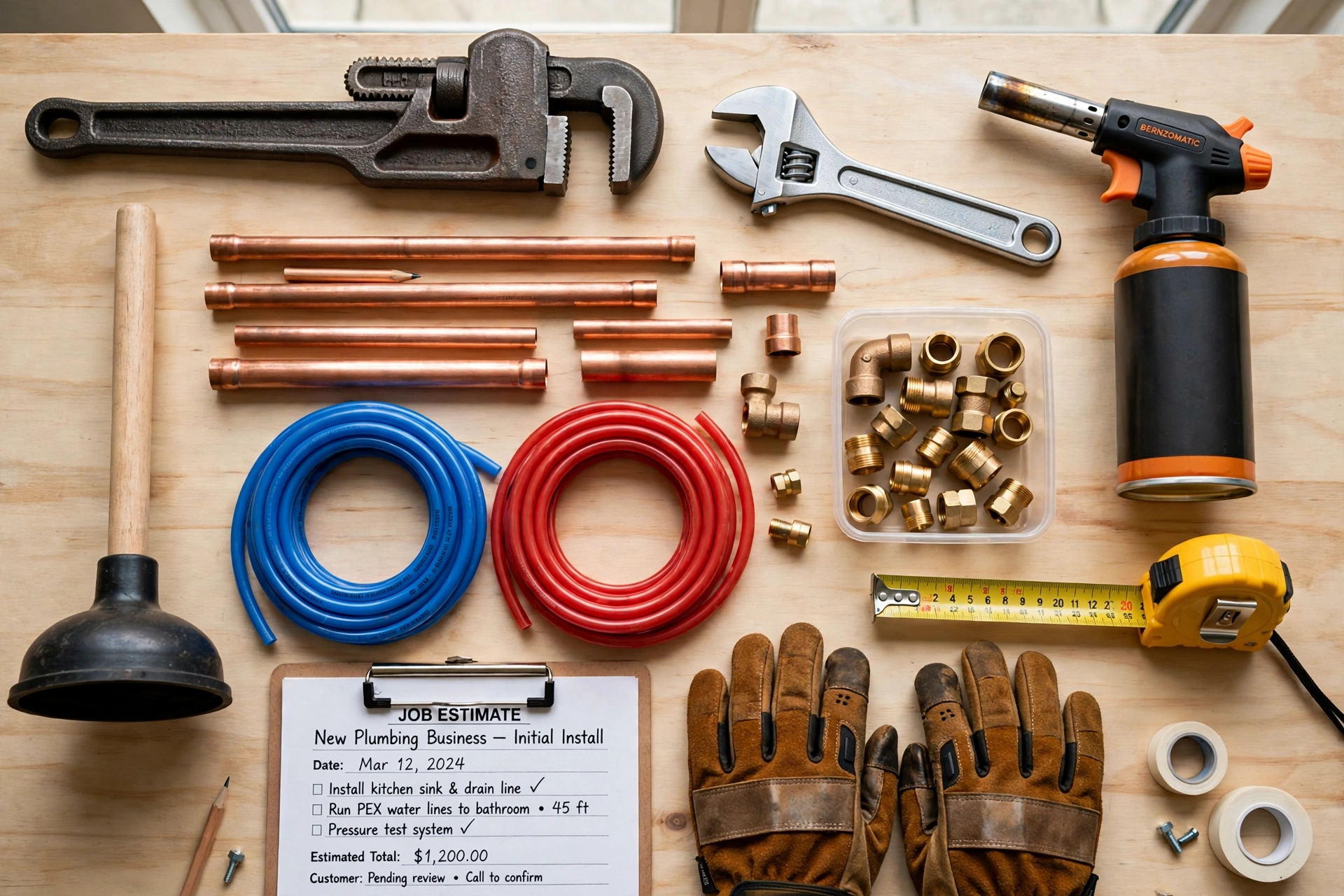
You do not need a fleet to start; you need one well-organised van that turns a service call into a finished, paid job without three trips to the supply shop. Stock it like a small moving shop: common fittings, copper and PEX pipe, valves, traps, tap washers, sealants and a few water heater parts. The exact stock depends on your niche, but the principle is the same — every part you carry is a return trip you do not make.
The essential tools are a large pipe wrench, an adjustable wrench, a basin wrench, a plunger and a drain snake, a blowtorch and solder for copper work, a tape measure, a spirit level and a good head torch for working under sinks and in lofts. Add a wet vacuum for the inevitable spills, and keep everything in labelled boxes so you can find a fitting in the dark at nine at night. A tidy van is not vanity — it is speed, and speed is profit when you charge by the job.
Set up the boring systems at the same time: a simple job sheet or app to record each visit, an invoicing tool that sends the bill before you leave the driveway, and a card reader so customers can pay on the spot. Plumbers who get paid on the day have far fewer cash-flow problems than plumbers who post invoices and wait. Buy workwear with your name on it, keep the van clean, and remember that your van is a moving advert — a scruffy van tells customers what to expect before you even ring the doorbell.
Step 7: How to Price Plumbing Jobs So You Actually Profit
Pricing is where most new plumbing businesses quietly fail. Charge too little and you work all week for nothing; charge too much and the phone stops ringing. Learning how to price plumbing jobs properly starts with knowing your true costs: fuel, parts, insurance, wear on the van, your time, and the tax you owe on every pound or dollar you earn.
There are two common models. Hourly pricing is simple and fair for diagnosis and small repairs — customers understand it, and you get paid for the time you actually spend. Flat-rate pricing works better for standard jobs such as fitting a tap, replacing a water heater or unblocking a drain: quote a fixed price, finish efficiently, and keep the difference. Many successful plumbers use both — hourly for the unknown, flat rate for the routine.
When you work out how to price plumbing jobs, always include a call-out fee for emergency work and a minimum charge for small visits. A thirty-minute fix still costs you the drive, the fuel and the slot in your diary, so a minimum charge is not greedy — it is honest. Check what established local plumbers charge, position yourself fairly, and never compete on being the cheapest. The cheapest plumber gets the worst customers, the most complaints and the thinnest margins. Compete on reliability, tidiness and turning up when you said you would.
Step 8: Win Your First Customers
Your first ten customers are the hardest, and they matter more than the next hundred, because they become your reviews, your referrals and your reputation. Start close to home: tell friends, family and neighbours you have launched, and ask them to pass your number on. A simple leaflet through local doors, a free listing on Google Business Profile, and a clean one-page website with your services, your area and your phone number will bring in the first calls.
Google Business Profile deserves special attention. Most people looking for a plumber search on their phone and call one of the first three names they see, so claim your profile, add photos of real work, list your services, and ask every happy customer for a review. Ten genuine five-star reviews will beat a big advertising budget in a local market, because trust is everything when a stranger is coming into someone’s home.
Word of mouth is still the strongest marketing a plumber has. Turn up on time, wear shoe covers, explain the problem in plain language, tidy up before you leave, and send the invoice the same day. Do that ten times and the referrals start arriving on their own. Local Facebook groups, community noticeboards and partnerships with estate agents, letting agents and builders are all cheap ways to stay visible. And if you are learning how to start a plumbing company rather than just working as a plumber, remember that the company is the brand — every job is an advert for the next one.
Step 9: Turn One-Off Jobs Into Repeat Work
A plumbing business lives or dies on repeat customers. A homeowner who trusts you will call you for every leak, every new bathroom and every boiler service for years, and will recommend you to everyone they know. The trick is to stay in touch without being a nuisance.
Offer an annual check-up: a boiler service, a tap and toilet check, a drain inspection. It gives the customer peace of mind, gives you quiet-season work, and keeps your name fresh. Keep a simple record of every customer — what you fixed, when, and what might need attention next — and send a polite reminder when a service is due. A short message once a year is helpful; a sales call every month is not.
Ask for reviews at the right moment, which is the moment the customer is smiling — just after you fixed the problem and tidied up. “Would you mind leaving a quick review? It really helps a small local business” works far better than an email sent three days later. Handle complaints fast and generously. A customer whose problem you fixed quickly after a mistake often becomes more loyal than one who never had a problem at all, because they have seen how you behave when things go wrong.
Step 10: Grow From One Van to a Crew
Growth should follow demand, not lead it. The right time to hire is when you are regularly turning work away, working late most nights, or losing jobs because you cannot get there fast enough. Hire an apprentice first: you get affordable help, they get a trade, and you can train them your way. A good apprentice who learns your standards becomes your first full plumber.
As you add people, add systems too. A shared diary, standard price lists, checklists for common jobs and a simple rule — every job gets a photo before and after — keep quality steady when you are not on site yourself. This is also the point where commercial plumbing services become realistic: with two or three vans you can take on maintenance contracts for landlords, restaurants and small offices, which smooth out the quiet weeks and give you predictable monthly income.
Keep your eye on the numbers as you grow. Know your profit per job, your cost per lead and your busiest and quietest months, and hire only when the figures say you can afford it. Plenty of one-van plumbers earn more than five-van firms, because the five-van firm forgot that growth is supposed to make money, not just make noise. Grow at the pace your reputation can support, and the business will last.
Mistakes That Sink New Plumbing Businesses
The same mistakes sink new plumbing firms again and again. The first is undercharging to win work — low prices attract the customers who argue hardest and pay slowest, and they leave no margin for the van repair or the quiet week. The second is skipping plumbing business insurance or paperwork to save money; one flooded kitchen without cover can wipe out a year’s profit.
The third is buying too much too soon. A brand-new van, a full fleet of specialist tools and a big office feel like success, but they are debts that need paying whether the phone rings or not. Start lean, buy from profit, and let the business earn its upgrades. The fourth is ignoring the admin: unrecorded cash jobs, late tax returns and lost invoices turn a busy plumber into a stressed one with no idea if the business is actually working.
The fifth is neglecting the customer after the job. No follow-up, no review request, no reminder — and the customer forgets your name by the next leak. A plumbing business is a relationship business, and the plumber who stays in touch is the plumber who gets the call. Finally, never stop learning. New boilers, new materials, new regulations and new tools arrive every year, and the plumber who keeps training stays ahead of the plumber who does not.
Frequently Asked Questions
Do I need a licence to learn how to start a plumbing business?
Yes, in almost every state and country you need a licence or recognised qualification to carry out plumbing work legally, and in most places you need a master-level licence — or to employ a master plumber — before you can run the business itself. Check your state plumbing board or local authority for the exact route, because the rules vary a lot by region.
Is starting a plumbing business profitable?
It can be very profitable. Residential work typically returns a net margin of roughly 12 to 18 percent once the business is established, and emergency and specialist work pays more. The keys are pricing properly, keeping overheads low, getting paid on the day, and building repeat customers rather than chasing one-off cheap jobs.
How long does it take to start a plumbing business?
If you are already a licensed plumber, you can register and take your first paying job within a few weeks. If you still need training, expect two to five years through an apprenticeship or college route before you can trade on your own. The business side — registration, insurance and a basic website — can be done in days once the licence is in hand.
What is the difference between starting a plumbing business and a plumbing company?
There is no real difference in the work — “how to start a plumbing company” is simply the version of the same question people ask when they think of a registered company rather than a sole trader. A company structure (LLC or limited company) gives you liability protection and a more professional image, while a sole trader setup is simpler and cheaper to run at the very start.
How do I get my first plumbing customers with no reviews?
Start with people who already know you, then build proof fast. Claim your Google Business Profile, ask every early customer for a review, take before-and-after photos of your work, and join local community groups where people ask for plumber recommendations. Ten honest reviews and a tidy online presence will bring in calls far sooner than an expensive advert.
Final Word
Plumbing will never go out of fashion. Homes age, pipes leak, boilers fail, and someone has to fix them — and the plumber who turns up on time, explains the problem honestly and leaves the place tidy will never be short of work. Learning how to start a plumbing business is really about combining a solid trade skill with a simple business system: the right licence, a clear niche, a short plan, proper insurance, honest pricing and customers who trust you enough to call again.
Start lean, charge fairly, look after every customer, and let the business grow at the pace your reputation allows. Do that, and the van that starts with one set of tools can become a firm that serves a whole town — and the wrenches really do turn into wealth.

Sparks to Success: How to Start an Electrical Business

Cool Air, Warm Profits: How to Start an HVAC Business

Wrenches to Wealth: How to Start a Plumbing Business

Shingles to Success: How to Start a Roofing Business

Posts, Panels and Profit: How to Start a Fencing Business

First Cut, Full Crew: How to Start a Tree Trimming Business

Ladder to Lights: How to Start a Christmas Light Business

Clear Water, Steady Pay: Starting a Pool Cleaning Business

Green Thumb to Paycheck: Starting a Landscaping Business

Turn Winter Into Income: How to Start a Snow Removal Business

How to Repurpose Blog Content for Social Media Without Starting From Scratch

How to Write a Simple Business Plan for Your Small Business: A Practical Guide That Gets You Started

How to Get More Clients for Your Business: Simple Ways That Actually Work

How to Create a Small Business Content Marketing Plan That Actually Gets Results

How to Write a Professional Business Email That Gets a Reply

Branding Tips for Small Businesses: A Simple Guide That Makes You Memorable
How to Create a Content Calendar for a Small Business
How to Handle Customer Complaints in a Small Business: A Calm, Practical Guide That Turns Problems Into Loyalty
How to Set Up a Simple Referral Program for Your Small Business: A Beginner’s Guide That Brings in New Customers

How to Set SMART Goals for a Small Business: A Practical Guide That Actually Works
Sparks to Success: How to Start an Electrical Business
Cool Air, Warm Profits: How to Start an HVAC Business
Wrenches to Wealth: How to Start a Plumbing Business
Shingles to Success: How to Start a Roofing Business
Posts, Panels and Profit: How to Start a Fencing Business
First Cut, Full Crew: How to Start a Tree Trimming Business
Ladder to Lights: How to Start a Christmas Light Business
Clear Water, Steady Pay: Starting a Pool Cleaning Business
Green Thumb to Paycheck: Starting a Landscaping Business
Turn Winter Into Income: How to Start a Snow Removal Business

 entertainment1 year ago
PYT Telegram: A Complete Guide to Understanding, Using, and Maximizing It

 entertainment1 year ago
OnionFlix: Everything You Need to Know About This Streaming Website
- education1 year ago
How to Become a Software Engineer: A Complete Guide
- entertainment10 months ago
Brainrot Memes: The Unhinged Humor of the Internet Generation





