
business
Smooth Walls, Steady Pay: How to Start a Drywall Business

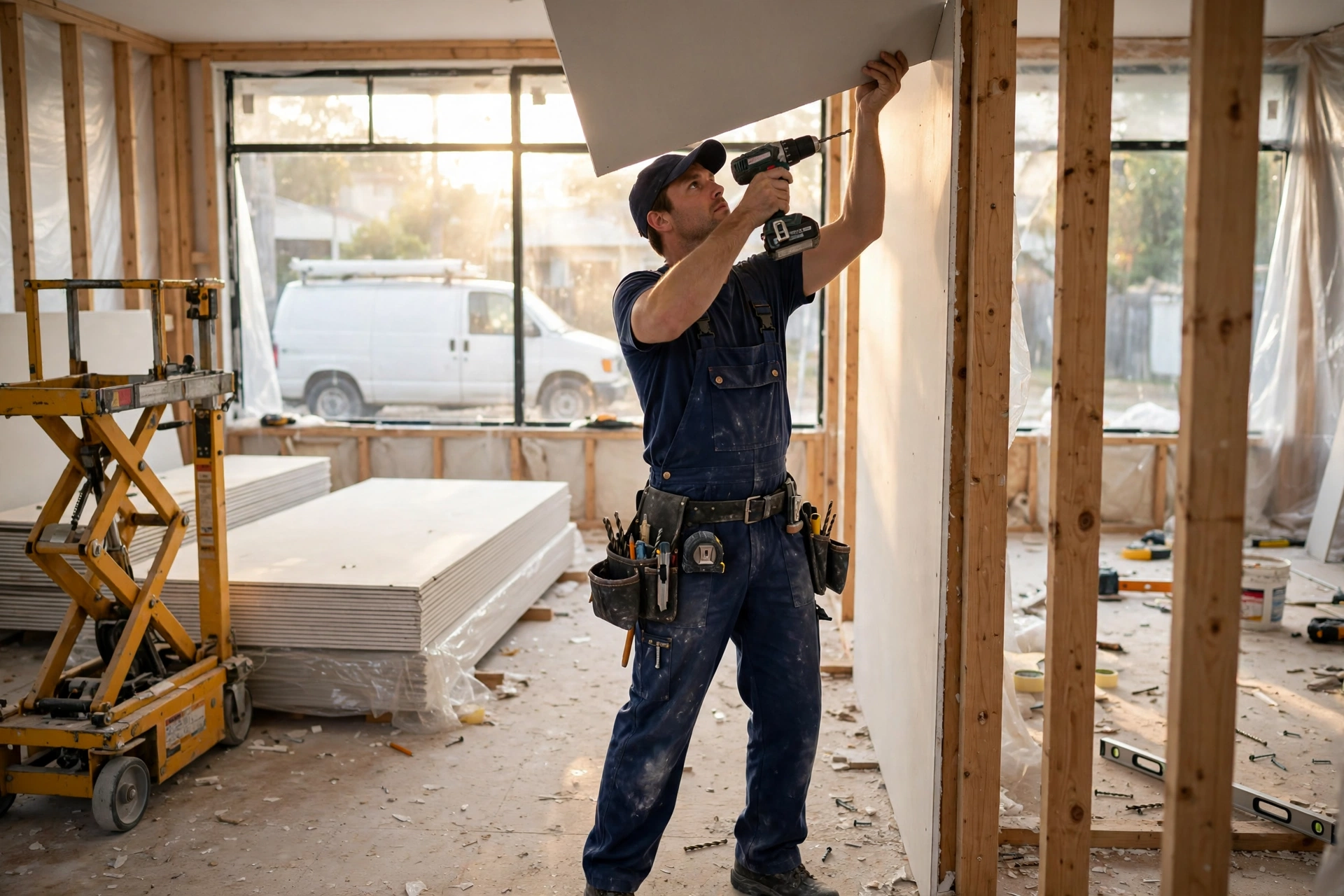
New homes, offices and renovations all need walls, and every one of those walls needs someone who can hang, tape and finish drywall properly. That steady demand is why a small drywall crew can stay busy all year. This guide shows you how to start a drywall business from scratch: the skills to learn first, the paperwork to sort, the kit to buy, what to charge, and how to win your first paying jobs.
What Does a Drywall Business Actually Do?
A drywall business installs and repairs the interior walls and ceilings of homes and commercial buildings. Most of the work falls into a few clear services, and it helps to decide which ones you will offer from day one.
Hanging new sheets on studs and joists is the core job. Taping and finishing the joints, then sanding everything smooth so it is ready for paint, is where the real skill shows. Patching holes, fixing water damage and matching old textures is repair work, and it is often the fastest way to get paid while you build a name. Many crews also fit soundproof boards, moisture-resistant boards in bathrooms, and fire-rated boards where the building code asks for them.
Repairs deserve special attention when you are new. A homeowner with a hole in a wall wants it fixed this week, not next month, and a tidy repair often turns into a referral. Knowing the going drywall repair cost in your area also helps you quote repairs quickly instead of guessing on every call.
Step 1: Learn the Trade Before You Sell It
Nobody hires a drywall contractor who cannot produce a flat, smooth wall. Before you take a paying job, you need to be able to hang sheets level, cut cleanly around sockets and doors, tape joints without bubbles, and sand without leaving waves or scratches.
If you have never done it, the fastest route is working for an established crew for a few months. You will learn how to hang drywall on real jobs, at real speed, with someone checking your work. A short trade-school course can teach the basics, but nothing replaces site experience. Practise on your own garage or a friend’s renovation too, and photograph every finished wall for your portfolio.
Speed matters as much as quality. A crew that finishes a room a day earns far more than a careful beginner who takes three days, even if the finish looks the same. Time yourself, learn the taping tools that suit you, and keep your kit organised so you are never hunting for a knife mid-job.
Step 2: Write a Drywall Business Plan
A one-page drywall business plan is enough to start, but write it down. It forces you to answer the questions that sink most new trades: who are your customers, what will you charge, and how much work do you need each month to survive?
Start with your services and your area. Will you work for homeowners, builders, or both? Homeowners pay faster and need repairs and small rooms. Builders give you whole houses but pay on longer terms and expect sharp prices. Many new drywall businesses start with homeowners and add builder work once they have a crew they trust.
Set a monthly target. Work out your fixed costs — van, insurance, phone, tool replacement — then decide how many days of paid work you need each month to cover them and pay yourself. Write down your starting prices too, and review the plan every three months. A plan you never look at is decoration; a plan you update is a tool.
Step 3: Register the Business and Check Licences
Choose a business structure and register it. In the United States most small drywall contractors start as a sole proprietorship or a limited liability company, and an LLC is the common choice because it separates your personal money from the business. Get a free Employer Identification Number from the IRS, open a business bank account, and keep business money and personal money apart from the first day.
Licensing rules change by state and by city. Some states license drywall contractors directly, others only ask for a general contractor licence above a certain job value, and some leave it to the city or county. The paperwork involved in how to start a drywall company is straightforward once you know which licences your state asks for, so check your state contractor board and your local building department before you quote a job, and find out whether a bond is required where you work. Getting this wrong can cost you a job, a fine, or both.
Picking a name is part of this step. Choose something short that says what you do and where you work, check that no other local contractor uses it, and make sure the matching domain and social handles are free. Good business name ideas are simple, easy to spell over the phone, and free of clever spellings customers will get wrong.
Step 4: Get Insurance Before Your First Job
Drywall work looks low-risk until a sheet falls on a finished floor, a ladder slips, or dust damages a customer’s belongings. Drywall business insurance protects you from the bill when something goes wrong, and many builders will not let you on site without proof of it.
At minimum, get general liability insurance. It covers damage to a customer’s property and injuries to other people caused by your work. If you hire anyone, even for a day, you will usually need workers’ compensation insurance as well. A commercial policy for your van is separate from personal car insurance, and using a personal policy for work driving can leave you uncovered after an accident.
Ask an insurance broker who works with trades for quotes, and compare at least three. Tell them honestly what you do — hanging, taping, sanding, repairs, commercial work — because a cheap policy that excludes your real work is worse than no policy at all. Keep your drywall business insurance certificates in the van and send copies to builders before they ask.
Step 5: Buy the Right Kit, Not the Most Kit
You can start a drywall business with a modest kit if you buy well. The essentials are a cordless drill and screw gun, taping knives in several sizes, a mud pan, a drywall saw, a utility knife, a tape measure, a spirit level, a sanding pole and sponges, a drywall lift for ceilings, and safety gear: glasses, gloves and a proper dust mask.
A van or a pick-up with a trailer is usually your biggest purchase. It does not need to be new, but it does need to be reliable and big enough for full sheets. Buy second-hand tools where it makes sense — a used drywall lift or scaffold is fine — but buy cutting blades, knives and safety gear new.
Set up a simple stock system from the start. Keep a running list of sheets, screws, tape and joint compound, and top up every Friday so Monday starts full. Running out of compound halfway through a finish coat wastes a day and looks unprofessional. A tidy van and a clean site also win you repeat work, because customers judge the finished wall and the mess you leave behind.
Step 6: Price Your Work So You Actually Profit
Pricing is where new drywall businesses fail most often. Charge too little and you work hard for nothing; charge too much and the phone stays quiet. The two numbers to learn first are the drywall cost per square foot in your area and the drywall installation cost for a typical room.
Most drywall contractors price by the square foot for hanging and finishing, with separate rates for repairs, ceilings, and texture matching. Call three local suppliers and ask for material prices, then ask other trades what labour rates look like in your town. Your price has to cover materials, your time, van and tool costs, insurance, and a profit margin — usually at least 20 percent on top of your costs.
Repairs price differently. A small patch might be a flat fee, because the visit, the drying time and the return trip cost nearly as much as the patch itself. Remember the drywall repair cost for a patch includes the return visit to sand and prime, so quote the full job including sanding, priming and making good, not just the hole. And when someone asks for a discount, remember that a cheap job that loses money is worse than no job at all. Pricing your drywall jobs with confidence is a skill, and it gets easier with every quote you write.

Step 7: Win Your First Customers
Your first jobs will come from people who already know you or know someone who does. Tell everyone you know that you are open for drywall work — friends, family, local builders, painters, plumbers and electricians. Trades refer each other constantly, and one good word from a painter is worth more than a month of online ads.
Set up a simple online presence: a Google Business Profile with your service area, a phone number that gets answered, and photos of finished walls. Ask every happy customer for a review and a photo of the finished room. Before-and-after photos of a repair are especially convincing, because they show the exact problem you solved.
Do not ignore commercial work. Offering commercial drywall services — offices, shops, schools and small warehouses — can fill quiet weeks, because commercial clients often need whole floors finished on a deadline. Start with small commercial jobs, deliver on time, and those clients will call you first next time.
Step 8: Hire Help When the Diary Fills Up
One person can hang and finish a small room, but ceilings, large houses and deadlines need a second pair of hands. Hire your first helper when you are turning work away or working late every night, not before. A good helper who tapes cleanly is worth more than a cheap one you have to redo.
Pay fairly and be clear about it. Check the going drywall installer salary and day rates in your area before you offer a wage, and remember that a skilled finisher earns more than a labourer who only carries sheets. Agree the rate, the hours and the pay day in writing, even for casual help. Good people stay when they are paid on time and treated with respect.
Train your helper your way. Show them how you want joints taped, how you want a site left, and how you want customers spoken to. Your name is on the finished wall, whoever held the knife.
Step 9: Run the Business Like a Business
Good drywall skills will not save a business with messy paperwork. Quote in writing, with the scope, the price and the payment terms clear. Take a deposit on materials for bigger jobs, invoice the same day the work finishes, and chase late payments politely but firmly. Cash flow kills more small trades than lack of work.
Keep a simple diary: jobs booked, materials ordered, invoices sent, money received. A notebook works, but a basic invoicing app saves hours at tax time. Photograph every finished job, keep copies of licences and insurance certificates in one folder, and put money aside for tax from every payment, not just at year end.
Step 10: Grow Into Bigger Jobs
Once you can finish houses on schedule, growth is about choosing the right next step. Some drywall businesses add a second crew and take on whole developments. Others specialise — soundproofing, fire-rated work, or high-end smooth finishes — and charge more for it. Some owners grow by taking on larger commercial drywall services contracts for offices and schools. Either path works, but growing too fast with the wrong people or the wrong jobs is how good businesses fail.
Keep your quality consistent as you grow. Visit every job before it is signed off, fix snags the same day, and keep asking customers for reviews. A drywall business lives or dies on its reputation, and a reputation is built one smooth wall at a time.
How Much Can You Earn From a Drywall Business?
Earnings depend on your area, your speed and whether you work alone or with a crew. A solo drywall installer working steadily can earn a solid trade income, and a small crew finishing houses every week can earn much more. Your best guide is local: the drywall installation cost for a standard house in your town, minus materials and expenses, is roughly what a crew can make on that job.
Repairs and small jobs pay well per hour because customers value a fast, tidy fix. Whole-house work pays more in total but needs more planning and more hands. And if you hire, remember the other side of the coin: the drywall installer salary you pay is a cost, but a good installer who finishes rooms faster than you could alone is what lets you take on more work.
Mistakes New Drywall Businesses Make
The most common mistake is underpricing to win work. A job that barely covers materials and fuel teaches the customer your price is low and teaches you nothing except exhaustion. Price properly from the start.
The second is skipping the finish. Hanging sheets is the visible half of the job; taping, filling and sanding is the half customers actually see. Rushing the finish to start the next job leaves walls that show every joint under paint, and that is the work people remember.
Other mistakes to avoid: working without insurance, mixing business and personal money, saying yes to every job including ones you cannot do well, and never asking for reviews. Fix these early and the business gets easier every year.
Frequently Asked Questions
Is starting a drywall business profitable?
It can be, if you price properly and stay busy. Drywall is needed in almost every renovation and new build, materials are straightforward to price, and a small crew has low overheads compared with many trades. Profit comes from speed, clean finishing and repeat customers, not from cutting corners on price.
How much does it cost to start a drywall business?
A lean start is possible for a few thousand dollars if you already own a vehicle: tools, insurance, registration and your first stock of materials. A van and a full professional kit push the figure higher, but you can add better tools as the work pays for them. Keep a cash buffer for the first slow month.
What is the drywall cost per square foot for a customer?
It varies by area, job size and finish level, but that per-square-foot rate is the number most contractors use to quote hanging and finishing. Small rooms and repairs cost more per square foot than whole houses, because the same visit and set-up time is spread over less area. Always quote the specific job, not just a rate.
Do I need a licence to start a drywall business?
It depends where you work. Some states and cities license drywall contractors, others only require a general business licence, and some set a licence threshold based on job value. Check your state contractor board and local building department before your first paid job, and check whether you need a bond as well.
Can I start a drywall business on my own?
Yes, many drywall businesses start as one person with a van and a basic kit, taking repairs and single rooms. Working alone limits you to smaller jobs and slower ceilings, so most owners hire a helper once the diary fills. The same rules apply solo or with a crew: learn the trade first, insure the work, and price it properly.
How is starting a drywall company different from working for one?
When you work for a drywall company, someone else finds the jobs, buys the materials and carries the risk. Learning how to start a drywall company means taking on all of that yourself — quoting, scheduling, insurance, tax and customer care — in exchange for keeping the profit and choosing your own work.
What should I learn first: hanging or finishing?
Both matter, but finishing is the skill customers judge. Knowing how to hang drywall gets the sheets on the wall; taping, filling and sanding decide whether the wall looks good under paint. Practise finishing until your joints disappear, and the rest of the trade follows.
Final Word
A drywall business is a practical way to turn a trade skill into your own income. Learn the work properly, write a short plan, register and insure the business, price with confidence, and treat every wall as your advertisement. If you already understand how to start a drywall business on paper, the next step is doing the first job properly. Do that, and the steady demand for smooth walls can keep your diary full for years.

Smooth Walls, Steady Pay: How to Start a Drywall Business

Open for Business: How to Start a Garage Door Business

Subfloor to Booked Solid: How to Start a Flooring Business

Arc to Income: How to Start a Welding Business

Keys to the Trade: How to Start a Locksmith Business

First Pour to Full Crew: How to Start a Concrete Business

Sparks to Success: How to Start an Electrical Business

Cool Air, Warm Profits: How to Start an HVAC Business

Wrenches to Wealth: How to Start a Plumbing Business

Shingles to Success: How to Start a Roofing Business

How to Repurpose Blog Content for Social Media Without Starting From Scratch

How to Get More Clients for Your Business: Simple Ways That Actually Work

How to Write a Simple Business Plan for Your Small Business: A Practical Guide That Gets You Started

How to Create a Small Business Content Marketing Plan That Actually Gets Results
How to Create a Content Calendar for a Small Business

How to Write a Professional Business Email That Gets a Reply
How to Handle Customer Complaints in a Small Business: A Calm, Practical Guide That Turns Problems Into Loyalty

Branding Tips for Small Businesses: A Simple Guide That Makes You Memorable
How to Set Up a Simple Referral Program for Your Small Business: A Beginner’s Guide That Brings in New Customers

How to Set SMART Goals for a Small Business: A Practical Guide That Actually Works
Smooth Walls, Steady Pay: How to Start a Drywall Business
Open for Business: How to Start a Garage Door Business
Subfloor to Booked Solid: How to Start a Flooring Business
Arc to Income: How to Start a Welding Business
Keys to the Trade: How to Start a Locksmith Business
First Pour to Full Crew: How to Start a Concrete Business
Sparks to Success: How to Start an Electrical Business
Cool Air, Warm Profits: How to Start an HVAC Business
Wrenches to Wealth: How to Start a Plumbing Business
Shingles to Success: How to Start a Roofing Business

 entertainment1 year ago
PYT Telegram: A Complete Guide to Understanding, Using, and Maximizing It

 entertainment1 year ago
OnionFlix: Everything You Need to Know About This Streaming Website
- education1 year ago
How to Become a Software Engineer: A Complete Guide
- entertainment10 months ago
Brainrot Memes: The Unhinged Humor of the Internet Generation





