business
Bins to Business: How to Start a Dumpster Rental Business

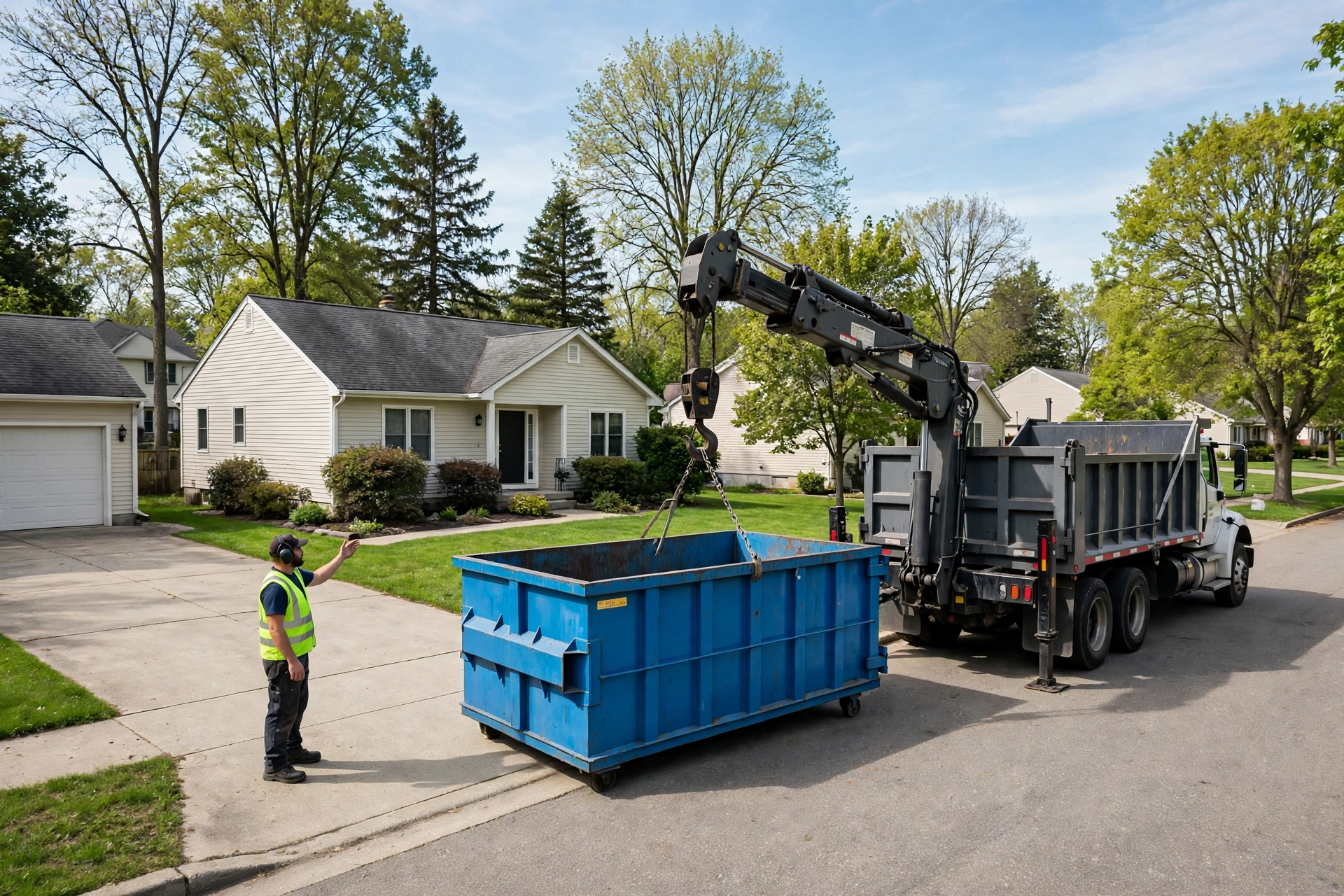
Every renovation, roof replacement and house cleanout ends the same way: a pile of waste that has to go somewhere. Somebody has to drop off the container, haul it away full and pay the landfill. That somebody can be you. If you are wondering how to start a dumpster rental business, the model is refreshingly simple — a truck, a few steel boxes and a phone that keeps ringing — but the money is made or lost in the details: the truck you buy first, the sizes you stock, the landfill accounts you open and the way you price each haul.
This guide walks through the whole launch in ten steps, from picking your first customers to tracking every container once you are running. It is written for a first-time owner-operator, not a fleet manager, and it keeps the focus on the decisions that actually decide whether the business pays.
How a Dumpster Rental Business Actually Works
The job is easy to describe and hard to do badly once the system is in place. A customer calls, usually a homeowner mid-renovation or a contractor mid-project. You deliver an empty open-top steel container to their driveway or job site, leave it for a set rental period, then collect it full with a hoist truck and drive it to a landfill or transfer station. The customer pays for the delivery, the rental period and a weight allowance; anything over that allowance is billed by the ton from the scale ticket.
Three things make this business attractive. First, demand is steady: people renovate, move, demolish and clean out in every season. Second, the work is repeatable — the same delivery, pickup and billing routine, job after job. Third, one truck can serve many containers, because a box sits at a customer’s site while the truck is out doing other drops. The flip side is also real: the startup bill is heavy, the work is regulated, and a single cracked driveway or an overweight load can eat a week’s profit. Get the setup right and those risks shrink fast.
Step 1 — Pick Your Customers Before You Buy Anything
Do not buy a truck before you know who will pay for it. The dumpster world splits into three customer groups, and each one wants something different.
Homeowners are the easiest first customers. They are clearing a garage, gutting a kitchen or replacing a roof, and they need one box for a few days. They care about a clean driveway, a fair price and a driver who shows up on time. A strong first niche here is dumpster rental for home renovation work — kitchen and bathroom refits, roofing jobs and whole-house cleanouts — because those projects always produce more waste than the owner expects.
Contractors are the volume customers. Roofers, builders and remodelling crews need boxes on a regular schedule and will call the same hauler every week if the service is reliable. They care less about charm and more about the box arriving before the crew does.
Property managers, estate agents and landlords sit in the middle: eviction cleanouts, void-property clearances and estate clearances. The jobs are smaller but frequent, and one good relationship can feed you work for years.
Pick one group to start with — homeowners doing renovations is the safest first pick — and learn everything about how they book, what sizes they need and what they complain about. You can add the other groups once the first one is paying.
Step 2 — Write a One-Page Dumpster Rental Business Plan
A dumpster rental business plan does not need to be a fifty-page document. One page, honestly filled in, beats a binder nobody reads. Write down five things: who your customers are, what sizes you will carry, what each job must earn, what the launch will cost, and how you will get the first twenty bookings.
Start with the money. List the big items — truck or trailer, containers, insurance, permits, a yard to store the boxes — and the monthly running costs: fuel, landfill fees, maintenance, phone and booking software. Then work backwards: if a truck payment, fuel and landfill fees come to a fixed monthly figure, how many hauls a month at your local price covers it? That number is your break-even, and it tells you whether the plan works before you spend anything.
The plan also forces the hard choices early. Will you buy new or used containers? Will you start with a roll-off truck or a cheaper dump trailer pulled by a heavy pickup? Will you serve one town or a whole county? Answer those on paper and the expensive mistakes stay on paper too. That is the discipline behind how to start a dumpster rental business without wasting money. A one-page plan is also what a lender or a finance company will ask to see, so keep a clean copy ready.
Step 3 — Register the Business and Sort the Paperwork
Before the first delivery, the business has to exist on paper. Choose a legal structure — most small haulers pick a limited liability company for the protection it gives their personal assets — register the business name, get a tax number and open a business bank account. Keep business money and personal money apart from day one; landfill fees and fuel receipts add up fast and messy books are the first thing that sinks a new hauler.
Then come the licences and permits. At minimum you will need a general business licence and commercial registration for each truck. Most states and counties also require a waste hauler permit, and some cities require a separate permit before a container can sit on a public street — and a few limit which hauler may serve a given area. Call your city or county clerk and the local public works department before your first rental and ask, in writing, exactly which permits apply to you. Environmental rules vary by state, and the rules for what can go in a container — no hazardous waste, no tyres, no fridge gas — are yours to enforce with every customer.
If you will drive a full-size roll-off truck, check the licence rules too. Under federal rules in the United States, a single vehicle with a gross vehicle weight rating of 26,001 pounds or more needs a commercial driver’s licence, and most roll-off trucks are over that line. A hook-lift truck on a smaller chassis can sit under the line, which is one reason many starters choose it. Whatever you drive, the door label’s rating is the one that counts — not the dealer’s description.
Step 4 — Choose Roll-Off or Dump Trailer
This is the biggest purchase decision you will make, and it shapes everything else. There are two ways into the business, and a guide on how to start a roll off dumpster business has to start here.
A roll-off setup uses a hook-lift or cable truck and separate open-top containers. One truck can keep many containers out at once, serving several customers a day, and it handles construction and commercial work easily. Used roll-off trucks commonly ask anywhere from roughly $40,000 to over $200,000 depending on age and mileage, and new ones cost far more. The truck is where the money goes — anyone researching how to start a roll off dumpster business should price the truck first and the containers second.
A dump trailer setup uses a hydraulic dump trailer pulled by a heavy pickup. The trailer is the container: it is dropped at the customer’s driveway, filled, and hauled away to dump. The entry cost is far lower, the pickup doubles as your daily vehicle, and a smaller operator can start with one trailer and one truck. The trade-off is capacity — one trailer serves one customer at a time — and weight limits that rule out the biggest jobs.
Which one is right depends on your customers from Step 1. Homeowners and small jobs: a dump trailer can pay its way quickly. Contractors and bigger sites: you will want a roll-off truck sooner rather than later. Many owners start with a trailer, build a customer base, then buy the roll-off truck with the profits.
There is also a third way in: buying an existing operation. A dumpster rental business for sale listing sometimes includes the truck, the containers and — most valuable of all — the customer list and the landfill accounts. If you go that route, check the age and condition of every container, read the service contracts, and ask why the owner is selling before you agree a price. A dumpster rental business for sale can be a shortcut or a trap, and the difference is in the due diligence.
Step 5 — Pick Your Container Sizes
Customers do not think in cubic yards; they think in projects. Your job is to match the project to the box. The standard open-top sizes are 10, 20, 30 and 40 cubic yards, and most starters carry two or three sizes rather than all four.
A 10-yard box suits a small cleanout, a single-room refit or a heavy load like concrete and soil, where weight matters more than volume. A 20-yard box is the workhorse: kitchen refits, roofing jobs and medium cleanouts — and it is the size most often booked for dumpster rental for home renovation projects. A 30-yard box handles whole-house renovations and larger construction waste. A 40-yard box is for big commercial and demolition work, and it needs a truck and a site that can handle it.
When you are choosing dumpster sizes for your first fleet, keep it simple: start with 20-yard boxes, add 10-yard boxes for heavy material, and add 30-yard boxes once contractors start asking for them. Buying a spread of sizes before you have customers is dead money sitting in your yard. Ask local builders which size they order most, then stock that one first. And remember the weight rules: a 20-yard box weighs over two tons empty, so the rating of the chassis minus the box is the most a load can ever weigh. Overweight loads mean extra landfill charges and, worse, a truck that cannot legally move.

Step 6 — Open Landfill and Transfer Station Accounts
You cannot run this business without somewhere to tip. Before your first delivery, open accounts with the landfill and transfer stations near your service area. Each one has its own price per ton, its own opening hours and its own rules about what it accepts — one county’s schedule might charge $70 a ton for construction debris while another charges nearly double, so the nearest tip is not always the cheapest.
Visit the scale house in person. Ask about account terms, payment timing, accepted materials and the paperwork for each load. Keep every scale ticket: it is your proof of what a load weighed, your record for billing overage, and your evidence if a customer disputes a charge. A driver who loses scale tickets is a driver who cannot bill properly.
Also plan your routes around the tips. A job that looks profitable on paper turns into a loss if the truck spends two hours driving to a far tip and back. The best haulers know their tip fees, their drive times and their fuel cost per job — and they price accordingly.
Step 7 — Sort Insurance and Protect Driveways
Insurance is not the place to cut corners in this business. At minimum you need general liability, commercial auto cover for the truck, and a policy that covers damage to customers’ property. Dumpster rental insurance should also cover the risks that are specific to hauling: container damage, environmental liability if a load leaks, and driver accidents. The right dumpster rental insurance also covers the load itself if a container is damaged in transit. Expect to budget a meaningful monthly figure for it, and get quotes from insurers who understand waste hauling rather than a general broker who has never insured a roll-off truck.
The claim this business sees most is not a road accident — it is a cracked or stained driveway. A loaded container is heavy, and a driveway that looked solid can crack under it. The fix is cheap and simple: carry wooden boards or pads and place them under the container on every single delivery, no exceptions. Photograph the driveway before and after the drop. Tell the customer in advance, in writing, that a heavy container can mark a surface and that boards reduce the risk. That one habit prevents more arguments than any other in the business.
The same care applies to what goes in the box. Give every customer a short written list of prohibited items — hazardous waste, paint, tyres, batteries, fridges, asbestos — and make them confirm it when they book. If a banned item turns up at the tip, the fine and the return trip are yours.
Step 8 — Set Your Pricing
Pricing is where most new haulers either win or quietly lose money. A rental price covers four things: delivery and pickup, the rental period, a weight allowance, and the scale ticket for anything over it. Quote it as one clear number with the weight allowance stated, and charge overage by the ton — customers accept overage charges when the allowance was clear upfront, and they resent them when it was not.
Work out your dumpster rental cost per job before you set your dumpster rental prices. Add the fuel for the round trip, the tip fee for the expected weight, the driver’s time, and a share of the truck payment and insurance. That is your floor; the price must sit above it with room for profit. Then check what local competitors charge — call three of them as a mystery customer — and position yourself near the market, not far below it. Undercutting the whole town wins bookings and loses money.
A few pricing habits pay for themselves. Charge more for same-day delivery and for tight-access sites that need extra time. Charge a fair fee for extra rental days rather than giving them away. And never quote a price without the weight allowance attached — a “cheap” rental that hides the tonnage is the fastest way to an angry customer and a bad review. Keep your dumpster rental cost honest and your dumpster rental prices simple, and customers will book again.
Step 9 — Win Your First Customers
Nobody finds a new hauler by accident. Your first customers come from relationships, not adverts. Start with the people who generate waste every week: roofers, builders, kitchen fitters, estate agents and property managers. Visit their sites and offices, leave a card, and follow up. Offer the first job at a fair price and deliver it flawlessly — one impressed contractor will send you more work than any advert.
Google Business Profile is your best free tool. Set it up properly, ask every happy customer for a review, and answer the phone fast. Most dumpster bookings are urgent — a customer searching for dumpster rentals near you has a skip to fill this week, not next month — so the hauler who answers first often wins the job. A simple website with your sizes, your service area and a booking form helps, but the phone is still where most bookings happen.
There is also the franchise route to consider. A dumpster rental franchise gives you a brand, a booking system and marketing support in exchange for fees and rules. For some owners that head start is worth it; for others the fees eat the margin that makes the business attractive. A dumpster rental franchise suits an owner who wants a system handed to them; building your own brand suits one who wants to keep every pound of profit. Decide based on your own skills, not on a sales pitch.
Step 10 — Track Every Container From Day One
A dumpster business is a logistics business, and logistics runs on records. From the first delivery, track every container: where it is, who has it, when it is due back, what it weighed and what it earned. A spreadsheet works for the first few boxes; booking and dispatch software earns its keep once you pass ten containers, because it tracks locations, delivery schedules, driver routes and billing in one place.
The daily routine is simple. Each morning, list today’s deliveries, pickups and overruns. Each evening, check that every scale ticket is filed, every invoice is sent and every container is where the record says it is. A container that sits forgotten at a finished job is money earning nothing — and a customer who was never invoiced is money lost twice over.
Set a rhythm for maintenance too. Containers rust, doors jam and tarps tear. A quick inspection at every pickup — door hinges, floor, paint — catches small damage before it becomes a replacement. That is the unglamorous side of how to start a dumpster rental business and keep it running: the businesses that last in this trade are not the ones with the newest trucks; they are the ones whose boxes are always where they should be.
What a Dumpster Rental Business Earns
So what does the work actually pay? A residential cleanout typically generates a few hundred dollars per haul, while regular commercial contracts can run into four figures a month. The honest answer is that earnings depend on how many hauls your truck does in a week, how full each box is, and how tight your costs are. A single truck doing two hauls a day, five days a week, at a sensible local price, can cover its costs and pay its owner — but only if the truck is rarely empty and rarely driving far to tip.
The levers are clear. More hauls per truck per day beats a higher price per haul. Shorter drives to the tip beat longer ones. Regular contractor customers beat one-off bookings, because they fill the diary in advance. And the biggest lever of all is keeping the boxes moving: a container sitting empty in your yard earns nothing, while the same container at a customer’s site is earning its rental. Growth in this business means more boxes out, more hauls per day, and eventually a second truck — in that order.
6 Mistakes That Sink New Dumpster Rental Businesses
1. Buying the truck before finding the customers. The truck payment starts the day you buy it; the customers do not. Line up demand first, even if it is only letters of intent from three local builders.
2. Stocking every size on day one. Four sizes of container in the yard is four sizes of dead money. Start with the size your area orders most and add the rest as demand proves itself.
3. Pricing without knowing the tip fee. A price that ignores the scale ticket is a guess, and guesses lose money. Know your tip fees per ton before you quote anyone.
4. Skipping the boards under the container. One cracked driveway claim costs more than a year of carrying boards. Protect every surface, photograph it, and put it in writing.
5. Letting the books slide. Fuel, tip fees, maintenance and invoices all pile up. If the records are a month behind, you will not know which jobs made money and which lost it until it is too late.
6. Trying to serve everywhere at once. A wide service area means long drives, late deliveries and tired drivers. Own one town properly, then expand street by street.
Frequently Asked Questions
How much money do I need to start a dumpster rental business?
What it costs to launch a dumpster rental business depends on the route you choose. A dump trailer setup with a heavy pickup can start for a fraction of a roll-off truck, which is why many owners begin there. The big items are the truck or trailer, the containers, insurance and permits, plus working money for landfill fees you pay before the customer pays you. Whatever the route, keep a cash reserve for the first slow months — bookings build gradually, but the truck payment does not wait.
Do I need a commercial driver’s licence to run a dumpster truck?
It depends on the vehicle. Under federal rules, a single vehicle with a gross vehicle weight rating of 26,001 pounds or more needs a commercial driver’s licence, and most full-size roll-off trucks are over that line. A hook-lift truck on a smaller chassis or a dump trailer pulled by a pickup can sit under it. Check the rating on the door label of the exact vehicle you plan to buy, and check your state’s rules on top of the federal ones.
Which container size should I start with?
For most new haulers, the 20-yard box is the best first buy: it suits kitchen refits, roofing jobs and medium cleanouts, which are the most common bookings. Add 10-yard boxes for heavy material like concrete and soil, and 30-yard boxes once contractors start asking for them. When you are weighing up dumpster sizes, ask local builders which size they order most — their answer is worth more than any guide.
Can I start a dumpster rental business from home?
Yes, and most small haulers do. You need a yard or storage space for the containers and the truck, which is the real constraint — a residential driveway rarely has room for several steel boxes. A small rented yard on the edge of town is usually the first fixed cost after the truck itself, and it doubles as the place where you inspect, clean and repair containers between jobs.
How do I find my first customers?
Start with the people who generate waste every week: roofers, builders, kitchen fitters, estate agents and property managers. Visit them, leave a card and follow up. Set up a Google Business Profile, ask happy customers for reviews and answer the phone fast — most bookings are urgent, and the hauler who answers first often wins. One impressed contractor can feed you regular work for years.
What items are not allowed in a rental dumpster?
Hazardous waste, paint, tyres, batteries, fridges, asbestos and anything flammable are banned by almost every landfill. Give every customer a short written list when they book and make them confirm it. If a banned item is found at the tip, the fine and the return trip fall on you, so this is one rule worth enforcing every single time.
Is a dumpster rental business profitable?
It can be, when the truck stays busy and the costs stay honest. The profit comes from hauls per day, not from a high price on a single job: a truck doing two hauls a day at a fair local price, with short drives to the tip and regular contractor customers, covers its costs and pays its owner. The businesses that struggle are usually the ones with long drives, empty containers sitting in the yard, or prices set without knowing the tip fee.
Should I buy a franchise or start my own dumpster brand?
A franchise offers a brand, a booking system and marketing support, which suits an owner who wants a proven system handed to them. Starting your own brand costs less and keeps every pound of profit, but you build the reputation yourself. There is no wrong answer — it depends on whether you value the head start or the independence more. Either way, the truck, the containers and the customers are the business.
Final Word
Starting a dumpster rental business is not glamorous work, but it is honest work with a clear path: pick your customers, write the plan, sort the paperwork, choose the right truck, stock the sizes your area actually orders, open your tip accounts, insure properly, price above your real costs and keep every container tracked. Do those ten things in order and the business has a real chance. Skip them, and the truck payment will teach the same lessons the expensive way.
If you are still deciding, the best next step is free: call three local haulers, ask their prices, visit your nearest landfill and talk to two builders about what they pay for waste removal. If the numbers work on paper and the demand is real, that is how to start a dumpster rental business — one truck, a few steel boxes and a phone that keeps ringing.

Bins to Business: How to Start a Dumpster Rental Business

Quarters to Cash Flow: Your Laundromat Business Plan

From Kitchen to Clients: How to Start a Catering Business

On Wheels: How Much Does It Cost to Start a Food Truck

Design to Dollars: How to Start a Home Staging Business

Launch Guide: How to Start an Appliance Repair Business

Solar Panel Installation Business Plan: A Launch Guide

Window Installation Cost Per Window: Launch Your Business

Siding Installation Companies: Launch Your Siding Business

Patio Installation Services: Start Your Own Patio Business

How to Repurpose Blog Content for Social Media Without Starting From Scratch

How to Get More Clients for Your Business: Simple Ways That Actually Work

How to Write a Simple Business Plan for Your Small Business: A Practical Guide That Gets You Started

How to Write a Professional Business Email That Gets a Reply

How to Create a Small Business Content Marketing Plan That Actually Gets Results
How to Handle Customer Complaints in a Small Business: A Calm, Practical Guide That Turns Problems Into Loyalty

Branding Tips for Small Businesses: A Simple Guide That Makes You Memorable
How to Create a Content Calendar for a Small Business
How to Set Up a Simple Referral Program for Your Small Business: A Beginner’s Guide That Brings in New Customers

How to Set SMART Goals for a Small Business: A Practical Guide That Actually Works
Bins to Business: How to Start a Dumpster Rental Business
Quarters to Cash Flow: Your Laundromat Business Plan
From Kitchen to Clients: How to Start a Catering Business
On Wheels: How Much Does It Cost to Start a Food Truck
Design to Dollars: How to Start a Home Staging Business
Launch Guide: How to Start an Appliance Repair Business
Solar Panel Installation Business Plan: A Launch Guide
Window Installation Cost Per Window: Launch Your Business
Siding Installation Companies: Launch Your Siding Business
Patio Installation Services: Start Your Own Patio Business

 entertainment1 year ago
PYT Telegram: A Complete Guide to Understanding, Using, and Maximizing It

 entertainment1 year ago
OnionFlix: Everything You Need to Know About This Streaming Website
- education1 year ago
How to Become a Software Engineer: A Complete Guide
- entertainment10 months ago
Brainrot Memes: The Unhinged Humor of the Internet Generation