
Productivity
How to Set Boundaries at Work: Simple Ways to Protect Your Time and Energy


You say yes to one extra task, then another, and before you know it your evenings belong to your inbox and your lunch break has disappeared. If that sounds familiar, you are not bad at your job — you are missing boundaries. Learning how to set boundaries at work is one of the most useful skills you can build, and it has nothing to do with being difficult or unhelpful.
A boundary is simply a clear line between your work and the rest of your life. It tells people when you are available, what you can take on, and how you like to work. Without it, other people’s urgent tasks become your emergencies. With it, you do better work — and you still have energy left at the end of the day.
1. Decide What Your Boundaries Actually Are
You cannot protect a line you have not drawn. Before you say anything to anyone, decide what matters most to you. Is it finishing on time three days a week? Is it no meetings before 10am? Is it one lunch break a day without your phone? Write down two or three non-negotiables — the lines you will hold even on a busy week. When you know your own limits, saying no stops feeling rude and starts feeling honest. Healthy boundaries at work begin with this private decision, not with a difficult conversation.
2. Say No in a Short, Kind Sentence
Most people dread saying no because they imagine a long, awkward explanation. In practice, a short, kind sentence works best: “I can’t take that on this week — my plate is full until Friday.” You do not owe a detailed excuse, and over-explaining invites negotiation. If the request matters, offer what you can do instead: “I can’t do the full report, but I can send you the figures by Thursday.” Learning how to say no at work is really about learning that a polite no is a complete answer.
3. Protect Your Time With Visible Limits
Boundaries you keep secret do not work. Put your limits where people can see them: block focus time in your calendar, set your working hours in your email signature, and let your team know when you are offline. A calendar block that says “focus — no meetings” is easier for colleagues to respect than a silent hope that nobody interrupts you. If you want a full system for guarding your hours, read our guide on how to stay focused at work.
4. Stop Answering Work Messages After Hours
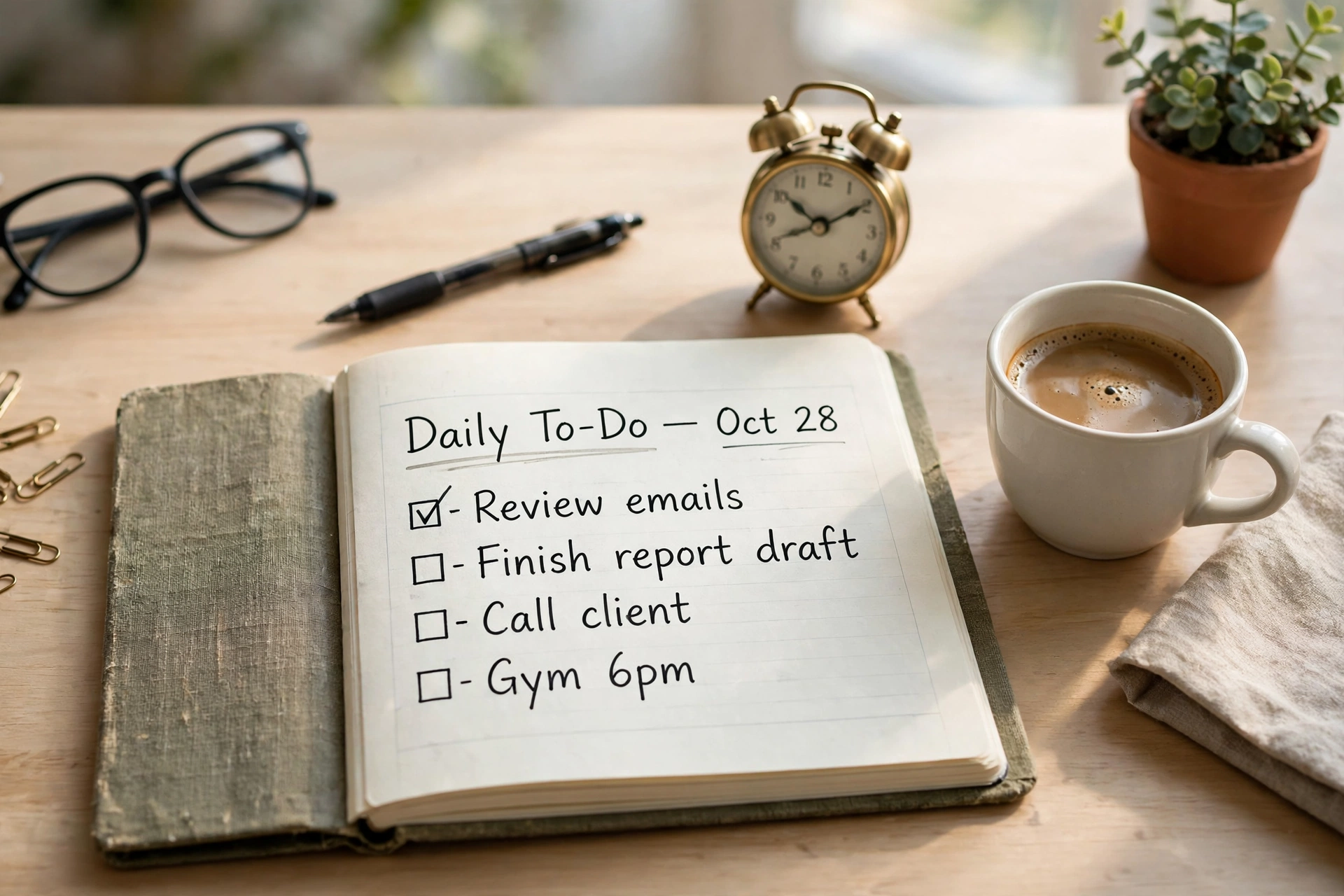
The fastest way to erase a boundary is to reply to a work message at 10pm. Every late reply teaches people that you are always available. Decide on a cut-off time — say 6:30pm — and stick to it. Turn off work notifications on your phone after that time, and answer the message the next morning instead. Most “urgent” evening messages are not urgent at all; they just feel that way because they arrive in real time. How to stop overworking often comes down to this one habit: letting the message wait until morning.
5. Talk to Your Boss Before Things Boil Over
Setting boundaries with your boss feels risky, but it is far easier than fixing burnout later. Pick a calm moment, not the middle of a crisis, and frame it around the work: “I want to do my best on the launch, so I need to protect two mornings a week for it — can we move my other tasks around?” Bosses usually respond well to a clear plan, because it shows you are thinking about results, not avoiding work. If your workload keeps growing, ask which task should come off the list — that question alone often changes the conversation.
6. Handle Pushback Without Giving In
Some people will test a new boundary. A colleague might say “just this once” or a manager might pile on work anyway. Expect it, and do not treat it as a failure. Repeat your limit calmly, in the same words: “I understand it’s urgent — I can start it tomorrow morning.” You do not need a new argument every time; consistency is the argument. Work boundaries examples from real offices all share this pattern: the person who holds the line politely, twice, is rarely asked a third time.
7. Review Your Boundaries Every Month
Boundaries are not set once and forgotten. Your workload changes, your team changes, and a limit that worked in January may not fit in June. Once a month, ask yourself three questions: What kept getting interrupted? What did I say yes to that I regret? What one limit would help most next month? Then adjust one thing. Small, regular updates keep your boundaries realistic — and realistic boundaries are the ones you actually keep.
When Boundaries Feel Selfish (They Are Not)
Many people — especially the helpful ones — worry that boundaries make them selfish. It helps to remember the alternative: a person who never says no eventually burns out, and a burned-out person helps nobody. Setting limits is how you stay useful over the long term. Your colleagues would rather have a rested, reliable teammate than an exhausted one who says yes to everything and delivers late. Protecting your time at work is not taking something away from the team; it is making sure you can keep showing up for it.
Frequently Asked Questions
How do I set boundaries at work without sounding rude?
Keep it short, kind, and specific. “I can’t take that on this week” is polite and complete. You do not need to justify yourself — a calm tone does the work.
What if my boss does not respect my boundaries?
Restate the limit once, calmly, and link it to the work: “To finish the launch on time, I need these two mornings free.” If the pattern continues, raise it in a one-to-one meeting with a concrete example.
Is it okay to say no to extra work?
Yes. Saying no to one task is how you say yes to doing your real work well. Offer an alternative when you can, such as a later date or a smaller piece of the task.
How do I stop working after hours?
Set a cut-off time, turn off work notifications after it, and leave your work laptop closed. The first week feels strange; by the second, your evenings start to feel like yours again.
What are examples of healthy work boundaries?
Fixed working hours, no meetings during focus blocks, a lunch break away from your desk, no work messages after a set time, and a clear list of what you will and will not take on each week.
Final Thoughts
Boundaries are not walls — they are fences with a gate you control. Setting boundaries at work is a skill you build one small limit at a time. Decide your two or three non-negotiables, say no in a short kind sentence, make your limits visible, and review them every month. You will not get it perfect the first week, and that is fine. The goal is not a perfect boundary; it is a working day that leaves you with energy for the rest of your life.

How to Set Boundaries at Work: Simple Ways to Protect Your Time and Energy

How to Stop Overthinking Before Bed: Simple Ways to Quiet Your Mind and Sleep Better

How to Prioritize Work Tasks: Simple Methods That Help You Get the Right Things Done

How to Stay Focused at Work: Simple Habits That Help You Get More Done

Punch Card Loyalty Program for Small Business: A Simple Guide That Brings Customers Back

Email Marketing Strategies for Small Business: A Simple Guide That Turns Subscribers Into Sales

How to Write a Business Contract for Your Small Business: A Simple Guide

Thank You Message for Customers: A Simple Guide With Examples That Build Loyalty

Small Business Cash Flow Problems and How to Fix Them: A Simple Guide

How to Start a Podcast for Your Business: A Simple Guide That Gets You Heard

How to Repurpose Blog Content for Social Media Without Starting From Scratch

How to Write a Professional Business Email That Gets a Reply

How to Set SMART Goals for a Small Business: A Practical Guide That Actually Works

How to Create a Content Calendar for a Small Business
How to Create a Small Business Content Marketing Plan That Actually Gets Results
How to Handle Customer Complaints in a Small Business: A Calm, Practical Guide That Turns Problems Into Loyalty

How to Write a Simple Business Plan for Your Small Business: A Practical Guide That Gets You Started
How to Set Up a Simple Referral Program for Your Small Business: A Beginner’s Guide That Brings in New Customers
How to Track Small Business Expenses: A Simple System That Keeps Your Money in Order

How to Price Your Services as a Small Business: A Simple Guide That Protects Your Profit
How to Set Boundaries at Work: Simple Ways to Protect Your Time and Energy
How to Stop Overthinking Before Bed: Simple Ways to Quiet Your Mind and Sleep Better
How to Prioritize Work Tasks: Simple Methods That Help You Get the Right Things Done
How to Stay Focused at Work: Simple Habits That Help You Get More Done
Punch Card Loyalty Program for Small Business: A Simple Guide That Brings Customers Back
Email Marketing Strategies for Small Business: A Simple Guide That Turns Subscribers Into Sales
How to Write a Business Contract for Your Small Business: A Simple Guide
Thank You Message for Customers: A Simple Guide With Examples That Build Loyalty
Small Business Cash Flow Problems and How to Fix Them: A Simple Guide
How to Start a Podcast for Your Business: A Simple Guide That Gets You Heard

 entertainment1 year ago
PYT Telegram: A Complete Guide to Understanding, Using, and Maximizing It

 entertainment1 year ago
OnionFlix: Everything You Need to Know About This Streaming Website
- education1 year ago
How to Become a Software Engineer: A Complete Guide
- others1 year ago
Nook vs Kindle: Which E-Reader Is Right for You?





