others
Multi Point Constraint (MPC): A Complete Guide
Published
10 months agoon
By
Hamari Web
Table of Contents
ToggleIntroduction
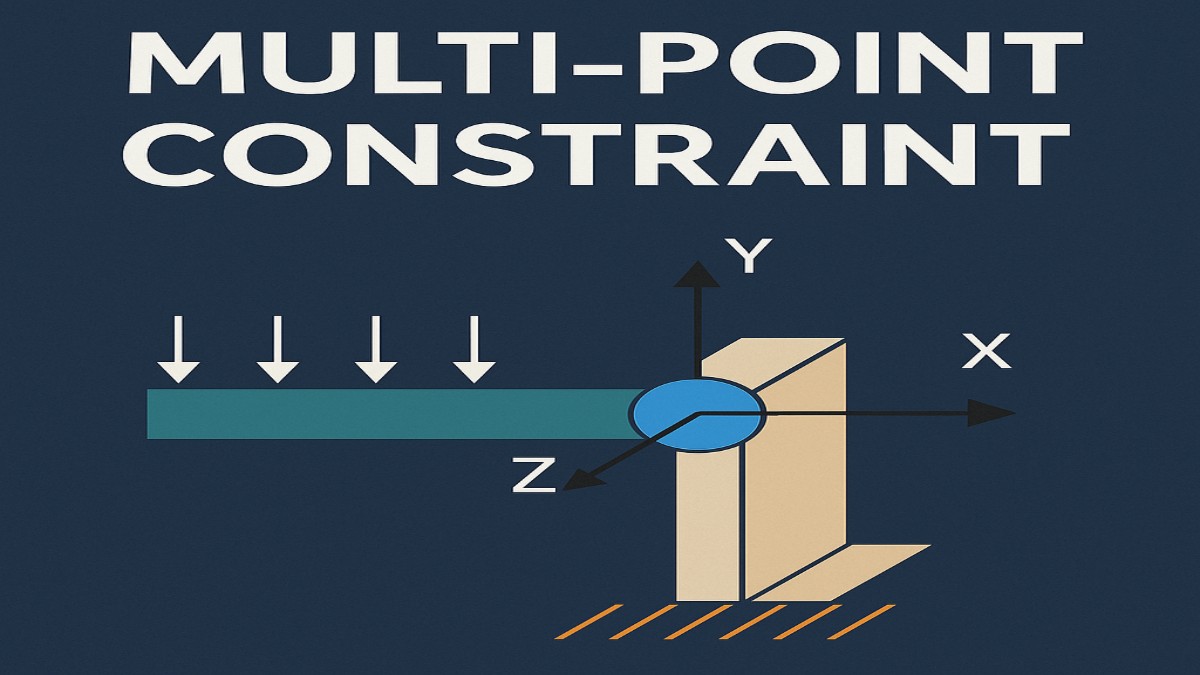
Multi Point Constraint .In the world of engineering simulations, particularly finite element analysis (FEA), how parts are connected or constrained can drastically affect the results. One such powerful tool is the Multi Point Constraint (MPC). It’s a fancy term, but once you understand it, you’ll realize it’s essential for accurate and efficient modeling.
What is a Constraint in Engineering/Simulation?
In simulations, a constraint is a boundary condition applied to restrict certain movements or behaviors of elements. It ensures the model mimics the physical world closely.
Overview of Multi Point Constraint (MPC)
Unlike traditional constraints that act at a single node or point, MPCs link multiple nodes together in a defined relationship, often involving motion or displacement.
Understanding the Concept of MPC
Definition of Multi Point Constraint
A Multi Point Constraint (MPC) is a technique used to enforce a mathematical relationship between the degrees of freedom (DOF) of multiple nodes in a model. For example, it can force the displacement at one node to be equal to that at another node or to be a function of several other nodes.
How It Differs from Single Point Constraint
- Single Point Constraint (SPC): Restrains one DOF at one node.
- Multi Point Constraint (MPC): Links multiple DOFs, possibly across several nodes.
The Need for Multi Point Constraints
When MPC is Used
MPCs are invaluable when modeling:
- Connections between parts that move together.
- Symmetry and periodic boundaries.
- Rotational constraints and kinematic couplings.
Real-World Engineering Scenarios
Think about how:
- A hinge rotates but keeps parts together.
- A bolt connects two plates but allows some rotation.
- A gear transfers motion from one shaft to another.
MPCs help simulate these accurately.
Mathematical Foundation of MPC
Equation-Based Relationships
MPCs rely on equations of the form:
u₁ = αu₂ + βu₃ + ...
Where u₁ is the displacement (or rotation) of one node, and u₂, u₃ are those of other nodes, scaled by constants α, β, etc.
Degree of Freedom (DOF) Mapping
Each node in FEA has multiple DOFs (translations, rotations). MPCs establish a relationship among these DOFs across nodes.
How MPC Works in Finite Element Analysis (FEA)
Role in Simulations and Structural Analysis
MPCs add extra constraint equations to the system of FEA equations. They guide how the solver interprets nodal motion.
MPC Equations and Solver Behavior
Modern solvers treat MPCs with special algorithms to avoid over-constraining or creating inconsistencies, which can lead to numerical errors.
Types of Multi Point Constraints
Rigid MPCs
These assume zero flexibility between connected nodes. Often used in solid mechanics to simulate rigid parts.
Elastic MPCs
Allow for a bit of flexibility, modeled using stiffness coefficients. Useful when some elasticity exists in the connection.
Kinematic Couplings
Used to tie motion of a slave node to a master node, like gears or robotic joints.
MPC vs RBE (Rigid Body Elements)
Differences and Similarities
- MPCs are equation-based and flexible.
- RBEs are element-based and typically rigid.
When to Use Each
- Use MPC for complex relationships or custom DOF links.
- Use RBE when rigid connection is acceptable and easier to model.
Implementation in FEA Software
Using MPC in ANSYS
ANSYS uses Constraint Equations (CE) to define MPCs. The GUI and APDL scripting allow users to link node DOFs flexibly.
Using MPC in Abaqus
In Abaqus, MPCs are declared via keywords like *MPC with predefined types (e.g., BEAM, HINGE, LINK). You can also use *EQUATION for custom relationships.
Other Tools Supporting MPC
- NASTRAN (uses RBE2, RBE3)
- LS-DYNA (uses *CONSTRAINED_NODAL_RIGID_BODY)
- COMSOL, Altair HyperMesh, and others support similar functionality.
Common Applications of MP
Connecting Parts in Assemblies
Used when parts must move together in a synchronized way or transfer loads.
Symmetry Conditions
When modeling a quarter or half of a structure, MPCs enforce symmetrical motion at boundaries.
Modeling Bolts, Hinges, and Interfaces
MPCs represent these features realistically without adding complex 3D elements.
Summary and Key Takeaways
- Multi Point Constraint (MPC) links multiple degrees of freedom across nodes.
- It’s essential in modeling real-world mechanical behaviors in FEA.
- Useful in assemblies, joints, symmetry, and coupling situations.
- Implemented in most FEA tools using equations or keywords.
- Proper usage ensures accuracy, efficiency, and reliability in simulations.
FAQs
1. What is a Multi Point Constraint in simple terms?
It’s a way to link motions of different parts in a simulation so they behave like they’re connected.
2. How is MPC different from a normal constraint?
MPC links multiple nodes and DOFs, whereas regular constraints act on just one.
3. Is MPC only used in structural simulations?
No, it’s also used in fluid dynamics, thermal analysis, and electromagnetics when node relationships matter.
4. Can MPC cause simulation failure?
Yes, if overused or incorrectly applied, it can lead to errors or convergence issues.
5. Do all FEA programs support MPC?
Most do, but the method of defining MPCs varies across software like ANSYS, Abaqus, and NASTRAN.

How to Start a Lawn Mowing Business: Simple Steps That Turn Mowing Into Income

How to Start a Dog Walking Business: Simple Steps That Turn Walks Into Income

How to Start a House Cleaning Business: Simple Steps That Win Your First Clients

How to Pay Employees in Your Small Business: Simple Steps That Get It Right

How to Do Market Research for Small Business: Simple Steps That Find Your Customers

How to Start a Tutoring Business: Simple Steps That Turn Your Knowledge Into Income

How to Create a Digital Product to Sell: A Simple Guide for Small Business Beginners

Christmas Marketing Ideas for Small Businesses: Simple Ways to Win Festive Customers

Benefit of Sole Proprietorship: Simple Advantages That Make Starting Easy

Grant Funding for Small Businesses: A Simple Guide to Finding and Winning Grants

How to Repurpose Blog Content for Social Media Without Starting From Scratch

How to Write a Simple Business Plan for Your Small Business: A Practical Guide That Gets You Started

How to Create a Small Business Content Marketing Plan That Actually Gets Results
How to Handle Customer Complaints in a Small Business: A Calm, Practical Guide That Turns Problems Into Loyalty

How to Get More Clients for Your Business: Simple Ways That Actually Work

How to Create a Content Calendar for a Small Business

How to Write a Professional Business Email That Gets a Reply

How to Set SMART Goals for a Small Business: A Practical Guide That Actually Works

How to Set Up a Simple Referral Program for Your Small Business: A Beginner’s Guide That Brings in New Customers

How to Write a Business Proposal for Your Small Business: A Simple Guide That Wins Clients

How to Start a Lawn Mowing Business: Simple Steps That Turn Mowing Into Income

How to Start a Dog Walking Business: Simple Steps That Turn Walks Into Income

How to Start a House Cleaning Business: Simple Steps That Win Your First Clients

How to Pay Employees in Your Small Business: Simple Steps That Get It Right

How to Do Market Research for Small Business: Simple Steps That Find Your Customers

How to Start a Tutoring Business: Simple Steps That Turn Your Knowledge Into Income

How to Create a Digital Product to Sell: A Simple Guide for Small Business Beginners

Christmas Marketing Ideas for Small Businesses: Simple Ways to Win Festive Customers

Benefit of Sole Proprietorship: Simple Advantages That Make Starting Easy

Grant Funding for Small Businesses: A Simple Guide to Finding and Winning Grants
Trending
entertainment1 year agoPYT Telegram: A Complete Guide to Understanding, Using, and Maximizing It
entertainment1 year agoOnionFlix: Everything You Need to Know About This Streaming Website
education1 year agoHow to Become a Software Engineer: A Complete Guide
others1 year agoNook vs Kindle: Which E-Reader Is Right for You?