others
Taiga

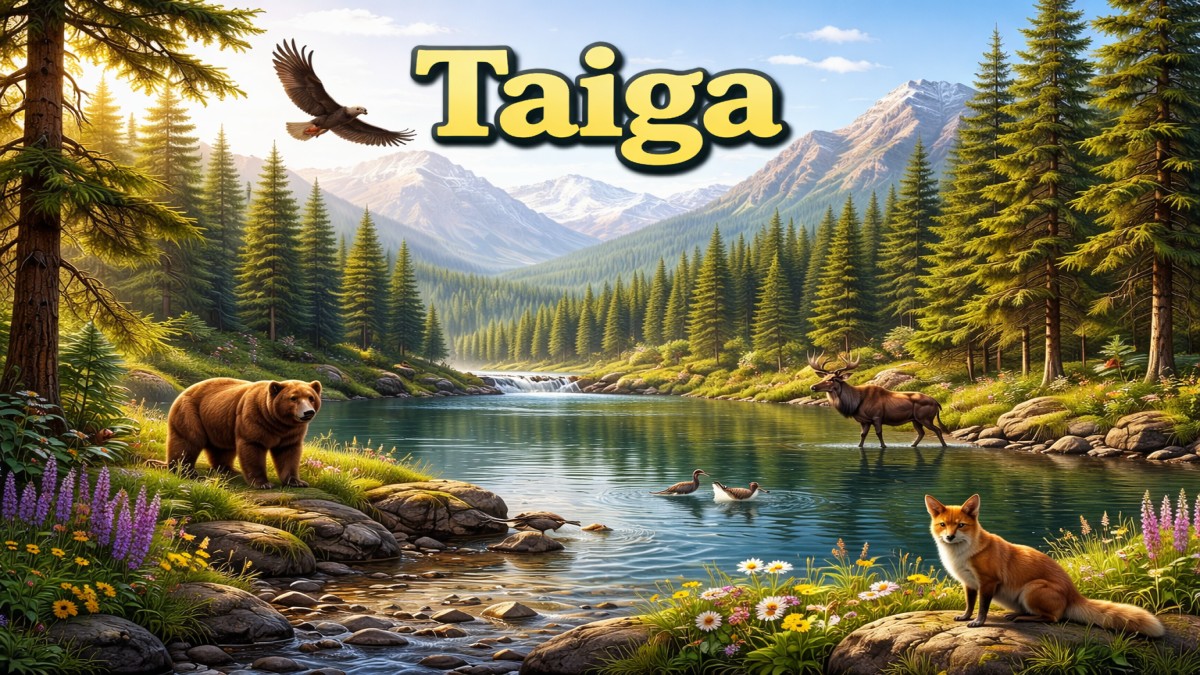
The taiga, also known as the boreal forest, is the largest land biome on Earth. Stretching like a green belt across the northern parts of the globe, the taiga is a land of towering evergreen trees, long winters, and incredible natural resilience. At first glance, it may seem harsh and silent, but look closer and you’ll discover a biome full of life, balance, and global importance.
So, what makes the taiga so special? Let’s explore it step by step.
What Is Taiga?
Taiga is a forest biome dominated by coniferous trees such as pine, spruce, and fir. It lies just south of the Arctic tundra and experiences extremely cold winters and short, mild summers.
Think of the taiga as Earth’s natural winter jacket—it protects the planet by storing carbon and regulating climate.
Meaning and Definition of Taiga
The word taiga comes from a Russian term meaning “land of little sticks,” referring to dense forests of thin, needle-leaved trees. Scientifically, it is classified as a cold forest biome adapted to low temperatures and limited sunlight.
Location of the Taiga Biome
The taiga forms a wide belt across the Northern Hemisphere.
Taiga in North America
In North America, taiga covers large areas of Canada and Alaska. These forests stretch for thousands of kilometers and are among the least disturbed ecosystems on Earth.
Taiga in Europe and Asia
In Europe and Asia, taiga spans Scandinavia, Russia, and Siberia. Russia alone contains more than half of the world’s taiga forests.
Climate of the Taiga
Winter Conditions
Winters in the taiga are long, dark, and bitterly cold. Temperatures often drop below –30°C, and snowfall is heavy. The ground may remain frozen for months.
Summer Season
Summers are short but relatively warm, lasting only 2–4 months. This brief growing season is just enough for plants and animals to thrive before winter returns.
Soil Characteristics of Taiga
Taiga soil is thin, acidic, and low in nutrients. Because cold temperatures slow decomposition, organic matter builds up slowly. Despite poor soil quality, trees survive thanks to shallow root systems and special adaptations.
Vegetation of the Taiga
Dominant Trees
The taiga is dominated by coniferous trees, including:
- Pine
- Spruce
- Fir
- Larch
These trees remain green year-round, allowing them to photosynthesize whenever sunlight is available.
Coniferous Adaptations
- Needle-shaped leaves reduce water loss
- Waxy coating protects from freezing
- Cone shape helps shed snow
Nature, once again, designs perfectly for survival.
Animals of the Taiga
Mammals
The taiga is home to many hardy animals, such as:
- Moose
- Wolves
- Bears
- Lynx
- Reindeer
These animals have thick fur and layers of fat to survive freezing temperatures.
Birds and Insects
Birds like owls and woodpeckers live in the taiga year-round, while many insects emerge quickly during summer to complete their life cycles.
Human Life in the Taiga
Human population in the taiga is low due to its harsh climate. Indigenous communities rely on hunting, fishing, and herding. Modern settlements focus on forestry and mining, but living here still requires resilience and adaptation.
Economic Importance of Taiga
The taiga is a major source of:
- Timber and paper products
- Minerals and fossil fuels
- Medicinal plants
It plays a significant role in national and global economies, especially in Canada and Russia.
Environmental Importance of Taiga
The taiga is a global climate regulator. It absorbs massive amounts of carbon dioxide, helping slow climate change. It also protects biodiversity and maintains Earth’s ecological balance.
Threats to the Taiga Biome
Despite its size, the taiga faces serious threats:
- Deforestation
- Climate change
- Wildfires
- Mining and industrial pollution
Rising temperatures are especially dangerous, as they disrupt fragile ecosystems.
Conservation of Taiga
Protecting the taiga requires:
- Sustainable forestry
- Wildlife protection laws
- Climate action
- Indigenous land rights
Saving the taiga means safeguarding the planet’s future.
Conclusion
The taiga may appear cold and quiet, but it is one of Earth’s most powerful and essential ecosystems. From regulating climate to supporting wildlife and human livelihoods, its role is undeniable. As climate change accelerates, protecting the taiga is no longer optional—it’s necessary. Like a silent guardian, the taiga works tirelessly for the planet. It’s time we returned the favor.
Frequently Asked Questions (FAQs)
1. What is the taiga biome?
It is a cold forest biome dominated by coniferous trees.
2. Where is the taiga found?
In northern regions of North America, Europe, and Asia.
3. Why is the taiga important?
It stores carbon, regulates climate, and supports biodiversity.
4. What animals live in the taiga?
Moose, wolves, bears, lynx, and many birds.
5. What threatens the taiga?
Climate change, deforestation, and industrial activities.

Shop Easter Basket: The Ultimate Guide to Perfect Easter Gifts

Best Apps to Make Money Online USA (2026 Guide)

How to Start Affiliate Marketing with No Money

Freelance Jobs for Beginners USA (Start with No Experience)

Side Hustle Ideas from Home USA (No Experience Needed) – Beginner’s Guide

Online Jobs from Home USA (Daily Pay) – Start Earning Instantly

Beton Celular Autoclavizat: The Future of Lightweight, Eco-Friendly Construction

Goblets: A Timeless Symbol of Elegance and Celebration

AI Tools for Making Money Online Free (Best 2026 Guide)

Passive Income Apps USA Free: Earn Money Effortlessly in 2026

Ishraq Time in Delhi: What It Is, When It Happens, and Why It Matters
Beton Celular Autoclavizat: The Future of Lightweight, Eco-Friendly Construction

Read OPM Manga Online: Where and How to Enjoy One Punch Man Legally

Technisches Gymnasium: Your Gateway to Engineering and Technology

Why Every Small Business Needs a Digital Marketing Agency
Goblets: A Timeless Symbol of Elegance and Celebration

Gold Shower: Nature’s Cascading Yellow Wonder

The Indian Bow: A Legacy of Precision, Power, and Tradition

Robert Provost: A Life of Leadership, Community, and Vision

Are Political Donations Tax Deductible?
Shop Easter Basket: The Ultimate Guide to Perfect Easter Gifts
Best Apps to Make Money Online USA (2026 Guide)
How to Start Affiliate Marketing with No Money
Freelance Jobs for Beginners USA (Start with No Experience)
Side Hustle Ideas from Home USA (No Experience Needed) – Beginner’s Guide
Online Jobs from Home USA (Daily Pay) – Start Earning Instantly
Beton Celular Autoclavizat: The Future of Lightweight, Eco-Friendly Construction
Goblets: A Timeless Symbol of Elegance and Celebration
AI Tools for Making Money Online Free (Best 2026 Guide)
Passive Income Apps USA Free: Earn Money Effortlessly in 2026

 entertainment7 months ago
PYT Telegram: A Complete Guide to Understanding, Using, and Maximizing It

 entertainment7 months ago
OnionFlix: Everything You Need to Know About This Streaming Website
- others6 months ago
Nook vs Kindle: Which E-Reader Is Right for You?
- gaming7 months ago
Melisandre: The Enigmatic Priestess of Game of Thrones