business
Liaison: Meaning, Role, and Importance in Modern Communication

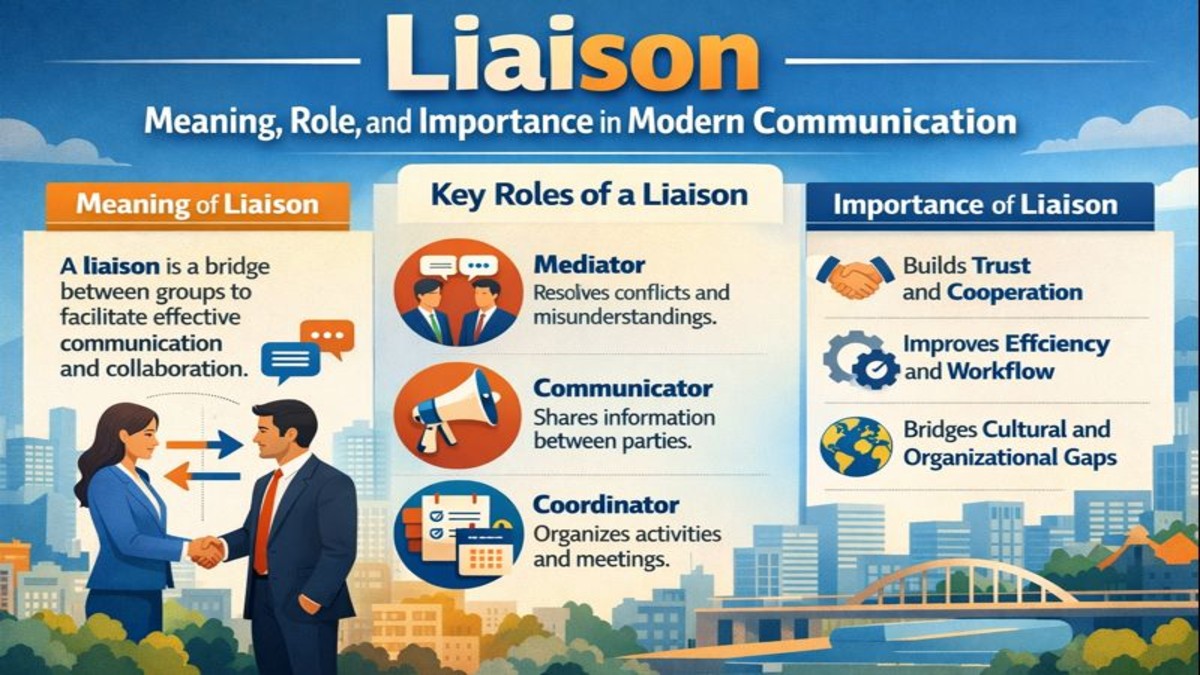
What Is a Liaison?
Definition of Liaison
A liaison is a person who acts as a link or bridge between two or more parties to ensure smooth communication and cooperation. Simply put, a liaison keeps everyone on the same page. Think of them as the glue that holds conversations together.
Origin and Etymology of the Word
The word “liaison” comes from the French language, meaning “to bind” or “to connect.” And that’s exactly what a liaison does—binds people, teams, or organizations through effective communication.
Understanding the Concept of Liaison
Liaison as a Connector
A liaison connects departments, organizations, or even countries. When information risks getting lost or misunderstood, the liaison steps in like a translator, making sure the message is clear and accurate.
Communication Bridge Explained
Imagine two islands separated by water. Without a bridge, nothing flows smoothly. A liaison is that bridge, ensuring ideas, instructions, and feedback travel safely in both directions.
Types of Liaisons
Business Liaison
In business, liaisons coordinate between departments, clients, or partners. They help align goals and avoid costly misunderstandings.
Government Liaison
Government liaisons communicate between public agencies and private organizations. They play a key role in policy implementation and compliance.
Corporate Liaison
Corporate liaisons often work between management and employees, ensuring transparency and collaboration.
Community and Public Liaison
These liaisons represent organizations within communities, addressing concerns and building trust.
Role and Responsibilities of a Liaison
Key Duties
A liaison’s duties include sharing information, resolving issues, and coordinating activities. They make sure messages are not only delivered but understood.
Daily Tasks
From attending meetings to writing reports, a liaison’s day is filled with communication tasks that keep operations running smoothly.
Reporting and Coordination
Liaisons gather feedback and report it to relevant stakeholders, helping leadership make informed decisions.
Skills Required to Be an Effective Liaison
Communication Skills
Clear speaking, active listening, and strong writing skills are essential. Without them, the bridge collapses.
Negotiation and Mediation
Liaisons often find themselves in the middle of disagreements. Negotiation skills help them find common ground.
Emotional Intelligence
Understanding emotions—both yours and others’—helps manage sensitive situations with grace.
Liaison in the Workplace
Improving Team Collaboration
Liaisons promote teamwork by ensuring everyone understands goals and expectations.
Reducing Miscommunication
They prevent confusion by clarifying instructions before problems arise.
Liaison vs Manager
Key Differences
Managers oversee people and processes. Liaisons focus on communication and coordination.
Authority and Responsibility
While managers have authority, liaisons rely more on influence and trust.
Importance of Liaison Roles
Enhancing Relationships
Strong relationships thrive on clear communication, and liaisons make that happen.
Supporting Decision-Making
By providing accurate information, liaisons help leaders make smarter choices.
Liaison in International Relations
Diplomatic Liaison
Diplomatic liaisons manage communication between governments, reducing misunderstandings that could escalate into conflicts.
Cultural Sensitivity
Understanding cultural differences is crucial when acting as an international liaison.
Challenges Faced by Liaisons
Managing Conflicts
Balancing different interests isn’t easy. Liaisons must remain neutral and calm.
Handling Pressure
Deadlines, expectations, and high stakes can be stressful, requiring resilience.
How to Become a Liaison
Education and Training
Degrees in communication, business, or public relations are helpful.
Career Pathways
Many liaisons grow into leadership roles thanks to their broad organizational insight.
Real-Life Examples of Liaison Roles
Corporate World
Project liaisons ensure teams meet deadlines and stay aligned.
Government and NGOs
Liaisons help coordinate aid, policy, and public services effectively.
Future of Liaison Roles
Digital Communication Impact
Technology has expanded the liaison’s reach, enabling instant global communication.
Remote Liaison Work
Remote liaisons are becoming common, proving that bridges don’t always need physical presence.
Common Misconceptions About Liaisons
Clearing the Myths
A liaison is not just a messenger. They are strategic communicators who add real value.
Conclusion
A liaison plays a vital role in connecting people, ideas, and organizations. In a world overflowing with information, having someone who ensures clarity and cooperation is priceless. Whether in business, government, or international relations, liaisons keep communication flowing and relationships strong.
FAQs
What does a liaison do?
A liaison facilitates communication and coordination between different parties.
Is a liaison a manager?
No, a liaison focuses on communication, not direct supervision.
What skills are needed for a liaison role?
Strong communication, negotiation, and emotional intelligence.
Where do liaisons work?
They work in businesses, governments, NGOs, and international organizations.
Is liaison a good career choice?
Yes, it offers diverse opportunities and strong career growth.

Consultative Selling Techniques: A Complete Guide to Building Customer Trust in 2026

Sales Objection Handling: A Complete Guide to Closing More Deals in 2026

Customer Closing Techniques: A Complete Guide to Converting Prospects into Buyers (2026)

Customer Conversion Process: A Complete Guide to Turning Visitors into Loyal Customers (2026)

Sales Funnel Examples: A Complete Guide to Converting More Customers (2026)

Lead Qualification Framework: A Complete Guide to Finding High-Quality Customers (2026)

Website Credibility Factors: A Complete Guide to Building Trust Online (2026)

Online Reputation Monitoring: A Complete Guide to Protecting Your Brand in 2026

Customer Testimonial Strategy: A Complete Guide to Building Trust and Increasing Sales (2026)

Business Storytelling Framework: A Complete Guide to Building Strong Brand Connections (2026)
Consultative Selling Techniques: A Complete Guide to Building Customer Trust in 2026
Sales Objection Handling: A Complete Guide to Closing More Deals in 2026
Customer Closing Techniques: A Complete Guide to Converting Prospects into Buyers (2026)
Customer Conversion Process: A Complete Guide to Turning Visitors into Loyal Customers (2026)
Sales Funnel Examples: A Complete Guide to Converting More Customers (2026)
Lead Qualification Framework: A Complete Guide to Finding High-Quality Customers (2026)
Website Credibility Factors: A Complete Guide to Building Trust Online (2026)
Online Reputation Monitoring: A Complete Guide to Protecting Your Brand in 2026
Customer Testimonial Strategy: A Complete Guide to Building Trust and Increasing Sales (2026)
Business Storytelling Framework: A Complete Guide to Building Strong Brand Connections (2026)

 entertainment1 year ago
PYT Telegram: A Complete Guide to Understanding, Using, and Maximizing It

 entertainment1 year ago
OnionFlix: Everything You Need to Know About This Streaming Website
- education1 year ago
How to Become a Software Engineer: A Complete Guide
- others12 months ago
Nook vs Kindle: Which E-Reader Is Right for You?