others
Darwinian Finches – Nature’s Classroom of Evolution

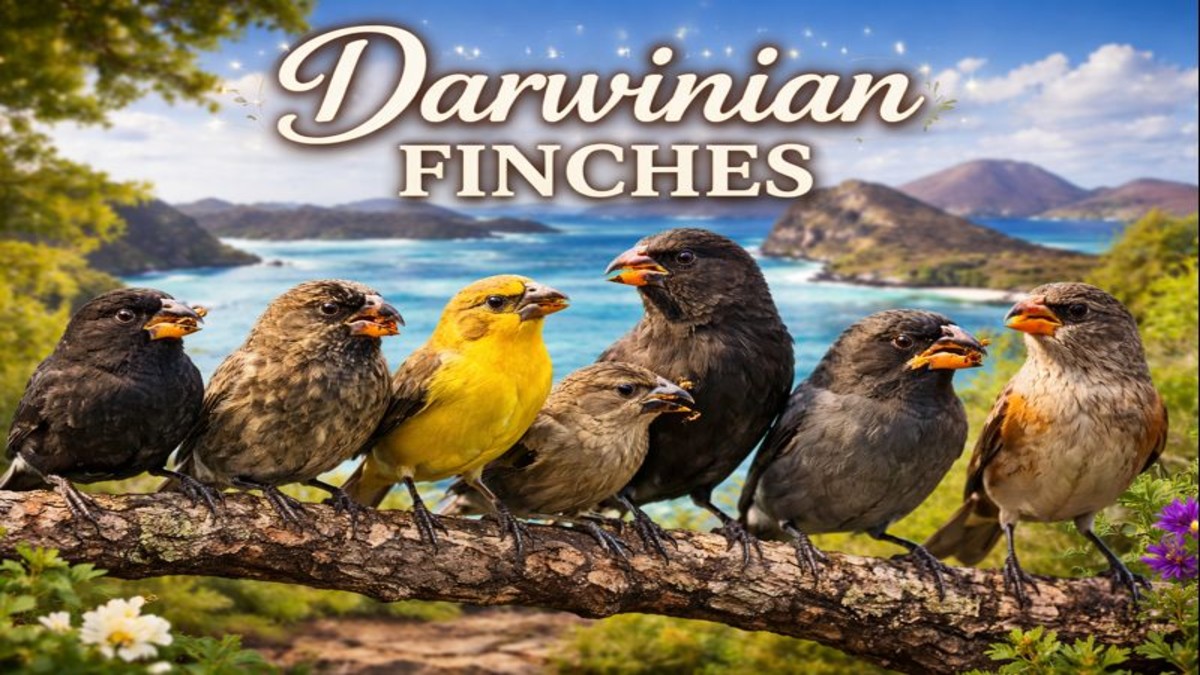
If evolution ever needed a mascot, it would be the Darwinian finches. These tiny birds, flitting around the volcanic islands of the Galápagos, carry in their beaks the story of how life changes, adapts, and survives.
Darwinian finches are small birds that live mainly on the Galápagos Islands, yet they carry one of the biggest stories in science. These finches look similar at first glance, but their beaks are wonderfully different—some are thick and strong for cracking seeds, while others are long and sharp for catching insects or sipping nectar.
These tiny differences in beak shape helped scientists understand natural selection. When food is scarce or the environment changes, finches with the most suitable beaks survive and reproduce. Over many generations, these helpful traits become common, slowly creating new species. This process is called adaptive radiation, where one ancestor gives rise to many specialized descendants.
Long-term studies by researchers like Peter and Rosemary Grant proved that evolution is not just ancient history—it is happening right now. During drought years, finches with larger beaks were more likely to survive because they could break tough seeds. After wetter years, smaller beaks became useful again. Nature is constantly adjusting its design.
Today, Darwinian finches are more than textbook examples. They help scientists understand how species may respond to climate change and environmental stress. They also remind us how fragile ecosystems can be. Protecting the Galápagos Islands means protecting one of the clearest living demonstrations of evolution on Earth—a real classroom where nature teaches, one beak at a time.
Introduction to Darwinian Finches
What Are Darwinian Finches?
Darwinian finches are a group of about 15 bird species found mostly in the Galápagos Islands. They look similar, but their beaks? Totally different.
Why They Changed Biology Forever
Their beak shapes told a story louder than words—a story about survival.
Charles Darwin and the Galápagos Islands
The Historic Voyage of the Beagle
In 1835, Darwin visited these islands and collected finches without realizing how revolutionary they were.
First Observations That Sparked a Theory
It was later, back in England, that he noticed the pattern.
Types of Darwinian Finches
Ground Finches
They feast on seeds with powerful beaks.
Tree and Warbler Finches
These prefer insects, nectar, and buds.
Beak Shapes and Their Functions
Thick Beaks for Seeds
Cracking seeds is like opening coconuts with pliers.
Sharp Beaks for Insects
Precision tools for tiny meals.
Natural Selection in Action
How Food Sources Shape Beaks
When food changes, birds change—or die.
Survival of the Best-Fitted
Not strongest. Not smartest. Just best adapted.
Adaptive Radiation Explained
From One Species to Many
One ancestor, many paths.
Isolation on Different Islands
Each island became its own evolutionary lab.
Environmental Changes and Finches
Droughts and Population Shifts
Hard years favored stronger beaks.
Long-Term Evolutionary Studies
Real-time evolution—no time machine needed.
The Role of Genetics
Inherited Traits
Parents pass on beak blueprints.
Gene Mutations and Variation
Tiny changes make big differences.
Modern Research on Darwinian Finches
Peter and Rosemary Grant’s Work
They tracked finches for decades.
What We’re Still Learning Today
Evolution isn’t done writing its story.
Why Darwinian Finches Matter Today
Lessons for Conservation
Adaptation has limits.
Understanding Climate Change
Rapid shifts challenge even nature’s best.
Common Misconceptions
Did Darwin Discover Them?
He studied them—but others named them.
Are They Really Finches?
They’re tanagers, technically!
Protecting the Galápagos Ecosystem
Threats from Humans
Tourism and invasive species are real dangers.
Conservation Efforts
Science and stewardship go hand in hand.
Conclusion
Darwinian finches are more than birds—they’re proof that life evolves right before our eyes.
FAQs
1. How many species exist?
Around 15.
2. Why are their beaks different?
Different foods.
3. Can evolution be observed today?
Yes, in finch populations.
4. Where do they live?
Mostly in the Galápagos.
5. Why are they important?
They prove natural selection in action.

Consultative Selling Techniques: A Complete Guide to Building Customer Trust in 2026

Sales Objection Handling: A Complete Guide to Closing More Deals in 2026

Customer Closing Techniques: A Complete Guide to Converting Prospects into Buyers (2026)

Customer Conversion Process: A Complete Guide to Turning Visitors into Loyal Customers (2026)

Sales Funnel Examples: A Complete Guide to Converting More Customers (2026)

Lead Qualification Framework: A Complete Guide to Finding High-Quality Customers (2026)

Website Credibility Factors: A Complete Guide to Building Trust Online (2026)

Online Reputation Monitoring: A Complete Guide to Protecting Your Brand in 2026

Customer Testimonial Strategy: A Complete Guide to Building Trust and Increasing Sales (2026)

Business Storytelling Framework: A Complete Guide to Building Strong Brand Connections (2026)
Consultative Selling Techniques: A Complete Guide to Building Customer Trust in 2026
Sales Objection Handling: A Complete Guide to Closing More Deals in 2026
Customer Closing Techniques: A Complete Guide to Converting Prospects into Buyers (2026)
Customer Conversion Process: A Complete Guide to Turning Visitors into Loyal Customers (2026)
Sales Funnel Examples: A Complete Guide to Converting More Customers (2026)
Lead Qualification Framework: A Complete Guide to Finding High-Quality Customers (2026)
Website Credibility Factors: A Complete Guide to Building Trust Online (2026)
Online Reputation Monitoring: A Complete Guide to Protecting Your Brand in 2026
Customer Testimonial Strategy: A Complete Guide to Building Trust and Increasing Sales (2026)
Business Storytelling Framework: A Complete Guide to Building Strong Brand Connections (2026)

 entertainment1 year ago
PYT Telegram: A Complete Guide to Understanding, Using, and Maximizing It

 entertainment1 year ago
OnionFlix: Everything You Need to Know About This Streaming Website
- education1 year ago
How to Become a Software Engineer: A Complete Guide
- others12 months ago
Nook vs Kindle: Which E-Reader Is Right for You?