
business
How to Start a Car Detailing Business: Simple Steps That Turn Your Skills Into Income


Learning how to start a car detailing business is one of the simplest ways to turn a love of clean cars into real income. You do not need a shop, a big loan, or years of experience. You need the right kit, a clear plan, and a way for local car owners to find you.
Car detailing is more than a quick wash. It is a deep, careful clean of the inside and outside of a car — paint, wheels, glass, seats, carpets, and every small corner most owners never reach. Because the work is skilled and takes time, customers are happy to pay well for it. That is what makes it such a good small business to start.
This guide walks you through the whole journey, from your first plan to your first paying customer.
Is a Car Detailing Business a Good Idea?
Yes, for most beginners it is. The startup costs are low compared with many other businesses, you can start from home or from your car, and demand is steady. Cars get dirty every week, and busy owners would rather pay someone else to clean them properly.
It also suits people who like practical, hands-on work. Every car is different, every job has a visible result, and happy customers come back again and again. A regular customer who books a full detail every month is worth far more than a one-off wash.
The work is physical, and the first months take effort to build a customer base. But if you enjoy cars and you are reliable, it is a business that can grow from a weekend side job into a full-time income.
Start With a Simple Car Detailing Business Plan
Before you buy anything, write a short car detailing business plan. It does not need to be a long document. One page is enough to start, as long as it answers the real questions.
First, decide who your customers are. Commuters who want a monthly clean? Families with muddy cars and sticky seats? Owners of expensive cars who want a premium finish? Each group needs different services and different prices.
Next, decide what you will offer and where you will work. Will you travel to customers, or will they come to you? Will you focus on interiors, exteriors, or full details? Write down your starting costs, your prices, and how many jobs a week you need to cover them.
Finally, set a simple goal for the first three months — for example, ten regular customers. A short plan like this keeps you focused and stops you spending money on things you do not need yet.
Build Your Car Detailing Services List
Your car detailing services list is the menu your customers choose from, so keep it clear and simple. Three or four packages are better than a long confusing list.
A basic exterior wash is the entry point: wash, dry, wheels, tyres, and windows. An interior detail covers vacuuming, dashboard and console cleaning, glass, and mats. A full detail combines both, plus wax or sealant, seat shampooing, and carpet cleaning.
You can also add extras that customers love: pet hair removal, odour treatment, leather conditioning, engine bay cleaning, and headlight restoration. Each extra is a small upsell that raises the value of every job without much extra work.
Name your packages clearly, list exactly what each one includes, and put the time each takes next to the price. Customers trust a business that is open about what they are paying for.
Your Car Detailing Equipment List
Your car detailing equipment list is the heart of the business, so buy good basics and add specialist tools as you earn. You do not need the most expensive kit on day one, but cheap tools that break will cost you more in the long run.
Start with the essentials: a pressure washer, a wet and dry vacuum, two buckets with grit guards, wash mitts, drying towels, and a set of brushes for wheels, vents, and badges. Add a foam cannon if you want a professional-looking wash, and a dual-action polisher once you start offering paint correction.
The image below shows a typical starter kit laid out and ready to go.
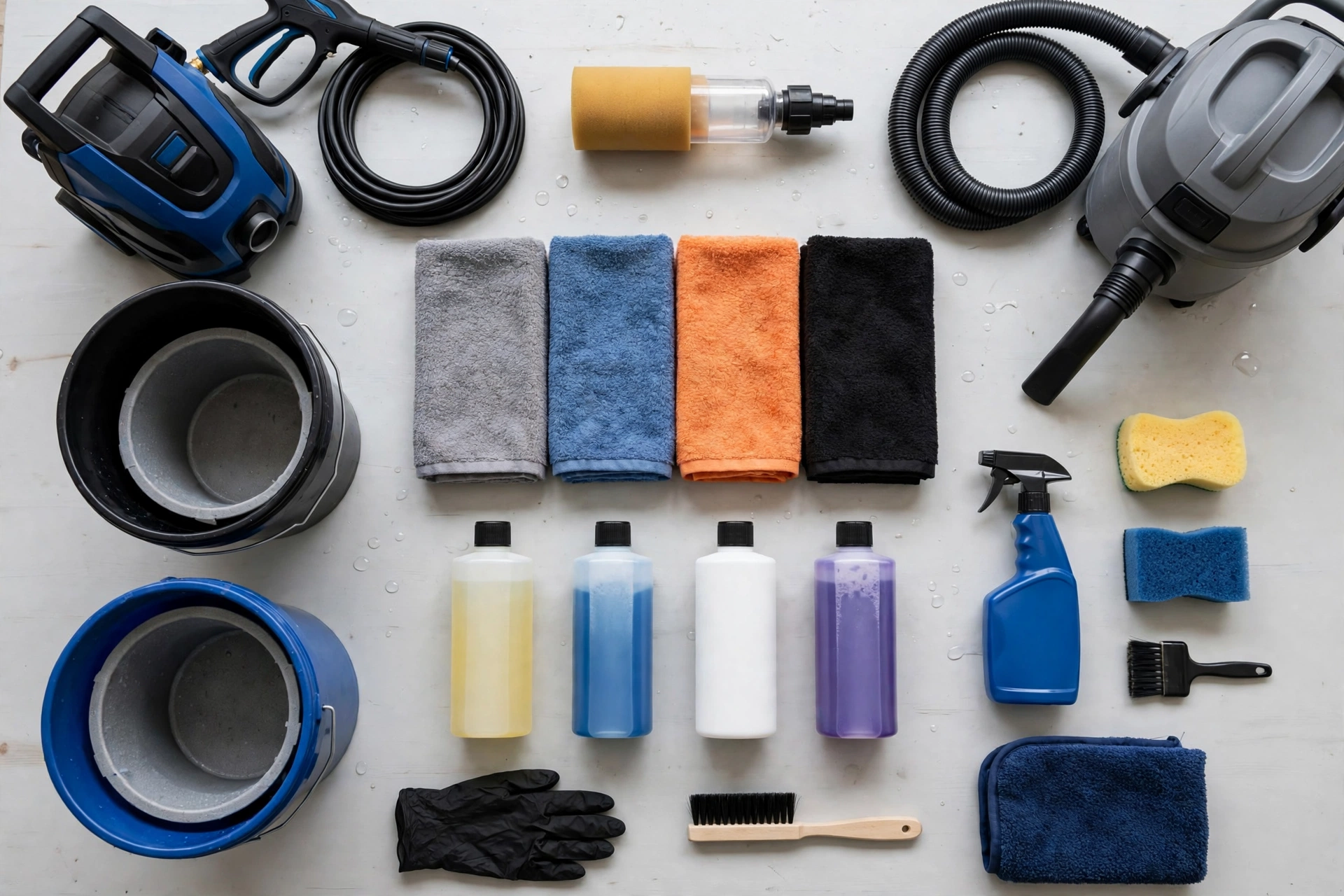
Look after your tools. Clean them after every job, store chemicals safely, and replace worn towels and pads before they can scratch paint. Good equipment, well kept, is part of your reputation.
Stock Up: Your Car Detailing Supplies List
Separate from the big tools, your car detailing supplies list covers the products you use up on every job: car shampoo, all-purpose cleaner, glass cleaner, interior cleaner, leather conditioner, tyre dressing, wax or sealant, and carpet shampoo.
Buy professional products in larger sizes once you know which ones you like — they work out cheaper per job than small retail bottles. Keep a simple stock sheet so you know what is running low before you run out in the middle of a customer’s car.
Use products that are safe for the surfaces you clean. A strong cleaner on the wrong leather or screen can cause damage that costs you a customer and a repair bill. Test every new product on a hidden spot first.
Choose From the Best Car Detailing Business Names
Your name is the first thing a customer sees, so pick from strong car detailing business names that are easy to say, easy to spell, and easy to remember. Short names work best, and a name that says what you do — such as your town plus “car detailing” — helps people find you online.
Before you settle on a name, check three things: that nobody else in your area is already using it, that the social media handle is free, and that a simple web address is available. A name you cannot use online will slow you down later.
Once you choose, use the same name everywhere — your van, your invoices, your social media, and your booking page. Consistency builds trust, and trust brings repeat bookings.
Mobile or Fixed: How a Mobile Car Detailing Business Works
A mobile car detailing business is the easiest way to start, because you go to the customer instead of paying rent on a unit. You work on driveways, in office car parks, and at customers’ homes, and your customers love the convenience of never leaving the house.
To run a mobile service you need reliable transport, a portable water supply or access to the customer’s tap, and a power source for your vacuum and polisher. A small van or a car with a trailer works well, and a simple booking system — even a phone number and a calendar — is enough to begin.
The main trade-off is weather and daylight. Rain and dark evenings limit outdoor work, so plan for that. Some mobile detailers offer interior-only jobs in bad weather, and others keep a covered space for winter work. A mobile start keeps your costs low, and you can add a fixed base later once you have regular income.
Set Your Budget and Startup Costs
Learning how to create a budget for a small business is a skill that will protect you from day one. Write down every cost before you spend anything: equipment, products, insurance, transport, phone, and marketing.
A basic mobile setup can cost a few hundred pounds if you buy sensibly, while a full professional kit with a polisher and a van setup costs more. Either way, keep a small cash cushion for the first month, when jobs may be slow.
Track every pound in and out for the first three months. When you know your real costs, you can set prices that cover them and still leave a profit. A business that knows its numbers is a business that survives.
Set Prices That Customers Understand
Pricing is where many new detailers go wrong, either charging too little and burning out, or charging so much that nobody books. Look at what other detailers in your area charge for similar packages, then set your prices in the same range while you build a reputation.
Price by the job, not by the hour, so customers know the cost before you start. A small hatchback costs less than a large SUV, and a car full of pet hair costs more than a clean one. Say this clearly on your price list so there are no surprises.
Offer a clear difference between your packages so customers can choose with confidence. As your reviews grow and your diary fills, you can raise your prices gradually. Good work, fairly priced, is the fastest way to a full diary.
Find Your First Customers
Your first customers are closer than you think. Start with friends, family, and neighbours, and offer a fair introductory price in exchange for honest reviews and photos of your work.
Set up a simple page on social media with before-and-after photos — they are the best advert a detailer has. Join local community groups, leave cards at garages and car parks where allowed, and ask every happy customer to tell a friend.
Local search matters too. Make sure your business name, area, and services appear on your pages so that people searching for a detailer near them can find you. A few good reviews in your first month are worth more than any paid advert.
How to Keep Customers Coming Back
Getting a customer once is good. Learning how to keep customers coming back is what turns a side job into a steady business. The secret is simple: do great work, be on time, and make rebooking easy.
After every job, send a short thank-you message and a reminder of when the car will need its next clean. Offer a small loyalty discount for regular bookings, and keep a note of each customer’s car, preferences, and last service date. People return to businesses that remember them.
Most of all, be consistent. A customer who gets the same careful finish every time will not look for anyone else. Word of mouth from a happy regular is the cheapest marketing you will ever get.
Common Mistakes to Avoid
The most common mistake is buying too much kit before you have customers. Start lean, earn, then upgrade. Another is skipping insurance — public liability cover is essential when you are working on other people’s cars.
Do not rush jobs to fit more in a day. A scratched panel or a missed stain costs more than the extra job earns. And never promise a result you cannot deliver. Honest expectations build a reputation that lasts.
Finally, keep learning. New products, new techniques, and new tools appear every year. The detailers who keep improving are the ones whose diaries stay full.
Frequently Asked Questions
How much does it cost to start a car detailing business?
A basic mobile setup can start from a few hundred pounds for essential tools and products. A full professional kit with a polisher, a good vacuum, and a van setup costs more, but you can add equipment gradually as you earn.
Do I need experience to start?
No formal qualification is needed, but practice matters. Detail your own car, then friends’ cars, until your results are consistent. Watch tutorials, learn the products, and build confidence before charging full prices.
Is mobile detailing better than a fixed unit?
Mobile detailing has lower costs and suits most beginners, because you go to the customer. A fixed unit gives you shelter from weather and room for bigger jobs, but it adds rent. Many detailers start mobile and add a base later.
How long does a full detail take?
A full detail usually takes three to five hours depending on the size and condition of the car. Interiors with pet hair or stains take longer. Always tell the customer the expected time before you start.
How do I get repeat customers?
Do excellent work, be reliable, and make rebooking simple. A thank-you message, a reminder when the next clean is due, and a small loyalty discount all help customers come back to you instead of trying someone new.
Final Thoughts
Learning how to start a car detailing business comes down to a few simple steps: plan first, buy the right kit, offer clear packages, set fair prices, and look after every customer. You do not need a big budget or a fancy unit to begin — you need good work and a steady flow of local customers.
Start small, keep your standards high, and let your results speak for you. With patience and consistency, a car detailing business can grow from a weekend job into a full-time income you enjoy.

How to Start a Car Detailing Business: Simple Steps That Turn Your Skills Into Income

How to Start a Pressure Washing Business: A Simple Guide That Gets You Your First Customers

How to Start a Lawn Mowing Business: Simple Steps That Turn Mowing Into Income

How to Start a Dog Walking Business: Simple Steps That Turn Walks Into Income

How to Start a House Cleaning Business: Simple Steps That Win Your First Clients

How to Pay Employees in Your Small Business: Simple Steps That Get It Right

How to Do Market Research for Small Business: Simple Steps That Find Your Customers

How to Start a Tutoring Business: Simple Steps That Turn Your Knowledge Into Income

How to Create a Digital Product to Sell: A Simple Guide for Small Business Beginners

Christmas Marketing Ideas for Small Businesses: Simple Ways to Win Festive Customers

How to Repurpose Blog Content for Social Media Without Starting From Scratch

How to Write a Simple Business Plan for Your Small Business: A Practical Guide That Gets You Started

How to Create a Small Business Content Marketing Plan That Actually Gets Results
How to Handle Customer Complaints in a Small Business: A Calm, Practical Guide That Turns Problems Into Loyalty

How to Get More Clients for Your Business: Simple Ways That Actually Work
How to Create a Content Calendar for a Small Business

How to Write a Professional Business Email That Gets a Reply

How to Set SMART Goals for a Small Business: A Practical Guide That Actually Works
How to Set Up a Simple Referral Program for Your Small Business: A Beginner’s Guide That Brings in New Customers
How to Write a Business Proposal for Your Small Business: A Simple Guide That Wins Clients
How to Start a Car Detailing Business: Simple Steps That Turn Your Skills Into Income
How to Start a Pressure Washing Business: A Simple Guide That Gets You Your First Customers
How to Start a Lawn Mowing Business: Simple Steps That Turn Mowing Into Income
How to Start a Dog Walking Business: Simple Steps That Turn Walks Into Income
How to Start a House Cleaning Business: Simple Steps That Win Your First Clients
How to Pay Employees in Your Small Business: Simple Steps That Get It Right
How to Do Market Research for Small Business: Simple Steps That Find Your Customers
How to Start a Tutoring Business: Simple Steps That Turn Your Knowledge Into Income
How to Create a Digital Product to Sell: A Simple Guide for Small Business Beginners
Christmas Marketing Ideas for Small Businesses: Simple Ways to Win Festive Customers

 entertainment1 year ago
PYT Telegram: A Complete Guide to Understanding, Using, and Maximizing It

 entertainment1 year ago
OnionFlix: Everything You Need to Know About This Streaming Website
- education1 year ago
How to Become a Software Engineer: A Complete Guide
- others1 year ago
Nook vs Kindle: Which E-Reader Is Right for You?





