
business
Arc to Income: How to Start a Welding Business


A skilled welder with a van, a machine and a phone that keeps ringing can earn far more working for himself than on somebody else’s payroll. Fabrication shops, farmers, fleet owners, builders and factories all need metal joined properly, and they pay well for it. If you can already lay a clean bead, the next step is turning that skill into a business of your own. This guide shows you how to start a welding business from scratch: the skills and papers you need, the gear to buy, how to price your work and how to win your first paying customers. If you have ever searched how to start a welding company, you already know the demand is real. What follows is the practical sequence that takes you from employed welder to business owner.
Is a Welding Business Worth Starting?
Welding is one of the few trades where a one-person outfit can charge genuine professional rates from day one. Shop rates commonly run from sixty to a hundred and twenty dollars an hour, and field work commands a premium on top. A single repair job on a farm trailer or a broken excavator bucket can pay more than a full day’s wages in a shop. The work is also varied: one week you are building gates and railings, the next you are repairing a food-processing line or fabricating a staircase.
The trade is not easy money, though. You need real skill, because a bad weld on structural steel or a pressure vessel is dangerous. You need capital for a machine, a vehicle and consumables. And you need to be comfortable selling yourself, quoting jobs and chasing invoices. If that mix appeals to you, the upside is a business with low overhead, loyal repeat customers and rates that rise with your reputation. The average welding salary for an employed welder gives you a useful baseline: your hourly rate as a business owner must beat what you could earn as an employee, or the risk is not worth taking.
How to Start a Welding Business in 10 Steps
Follow these steps in order. Each one builds on the last, and skipping the early ones is how most new welding outfits get into trouble.
Step 1: Learn How to Become a Welder First
You cannot sell welding you cannot do. Before you spend a dollar on a business, make sure your skill is genuinely job-ready. The fastest route for how to become a welder is a trade school or community college programme, followed by hands-on time in a fabrication shop. Many working welders start as helpers, learn MIG and stick on the job, then add TIG and flux-core as their work demands it.
A welding certification proves your skill to customers who have never seen your work. The American Welding Society offers the Certified Welder credential, and most employers and general contractors recognise it instantly. Structural work usually calls for a qualification under AWS D1.1, while pipe work follows different codes. You do not need every certificate on day one. Get certified in the process your first customers actually need, then add more as your niche grows. Certification also helps with insurance and with winning commercial work, because it shows a third party has tested your welds.
Step 2: Pick a Niche That Pays
“Welding” is too broad to build a business around. The welders who earn best pick one corner of the market and become the obvious choice there. Commercial welding services pay the best hourly rates, because factories, warehouses and construction firms need certified work done to code and on schedule. Mobile repair work is another strong niche: farmers, truck fleets and plant hire firms will pay a call-out fee plus a premium hourly rate to have a broken machine fixed on site instead of towed to a shop.
Other profitable corners include ornamental ironwork such as gates, railings and staircases, aluminium fabrication for boats and trailers, and stainless work for food and dairy plants. Choose a niche where you already have skill and where local demand is visible. Drive around your area and count the fabrication shops, farms, factories and builders. If three mobile rigs already serve the same farms, a shop-based ornamental niche may be the smarter gap.
Step 3: Write a Welding Business Plan
A welding business plan does not need to be a fifty-page document. One or two pages that answer the hard questions will do. What services will you sell, and to whom? What will you charge per hour and per job? What will your monthly costs be, including fuel, gas, wire, rods, insurance and loan payments? How many billable hours a week do you need to cover those costs and pay yourself?
Write down your start-up costs honestly. A reliable mobile rig can cost fifteen to thirty-five thousand dollars once you count the machine, vehicle, trailer, generator and consumables. A shop needs rent, a three-phase power supply and extraction on top. Your plan should also name your break-even point: the number of jobs or billable hours that covers your costs. Knowing that number stops you from taking work at a loss just to stay busy. You will need a plan in this form if you ever ask a bank for a loan or a grant, and it keeps your own decisions honest even if you fund the business yourself.
Step 4: Choose Your Welding Business Name
Your name goes on your van, your quotes, your invoices and your hot-work permits, so choose one that reads well in all of those places. Good welding business names are short, say what you do, and are easy to spell over the phone. “Ironclad Mobile Welding” works. A clever pun that nobody can spell does not.
Check that the name is free before you print anything. Search your state business register, check the domain name, and look on social media. If another welder in your state already trades under it, pick something else. Shortlist three welding business names and test each one out loud, on a van mock-up and on a quote header, before you commit. Register the name as a DBA or trade name if your structure requires it, and make sure the registered name matches the one on your insurance certificate and any contractor licence. Customers and general contractors check these details more often than you might think.
Step 5: Register Your Business and Get Licenced
Most welding businesses start as a sole proprietorship or a limited liability company. An LLC separates your personal savings and property from the business, which matters in a trade where a failed weld can cause real damage. Register with your Secretary of State, get an employer identification number from the IRS, and open a business bank account so your money never mixes with the business’s money.
Licensing depends on where you work. Most areas require a general business licence, and structural or pipe work usually needs a specialty contractor licence through your state contractor board. Some cities also require a hot-work permit for welding on site. Check your state and county rules before your first paid job, not after. The steps for how to start a welding company are the same whether you work alone or hire a crew, but a crew adds payroll, workers’ compensation and safety obligations, so get the paperwork right from the start.
Step 6: Get Welding Business Insurance
Insurance is not optional in this trade. General liability is your first policy, and most commercial clients will ask for a certificate before they let you on site. A one-million-dollar liability policy is the usual minimum for commercial work. Your policy should also cover your tools and machines against theft, because a stolen rig can stop you earning for weeks. If you weld on customer sites, ask your broker about completed-operations cover, which protects you if a weld fails after the job is done. If you hire anyone, workers’ compensation is usually a legal requirement. Keep your certificates in the van and in your phone. When a general contractor asks for proof of welding business insurance before a job starts, handing it over in thirty seconds marks you out as a professional. A contractor who has to chase you for paperwork will hire the next welder on the list.
Step 7: Buy Your Gear and Set Up Your Rig
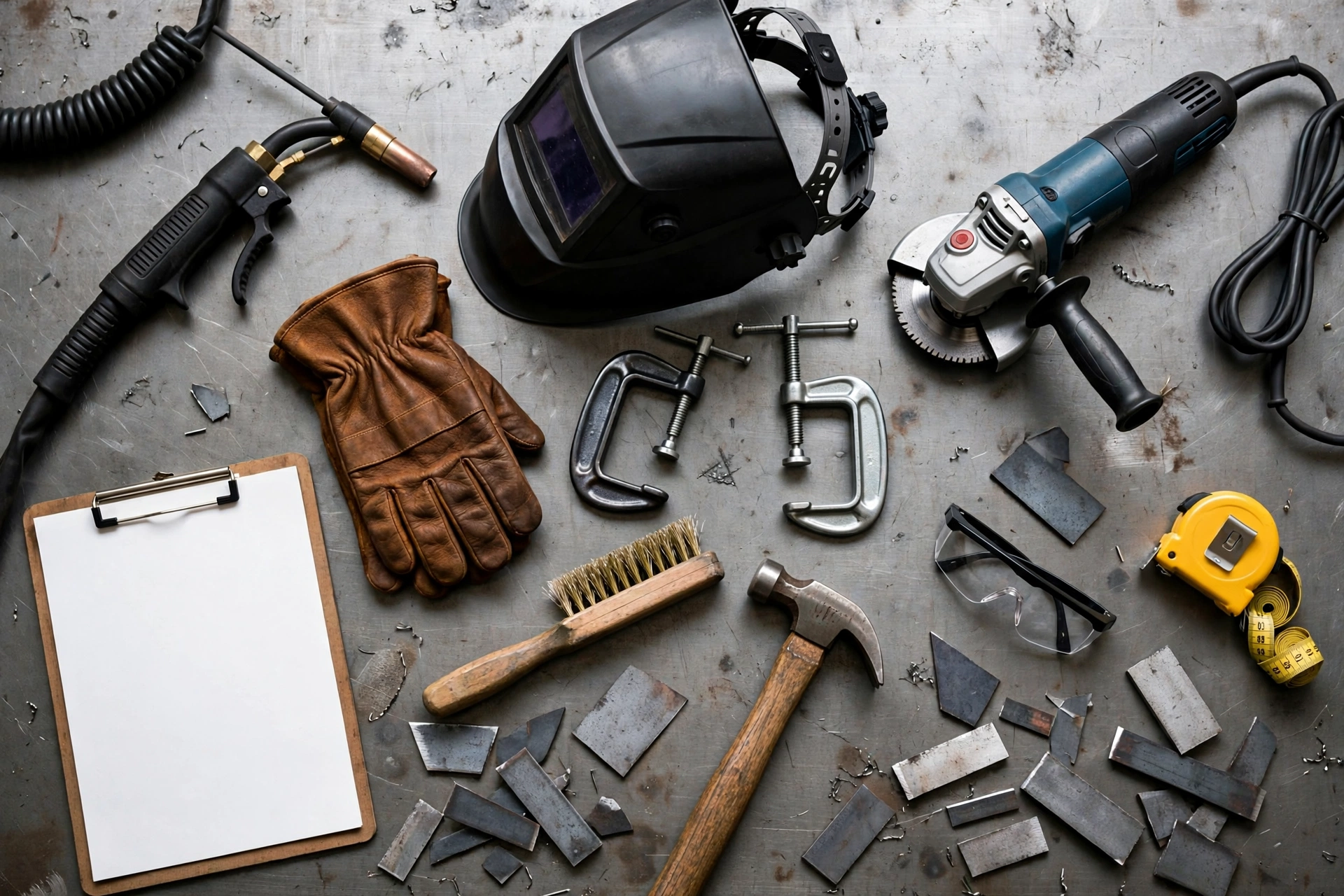
Buy the machine that matches your niche, not the biggest machine you can finance. A multi-process MIG, stick and TIG machine covers most repair and fabrication work. A mobile rig also needs an engine-driven welder or a generator, a plasma cutter for cutting plate, grinders, clamps, a good auto-darkening helmet, and a reliable vehicle or trailer. For a shop, add a welding table, extraction, and proper three-phase power.
Buy quality on the items that touch the weld: the machine, the torch, the helmet and your grinders. Save money on consumables by buying wire, rods and gas in bulk once you know your usage. Keep a simple inventory system so you never run out of the rod you need halfway through a job. Your kit is the heart of the business, so maintain it like your income depends on it, because it does. A clean, organised rig also sells the job: customers judge your workmanship by the state of your tools before you strike an arc.
Step 8: Price Your Work and Get Paid
Pricing your welding jobs is where many new owners lose money. Start with your costs: consumables, gas, fuel, wear on your machine, insurance and your own time. Then add your margin. Shop rates of sixty to a hundred and twenty dollars an hour are common, with mobile work carrying a twenty to forty dollar premium. Always charge a call-out or minimum fee for site visits, because driving an hour to a ten-minute repair is not free work.
Quote fixed prices for fabrication jobs where you can measure the material and estimate the hours, and charge hourly for repair work where the full extent of the damage is unknown. Put every quote in writing, state your payment terms clearly, and ask for a deposit on material-heavy jobs. Check the going welding salary in your area before you set your hourly rate: if your rate is barely above what you could earn as an employee, raise it or narrow your niche. Finally, send the invoice the same day the job finishes. Cash flow is the difference between a business and a hobby.
Step 9: Mobile or Shop — Choose Your Model
A mobile welding business keeps your overhead low and takes you to the work. Farmers, fleet managers and plant operators cannot bring a broken machine to you, so they pay well for a welder who comes to them. Your van becomes your shop, your billboard and your office. The trade-off is weather, rough working conditions and the cost of running a heavy vehicle full of gear.
A fixed shop suits fabrication work: gates, railings, staircases, trailers and custom projects that need a bench, a jig and steady power. You can take bigger jobs and employ help more easily, but you carry rent and bills whether work comes in or not. Many owners start mobile, build a customer base, then open a small shop once the order book is full. A mobile welding business is the lower-risk start for most new owners, and the van keeps earning while you decide.
Step 10: Win Your First Customers
Your first customers will come from people who already know your work. Tell every former employer, colleague, farmer, builder and fleet manager that you are open for business. Join local trade groups and builders’ associations, and put your name on community boards, Google Business Profile and local directories. A simple website with photos of your work, your services and your phone number is worth more than a clever advert.
General contractors are the best repeat customers in this trade. Visit site offices with a card and a short introduction, and follow up after every job with a thank-you and a request for a review. The general contractors who buy commercial welding services value reliability above all: turn up on time, weld to code, leave the site tidy and invoice promptly, and you will get the next call before the competition even hears about it. Word of mouth is slow at first and unstoppable once it starts, so treat every small job as an audition for the next big one.
How Much Can You Earn in Your First Year?
A realistic first year for a one-person welding outfit looks like this. In the first three months, expect part-time income while you build a customer base: a few repair jobs a week, some small fabrication work, and a lot of quoting. By month six, a steady mobile welder working thirty billable hours a week at seventy to ninety dollars an hour is grossing eight to eleven thousand dollars a month. After fuel, gas, consumables, insurance, vehicle costs and tax, the take-home is far less, which is why honest bookkeeping matters from day one.
Year one is about reputation, not riches. The welders who earn six figures by year three are the ones who spent year one turning up on time, finishing clean work and collecting reviews and referrals. Keep a simple spreadsheet of every job: hours, materials, rate and profit. After three months the numbers will tell you which jobs pay and which ones waste your time. Drop the losers, even if they feel like safe work, and spend the freed hours on the niche that pays best. A second machine, a helper or a small shop all come later, funded by profit, once the order book proves the demand is real and repeatable.
Mistakes That Sink New Welding Businesses
The most common mistake is under-pricing. New owners charge shop wages instead of business rates, forget the cost of gas, consumables, insurance and vehicle wear, and end up working full weeks for less than they earned as employees. Price every job as a business, not as a favour.
The second mistake is taking work you are not qualified for. Structural steel, pressure vessels and coded pipe work demand the right certificates and procedures. A failed weld in those areas can injure people and end your business. Say no, and refer the job to a qualified specialist. The third mistake is neglecting paperwork: no written quotes, no insurance certificate on hand, invoices sent weeks late. The fourth is buying too much gear before the order book justifies it. Start lean, earn, then upgrade. The fifth is working without a safety routine: skipping the fire watch after hot work, welding near fuel or paint fumes, or working alone on a remote site with no one knowing where you are. One fire or one injury can end a new business overnight, so treat safety checks as part of the job, not as lost time.
Frequently Asked Questions
How much does it cost to start a welding business?
A mobile setup typically costs fifteen to thirty-five thousand dollars, covering a machine, generator, vehicle or trailer, plasma cutter, grinders, helmet and initial consumables. A shop costs more, because rent, three-phase power and extraction add to the bill. Start with the smallest rig that serves your niche, and upgrade from profit rather than debt.
Do I need certification to start?
You do not legally need one in most places, but a welding certification makes winning work far easier. Commercial clients and general contractors treat it as proof your welds have been tested by a third party, and some jobs, especially structural and coded pipe work, require it outright. Get certified in the process your first customers need.
Is a welding business profitable?
Yes, when it is priced like a business. Shop rates of sixty to a hundred and twenty dollars an hour, plus a premium for mobile work, leave a healthy margin once consumables, fuel, insurance and vehicle costs are covered. Profitability depends on keeping billable hours high, quoting accurately and chasing invoices promptly.
Can I start a welding business from home?
Many owners start from a home garage or a driveway rig, and it works well for mobile repair work. Check local zoning rules first, because some areas restrict commercial welding at residential addresses. A home base also needs proper ventilation, fire precautions and storage for gas cylinders.
What is the best niche for a new welder?
Mobile repair is the strongest start for most new owners: low overhead, premium rates and customers who need you urgently. Ornamental ironwork and aluminium fabrication are strong shop-based alternatives if you have the skill and the space. Choose the niche where your existing skill meets visible local demand.
Final Word
Starting a welding business is a craft decision and a business decision in one. Get your skill and certificates in order, pick a niche, register properly, insure yourself, buy only the gear the work demands, and price every job like the business it is. Do the unglamorous parts well — written quotes, same-day invoices, tidy sites, on-time arrival — and the welding will take care of itself. If you already know how to start a welding business in theory, the only step left is the first paid job. Strike the arc, do the work properly, and let the second job follow the first.

Arc to Income: How to Start a Welding Business

Keys to the Trade: How to Start a Locksmith Business

First Pour to Full Crew: How to Start a Concrete Business

Sparks to Success: How to Start an Electrical Business

Cool Air, Warm Profits: How to Start an HVAC Business

Wrenches to Wealth: How to Start a Plumbing Business

Shingles to Success: How to Start a Roofing Business

Posts, Panels and Profit: How to Start a Fencing Business

First Cut, Full Crew: How to Start a Tree Trimming Business

Ladder to Lights: How to Start a Christmas Light Business

How to Repurpose Blog Content for Social Media Without Starting From Scratch

How to Write a Simple Business Plan for Your Small Business: A Practical Guide That Gets You Started

How to Get More Clients for Your Business: Simple Ways That Actually Work

How to Create a Small Business Content Marketing Plan That Actually Gets Results

How to Write a Professional Business Email That Gets a Reply

Branding Tips for Small Businesses: A Simple Guide That Makes You Memorable
How to Handle Customer Complaints in a Small Business: A Calm, Practical Guide That Turns Problems Into Loyalty
How to Create a Content Calendar for a Small Business
How to Set Up a Simple Referral Program for Your Small Business: A Beginner’s Guide That Brings in New Customers

How to Set SMART Goals for a Small Business: A Practical Guide That Actually Works
Arc to Income: How to Start a Welding Business
Keys to the Trade: How to Start a Locksmith Business
First Pour to Full Crew: How to Start a Concrete Business
Sparks to Success: How to Start an Electrical Business
Cool Air, Warm Profits: How to Start an HVAC Business
Wrenches to Wealth: How to Start a Plumbing Business
Shingles to Success: How to Start a Roofing Business
Posts, Panels and Profit: How to Start a Fencing Business
First Cut, Full Crew: How to Start a Tree Trimming Business
Ladder to Lights: How to Start a Christmas Light Business

 entertainment1 year ago
PYT Telegram: A Complete Guide to Understanding, Using, and Maximizing It

 entertainment1 year ago
OnionFlix: Everything You Need to Know About This Streaming Website
- education1 year ago
How to Become a Software Engineer: A Complete Guide
- entertainment10 months ago
Brainrot Memes: The Unhinged Humor of the Internet Generation





