Technology
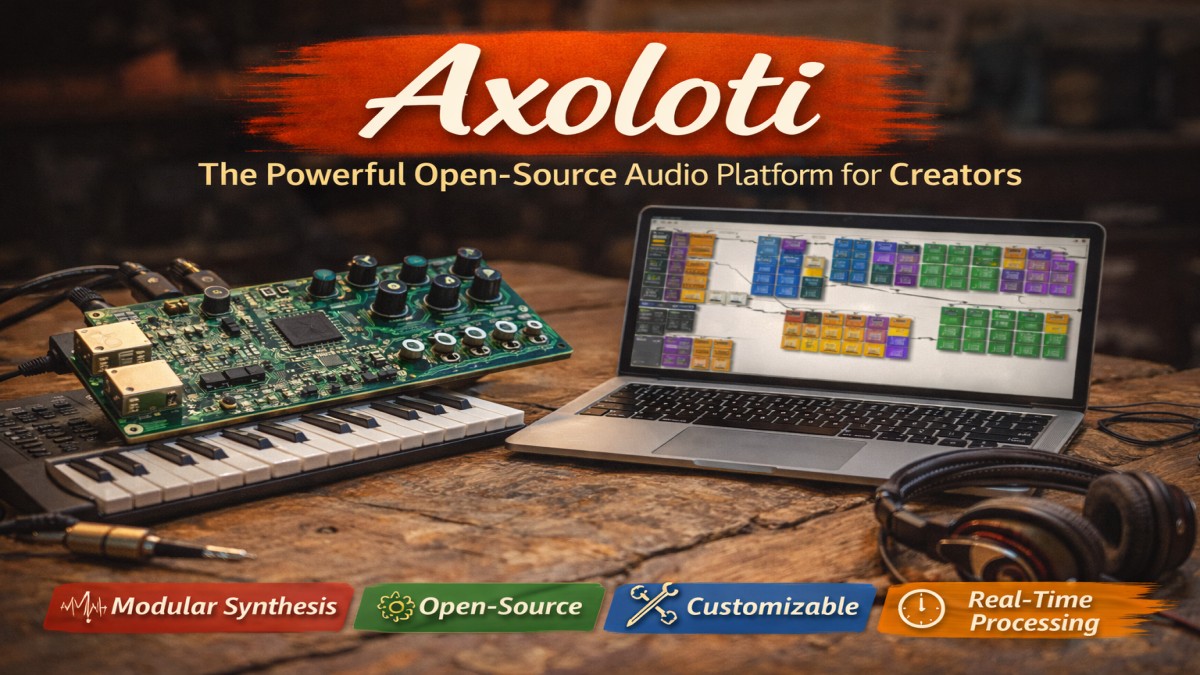
Axoloti – The Powerful Open-Source Audio Platform for Creators

Introduction to Axoloti
If you’ve ever dreamed of building your own synthesizer, audio processor, or experimental sound machine without being locked into expensive gear, Axoloti might just feel like magic. It sits right at the intersection of hardware freedom and software flexibility, giving creators a playground for sound.
What Is Axoloti?
Axoloti is an open-source hardware and software platform designed for real-time audio processing. In simple terms, it’s a small but powerful board that lets you create synthesizers, effects, and audio tools by visually connecting sound modules—no deep programming required.
Think of it as LEGO for sound. You snap pieces together, experiment, break things, and rebuild—until it sounds just right.
Why Axoloti Matters in Music Technology
In a world dominated by closed systems and expensive gear, Axoloti stands out by being:
- Affordable
- Customizable
- Community-driven
It gives power back to musicians, hackers, and sound designers who want full control over their tools.
The Origin and Evolution of Axoloti
How Axoloti Started
Axoloti was created to solve a simple problem: how can musicians build custom audio devices without deep embedded programming knowledge? The answer was a visual patching environment paired with dedicated hardware capable of real-time audio.
Community-Driven Development
One of Axoloti’s biggest strengths is its community. Users constantly share patches, modules, and ideas. Over time, this collective effort turned Axoloti into a rich ecosystem rather than just a product.
Understanding How Axoloti Works
Hardware Overview
At the heart of Axoloti is a compact board equipped with:
- A powerful processor
- Audio input and output
- USB and MIDI connectivity
It’s designed to run standalone, meaning once your patch is loaded, it doesn’t need a computer.
Software and Patching Environment
Axoloti’s software uses a visual patching system. You drag modules onto a canvas and connect them with virtual cables. Oscillators, filters, envelopes—everything is there.
Modular Audio Concept Explained
If you’ve seen modular synths with cables everywhere, Axoloti follows the same philosophy—but digitally. You design the signal flow yourself, giving endless creative freedom.
Key Features of Axoloti
Open-Source Flexibility
Axoloti is fully open-source. That means:
- You can modify the software
- You can create your own modules
- You’re not locked into a company’s roadmap
Freedom like this is rare.
Real-Time Audio Processing
Latency is low, performance is stable, and sound processing happens in real time. This makes Axoloti suitable for both studio work and live shows.
MIDI and USB Integration
Axoloti works seamlessly with MIDI controllers, keyboards, and computers. You can control parameters live or automate changes with ease.
Axoloti for Music Production
Synthesizers and Sound Design
From classic subtractive synths to wild experimental textures, Axoloti shines in sound design. You’re not limited to presets—you create the instrument itself.
Effects and Signal Processing
Reverbs, delays, distortions, granular effects—Axoloti handles them all. Many users build custom effects chains that would be impossible or expensive elsewhere.
Axoloti for Live Performance
Performance Reliability
Once a patch is loaded, Axoloti runs independently. No crashes, no background apps, no distractions. That’s gold for live performers.
Custom Controllers and Mapping
Buttons, knobs, pedals—you can map almost anything. Performers often build custom controllers to pair perfectly with their Axoloti setups.
Axoloti vs Other Audio Platforms
Axoloti vs Modular Synths
Hardware modular synths are powerful but expensive. Axoloti offers similar flexibility at a fraction of the cost, with the bonus of digital precision.
Axoloti vs Software DAWs
DAWs are great, but they run on general-purpose computers. Axoloti is focused, dedicated, and distraction-free—perfect for experimentation and performance.
Learning Curve and Accessibility
Beginner-Friendly or Not?
Axoloti is approachable but not instant. Beginners can start with existing patches, while advanced users dive deeper into customization. It rewards curiosity.
Community Support and Resources
Tutorials, forums, and shared patches make learning smoother. You’re rarely alone when figuring something out.
Real-World Use Cases
Experimental Music
Axoloti is a favorite among experimental musicians who want unique sounds that don’t exist anywhere else.
Interactive Art and Installations
Because it’s standalone and reliable, Axoloti is often used in sound installations, interactive exhibits, and multimedia art.
Conclusion
Axoloti isn’t just a tool—it’s a mindset. It encourages experimentation, learning, and creative independence. If you enjoy building things, breaking rules, and shaping sound from the ground up, Axoloti is absolutely worth exploring. It’s not about convenience—it’s about possibility.
FAQs
1. Is Axoloti suitable for beginners?
Yes, especially with community patches and tutorials.
2. Can Axoloti run without a computer?
Yes, once a patch is loaded, it works standalone.
3. Is Axoloti still relevant today?
Absolutely, especially in experimental and DIY music scenes.
4. What makes Axoloti different from a DAW?
It’s dedicated hardware with real-time processing and modular design.
5. Can Axoloti be used for live performance?
Yes, it’s stable, portable, and widely used on stage.

Fold Rucksack: The Ultimate Space-Saving Backpack for Life on the Go

Are Political Donations Tax Deductible?

Understanding Amish Women: Roles, Lifestyle, and Beliefs

Technisches Gymnasium: Your Gateway to Engineering and Technology

Spangram – Unlocking the Fun and Challenge of Word Puzzles

Drones in the Sky: Revolutionizing the Way We See the World

Gold Shower: Nature’s Cascading Yellow Wonder

Best Dry Shampoo – The Complete Guide for Fresh Hair Without Washing

Angora Cats Splendor – Discover the Majesty of This Elegant Breed

The Indian Bow: A Legacy of Precision, Power, and Tradition

Incestflox: Exploring Controversial Narratives and Online Discourse

Cozey: Revolutionizing Home Comfort One Sofa at a Time

Smut Book Meaning: Everything You Need to Know About This Steamy Genre

Libélula: The Enchanting Dragonfly and Its Symbolic Power

Sarkari Network: Everything You Need to Know
Zoology Project Topics: Creative Ideas & FAQs for Students

Rapture Ready News: Interpreting Today’s Headlines Through a Prophetic Lens

Lucipara Islands: Indonesia’s Untouched Paradise

Torcia: Lighting the Way – From Ancient Flames to Modern Innovation

The Ultimate Guide to SEOs: Everything You Need to Know
Fold Rucksack: The Ultimate Space-Saving Backpack for Life on the Go
Are Political Donations Tax Deductible?
Understanding Amish Women: Roles, Lifestyle, and Beliefs
Technisches Gymnasium: Your Gateway to Engineering and Technology
Spangram – Unlocking the Fun and Challenge of Word Puzzles
Drones in the Sky: Revolutionizing the Way We See the World
Gold Shower: Nature’s Cascading Yellow Wonder
Best Dry Shampoo – The Complete Guide for Fresh Hair Without Washing
Angora Cats Splendor – Discover the Majesty of This Elegant Breed
The Indian Bow: A Legacy of Precision, Power, and Tradition

 entertainment6 months ago
PYT Telegram: A Complete Guide to Understanding, Using, and Maximizing It

 entertainment7 months ago
OnionFlix: Everything You Need to Know About This Streaming Website
- others5 months ago
Nook vs Kindle: Which E-Reader Is Right for You?
- gaming7 months ago
Melisandre: The Enigmatic Priestess of Game of Thrones