business
Bouncing to Profit: How to Start a Bounce House Business

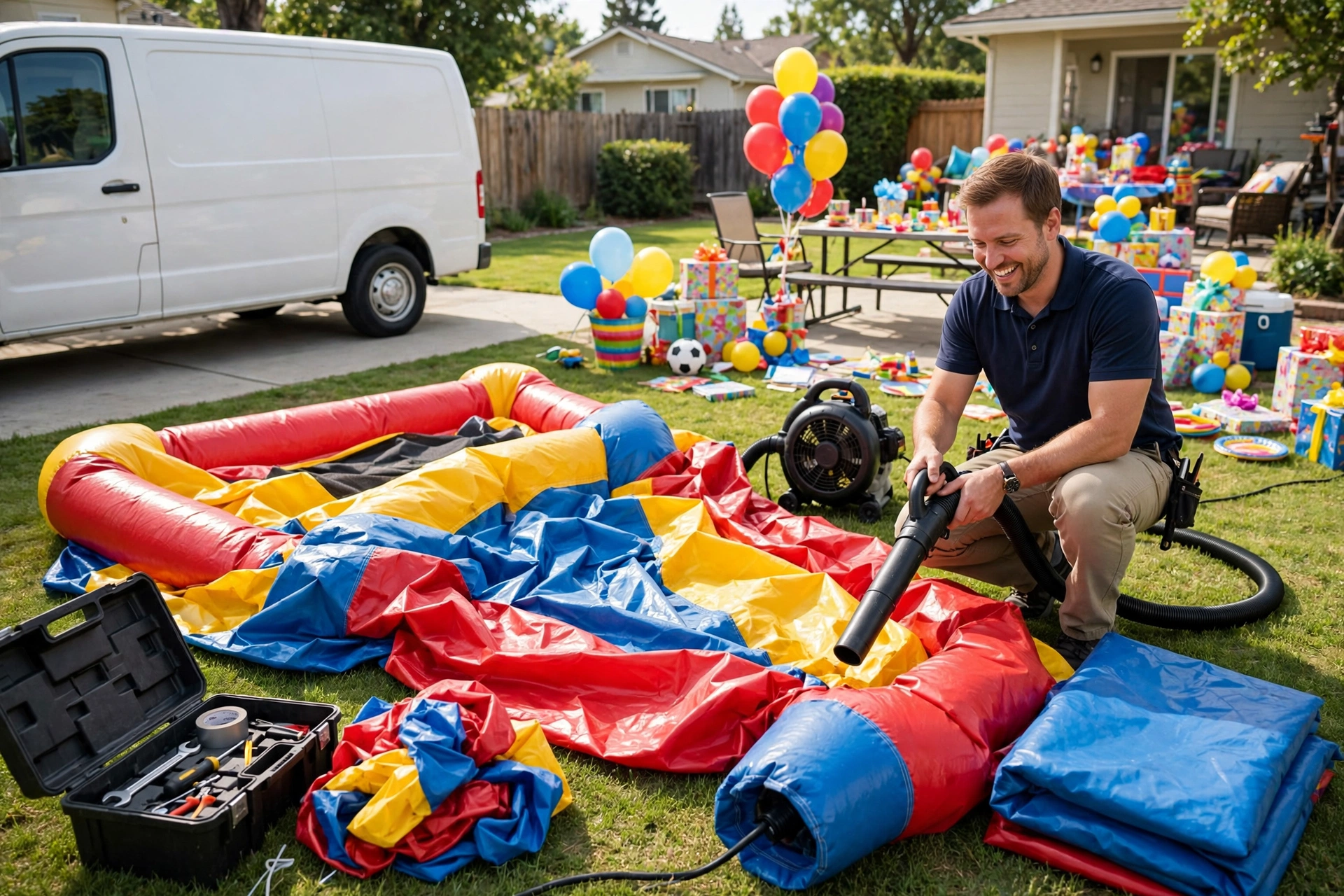
Every weekend, somewhere in your town, a parent is setting up a birthday party and wondering where to rent a bounce house. That parent is your customer. A bounce house rental company is one of the friendliest small service businesses you can start: the product is pure fun, the work is mostly weekends, and you can begin with one or two inflatables stored in a garage. This guide walks you through how to start a bounce house business in 13 practical steps, from checking demand to booking your first party.
Step 1: Check Whether Your Town Has Room for Another Rental Company
Before you spend a dollar, find out if your area actually needs another bounce house rental company. Search online for bounce house rentals in your town and the towns around it, and write down how many operators you find, what they charge for a standard four-hour rental, and which weekends look booked out. Call two or three of them as a pretend customer and ask about availability for a Saturday two weeks away. If everyone is booked, demand is strong. If everyone is free, the market may be crowded or the season may be slow.
Look at the numbers behind the fun. Count the schools, churches, parks, and community halls within a 30-minute drive, because those are the places that book inflatables again and again. Check local parent groups on social media and see how often someone asks for a bounce house recommendation. A town with lots of young families, birthday parties, school fairs, and church festivals gives you repeat customers. A town with only one operator and high prices gives you room to undercut. Either way, this first check is the cheapest research you will ever do, and it is the step that separates a hobby from a real business. When you learn how to start a bounce house business properly, this demand check comes before the shopping, not after it.
Step 2: Write Your Bounce House Business Plan
A bounce house business plan does not need to be a fifty-page document. It needs to answer five questions on one or two pages: who your customers are, what you will rent them, what you will charge, what it will cost you, and how you will find bookings. Write down your target customer first. Birthday parties for children aged three to ten are the core market, but school events, church gatherings, and neighborhood block parties fill the calendar too.
Your plan should list the inflatables you will start with and the ones you will add later. Good add-on ideas for extra income include water slides in summer, obstacle courses for school fairs, concession machines like popcorn and snow cones, and add-on party packages with tables and chairs. Each add-on raises the value of a single booking without much extra driving. Decide your delivery area now, because a tight delivery zone keeps fuel and driving time low. Finally, set a simple money goal for year one, such as paying off your first two units and covering insurance, so you can tell whether the business is working.
Step 3: Choose Your First Inflatables (Commercial, Not Backyard)
Buy commercial-grade units, never the backyard models sold at toy stores. A commercial bounce house is built from heavy vinyl, has reinforced seams, and comes with the safety documentation your insurer and your state will ask for. A standard 13 by 13 foot bounce house is the classic first purchase, and a combo unit with a small slide rents for more and books faster. Start with one or two units, not five. Two units let you serve two parties on the same Saturday, which is where the money is.
You have three ways to get your first units. Buying new from a known manufacturer costs roughly $1,500 to $3,000 per standard unit and comes with a warranty. Buying used from a retiring operator can cut that cost in half, and sometimes you will see a bounce house business for sale that includes the units, the trailer, and the customer list in one deal. A bounce house franchise is a third route: you pay a franchise fee and get a brand, a booking system, and training, but you also pay ongoing royalties and follow their rules. For most beginners, one new unit plus one good used unit is the smartest start.
Step 4: Work Out What Launching Will Really Cost
So what does launching one cost in real life? Most owners launch for somewhere between $5,000 and $20,000, and the exact figure depends on how many units you buy and whether you already own a vehicle that can tow. A lean start with one commercial unit, a blower, stakes, a tarp, and insurance can come in under $8,000 if you already own a truck or SUV. A fuller launch with two units, a used trailer, a website, and a first batch of advertising lands closer to $15,000.
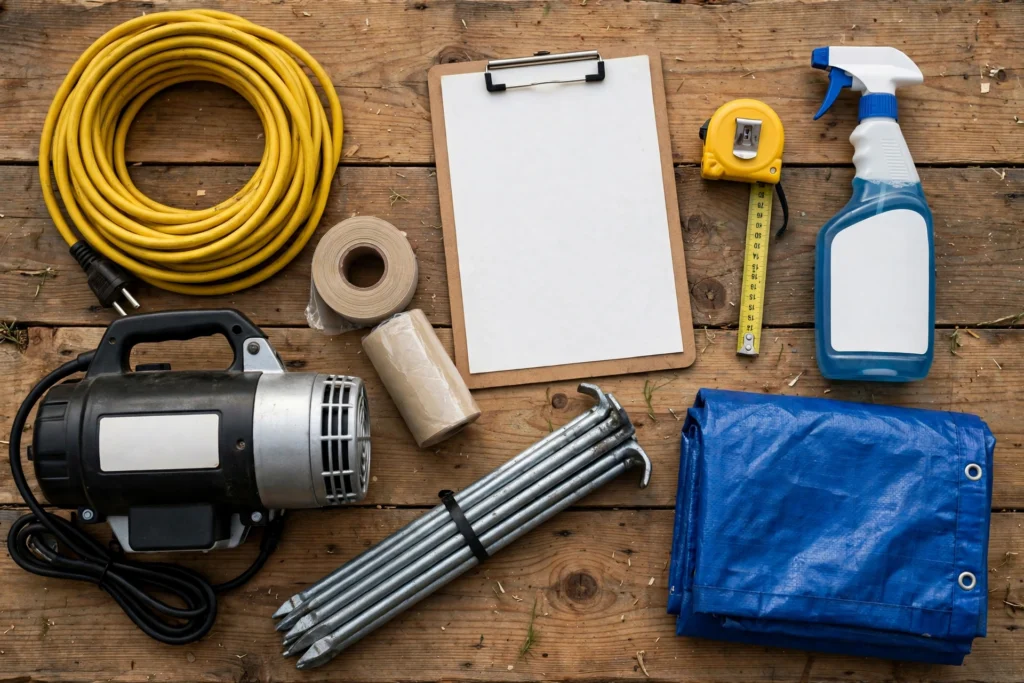
Work out your launch budget line by line before you buy anything. The big items are the inflatables themselves, the blowers that come with them, a trailer or roof rack, liability insurance for the year, a business license, and a simple website with online booking. Smaller items add up too: extension cords, ground stakes, sandbags, repair patches, vinyl cleaner, and a dolly for moving heavy rolled units. Your launch budget is not just the shopping list, though. Keep a cash cushion of at least $1,000 for the slow weeks, because party bookings cluster on weekends and in warm months. If the total scares you, start with one unit and let its rentals pay for the second.
Step 5: Register the Business and Get an EIN
Once the plan and budget look sensible, make the business official. Most owners form a limited liability company, because it separates your personal money from the business and protects your home if someone ever sues over an injury. Filing an LLC usually costs between $50 and $500 depending on your state, and you can file online through your Secretary of State website in under an hour. After that, apply for a free Employer Identification Number from the IRS website. The EIN is what lets you open a business bank account and hire help later.
Open a separate business bank account the same week you register. Mixing party money with household money is the fastest way to lose track of whether the business is actually making money. A basic business checking account is enough to start. Keep every receipt for inflatables, fuel, insurance, and advertising in one folder, physical or digital, because clean records make tax time simple and make your business look serious if you ever apply for a loan to buy more units.
Step 6: Get Your Bounce House Business License and Permits
A bounce house business license is usually a general local business license from your city or county, and it commonly costs between $50 and $200 a year. Start at your city clerk’s office or its website and ask what a rental business needs. Some cities also want a sales tax permit, since you are renting tangible goods, and that permit is often free to register. Do not skip this step. A customer who asks for proof of licensing will trust you more when you can show it, and some schools and churches will not book you without it.
Rules for inflatables change from state to state, so check your state as well as your city. A few states treat large inflatables like amusement rides and require an annual inspection, a permit sticker on each unit, or an operator training certificate. Others have no state-level rule at all. Your state parks department or department of labor usually handles these rules, and a quick phone call will tell you where you stand. If your state does require inspections, build the inspection fee and the scheduling time into your season plan so it never blocks a booked weekend.
Step 7: Get Bounce House Insurance Before Your First Booking
Bounce house insurance is the one cost you should never skip, and it is the step that protects everything else you build. A general liability policy for an inflatable rental company usually costs between $1,500 and $3,000 a year and typically covers $1 million per incident. Ask the agent to confirm in writing that inflatables are covered, because a generic policy sometimes excludes them. If the policy does not name inflatables, it does not protect you. This is also the step where the main keyword earns its keep: when you learn how to start a bounce house business the safe way, insurance comes before the first party, not after the first accident.
Get quotes from at least two insurers who work with event and rental companies, and compare what each policy actually covers. Ask about coverage for setup and takedown, not just the rental hours, and ask whether the policy covers you if a customer moves the unit after you leave. Some owners also add a commercial auto policy for the delivery vehicle and a small policy for the inflatables themselves against theft or storm damage. Once you have a policy, put your certificate of insurance on your website. Parents, schools, and event planners look for it, and it wins bookings.
Step 8: Pick Bounce House Business Names That Parents Remember
Your name is what parents type into a search box and what children shout at a party, so keep it short, friendly, and easy to spell. Good bounce house business names usually include your town or a fun word: think “Sunny Days Bounce Rentals” or “Jump City Parties.” Avoid names that are hard to pronounce, names that limit you to one product, and names that sound like another local company. Say the name out loud, imagine it on the side of a van, and check that the matching website address is available before you fall in love with it.
Check the name in three places before you commit. First, search your state business registry to make sure no other company uses it. Second, check that the domain name is free or cheap. Third, check the name on social media to see if the handles are free. Once you pick a name, use it everywhere: your website, your booking page, your van, your flyers, and the waiver form customers sign. A consistent name builds trust, and trust is what gets a parent to book with a stranger for their child’s birthday.
Step 9: Set Your Rental Rates and Write Clear Rules
Bounce house rental prices in most towns run $150 to $350 for a four-hour rental of a standard 13 by 13 foot unit, with the exact price depending on your town, the season, and what competitors charge. Combo units and water slides rent for more. Set your prices from your costs upward: work out what one rental must earn to cover fuel, time, cleaning, insurance, and wear on the unit, then check that figure against local competitors. Price too low and you will be busy and broke. Price too high and the phone stays quiet. A clean middle price with clear value wins more bookings than the cheapest price in town.
Write your rental rules down and put them on the booking page. State the rental window, the delivery fee beyond your free zone, the deposit, the cancellation policy, and the weather policy. Wind and rain are your biggest enemies, so promise a free reschedule for bad weather instead of arguing with a parent on a stormy morning. Include a simple safety sheet with every booking: maximum number of children, no shoes, no food inside, and adult supervision at all times. Clear rules prevent the awkward conversations that ruin a party, and they make you look professional.
Step 10: Build a Simple Website With Online Booking
Parents book on their phones, usually in the evening, so your website must work well on a small screen and let someone book without calling you. A one-page site is enough to start: your best photos, your prices, your delivery area, and a booking form that asks for the date, the address, and the unit they want. Add real photos of your own inflatables, not stock photos from a manufacturer, because parents want to see the exact unit coming to their garden. A short video of a unit inflating in under two minutes builds more trust than a paragraph of promises.
A bounce house rental business lives or dies by its reviews, so collect them from your very first customers and put them on the site. A simple text message after each party asking for a quick review brings in more bookings than any paid advert, because parents trust other parents. Set up a free business profile on Google so you appear when someone searches for party rentals in your town, and keep your phone number and delivery area up to date there. Your website does not need to be fancy. It needs to answer three questions fast: what do you rent, how much does it cost, and is my date free?
Step 11: Learn Safe Setup, Anchoring, and Supervision
An inflatable bounce house business is only as good as its safety record, and safety is the part of this business where there are no shortcuts. A bounce house that is not anchored properly can lift in a gust of wind, and that is how children get hurt and how businesses get sued. Always anchor every corner with the stakes or sandbags the manufacturer specifies, never fewer. Set up on flat ground, away from fences, trees, and overhead wires. Check the wind before every party and follow the manufacturer limit, usually around 15 to 25 miles per hour. If the wind is over the limit, do not set up, even if the customer begs.
Learn the setup routine until it is automatic: unroll, inspect for tears, connect the blower, inflate, anchor, test the seams, and walk the customer through the safety rules before you leave. Give every customer a written safety sheet that states the maximum number of children, the weight limit, no shoes, no food or drinks inside, and adult supervision at all times. After each rental, clean the unit with a vinyl-safe cleaner, dry it completely before rolling it up, and store it somewhere dry. A clean, dry unit lasts years longer than a damp one, and a unit that smells fresh gets better reviews.
Step 12: Promote Your Rentals Where Parents Already Gather
Your first customers are hiding in plain sight. Join local parent groups on social media and answer questions helpfully before you ever post an advert. Offer a free or discounted rental to a school fair or a church festival in exchange for a banner with your name on it, because one busy fair can fill your calendar for a month. Drop a simple flyer at party supply shops, cake shops, and community halls, and ask each one if you can leave a small stack by the till. Word of mouth is the strongest promotion in this business, and it starts with one delighted birthday child.
Keep your promotion simple and local. Post photos and short videos of real parties, with the parents’ permission, and always show the unit, the happy children, and your clean setup. Run a small discount for weekday bookings to fill the quiet days, and offer a returning-customer discount so the same families book you for every birthday. Ask every happy customer for a review and for a referral, and thank them by name when they send a friend your way. Steady, friendly, local promotion beats a big advertising budget in this business.
Step 13: Book Your First Parties, Then Grow Step by Step
Your first three bookings matter more than your first thirty, because they produce your first photos, your first reviews, and your first referrals. Price the first few parties fairly, arrive early, set up perfectly, and stay friendly. Ask the parent at pickup if everything went well and whether they would recommend you. Those early reviews are the foundation of everything that follows, so treat the first parties like auditions. If a friend asks you how to start a bounce house rental business, the honest answer is to start with one unit and one happy customer at a time. You can run one from home for years with just a garage, a trailer, and a phone, so do not rush into renting a warehouse before the bookings justify it.
Grow one unit at a time and let the rentals pay for each new purchase. Fresh add-on ideas keep the calendar full: add a water slide before summer, an obstacle course before school fair season, and a concession machine for winter parties indoors. Some owners eventually buy into a bounce house franchise to expand into a new town with a known brand, while others stay independent and simply add more units. Either path works. The rule is the same: buy the next unit only when the current ones are booked solid on Saturdays, and keep every customer happy enough to book again next year.
Frequently Asked Questions
Before you jump in, here are the questions every beginner asks about how to start a bounce house business.
Is this kind of business profitable?
Yes, it can be, because the costs per rental are low once the unit is paid for. A single unit that rents for $200 on a Saturday and costs perhaps $30 in fuel, cleaning, and wear leaves a healthy margin, and two bookings on the same day double it. The bounce house business profit depends on how many weekends you book, so the owners who do best are the ones who book early, keep their units clean, and earn repeat customers.
Do I need a license to rent bounce houses?
In most places you need at least a general local business license, and some states add an inflatable inspection or permit. Check with your city clerk and your state parks or labor department before your first booking, and keep copies of every license and permit with your insurance certificate.
Can I run this business from home?
Yes, you can run one from home as long as you have dry storage space for the units and a vehicle that can tow a trailer. Many owners start from a garage and only rent storage space when they own more units than the garage can hold. Check your local zoning rules first, because some neighborhoods limit commercial vehicles or trailers parked at home.
Should I buy a bounce house business for sale instead of starting fresh?
Buying an existing rental operation can make sense if the price includes good units, a trailer, and a customer list with repeat bookings. Inspect every unit in person, inflate each one, check the seams and the blowers, and ask to see the booking records for the last year. If the seller cannot show real bookings, you are just buying used vinyl at a premium.
What size bounce house should I buy first?
A standard 13 by 13 foot unit is the best first purchase for most owners. It fits most gardens, suits the birthday age group, and rents steadily. A combo unit with a slide costs more but rents for more, so it makes a good second purchase once the first unit is paying for itself.
How do I keep inflatables clean between parties?
Wipe every surface with a vinyl-safe cleaner after each rental, let the unit dry completely in the sun or with the blower running, and never roll up a damp unit. A damp unit grows mildew, smells bad, and wears out faster. Keep a small cleaning kit in the van so you can tidy up on site before pickup.
What happens if it rains on party day?
Offer a free reschedule or a full refund of the deposit, and say so on your booking page before anyone asks. Rain is nobody’s fault, and a generous weather policy earns more future bookings than a strict one ever will. Watch the forecast the day before and call the customer early so they can move the party indoors if needed.
Do I need a trailer, or can I use my car?
A rolled commercial bounce house is heavy, often 150 to 250 pounds, so a small car is not enough. A truck bed, a van, or a small utility trailer works well, and a trailer is the most popular choice because it keeps the vehicle free for daily use. Buy the trailer after your first unit, not before, so you know the exact size you need.
Final Word
If you have been wondering how to start an inflatable rental business, the answer is simple: start small with one or two commercial units, get insured and licensed before the first party, price fairly, set up safely every single time, and let delighted parents do your advertising for you. The work is physical and the Saturdays are busy, but there are few better feelings than driving away from a party while children are still laughing inside the castle you just built. Pick your first unit this week, and your first booking may be closer than you think.

Bouncing to Profit: How to Start a Bounce House Business

Driveway Dollars: How to Start a Mobile Car Wash Business

Coins to Cash Flow: How to Start a Vending Machine Business

Soot to Success: How to Start a Chimney Sweep Business

Wrenches on Wheels: How to Start a Mobile Mechanic Business

Foundations First: How to Start a Home Inspection Business

Stamps on the Move: How to Start a Mobile Notary Business

Paws and Paychecks: How to Start a Pet Sitting Business

Vows to Ventures: How to Start a Wedding Planning Business

Bins to Business: How to Start a Dumpster Rental Business

How to Get More Clients for Your Business: Simple Ways That Actually Work

How to Write a Simple Business Plan for Your Small Business: A Practical Guide That Gets You Started

Branding Tips for Small Businesses: A Simple Guide That Makes You Memorable

How to Start Freelancing With No Experience: A Simple Guide That Gets You Your First Client

How to Do a Small Business Competitive Analysis: A Simple Guide That Finds Your Edge

Networking Tips for Small Business Owners: A Simple Guide That Turns Conversations Into Customers

How to Keep Customers Coming Back: Simple Ways That Actually Work

How to Create a Budget for a Small Business: A Simple Guide That Keeps Your Money in Order

Christmas Marketing Ideas for Small Businesses: Simple Ways to Win Festive Customers

How to Promote Your Blog Posts: Simple Ways That Actually Work
Bouncing to Profit: How to Start a Bounce House Business
Driveway Dollars: How to Start a Mobile Car Wash Business
Coins to Cash Flow: How to Start a Vending Machine Business
Soot to Success: How to Start a Chimney Sweep Business
Wrenches on Wheels: How to Start a Mobile Mechanic Business
Foundations First: How to Start a Home Inspection Business
Stamps on the Move: How to Start a Mobile Notary Business
Paws and Paychecks: How to Start a Pet Sitting Business
Vows to Ventures: How to Start a Wedding Planning Business
Bins to Business: How to Start a Dumpster Rental Business

 entertainment1 year ago
PYT Telegram: A Complete Guide to Understanding, Using, and Maximizing It

 entertainment1 year ago
OnionFlix: Everything You Need to Know About This Streaming Website
- education1 year ago
How to Become a Software Engineer: A Complete Guide
- entertainment10 months ago
Brainrot Memes: The Unhinged Humor of the Internet Generation