business
Soot to Success: How to Start a Chimney Sweep Business

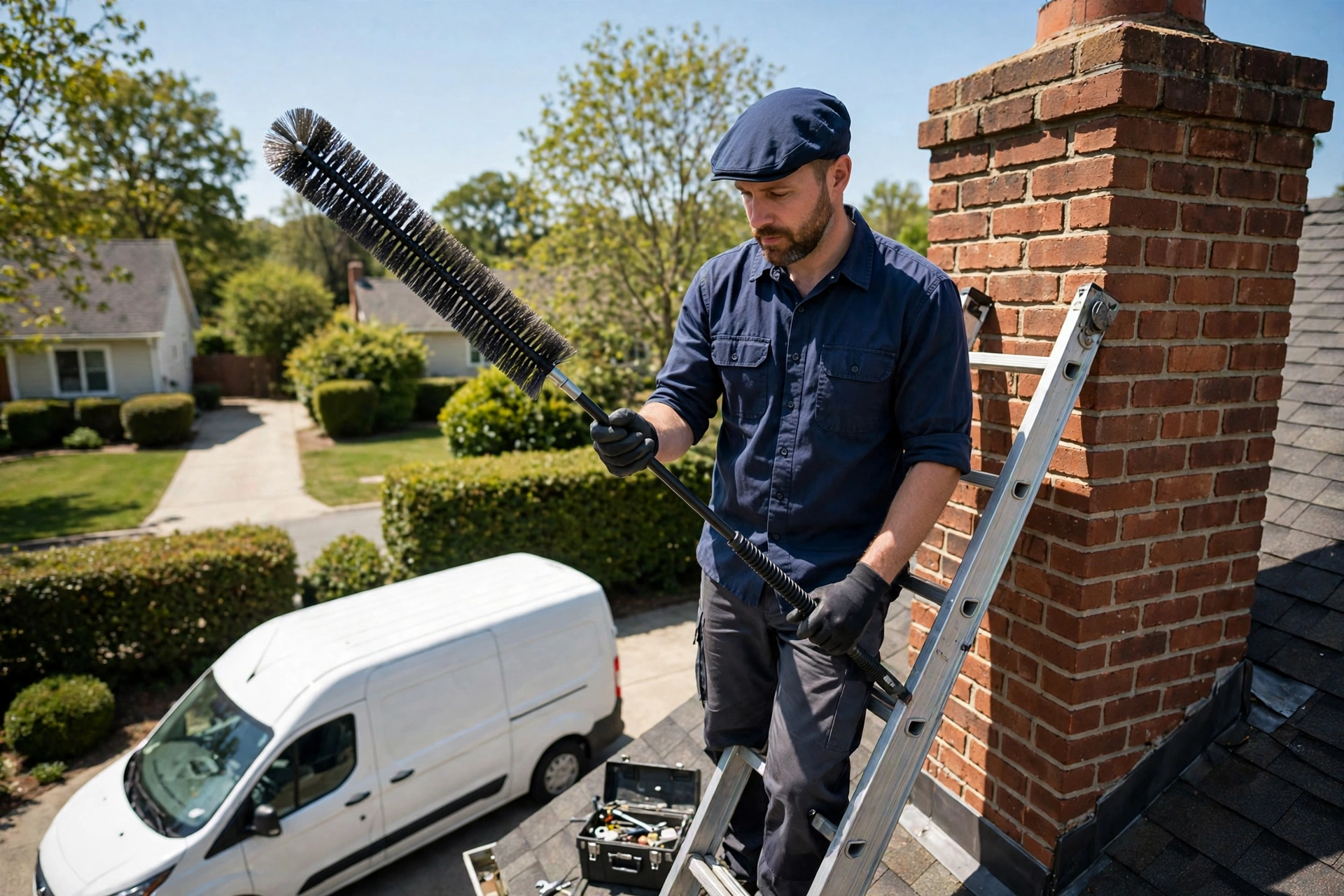
Soot to Success: How to Start a Chimney Sweep Business
Every autumn, as the first cold snap arrives, homeowners light their fireplaces for the first time in months — and thousands of them realise the chimney has not been cleaned since last winter. Creosote, soot and bird nests build up quietly all year, and a dirty flue is a genuine fire risk. That is why learning how to start a chimney sweep business is such a solid opportunity: the demand returns every single year, the startup costs are modest, and most of the work happens in a busy season when customers are actively looking for help.
A chimney sweep business is one of the cheapest trade businesses to launch. You do not need a shop, a big crew or expensive machinery. A reliable van, a set of rods and brushes, a good vacuum and the right training will get you earning. This guide walks through the whole process in order, from learning the trade to winning your first paying customers.
Is a Chimney Sweep Business Worth Starting?
Before you spend a penny, it is worth asking whether the trade suits you. Chimney sweeping is physical, dirty work done in all weathers, often on ladders and rooftops. If you enjoy working with your hands, meeting homeowners and being out of an office, it fits well. If you dislike heights or soot, it will not.
The economics are encouraging. A standard chimney cleaning typically takes 45 to 90 minutes and is charged at a flat fee, so a solo sweep can complete four to six jobs on a busy day. The busiest months run from late summer through winter, when homeowners prepare for the heating season, and repeat customers come back every year. Many sweeps add inspections, minor repairs and stove installations to smooth out the quieter spring months.
The trade also rewards trust. Homeowners invite you into their living rooms and onto their roofs, so a tidy van, a clean uniform and a professional manner matter as much as a good brush. Do the job well and customers will recommend you to their neighbours — and in this trade, word of mouth is the best advertising you will ever get.
Step 1: Learn the Trade and Get Certified
Chimney sweeping is not a trade you can fake. Before you think about customers, you need to know how a flue actually works: how creosote forms, how to read a chimney camera, how to spot a cracked liner or a blocked flue, and how to leave a living room cleaner than you found it.
The best way to learn is on the job. Spend a season working for an established sweep and you will learn the pace of the work, which brushes suit which flue, and how to talk to customers about what you found. Trade schools and short courses are another good route, and they look strong when you later apply for insurance.
Certification is not legally required in every area, but it is the fastest way to earn trust. A chimney sweep certification from a recognised body — the Chimney Safety Institute of America (CSIA) is the best known in the United States — shows customers and insurers that you know the safety standards. The CSIA course runs over several days and covers inspection, cleaning and fire safety, and the credential is widely recognised. Treat your chimney sweep certification as an investment, not a cost: it pays for itself in higher rates and easier insurance.
While you learn, pay attention to the business side too. Watch how your boss prices a job, where the equipment comes from, and how long a typical cleaning takes. That knowledge is worth more than any course when you learn how to start a chimney sweep business.
Step 2: Write Your Business Plan
Every serious business starts on paper. A business plan does not need to be a 40-page document, but it should answer the important questions: what services will you offer, who are your customers, what will you charge, and what will it cost you to start?
Start with your chimney sweep services. Will you focus on cleaning only, or add inspections, minor repairs and stove fitting? Cleaning brings fast cash and repeat customers; inspections and repairs bring bigger tickets. Many new sweeps start with cleaning and inspections, then add repair work as their skills and reputation grow. If you want more ideas for extra income, look at what established sweeps in your area offer and pick the services you can deliver well.
Next, work out your startup costs honestly. A reliable used van, rods and brushes, a HEPA vacuum, a camera and your first insurance payment can easily add up to $7,500–$15,000. Your plan should also include a small marketing budget — even a modest one — because a new company with no customers earns nothing.
Finally, set a simple financial target for your first year: how many jobs per month, at what average price, will cover your costs and pay you a wage? If the numbers do not work on paper, adjust the plan before you spend a dollar.
Step 3: Pick a Name and Register Your Company
A good name is short, easy to remember and clearly about chimneys. The best names for a chimney sweep business tell people what you do in two or three words — think “Hearthstone Chimney Care”, “Clear Flue Chimney Sweeps” or “Summit Soot & Sweep”. Avoid names that are hard to spell or sound like a joke; short names also work better on a van, a quote and a website, and your name will be on all three.
Check that the name is free in your state and that the matching domain name and social media handles are available. You will want a simple website early, even a one-page site with your services, your phone number and a few photos of your work.
Then register the business. Most sweeps choose a limited liability company (LLC) because it separates your personal savings from the business, and it is simple to set up. Apply for an employer identification number (EIN) from the tax authority, open a business bank account, and keep your business money separate from your personal money from day one.
Step 4: Sort Out Licenses and Permits
A chimney sweep license is not a single document. In most places you need a standard local business license from your city or county, and some areas add trade-specific permits or fire-safety registrations. Check with your local clerk’s office before your first job — the rules vary a lot from one town to the next.
Your license may also be tied to your certification: some insurers and local authorities ask for proof of training before they will cover you. Keep copies of every certificate, license and permit in one folder, and note the renewal dates in your calendar. A lapsed license discovered during a customer’s insurance claim is an expensive lesson.
If you plan to work across state or county lines, check the rules in each area you serve. A license that covers your home town may not cover the next county, and a fine for unlicensed work costs more than the permit ever would.
Step 5: Set Up Your Home Base and Finances
You do not need a shop to run this trade. Running the business from home is the normal way to start: the van is your workshop, the garage holds your spares, and a spare room or kitchen table is your office. Working from home keeps your overheads low, which matters in the quiet spring months when jobs slow down.
Set up your bookkeeping before the first job. Open a business bank account and a business credit card, and record every expense — fuel, brushes, insurance, advertising — from the start. A simple accounting app will do; the point is that you can see at a glance whether a month made money.
Price your work before you need to quote it. Work out your costs per job — fuel, time, wear on equipment — and set a flat fee for a standard cleaning, with clear add-ons for inspections, camera surveys and repairs. Customers like a clear price, and a flat fee stops awkward negotiations on the doorstep.
Step 6: Get Insured Before Your First Job
Chimney sweep insurance is not optional. You work on roofs, inside people’s homes and around open fireplaces, so a single accident — a cracked tile, a soot stain on a white carpet, a fall from a ladder — can cost thousands. General liability cover is the minimum, and commercial vehicle cover for the van is essential.
Good chimney sweep insurance also protects your reputation. Customers ask about it, and being able to show a certificate of insurance on the spot wins jobs from cautious homeowners. Talk to a broker who understands trade businesses; a generic policy may exclude roof work or soot damage, which is exactly the work you do.
If you hire a helper, add workers’ compensation cover. It is a legal requirement in most places once you have employees, and it protects both of you if someone is injured on a job.
Step 7: Buy Your Tools and Equipment
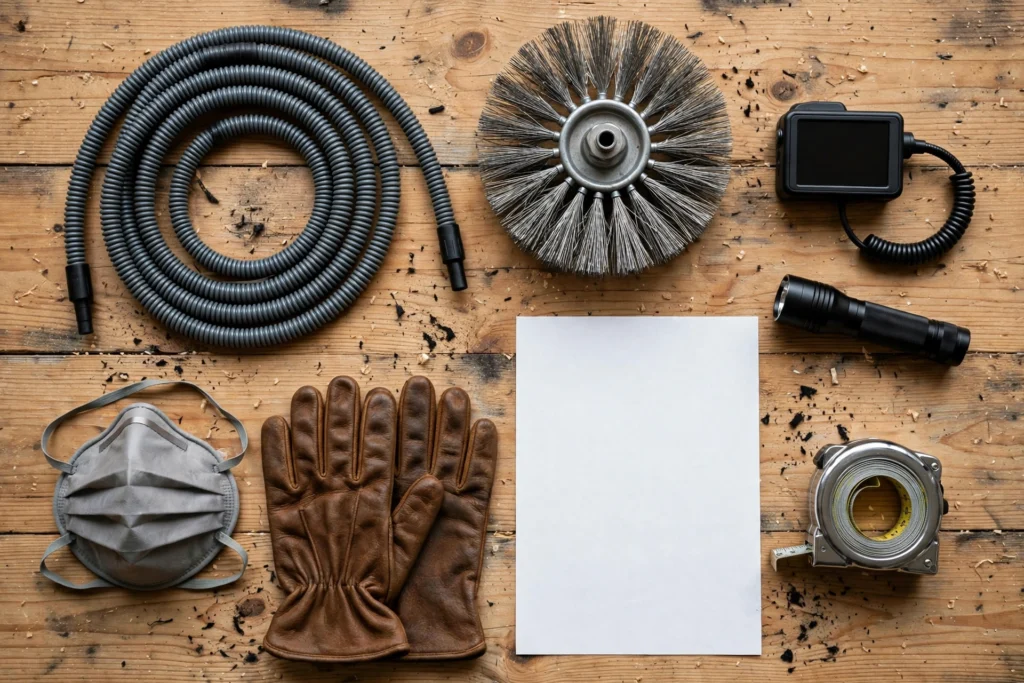
Your kit is your livelihood, so buy quality where it matters and save where it does not. The chimney sweep tools you choose matter more than the van you drive: a good brush set and a powerful vacuum last for years, while cheap rods bend and snap at the worst moment. The essentials are a set of flexible rods, a range of brushes for different flue sizes, a powerful HEPA vacuum to keep soot out of the living room, a torch, dust sheets and a sturdy ladder. A chimney inspection camera is a bigger purchase, but it lets you show customers exactly what is wrong inside their flue — and that picture sells repair work.
Start with a reliable used van rather than a new one. It needs roof bars or a rack for ladders and rods, and enough space for the vacuum and your spares. Keep the van tidy and sign-written: it is a moving advertisement, and neighbours notice a clean, professional vehicle. A sweep who arrives prepared earns the referral.
Step 8: Price Your Services for Profit
Pricing is where many new sweeps go wrong, usually by charging too little. Your rate has to cover fuel, time, equipment wear, insurance and tax — and still leave you a wage. Research what other sweeps charge in your area, then set your own flat fee for a standard cleaning, with add-ons for inspections, camera surveys and repairs.
So what does it cost to launch, and then keep it running? The launch budget is modest — often $7,500 to $15,000 — but the running costs matter just as much. Fuel, brush replacements, insurance renewals and advertising add up every month, so build them into your prices from the start. Knowing the launch cost is useful, but knowing what each job costs you is what keeps the business alive.
Offer a small discount for repeat bookings and for neighbours who book together on the same street. It fills your diary efficiently and turns one visit into three. Never discount so deeply that a day’s work loses money — a busy diary that pays nothing is worse than a quiet one.
Step 9: Find Your First Customers
Finding customers is the hardest part of how to start a chimney sweep business, so use every channel you have. A simple website with your services, prices and phone number is the foundation. List the business on Google Business Profile and local directories, and ask every happy customer for a review — five-star reviews are the single best advertisement for a local trade.
Local promotion works well for this trade. Leaflets through doors in streets with older houses and open fireplaces, a stall at a local market, and partnerships with stove shops, estate agents and fireplace installers can all bring work. Fireplace installers in particular are a great source of referrals: every new stove they fit needs a swept flue first.
Do not forget the power of a tidy job. Leave the living room spotless, explain what you found in plain language, and leave a card with the date of the next recommended clean. That customer will book again next year — and tell their neighbours.
Step 10: Grow Beyond the First Season
Once your diary is full, growth is about adding services, not just adding jobs. Inspections, minor repairs, chimney relining and stove installation all pay better than cleaning alone, and they keep you busy in the quiet months. Training for each new service pays for itself quickly. Good ideas for extra income include bird-guard fitting, cap replacement and annual service plans.
Another route is to buy rather than build. An existing chimney sweep business up for sale in a neighbouring town can be a smart shortcut: you get an existing customer list, a reputation and a van full of kit in one deal. A business on the market should always be checked carefully — look at the customer list, the equipment condition and the reason for selling before you agree a price.
Hiring is the third way to grow. A trained helper doubles the jobs you can complete in a day, and a second van opens a new area. Hire slowly, train properly and keep your quality high: in this trade, your name is the business.
Mistakes New Chimney Sweeps Should Avoid
The most common mistake is underpricing. A low price wins jobs, but it also wins customers who leave the moment someone cheaper appears — and it leaves no margin for the quiet months. Charge a fair price and deliver a first-class job.
The second mistake is skipping insurance or certification to save money. Both are cheap compared with the cost of one claim, and both are the first things a careful customer asks about. The third is neglecting the off-season. Spring and summer are the time to service equipment, train, advertise and build relationships with stove shops — not the time to switch off.
Finally, never leave a mess. Soot on a carpet or a dusty mantelpiece undoes a perfect clean in the customer’s mind. Dust sheets, a good vacuum and five minutes of tidying are the cheapest marketing you will ever do.
Final Thoughts: From First Brush to Full Book
Learning how to start a chimney sweep business is one of the most accessible routes into self-employment in the trades. The startup costs are low, the demand returns every autumn, and a good reputation compounds year after year. The work is dirty and physical, but it is honest, skilled and genuinely useful — you keep families safe from chimney fires.
If you already know the trade, the steps are simple: get certified, write your plan, register, insure, equip and start booking. If you are new to it, spend a season working for an established sweep first. Either way, the chimney sweep business you build this year can still be paying you in ten years’ time, one clean flue at a time.
Frequently Asked Questions
Do I need a license to start a chimney sweep business?
In most places you need a standard local business license, and some areas add trade-specific permits or fire-safety registrations. Certification is not legally required everywhere, but insurers and customers often ask for it. Check with your local clerk’s office before your first job.
How much money do I need to start?
A typical launch budget runs from $7,500 to $15,000, covering a used van, rods and brushes, a HEPA vacuum, a camera, certification and your first insurance payment. You can start smaller if you already own a suitable vehicle.
How much do chimney sweeps earn?
A chimney sweep salary for a solo operator varies with location and season, but charging a flat fee per cleaning and completing four to six jobs a day in the busy season can earn a comfortable living. Inspections, repairs and stove work raise income further, and repeat customers return every year.
Is chimney sweeping seasonal?
Yes, the busiest months run from late summer through winter, when homeowners prepare for the heating season. Spring is quieter, which is why many sweeps add inspections, repairs and stove installation to smooth out income across the year.
Do I need a van?
A van is the practical choice: it carries ladders, rods, a vacuum and spares, and it advertises your business wherever it parks. A large car with a roof rack can work at the very start, but most sweeps move to a van quickly.
How long does a chimney cleaning take?
A standard cleaning takes 45 to 90 minutes, depending on the flue size and how much soot has built up. A camera inspection adds 15 to 30 minutes. Allow extra time for the first visit to a home, when you are learning the chimney.
Can I run this trade from home?
Yes — most sweeps do. The van is your workshop, the garage holds your spares, and a spare room is your office. Keep business records separate from household ones, and make sure your home insurance covers storing trade equipment.
What insurance do I need?
General liability cover is the minimum, plus commercial vehicle cover for the van. If you hire help, add workers’ compensation. Ask a broker who understands trade businesses to check that roof work and soot damage are covered.

Soot to Success: How to Start a Chimney Sweep Business

Wrenches on Wheels: How to Start a Mobile Mechanic Business

Foundations First: How to Start a Home Inspection Business

Stamps on the Move: How to Start a Mobile Notary Business

Paws and Paychecks: How to Start a Pet Sitting Business

Vows to Ventures: How to Start a Wedding Planning Business

Bins to Business: How to Start a Dumpster Rental Business

Quarters to Cash Flow: Your Laundromat Business Plan

From Kitchen to Clients: How to Start a Catering Business

On Wheels: How Much Does It Cost to Start a Food Truck

How to Get More Clients for Your Business: Simple Ways That Actually Work

How to Write a Simple Business Plan for Your Small Business: A Practical Guide That Gets You Started

Branding Tips for Small Businesses: A Simple Guide That Makes You Memorable

How to Start Freelancing With No Experience: A Simple Guide That Gets You Your First Client

How to Do a Small Business Competitive Analysis: A Simple Guide That Finds Your Edge
How to Write a Business Proposal for Your Small Business: A Simple Guide That Wins Clients

How to Create a Budget for a Small Business: A Simple Guide That Keeps Your Money in Order
How to Run a Simple Customer Survey for Your Small Business: A Practical Guide That Gets Honest Answers
How to Write a Case Study for Your Small Business: A Simple Guide That Turns Happy Customers Into Sales

How to Keep Customers Coming Back: Simple Ways That Actually Work
Soot to Success: How to Start a Chimney Sweep Business
Wrenches on Wheels: How to Start a Mobile Mechanic Business
Foundations First: How to Start a Home Inspection Business
Stamps on the Move: How to Start a Mobile Notary Business
Paws and Paychecks: How to Start a Pet Sitting Business
Vows to Ventures: How to Start a Wedding Planning Business
Bins to Business: How to Start a Dumpster Rental Business
Quarters to Cash Flow: Your Laundromat Business Plan
From Kitchen to Clients: How to Start a Catering Business
On Wheels: How Much Does It Cost to Start a Food Truck

 entertainment1 year ago
PYT Telegram: A Complete Guide to Understanding, Using, and Maximizing It

 entertainment1 year ago
OnionFlix: Everything You Need to Know About This Streaming Website
- education1 year ago
How to Become a Software Engineer: A Complete Guide
- entertainment10 months ago
Brainrot Memes: The Unhinged Humor of the Internet Generation