business
Business Process Optimization: Complete Guide to Improving Business Efficiency (2026)

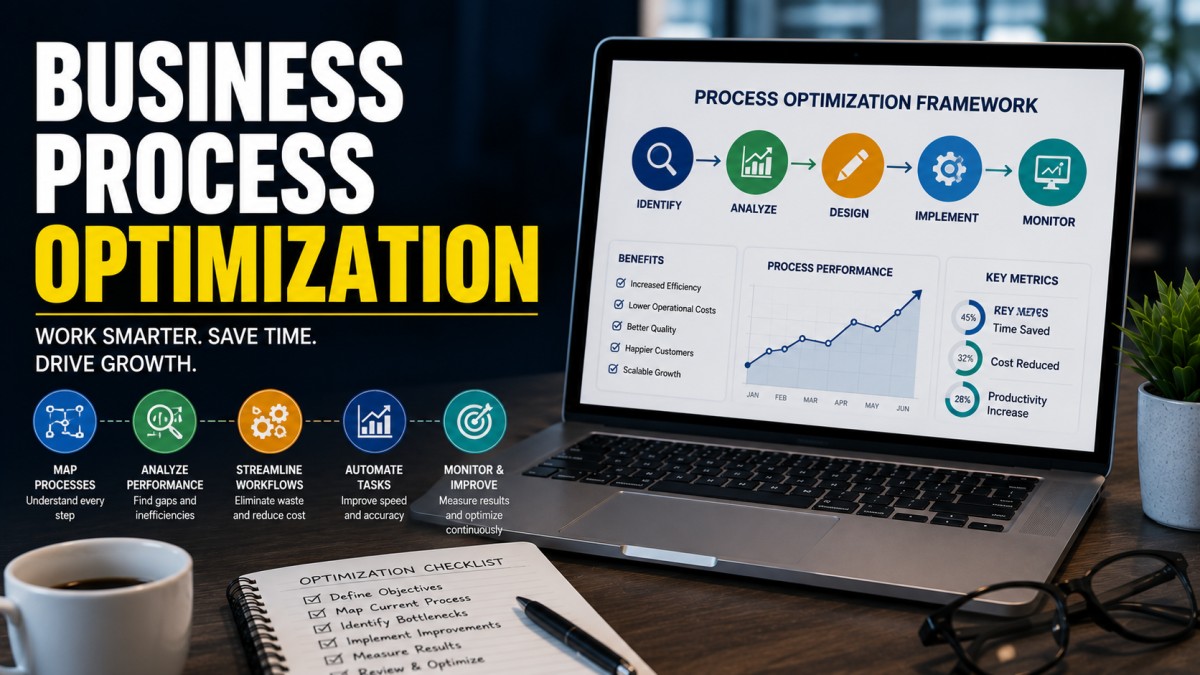
Every successful business looks for ways to work faster, reduce costs, and deliver better results. As competition continues to increase across industries, companies can no longer rely on outdated workflows or inefficient systems. That is why business process optimization has become one of the most important business strategies for organizations of every size.
Learning business process optimization helps businesses identify unnecessary steps, improve productivity, and create smoother workflows. Whether you own a startup, manage a small business, or work for a large company, optimizing daily operations can save both time and money while improving customer satisfaction.
The goal is not simply to work harder—it is to work smarter.
Business Process Optimization: Why Every Business Needs It
Understanding business process optimization begins with recognizing that every company has processes that can be improved. From customer support and marketing to finance and operations, even small improvements can create significant long-term benefits.
The growing popularity of business process optimization comes from businesses wanting to eliminate repetitive work, reduce human errors, and increase operational efficiency. Modern companies now focus on improving systems rather than simply increasing workloads.
Well-optimized processes allow employees to spend more time on valuable tasks instead of unnecessary manual work.
Identify Existing Business Processes
The first step is understanding how work currently flows.
Review processes such as:
- Customer service.
- Sales.
- Marketing.
- Finance.
- Inventory.
- Administration.
Knowing where time is wasted makes optimization easier.
Remove Unnecessary Steps
Many businesses continue following outdated procedures.
Look for activities that:
- Add little value.
- Cause delays.
- Duplicate work.
- Increase costs.
Simplifying workflows often improves productivity immediately.
Automate Repetitive Tasks
Automation is becoming essential for modern businesses.
Tasks suitable for automation include:
- Email responses.
- Invoice generation.
- Appointment scheduling.
- Data entry.
- Report creation.
Automation allows employees to focus on more important responsibilities.
Improve Team Communication
One important part of business process optimization is improving collaboration between departments.
Better communication helps teams:
- Share information quickly.
- Avoid misunderstandings.
- Complete projects faster.
- Solve problems efficiently.
Strong teamwork supports smoother business operations.
Measure Business Performance
Optimization requires continuous improvement.
Track metrics such as:
- Task completion time.
- Customer satisfaction.
- Revenue growth.
- Error rates.
- Employee productivity.
Performance data helps identify future improvements.
Standardize Workflows
Standard procedures improve consistency.
Document:
- Business processes.
- Employee responsibilities.
- Approval systems.
- Customer handling procedures.
Clear guidelines reduce confusion.
Train Employees Regularly
Employees play an important role in successful optimization.
Training should cover:
- Updated processes.
- New software.
- Productivity techniques.
- Customer service improvements.
Well-trained teams adapt faster to changes.
Common Business Process Mistakes
Many organizations struggle because they:
- Ignore employee feedback.
- Automate inefficient processes.
- Skip documentation.
- Avoid performance tracking.
- Change too many systems at once.
Successful optimization happens gradually.
Best Practices for Process Improvement
Companies often achieve better results by:
- Reviewing workflows regularly.
- Eliminating bottlenecks.
- Using automation wisely.
- Monitoring key metrics.
- Encouraging employee suggestions.
- Keeping processes simple.
- Updating procedures consistently.
Continuous improvement creates long-term success.
Benefits of Business Process Optimization
Optimized processes help businesses:
- Reduce operating costs.
- Increase productivity.
- Improve customer satisfaction.
- Save time.
- Minimize errors.
- Support business growth.
Small improvements often create significant financial benefits.
Future of Business Process Optimization
As technology continues evolving, businesses increasingly rely on:
- Artificial intelligence.
- Workflow automation.
- Cloud collaboration.
- Data analytics.
- Digital transformation.
Organizations that improve their systems today will remain more competitive in the years ahead.
Conclusion
Implementing business process optimization is one of the smartest ways to improve efficiency, reduce unnecessary costs, and strengthen long-term business performance.
By reviewing existing workflows, removing unnecessary steps, automating repetitive work, improving communication, measuring results, and continuously updating business systems, companies can create faster and more productive operations. Optimization is not a one-time project—it is an ongoing strategy that helps businesses stay competitive and prepared for future growth.
For businesses across the USA, improving operational efficiency will continue to be one of the most valuable investments throughout 2026.
FAQs
1. What is business process optimization?
It is the practice of improving business workflows to increase efficiency and reduce costs.
2. Why is process optimization important?
It improves productivity, customer satisfaction, and overall business performance.
3. Can small businesses optimize processes?
Yes. Even simple improvements can produce significant results.
4. Does automation help optimization?
Yes. Automation reduces repetitive work and increases efficiency.
5. How often should businesses review processes?
Regular reviews help identify new improvement opportunities.

Consultative Selling Techniques: A Complete Guide to Building Customer Trust in 2026

Sales Objection Handling: A Complete Guide to Closing More Deals in 2026

Customer Closing Techniques: A Complete Guide to Converting Prospects into Buyers (2026)

Customer Conversion Process: A Complete Guide to Turning Visitors into Loyal Customers (2026)

Sales Funnel Examples: A Complete Guide to Converting More Customers (2026)

Lead Qualification Framework: A Complete Guide to Finding High-Quality Customers (2026)

Website Credibility Factors: A Complete Guide to Building Trust Online (2026)

Online Reputation Monitoring: A Complete Guide to Protecting Your Brand in 2026

Customer Testimonial Strategy: A Complete Guide to Building Trust and Increasing Sales (2026)

Business Storytelling Framework: A Complete Guide to Building Strong Brand Connections (2026)
Consultative Selling Techniques: A Complete Guide to Building Customer Trust in 2026
Sales Objection Handling: A Complete Guide to Closing More Deals in 2026
Customer Closing Techniques: A Complete Guide to Converting Prospects into Buyers (2026)
Customer Conversion Process: A Complete Guide to Turning Visitors into Loyal Customers (2026)
Sales Funnel Examples: A Complete Guide to Converting More Customers (2026)
Lead Qualification Framework: A Complete Guide to Finding High-Quality Customers (2026)
Website Credibility Factors: A Complete Guide to Building Trust Online (2026)
Online Reputation Monitoring: A Complete Guide to Protecting Your Brand in 2026
Customer Testimonial Strategy: A Complete Guide to Building Trust and Increasing Sales (2026)
Business Storytelling Framework: A Complete Guide to Building Strong Brand Connections (2026)

 entertainment1 year ago
PYT Telegram: A Complete Guide to Understanding, Using, and Maximizing It

 entertainment1 year ago
OnionFlix: Everything You Need to Know About This Streaming Website
- education1 year ago
How to Become a Software Engineer: A Complete Guide
- others1 year ago
Nook vs Kindle: Which E-Reader Is Right for You?