Health
Butternut Squash Nutrition: Health Benefits, Calories, and How to Eat It

Butternut squash may look humble sitting on a kitchen counter, but nutritionally, it’s a superstar. Sweet, nutty, and incredibly versatile, this winter squash is packed with vitamins, minerals, and antioxidants that your body absolutely loves. Whether you’re trying to eat healthier, lose weight, or just add more color to your plate, understanding butternut squash nutrition can help you make smarter food choices.
Let’s break it all down—no boring science talk, just real, useful info you can actually apply.
What Is Butternut Squash?
Origin and Overview
Butternut squash is a type of winter squash known for its long neck, bulbous bottom, and pale beige skin. Inside, it hides vibrant orange flesh that signals one thing: nutrients galore.
Taste and Texture
Think mildly sweet, slightly nutty, and creamy when cooked. It’s like nature’s comfort food—soft enough for soups, firm enough for roasting, and smooth enough for purees.
Nutritional Profile of Butternut Squash
Calories and Macronutrients
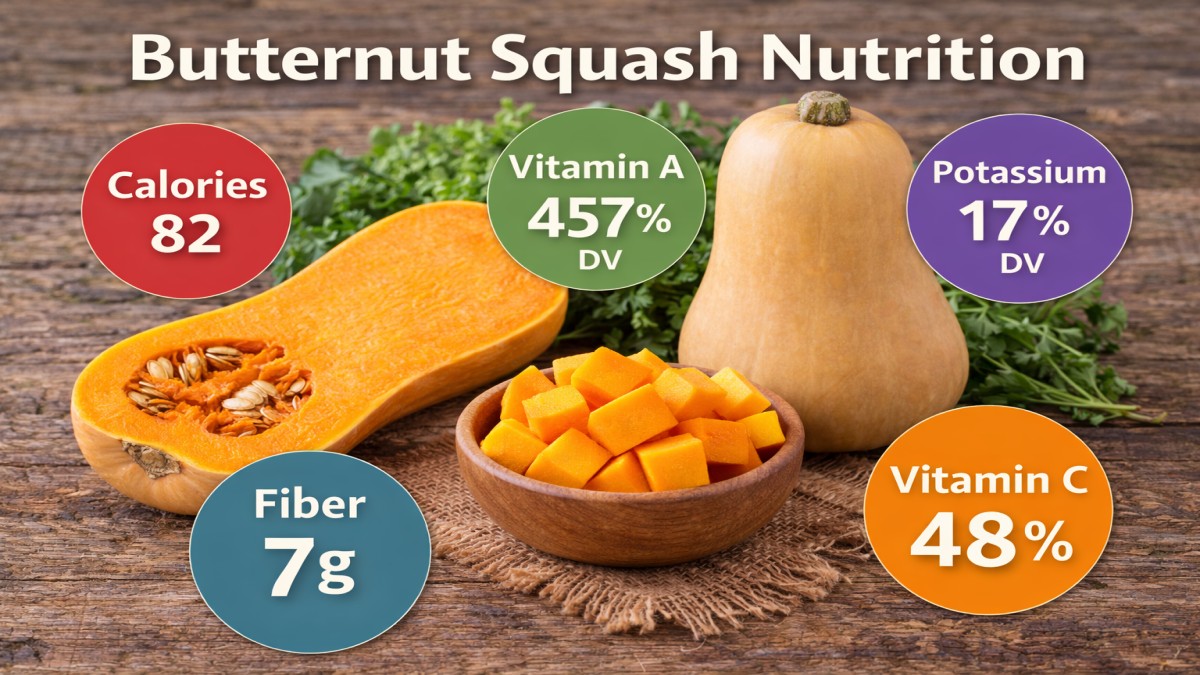
One cup of cooked butternut squash (about 205 grams) contains roughly:
- Calories: ~82
- Carbohydrates: ~22 g
- Fiber: ~7 g
- Protein: ~2 g
- Fat: <1 g
Low in calories, high in fiber—this combo alone makes it a nutrition win.
Vitamins in Butternut Squash
Vitamin A Powerhouse
Here’s where butternut squash really shines. One cup provides over 450% of your daily vitamin A needs in the form of beta-carotene. That’s huge for:
- Eye health
- Skin repair
- Immune strength
If carrots had a more sophisticated cousin, this would be it.
Vitamin C and Immune Support
Butternut squash delivers a solid dose of vitamin C, helping your body fight infections and repair tissues. Think of it as backup support for your immune system—quiet but effective.
Minerals in Butternut Squash
You’ll also get:
- Potassium: Supports heart health and muscle function
- Magnesium: Helps with relaxation and nerve signaling
- Manganese: Important for bone health and metabolism
Health Benefits of Butternut Squash
Supports Eye Health
Thanks to beta-carotene, butternut squash helps protect vision and may lower the risk of age-related eye problems. It’s like wearing sunglasses from the inside out.
Boosts Immunity
Vitamins A and C work together to keep your immune system strong. Regular consumption may help you bounce back faster from colds and infections.
Promotes Heart Health
The potassium and fiber content helps regulate blood pressure and cholesterol levels. Your heart loves consistency, and butternut squash delivers just that.
Aids Digestion
High fiber means smoother digestion and better gut health. If your digestive system had a favorite food, this would be on the list.
Helps with Weight Management
Low calories + high fiber = longer-lasting fullness. You eat less without feeling deprived. That’s a rare and beautiful thing.
Butternut Squash Nutrition for Special Diets
Low-Calorie and Weight Loss Diets
Butternut squash is filling without being heavy. It’s perfect for soups, bowls, and roasted veggie plates.
Diabetes-Friendly?
Yes—with portion control. While it contains carbs, its fiber helps slow sugar absorption.
Vegan and Gluten-Free Diets
Naturally vegan, gluten-free, and plant-based friendly. No labels required.
Butternut Squash vs Other Squash
Compared to pumpkin or acorn squash, butternut squash is:
- Sweeter than pumpkin
- Creamier than acorn squash
- Higher in vitamin A than most
It’s basically the overachiever of the squash family.
How to Cook Butternut Squash Without Losing Nutrients
Roasting
Roasting enhances sweetness and preserves most nutrients. Toss with olive oil and roast at 200°C (400°F).
Steaming and Boiling
Steaming is better than boiling if you want to keep vitamins intact.
Soups and Purees
Blending cooked squash into soups retains fiber and beta-carotene—comfort food with benefits.
Best Ways to Include Butternut Squash in Your Diet
- Roasted as a side dish
- Blended into creamy soups
- Mashed like potatoes
- Added to salads or grain bowls
- Used in curries and pasta sauces
Conclusion
Butternut squash nutrition proves that healthy food doesn’t have to be boring. It’s colorful, comforting, and loaded with benefits—from eye health to digestion and weight management. Whether roasted, blended, or mashed, this humble squash earns its place on your plate.
If you’re looking for one simple ingredient to upgrade your meals and your health, butternut squash is a pretty sweet place to start.
FAQs
1. Is butternut squash healthy for daily consumption?
Yes, when eaten in balanced portions, it’s highly nutritious and safe for daily meals.
2. Is butternut squash high in carbs?
It contains carbs but also plenty of fiber, which helps balance blood sugar levels.
3. Can butternut squash help with weight loss?
Absolutely. Its low calorie and high fiber content promotes fullness.
4. Is butternut squash better than sweet potatoes?
Both are nutritious. Butternut squash is lower in calories, while sweet potatoes offer more complex carbs.
5. Can I eat butternut squash seeds?
Yes! Roasted squash seeds are crunchy, tasty, and nutrient-rich.

Brownwood News: Your Window into Texas Life

Abs Training with Dumbbells: Build a Strong, Defined Core Faster

Butternut Squash Nutrition: Health Benefits, Calories, and How to Eat It

Minted Greens: A Fresh Take on Style and Sustainability

Composite Veneers – Cost, Benefits, Procedure, Pros & Cons Explained

Oil of Oregano Benefits: Uses, Science, and How to Take It Safely

Mango Benefits – Why This “King of Fruits” Deserves a Spot in Your Diet

Scallop Shell: A Symbol of Nature, Culture, and Culinary Delight

Thai Tea – A Deep Dive Into Thailand’s Iconic Orange Drink

Bolly4u Life: Everything You Need to Know About This Controversial Movie Download Site

Brainrot Memes: The Unhinged Humor of the Internet Generation

Leonardo DiCaprio Meme: How The Internet Turned An Oscar-Winning Actor Into A Meme Icon

Incestflox: Exploring Controversial Narratives and Online Discourse

Cozey: Revolutionizing Home Comfort One Sofa at a Time

Snifies: Redefining the World of Casual Connections and LGBTQ+ Social Discovery

Libélula: The Enchanting Dragonfly and Its Symbolic Power

Smut Book Meaning: Everything You Need to Know About This Steamy Genre
Sarkari Network: Everything You Need to Know

WJBD News: Keeping South Central Illinois Informed and Connected

Zoology Project Topics: Creative Ideas & FAQs for Students
Brownwood News: Your Window into Texas Life
Abs Training with Dumbbells: Build a Strong, Defined Core Faster
Butternut Squash Nutrition: Health Benefits, Calories, and How to Eat It
Minted Greens: A Fresh Take on Style and Sustainability
Composite Veneers – Cost, Benefits, Procedure, Pros & Cons Explained
Oil of Oregano Benefits: Uses, Science, and How to Take It Safely
Mango Benefits – Why This “King of Fruits” Deserves a Spot in Your Diet
Scallop Shell: A Symbol of Nature, Culture, and Culinary Delight
Thai Tea – A Deep Dive Into Thailand’s Iconic Orange Drink
Bolly4u Life: Everything You Need to Know About This Controversial Movie Download Site

 entertainment6 months ago
PYT Telegram: A Complete Guide to Understanding, Using, and Maximizing It

 entertainment6 months ago
OnionFlix: Everything You Need to Know About This Streaming Website
- others5 months ago
Nook vs Kindle: Which E-Reader Is Right for You?
- gaming6 months ago
Melisandre: The Enigmatic Priestess of Game of Thrones