fashion
Clothing Doublet: A Complete Guide to This Iconic Garment

Introduction to the Doublet
What Is a Doublet?
A Clothing Doublet is a close-fitting jacket worn by men from the late Middle Ages through the 17th century. Think of it as the backbone of historical menswear. It hugged the torso, shaped the body, and acted as both armor padding and a fashion statement. Short or waist-length, structured or padded, the doublet was once as essential as a modern blazer.
Why the Doublet Still Matters Today
So why talk about a centuries-old garment today? Because the doublet is the grandfather of modern tailoring. Its influence lives on in suits, jackets, and even uniforms. Plus, with historical fashion making a comeback, the doublet is enjoying a quiet revival.
Historical Origins of the Doublet
Early Beginnings in Medieval Europe
The doublet emerged in the 14th century as a padded garment worn under armor. Soldiers needed comfort and protection, and the doublet delivered both. Over time, it stepped out of the battlefield and into everyday life.
Influence of Military Clothing
Originally stuffed with layers of fabric or padding, the doublet helped absorb impact. This practical purpose shaped its snug fit and durable construction.
Evolution During the Renaissance
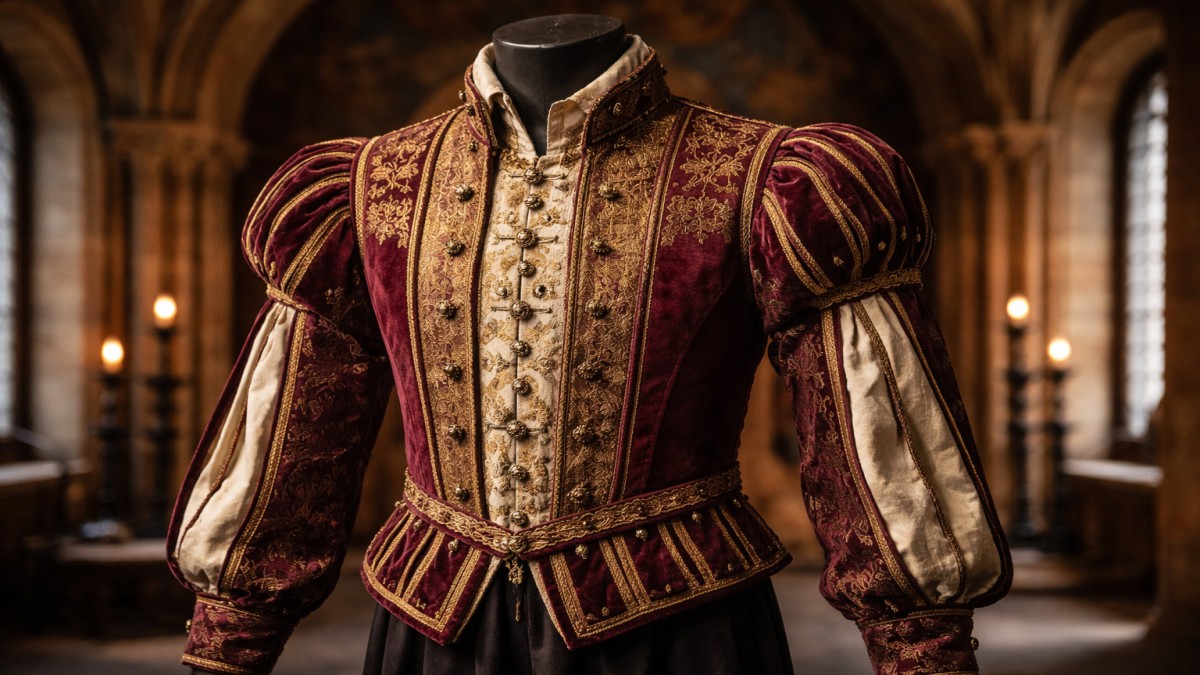
By the Renaissance, the doublet became a symbol of elegance. Tailors refined it, added decorative buttons, embroidery, and rich fabrics. The doublet wasn’t just clothing anymore—it was power stitched into fabric.
Structure and Design of a Doublet
Key Components of a Doublet
A classic doublet features a fitted bodice, sleeves (sometimes detachable), and a front opening with buttons or ties. Its shape emphasized a ties. Its shape emphasized a broad chest and narrow waist.
Padding, Buttons, and Fastenings
Padding gave the garment structure, while buttons added flair. Some doublets had dozens of buttons, turning the front into a visual rhythm of style.
Fabrics Used in Traditional Doublets
Wool and linen were common for everyday wear. Nobility preferred silk, velvet, or brocade. Fabric choice spoke volumes about social status.
Types of Doublets
Military Doublets
These were sturdy, functional, and often heavily padded. Designed for protection, they prioritized durability over decoration.
Fashion Doublets
Slimmer and more decorative, fashion doublets were worn at court or social gatherings. Bright colors and fine fabrics ruled here.
Ceremonial and Court Doublets
Reserved for royalty and high-ranking officials, these doublets were masterpieces of tailoring, often adorned with gold thread and jewels.
Doublet vs Other Historical Garments
Doublet vs Jerkin
A jerkin was typically worn over a doublet and was looser in fit. The doublet, on the other hand, sat closer to the body and provided structure.
Doublet vs Tunic
Tunics were longer and simpler. Doublets were tailored, shaped, and far more complex in construction.
How Doublets Were Worn
Layering with Shirts and Hose
The doublet was worn over a linen shirt and paired with hose. It acted as the central anchor of the outfit, holding everything together—sometimes literally.
Accessories Paired with Doublets
Belts, cloaks, ruffs, and hats completed the look. Accessories turned a simple doublet into a statement.
Doublets in Modern Fashion
Renaissance Fairs and Reenactments
Today, doublets are popular at historical reenactments. They bring authenticity and charm, making history wearable.
Doublets in Film and Theatre
Movies and stage productions rely on doublets to instantly signal a historical era. They’re visual shorthand for “medieval” or “Renaissance.”
Designer-Inspired Modern Doublets
Some designers borrow elements like structured waists or buttoned fronts, blending old-world style with modern fashion.
How to Choose the Right Doublet Today
Fit and Comfort
A good doublet should fit snugly without restricting movement. Comfort matters, especially if worn for long events.
Material and Craftsmanship
Look for breathable fabrics and solid stitching. A well-made doublet feels like armor and art combined.
Conclusion
The clothing doublet is more than a historical curiosity. It’s a cornerstone of fashion history, a bridge between armor and tailoring, function and flair. Whether admired in museums, worn at festivals, or echoed in modern design, the doublet continues to button together the past and present.
FAQs
1. Is a doublet the same as a jacket?
No, but it influenced modern jackets. A doublet is more fitted and structured.
2. Were doublets only worn by men?
Historically, yes, though modern adaptations are worn by all genders.
3. Are doublets comfortable to wear?
Well-made doublets can be surprisingly comfortable when properly fitted.
4. Can doublets be worn casually today?
Mostly for events or performances, but modern versions can be styled creatively.
5. What is the most common fabric for a doublet?
Historically wool and linen; today, cotton blends and velvet are common.

Technisches Gymnasium: Your Gateway to Engineering and Technology

Spangram – Unlocking the Fun and Challenge of Word Puzzles

Drones in the Sky: Revolutionizing the Way We See the World

Gold Shower: Nature’s Cascading Yellow Wonder

Best Dry Shampoo – The Complete Guide for Fresh Hair Without Washing

Angora Cats Splendor – Discover the Majesty of This Elegant Breed

The Indian Bow: A Legacy of Precision, Power, and Tradition

Hydrating Mask for Skin: The Ultimate Guide to Deep Moisture and Glowing Complexion

Brown Sneakers: The Ultimate Style Guide for Timeless Comfort and Versatility

Robert Provost: A Life of Leadership, Community, and Vision

Incestflox: Exploring Controversial Narratives and Online Discourse

Cozey: Revolutionizing Home Comfort One Sofa at a Time

Libélula: The Enchanting Dragonfly and Its Symbolic Power

Smut Book Meaning: Everything You Need to Know About This Steamy Genre

Sarkari Network: Everything You Need to Know

WJBD News: Keeping South Central Illinois Informed and Connected

Zoology Project Topics: Creative Ideas & FAQs for Students

Rapture Ready News: Interpreting Today’s Headlines Through a Prophetic Lens

Lucipara Islands: Indonesia’s Untouched Paradise

Torcia: Lighting the Way – From Ancient Flames to Modern Innovation
Technisches Gymnasium: Your Gateway to Engineering and Technology
Spangram – Unlocking the Fun and Challenge of Word Puzzles
Drones in the Sky: Revolutionizing the Way We See the World
Gold Shower: Nature’s Cascading Yellow Wonder
Best Dry Shampoo – The Complete Guide for Fresh Hair Without Washing
Angora Cats Splendor – Discover the Majesty of This Elegant Breed
The Indian Bow: A Legacy of Precision, Power, and Tradition
Hydrating Mask for Skin: The Ultimate Guide to Deep Moisture and Glowing Complexion
Brown Sneakers: The Ultimate Style Guide for Timeless Comfort and Versatility
Robert Provost: A Life of Leadership, Community, and Vision

 entertainment6 months ago
PYT Telegram: A Complete Guide to Understanding, Using, and Maximizing It

 entertainment7 months ago
OnionFlix: Everything You Need to Know About This Streaming Website
- others5 months ago
Nook vs Kindle: Which E-Reader Is Right for You?
- gaming7 months ago
Melisandre: The Enigmatic Priestess of Game of Thrones