others
Pauldrons: The Shoulder Armor That Defined Warriors
Published
1 year agoon
By
Hamari Web
Table of Contents
ToggleIntroduction to Pauldrons
Ever seen a knight with those big, bulky shoulder guards and wondered what they’re called? Those are pauldrons, and they’re not just for show. These curved plates of metal (or sometimes leather) were once a warrior’s best friend in battle, protecting one of the most vulnerable parts of the body the shoulders.
Historical Origins
Early Shoulder Protection in Ancient Warfare
Before pauldrons became standardized armor pieces, ancient warriors used basic shoulder protection made from leather, bone, or layered textiles. The Greeks and Romans used shoulder flaps on their tunics, offering limited protection.
Rise of the Medieval Pauldron
Pauldrons as we know them really took shape during the late medieval period — especially in the 14th and 15th centuries when full plate armor became the standard for knights and high-ranking soldiers.
Evolution Over the Centuries
From Chainmail to Plate Armor
Early warriors relied heavily on chainmail, but as weapons advanced — particularly maces and longbows — heavier armor became necessary. Enter the pauldron: crafted from interlocking metal plates that moved with the body.
Design Modifications in the Renaissance Era
By the Renaissance, pauldrons were not just protective but also decorative. Noble warriors had them etched, fluted, and even gold-plated to signify wealth and rank.
Structure and Design
Main Components of a Pauldron
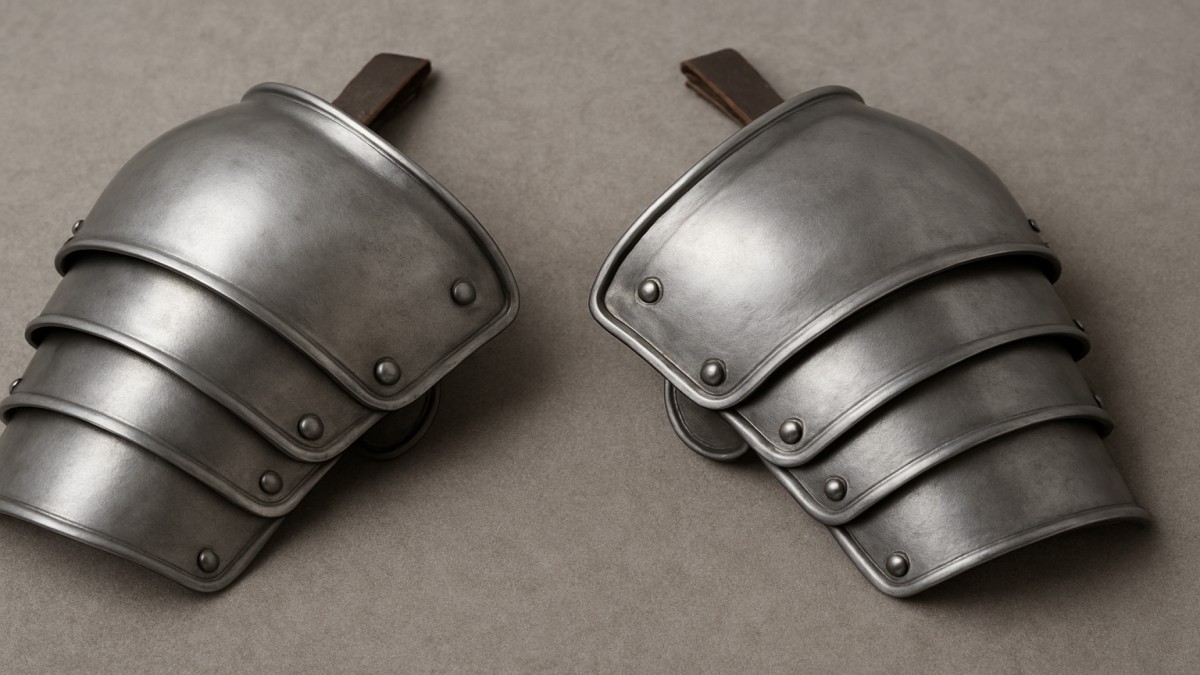
- Top plate (shoulder cap): The main curved part that covers the shoulder.
- Lames: Overlapping metal strips for flexibility.
- Straps and buckles: To attach to the cuirass (chest piece).
Left vs Right Pauldron
Many historical suits had asymmetrical pauldrons. The sword arm (right) usually had a smaller pauldron for movement, while the shield side (left) had a larger one for protection.
Types of Pauldrons
Articulated Pauldrons
Made with multiple lames (metal strips) that allow full arm movement while still offering layered protection.
Fluted Pauldrons
Popular in German Gothic armor, fluting wasn’t just stylish — it added structural strength without additional weight.
Fantasy and Cosplay Variants
These exaggerate the size and design for dramatic effect. Think of the massive, spiky pauldrons in video games like World of Warcraft.
Materials Used
Traditional Metals
Steel and iron were the go-to choices. Some high-status warriors used bronze or even silver inlays.
Modern Materials
Today’s cosplayers and reenactors often use EVA foam, Worbla, or leather for lightweight, wearable pieces.
Pauldrons in Battle
Practical Combat Use
Pauldrons were vital for deflecting sword strikes, arrow hits, and glancing blows. Their curved surface helped redirect force away from the body.
Flexibility vs Protection
Too large, and you couldn’t move your arm. Too small, and you’d get skewered. The best pauldrons struck a delicate balance.
Cultural and Symbolic Significance
Emblems, Etchings, and Engravings
Knights often had their family crests engraved into their pauldrons. It wasn’t just about vanity it was identity in battle.
Rank and Identity
More ornate pauldrons often meant higher status. Generals and royalty had gold-trimmed or uniquely shaped designs.
Pauldrons in Modern Media
Hollywood and Historical Dramas
From “Braveheart” to “Game of Thrones,” pauldrons help define a character’s warrior status and add historical realism.
Gaming and Fantasy Influence
Whether you’re playing Skyrim or Diablo, you’ve probably equipped a pauldron. Fantasy artists love to exaggerate these into massive armor chunks.
Cosplay and Reenactments
DIY Pauldrons for Beginners
Foam pauldrons are a great entry project. All you need is EVA foam, a heat gun, and a YouTube tutorial.
LARP and Renaissance Fairs
LARPers love pauldrons for their look and feel. They’re durable enough for foam weapon combat and light enough for long wear.
Conclusion
Pauldrons may seem like a small part of a knight’s armor, but they played a major role in protecting warriors throughout history. From medieval battlefields to comic cons, pauldrons continue to capture our imagination. Whether you’re a history buff, a gamer, or a cosplayer, these shoulder guards prove that sometimes the smallest pieces make the biggest impact.
FAQs
1. What is the difference between a pauldron and a spaulder?
A pauldron typically covers the shoulder and upper chest/back, while a spaulder is smaller and covers only the shoulder area.
2. Can pauldrons be worn without full armor?
Yes, especially in cosplay or reenactments. They can be strapped on individually.
3. Are there left- and right-specific pauldrons?
Historically, yes. The sword arm had a smaller one for movement, while the shield arm had more protection.
4. What are pauldrons made of today?
Modern pauldrons can be made from metal, leather, foam, plastic, or composite materials depending on the purpose.
5. Where can I buy or make a pair of pauldrons?
You can find them online from armor vendors, cosplay shops, or DIY them with materials like EVA foam and Worbla.

How to Pay Employees in Your Small Business: Simple Steps That Get It Right

How to Do Market Research for Small Business: Simple Steps That Find Your Customers

How to Start a Tutoring Business: Simple Steps That Turn Your Knowledge Into Income

How to Create a Digital Product to Sell: A Simple Guide for Small Business Beginners

Christmas Marketing Ideas for Small Businesses: Simple Ways to Win Festive Customers

Benefit of Sole Proprietorship: Simple Advantages That Make Starting Easy

Grant Funding for Small Businesses: A Simple Guide to Finding and Winning Grants

Business Loans for New Business: A Simple Guide That Gets You Funded

Small Business Content Calendar: A Simple Guide That Keeps Your Posts on Track

How to Start a Freelance Business: Simple Steps That Turn Your Skills Into Income

How to Repurpose Blog Content for Social Media Without Starting From Scratch

How to Write a Simple Business Plan for Your Small Business: A Practical Guide That Gets You Started
How to Handle Customer Complaints in a Small Business: A Calm, Practical Guide That Turns Problems Into Loyalty

How to Create a Small Business Content Marketing Plan That Actually Gets Results

How to Create a Content Calendar for a Small Business

How to Write a Professional Business Email That Gets a Reply

How to Set SMART Goals for a Small Business: A Practical Guide That Actually Works

How to Set Up a Simple Referral Program for Your Small Business: A Beginner’s Guide That Brings in New Customers

How to Write a Business Proposal for Your Small Business: A Simple Guide That Wins Clients

How to Get More Clients for Your Business: Simple Ways That Actually Work

How to Pay Employees in Your Small Business: Simple Steps That Get It Right

How to Do Market Research for Small Business: Simple Steps That Find Your Customers

How to Start a Tutoring Business: Simple Steps That Turn Your Knowledge Into Income

How to Create a Digital Product to Sell: A Simple Guide for Small Business Beginners

Christmas Marketing Ideas for Small Businesses: Simple Ways to Win Festive Customers

Benefit of Sole Proprietorship: Simple Advantages That Make Starting Easy

Grant Funding for Small Businesses: A Simple Guide to Finding and Winning Grants

Business Loans for New Business: A Simple Guide That Gets You Funded

Small Business Content Calendar: A Simple Guide That Keeps Your Posts on Track

How to Start a Freelance Business: Simple Steps That Turn Your Skills Into Income
Trending
entertainment1 year agoPYT Telegram: A Complete Guide to Understanding, Using, and Maximizing It
entertainment1 year agoOnionFlix: Everything You Need to Know About This Streaming Website
education1 year agoHow to Become a Software Engineer: A Complete Guide
others1 year agoNook vs Kindle: Which E-Reader Is Right for You?