others
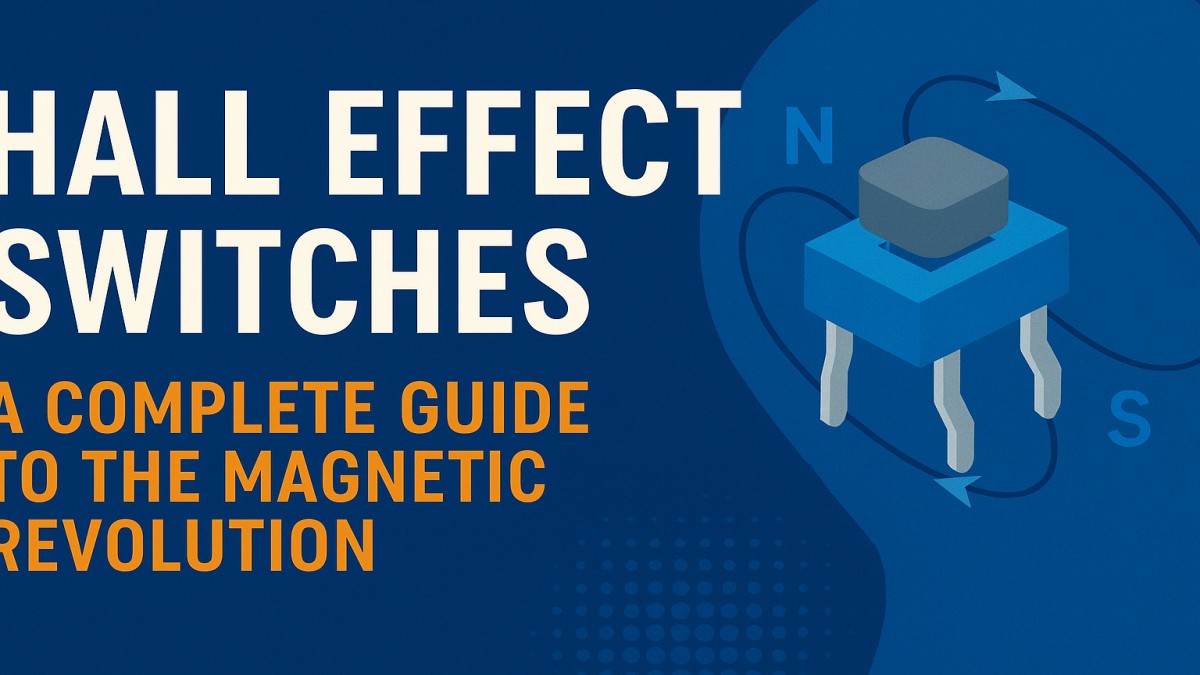
Hall Effect Switches: A Complete Guide to the Magnetic Revolution
Published
1 year agoon
By
Hamari Web
Table of Contents
ToggleIntroduction
Hall Effect Switches. Ever wondered how your car knows when your door is open? Or how your smartphone screen turns off when it’s near your ear? That’s the magic of Hall effect switches tiny magnetic-field-sensing heroes hidden inside many devices we use every day.
The Science Behind Hall Effect
Who Discovered the Hall Effect?
The phenomenon was discovered by Edwin H. Hall in 1879. He observed that a magnetic field applied perpendicular to a current-carrying conductor produced a voltage—now called the Hall voltage at right angles to both the current and the magnetic field.
How the Hall Effect Works
When electrons move through a conductor and encounter a magnetic field, they get pushed to one side, creating a voltage. That voltage tells us that a magnetic field is present. Hall sensors use this principle to detect magnetic fields without physical contact.
What is a Hall Effect Switch?
A Hall effect switch is a device that uses the Hall effect to detect the presence (or absence) of a magnetic field and trigger an electronic output—just like a regular switch but without needing to be physically pressed.
Components Involved
- Hall Element (sensor): Core part that detects the magnetic field
- Signal Processor: Converts the analog signal to digital
- Output Driver: Sends the signal to external circuits
Hall Sensor vs Hall Switch
While both use the Hall effect, sensors measure magnetic field strength continuously, while switches only tell you if the field is present or not—like a digital ON/OFF signal.
Types of Hall Effect Switches
Unipolar Switches
These switch on when exposed to a single magnetic pole (usually south). Once the magnet is gone, they turn off.
Bipolar Switches
They need both poles to operate—one to switch on, the other to switch off.
Omnipolar Switches
React to either north or south poles—extremely versatile and widely used.
Latching Switches
They remain ON even after the magnetic field is removed, until the opposite polarity resets them. Perfect for toggle-style operations.
Key Features and Benefits
- Contactless Operation: No physical wear and tear, unlike mechanical switches.
- Long Lifespan: Can easily last tens of millions of cycles.
- Highly Immune to Noise: Stable performance even in electrically noisy environments.
- Low Power Draw: Ideal for battery-powered gadgets.
Common Applications
Automotive Industry
Used in:
- Ignition systems
- Wheel speed sensors
- Throttle position sensing
Consumer Electronics
- Flip covers in phones
- Proximity sensors in smartwatches
- Gaming controllers
Industrial Machinery
- Motor speed regulation
- Safety locks
- Shaft position monitoring
Medical Devices
- MRI-compatible equipment
- Infusion pumps
- Surgical robotics
Working Principle of Hall Effect Switch
When a magnet comes close, the sensor detects it and sends an electrical signal. Here’s how:
- Magnet Near Sensor → Creates a Hall voltage
- Signal Processing → Interprets it as ON/OFF
- Output Circuit → Sends logic high or low to a microcontroller
You can imagine it like an invisible push-button that reacts to a magnet.
Advantages Over Mechanical Switches
- No Friction = No Failure
- Operates at High Speeds
- Sealed Designs make them dust-proof and waterproof
Hall Effect Switch vs Reed Switch
| Feature | Hall Effect Switch | Reed Switch |
|---|---|---|
| Response Time | Faster | Slower |
| Durability | Longer | Shorter |
| Contactless | Yes | Yes |
| Sensitivity | Moderate | High |
| Price | Slightly Higher | Cheaper |
Conclusion
Hall effect switches are silent workers behind many modern conveniences. With no moving parts, great durability, and adaptability across industries, they’re powering a magnetic revolution in switching technology. Whether you’re building a smart home project or designing automotive electronics, Hall effect switches offer a reliable and efficient solution.
FAQs
1. What is the typical lifespan of a Hall effect switch?
Most can last over 100 million operations, far surpassing mechanical alternatives.
2. Can Hall effect switches work underwater?
Yes, as long as the circuit is properly sealed. They work without contact, so no issue with water ingress.
3. Are Hall effect switches safe for medical use?
Absolutely! Many are used in non-invasive medical devices, especially in MRI-safe environments.
4. What kind of magnets are used in Hall effect switches?
Generally, neodymium magnets due to their small size and strong magnetic field.
5. Do Hall effect switches require calibration?
Most modern sensors are pre-calibrated, but for high-precision work, calibration may be needed.

How to Start a Lawn Mowing Business: Simple Steps That Turn Mowing Into Income

How to Start a Dog Walking Business: Simple Steps That Turn Walks Into Income

How to Start a House Cleaning Business: Simple Steps That Win Your First Clients

How to Pay Employees in Your Small Business: Simple Steps That Get It Right

How to Do Market Research for Small Business: Simple Steps That Find Your Customers

How to Start a Tutoring Business: Simple Steps That Turn Your Knowledge Into Income

How to Create a Digital Product to Sell: A Simple Guide for Small Business Beginners

Christmas Marketing Ideas for Small Businesses: Simple Ways to Win Festive Customers

Benefit of Sole Proprietorship: Simple Advantages That Make Starting Easy

Grant Funding for Small Businesses: A Simple Guide to Finding and Winning Grants

How to Repurpose Blog Content for Social Media Without Starting From Scratch

How to Write a Simple Business Plan for Your Small Business: A Practical Guide That Gets You Started

How to Create a Small Business Content Marketing Plan That Actually Gets Results
How to Handle Customer Complaints in a Small Business: A Calm, Practical Guide That Turns Problems Into Loyalty

How to Get More Clients for Your Business: Simple Ways That Actually Work

How to Create a Content Calendar for a Small Business

How to Write a Professional Business Email That Gets a Reply

How to Set SMART Goals for a Small Business: A Practical Guide That Actually Works

How to Set Up a Simple Referral Program for Your Small Business: A Beginner’s Guide That Brings in New Customers

How to Write a Business Proposal for Your Small Business: A Simple Guide That Wins Clients

How to Start a Lawn Mowing Business: Simple Steps That Turn Mowing Into Income

How to Start a Dog Walking Business: Simple Steps That Turn Walks Into Income

How to Start a House Cleaning Business: Simple Steps That Win Your First Clients

How to Pay Employees in Your Small Business: Simple Steps That Get It Right

How to Do Market Research for Small Business: Simple Steps That Find Your Customers

How to Start a Tutoring Business: Simple Steps That Turn Your Knowledge Into Income

How to Create a Digital Product to Sell: A Simple Guide for Small Business Beginners

Christmas Marketing Ideas for Small Businesses: Simple Ways to Win Festive Customers

Benefit of Sole Proprietorship: Simple Advantages That Make Starting Easy

Grant Funding for Small Businesses: A Simple Guide to Finding and Winning Grants
Trending
entertainment1 year agoPYT Telegram: A Complete Guide to Understanding, Using, and Maximizing It
entertainment1 year agoOnionFlix: Everything You Need to Know About This Streaming Website
education1 year agoHow to Become a Software Engineer: A Complete Guide
others1 year agoNook vs Kindle: Which E-Reader Is Right for You?