others
Halepensis: The Resilient Mediterranean Pine and Its Ecological Importance

Introduction to Halepensis
Halepensis. Have you ever walked through a Mediterranean forest and noticed the tall, slender pine trees filling the air with a refreshing, resinous scent? That’s Pinus halepensis, commonly known as the Aleppo Pine. Native to the Mediterranean basin, this species is a symbol of resilience thriving in dry, rocky soils where few other trees can survive. Beyond its beauty, Halepensis plays a vital role in ecology, climate resilience, and even human culture.
Scientific Classification
Taxonomy and Nomenclature
- Scientific Name: Pinus halepensis
- Family: Pinaceae
- Genus: Pinus
- Common Name: Aleppo Pine
Common Names Across Regions
In Spain, it’s known as Pino carrasco; in France, Pin d’Alep; and in Italy, Pino d’Aleppo. Despite regional differences, it’s recognized everywhere as one of the most characteristic trees of the Mediterranean landscape.
Physical Characteristics of Pinus halepensis
Appearance and Growth Pattern
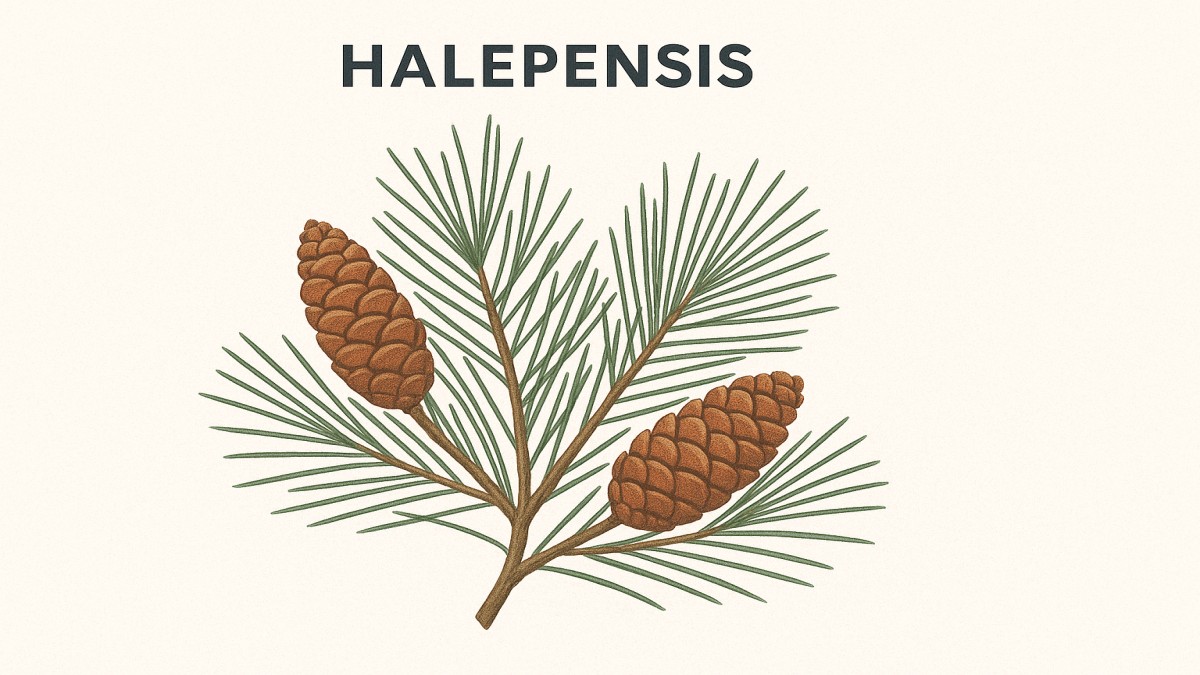
The Aleppo Pine is an evergreen conifer that typically grows between 10 and 20 meters tall, though it can reach up to 25 meters under ideal conditions. Its trunk is often irregular and twisted, giving it a rugged yet elegant appearance.
Cones, Needles, and Bark
- Needles: Slender, light green, and usually in pairs, ranging from 6–12 cm long.
- Cones: Oval-shaped, about 5–12 cm long, maturing after two years.
- Bark: Thin, scaly, and reddish-gray, which peels off in plates with age.
These features allow the tree to adapt and survive harsh Mediterranean climates.
Natural Habitat and Distribution
Native Range
Pinus halepensis thrives across the Mediterranean Basin, from southern Europe to North Africa and the Middle East. It is particularly abundant in countries like Greece, Italy, Spain, Algeria, and Israel.
Climate and Soil Preferences
The tree prefers semi-arid climates, tolerating long, hot summers and mild winters. It can grow in rocky, calcareous soils and withstand limited water availability, making it perfect for dry regions.
Adaptations and Resilience
Drought Resistance
One of the defining traits of Halepensis is its ability to survive with minimal water. Its deep root system and waxy needle coating help reduce water loss, ensuring survival during droughts.
Fire Adaptation
Fires are common in Mediterranean ecosystems, but the Aleppo Pine has evolved with them. Its cones can remain closed for years, opening only after exposure to fire — releasing seeds that quickly germinate in the nutrient-rich ash.
Growth in Poor Soils
Even in nutrient-poor or eroded soils, Halepensis can take root and flourish, improving soil fertility over time through organic matter deposition.
Ecological Role of Halepensis
Soil Stabilization
The roots of Pinus halepensis prevent soil erosion, especially on hillsides and coastal regions. Its presence helps maintain the landscape against wind and rain damage.
Biodiversity Support
This tree provides habitat for numerous species of birds, insects, and fungi. It forms part of a broader ecosystem that sustains Mediterranean biodiversity.
Carbon Sequestration
Like other trees, Halepensis absorbs carbon dioxide, contributing to climate regulation and helping combat global warming.
Conclusion
The Aleppo Pine (Pinus halepensis) is far more than a simple tree — it’s a symbol of endurance, adaptability, and balance between nature and human life. From stabilizing soils to cleansing the air and inspiring cultures, Halepensis continues to play a vital role in the Mediterranean ecosystem. Protecting and preserving it ensures not just the survival of a species, but the harmony of an entire region’s environment.
FAQs
1. What is Halepensis commonly known as?
Halepensis is commonly known as the Aleppo Pine, a Mediterranean evergreen tree.
2. Where does Pinus halepensis grow naturally?
It grows across the Mediterranean Basin, including southern Europe, North Africa, and parts of the Middle East.
3. Why is the Aleppo Pine important?
It prevents soil erosion, supports biodiversity, and helps combat desertification in arid regions.
4. Can Aleppo Pine survive in dry climates?
Yes, it’s one of the most drought-tolerant pine species, adapted perfectly to Mediterranean environments.
5. Is Pinus halepensis used in reforestation?
Absolutely. It’s a key species for reforestation and land restoration projects due to its resilience and fast growth.

Consultative Selling Techniques: A Complete Guide to Building Customer Trust in 2026

Sales Objection Handling: A Complete Guide to Closing More Deals in 2026

Customer Closing Techniques: A Complete Guide to Converting Prospects into Buyers (2026)

Customer Conversion Process: A Complete Guide to Turning Visitors into Loyal Customers (2026)

Sales Funnel Examples: A Complete Guide to Converting More Customers (2026)

Lead Qualification Framework: A Complete Guide to Finding High-Quality Customers (2026)

Website Credibility Factors: A Complete Guide to Building Trust Online (2026)

Online Reputation Monitoring: A Complete Guide to Protecting Your Brand in 2026

Customer Testimonial Strategy: A Complete Guide to Building Trust and Increasing Sales (2026)

Business Storytelling Framework: A Complete Guide to Building Strong Brand Connections (2026)
Consultative Selling Techniques: A Complete Guide to Building Customer Trust in 2026
Sales Objection Handling: A Complete Guide to Closing More Deals in 2026
Customer Closing Techniques: A Complete Guide to Converting Prospects into Buyers (2026)
Customer Conversion Process: A Complete Guide to Turning Visitors into Loyal Customers (2026)
Sales Funnel Examples: A Complete Guide to Converting More Customers (2026)
Lead Qualification Framework: A Complete Guide to Finding High-Quality Customers (2026)
Website Credibility Factors: A Complete Guide to Building Trust Online (2026)
Online Reputation Monitoring: A Complete Guide to Protecting Your Brand in 2026
Customer Testimonial Strategy: A Complete Guide to Building Trust and Increasing Sales (2026)
Business Storytelling Framework: A Complete Guide to Building Strong Brand Connections (2026)

 entertainment1 year ago
PYT Telegram: A Complete Guide to Understanding, Using, and Maximizing It

 entertainment1 year ago
OnionFlix: Everything You Need to Know About This Streaming Website
- education1 year ago
How to Become a Software Engineer: A Complete Guide
- others12 months ago
Nook vs Kindle: Which E-Reader Is Right for You?