business
Bootstrap Startup Strategy: Complete Guide to Growing a Business Without Investors in 2026

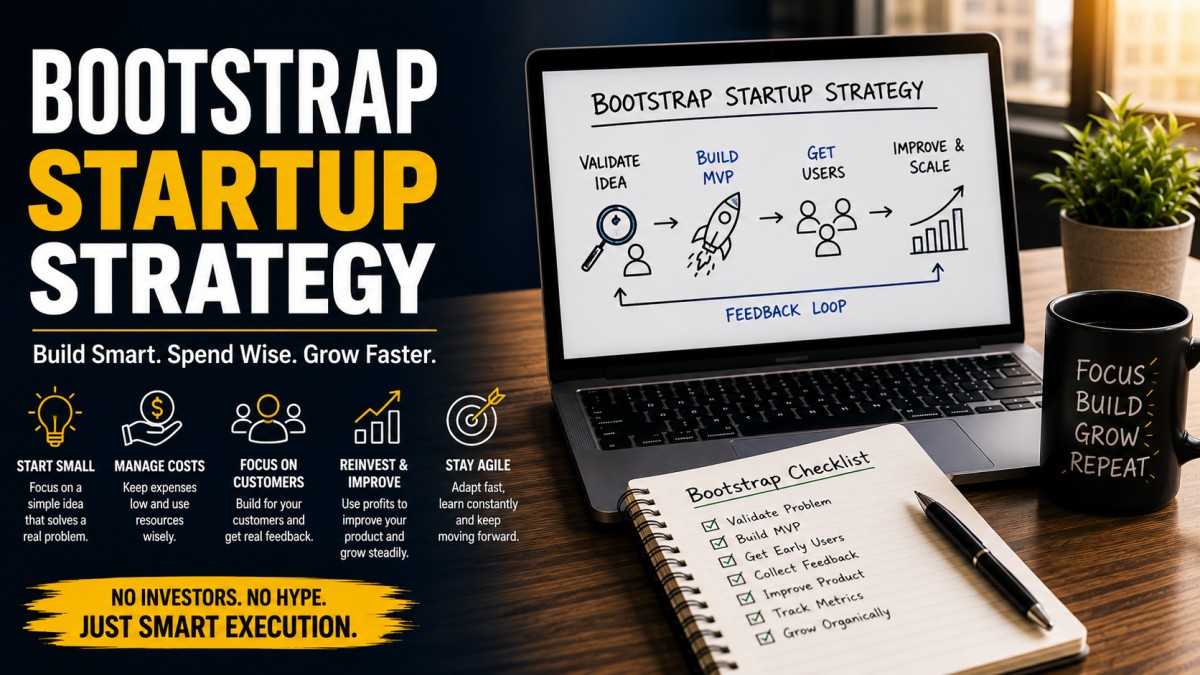
Many successful companies started with limited resources, proving that outside funding is not always necessary for building a profitable business. Instead of raising money from investors, many entrepreneurs choose to grow using their own savings and business revenue. That’s why bootstrap startup strategy has become a popular topic among founders in the USA.
Understanding bootstrap startup strategy helps entrepreneurs build sustainable businesses while maintaining full ownership and control. Rather than depending on venture capital or loans, bootstrapped startups focus on smart budgeting, gradual growth, and reinvesting profits back into the business. Whether you’re launching a digital product, online store, consulting service, or software company, bootstrapping offers a practical path toward long-term success.
The best part is that many bootstrapped businesses become profitable much earlier because they learn to manage resources efficiently from day one.
Bootstrap Startup Strategy: Why More Entrepreneurs Are Choosing It
Learning bootstrap startup strategy starts with understanding one simple idea: growing a business at a pace your finances can support. Instead of chasing rapid expansion, bootstrapped founders focus on building a strong foundation and serving customers well.
The growing interest in bootstrap startup strategy comes from entrepreneurs who want financial independence and complete decision-making authority. Without outside investors, founders can shape the business according to their own vision while avoiding pressure to achieve unrealistic growth targets.
This approach often encourages better financial discipline and smarter business decisions.
Start With a Simple Business Model
Complex businesses usually require more money.
Instead, begin with:
- One core product.
- One target audience.
- One clear problem to solve.
- A simple pricing model.
Keeping things simple reduces unnecessary costs.
Control Every Business Expense
Cash flow is one of your biggest assets.
Review spending on:
- Software subscriptions.
- Marketing campaigns.
- Office expenses.
- Equipment.
Only spend money where it creates measurable value.
Focus on Revenue Early
Instead of waiting months to generate income, prioritize early sales.
You can:
- Offer pre-orders.
- Sell services.
- Launch digital products.
- Provide consulting.
Early revenue supports future growth.
Reinvest Business Profits
One of the most important parts of a bootstrap startup strategy is reinvesting earnings.
Profits can be used for:
- Product improvements.
- Marketing.
- Hiring freelancers.
- Better customer support.
Consistent reinvestment creates sustainable growth.
Build a Minimum Viable Product (MVP)
Avoid creating unnecessary features.
Launch a product that:
- Solves one major problem.
- Is easy to use.
- Can be improved later.
Customer feedback helps shape future development.
Use Affordable Marketing Channels
Expensive advertising isn’t the only growth option.
Focus on:
- SEO.
- Content marketing.
- Email marketing.
- Social media.
- Referral programs.
Organic growth often provides long-term value.
Automate Repetitive Tasks
Automation saves both time and money.
Automate activities like:
- Email campaigns.
- Customer follow-ups.
- Appointment scheduling.
- Invoicing.
Efficiency allows small teams to achieve more.
Build Strong Customer Relationships
Happy customers often become repeat buyers.
Encourage loyalty by:
- Providing excellent support.
- Listening to feedback.
- Solving problems quickly.
- Delivering consistent value.
Customer retention costs less than acquiring new customers.
Common Bootstrapping Mistakes
Many founders struggle because they:
- Spend too much too early.
- Expand too quickly.
- Ignore customer feedback.
- Delay revenue generation.
- Try to compete with larger companies immediately.
Patience and discipline are essential.
Best Practices for Bootstrapped Startups
Successful entrepreneurs usually:
- Monitor cash flow carefully.
- Keep operating costs low.
- Validate ideas before scaling.
- Focus on customer satisfaction.
- Reinvest profits wisely.
- Automate repetitive work.
- Improve products continuously.
- Make data-driven decisions.
Steady growth often leads to stronger businesses.
Benefits of a Bootstrap Startup Strategy
Choosing this approach offers several advantages.
These include:
- Full ownership.
- Financial independence.
- Better cost control.
- Greater flexibility.
- Sustainable long-term growth.
Many entrepreneurs value the freedom that bootstrapping provides.
Future of Bootstrapped Startups
Technology is making bootstrapping easier than ever.
Modern founders benefit from:
- AI-powered business tools.
- No-code platforms.
- Affordable cloud software.
- Digital payment systems.
- Online marketing channels.
These resources reduce startup costs and accelerate growth.
Conclusion
Following a bootstrap startup strategy is one of the smartest ways to build a business while maintaining complete ownership and financial control.
By focusing on early revenue, controlling expenses, validating ideas, reinvesting profits, and building strong customer relationships, entrepreneurs can grow steadily without depending on outside investors. Although bootstrapping requires patience and discipline, it often creates stronger and more resilient businesses over time.
For entrepreneurs launching businesses in the USA, bootstrapping remains a practical and sustainable strategy in 2026.
FAQs
1. What is a bootstrap startup strategy?
It is a business growth approach where entrepreneurs use personal funds and business revenue instead of outside investment.
2. Why do founders choose bootstrapping?
It allows them to maintain full ownership and financial control.
3. Is bootstrapping suitable for small businesses?
Yes. Many successful small businesses begin as bootstrapped startups.
4. Can a bootstrapped business grow successfully?
Absolutely. Many well-known companies started without investors.
5. What is the biggest advantage of bootstrapping?
Maintaining ownership while growing sustainably.

Consultative Selling Techniques: A Complete Guide to Building Customer Trust in 2026

Sales Objection Handling: A Complete Guide to Closing More Deals in 2026

Customer Closing Techniques: A Complete Guide to Converting Prospects into Buyers (2026)

Customer Conversion Process: A Complete Guide to Turning Visitors into Loyal Customers (2026)

Sales Funnel Examples: A Complete Guide to Converting More Customers (2026)

Lead Qualification Framework: A Complete Guide to Finding High-Quality Customers (2026)

Website Credibility Factors: A Complete Guide to Building Trust Online (2026)

Online Reputation Monitoring: A Complete Guide to Protecting Your Brand in 2026

Customer Testimonial Strategy: A Complete Guide to Building Trust and Increasing Sales (2026)

Business Storytelling Framework: A Complete Guide to Building Strong Brand Connections (2026)
Consultative Selling Techniques: A Complete Guide to Building Customer Trust in 2026
Sales Objection Handling: A Complete Guide to Closing More Deals in 2026
Customer Closing Techniques: A Complete Guide to Converting Prospects into Buyers (2026)
Customer Conversion Process: A Complete Guide to Turning Visitors into Loyal Customers (2026)
Sales Funnel Examples: A Complete Guide to Converting More Customers (2026)
Lead Qualification Framework: A Complete Guide to Finding High-Quality Customers (2026)
Website Credibility Factors: A Complete Guide to Building Trust Online (2026)
Online Reputation Monitoring: A Complete Guide to Protecting Your Brand in 2026
Customer Testimonial Strategy: A Complete Guide to Building Trust and Increasing Sales (2026)
Business Storytelling Framework: A Complete Guide to Building Strong Brand Connections (2026)

 entertainment1 year ago
PYT Telegram: A Complete Guide to Understanding, Using, and Maximizing It

 entertainment1 year ago
OnionFlix: Everything You Need to Know About This Streaming Website
- education1 year ago
How to Become a Software Engineer: A Complete Guide
- others1 year ago
Nook vs Kindle: Which E-Reader Is Right for You?