business
Micro SaaS Startup Ideas: Best Small Software Business Opportunities in 2026

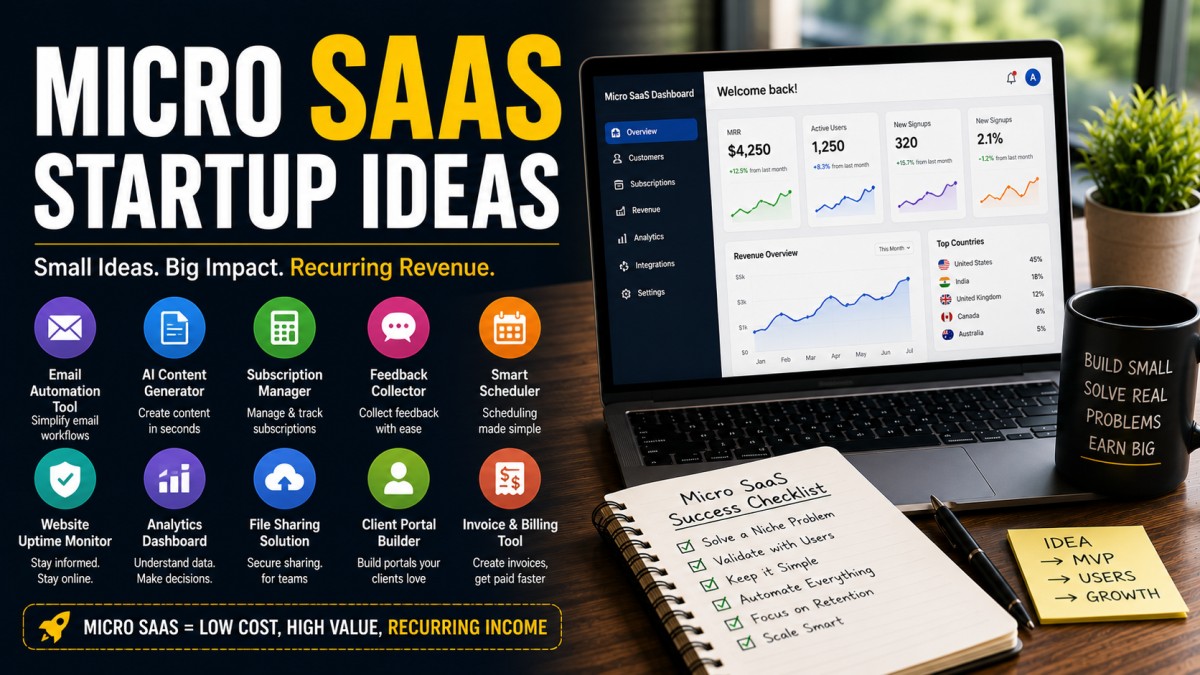
Starting a software business no longer requires a large team, millions of dollars, or years of development. Today, many entrepreneurs are building profitable online businesses by solving one specific problem for a targeted audience. That’s why micro saas startup ideas have become one of the fastest-growing business topics among entrepreneurs in the USA.
Understanding micro saas startup ideas can help you build a small software product that generates recurring monthly income. Unlike traditional startups that often require investors and large development teams, Micro SaaS businesses are designed to stay lean, profitable, and easy to manage. Whether you’re a developer, freelancer, or entrepreneur with a business idea, a Micro SaaS product can become a sustainable source of long-term revenue.
The biggest advantage is that many successful Micro SaaS businesses begin with a single founder and a simple solution.
Micro SaaS Startup Ideas: Why This Business Model Is Growing
Learning micro saas startup ideas starts with understanding why this business model is becoming so popular. Businesses today prefer affordable software that solves one clear problem instead of paying for complicated enterprise platforms.
The growing demand for micro saas startup ideas comes from entrepreneurs who want recurring income without building massive companies. Small software products require lower operating costs, serve focused audiences, and are often easier to market than large applications.
With cloud technology and subscription pricing becoming the norm, Micro SaaS continues to attract founders worldwide.
Customer Support Automation Tool
Many small businesses struggle to answer customer questions quickly.
A simple SaaS product can help them:
- Manage live chat.
- Organize support tickets.
- Automate FAQs.
- Track customer conversations.
Customer service remains one of the strongest Micro SaaS markets.
Social Media Content Planner
Content creators and businesses publish posts every day.
A Micro SaaS tool could help users:
- Schedule posts.
- Plan content calendars.
- Generate posting reminders.
- Organize social campaigns.
This niche continues growing every year.
AI Writing Assistant for Small Businesses
Many businesses need help creating marketing content.
Your software could assist with:
- Email drafts.
- Product descriptions.
- Social captions.
- Blog outlines.
AI-powered productivity tools remain in high demand.
Invoice and Expense Tracker
One of the most practical micro saas startup ideas is financial management software for freelancers and small businesses.
Useful features include:
- Invoice creation.
- Payment tracking.
- Expense management.
- Monthly reports.
Simple finance tools often attract loyal subscribers.
Appointment Booking System
Professionals such as consultants, coaches, and salons need online scheduling.
A booking platform can provide:
- Calendar management.
- Appointment reminders.
- Payment integration.
- Client management.
Automation saves businesses valuable time.
Employee Task Management Software
Small companies need simple project organization.
Features may include:
- Task assignments.
- Team collaboration.
- Deadlines.
- Progress tracking.
Easy-to-use productivity software has broad appeal.
Email Marketing Dashboard
Many small businesses want affordable email marketing tools.
Your platform can offer:
- Campaign management.
- Subscriber tracking.
- Performance reports.
- Email automation.
Email marketing remains one of the highest ROI channels.
Local Business Review Manager
Managing online reviews can be challenging.
A review management platform may help businesses:
- Monitor reviews.
- Respond quickly.
- Track ratings.
- Build customer trust.
Local SEO tools continue gaining popularity.
Common Mistakes New Micro SaaS Founders Make
Many startups struggle because they:
- Build too many features.
- Ignore customer feedback.
- Target everyone.
- Spend too much before validation.
- Delay product launches.
Simple products often outperform overly complex software.
Best Practices for Building a Micro SaaS Business
Successful founders usually:
- Solve one specific problem.
- Validate demand before development.
- Launch an MVP quickly.
- Improve through customer feedback.
- Focus on recurring subscriptions.
- Keep operating costs low.
- Invest in SEO and content marketing.
- Build long-term customer relationships.
Steady improvements often lead to sustainable growth.
Benefits of Starting a Micro SaaS
Launching a Micro SaaS business offers several advantages.
These include:
- Recurring monthly revenue.
- Low operating costs.
- Small team requirements.
- Flexible remote work.
- Scalable business growth.
Many entrepreneurs prefer Micro SaaS because it balances profitability with simplicity.
Future of Micro SaaS Businesses
Technology continues making software development easier.
Future trends include:
- AI-powered automation.
- No-code development.
- Cloud infrastructure.
- Subscription-based software.
- Vertical niche solutions.
Founders who identify underserved markets may discover significant opportunities in the coming years.
Conclusion
Exploring micro saas startup ideas is one of the smartest ways to build an online business with recurring revenue in 2026.
By solving one clear customer problem, launching a simple product, validating demand early, and continuously improving through feedback, entrepreneurs can create profitable software businesses without large investments. The Micro SaaS model rewards focus, efficiency, and customer value rather than company size.
For entrepreneurs in the USA, now is an excellent time to explore Micro SaaS opportunities and build scalable digital businesses.
FAQs
1. What is a Micro SaaS business?
A Micro SaaS is a small software company that focuses on solving one specific problem through subscription-based software.
2. Do I need investors to build a Micro SaaS?
No. Many Micro SaaS businesses are completely bootstrapped.
3. Can beginners start a Micro SaaS?
Yes. Many founders begin with simple MVPs and improve over time.
4. How do Micro SaaS companies make money?
Most generate recurring monthly or yearly subscription revenue.
5. Is coding required?
Not always. No-code tools allow many founders to build software without advanced programming skills.

Consultative Selling Techniques: A Complete Guide to Building Customer Trust in 2026

Sales Objection Handling: A Complete Guide to Closing More Deals in 2026

Customer Closing Techniques: A Complete Guide to Converting Prospects into Buyers (2026)

Customer Conversion Process: A Complete Guide to Turning Visitors into Loyal Customers (2026)

Sales Funnel Examples: A Complete Guide to Converting More Customers (2026)

Lead Qualification Framework: A Complete Guide to Finding High-Quality Customers (2026)

Website Credibility Factors: A Complete Guide to Building Trust Online (2026)

Online Reputation Monitoring: A Complete Guide to Protecting Your Brand in 2026

Customer Testimonial Strategy: A Complete Guide to Building Trust and Increasing Sales (2026)

Business Storytelling Framework: A Complete Guide to Building Strong Brand Connections (2026)
Consultative Selling Techniques: A Complete Guide to Building Customer Trust in 2026
Sales Objection Handling: A Complete Guide to Closing More Deals in 2026
Customer Closing Techniques: A Complete Guide to Converting Prospects into Buyers (2026)
Customer Conversion Process: A Complete Guide to Turning Visitors into Loyal Customers (2026)
Sales Funnel Examples: A Complete Guide to Converting More Customers (2026)
Lead Qualification Framework: A Complete Guide to Finding High-Quality Customers (2026)
Website Credibility Factors: A Complete Guide to Building Trust Online (2026)
Online Reputation Monitoring: A Complete Guide to Protecting Your Brand in 2026
Customer Testimonial Strategy: A Complete Guide to Building Trust and Increasing Sales (2026)
Business Storytelling Framework: A Complete Guide to Building Strong Brand Connections (2026)

 entertainment1 year ago
PYT Telegram: A Complete Guide to Understanding, Using, and Maximizing It

 entertainment1 year ago
OnionFlix: Everything You Need to Know About This Streaming Website
- education1 year ago
How to Become a Software Engineer: A Complete Guide
- others1 year ago
Nook vs Kindle: Which E-Reader Is Right for You?