education
Foot Bones: Structure, Types, and Functions of the Human Foot

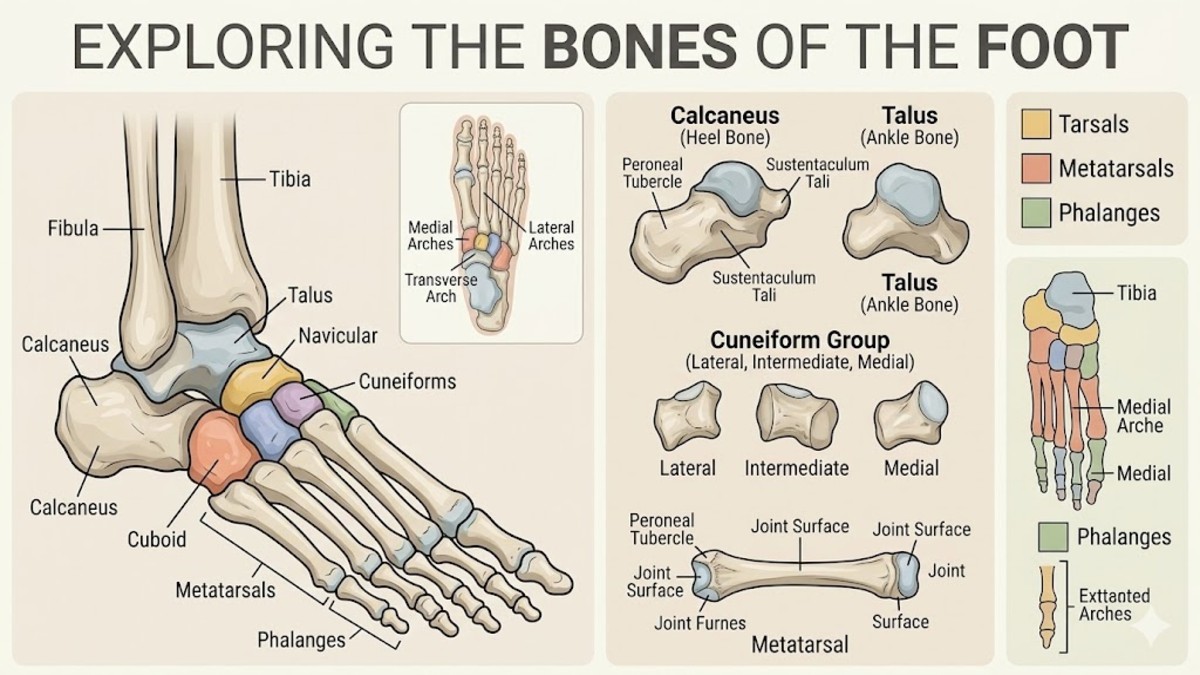
The human foot is an incredible structure designed to support body weight, maintain balance, and allow smooth movement. Each foot contains 26 bones, making up about one-quarter of all the bones in the human body. These bones work together with muscles, ligaments, and tendons to help us walk, run, jump, and stand comfortably.
Understanding foot bones is important not only for medical professionals but also for anyone interested in human anatomy or maintaining healthy feet. Injuries, fractures, and structural problems in foot bones can affect mobility and overall body posture. Learning how these bones function helps us appreciate the complexity of the human body.
Overview of Foot Bone Anatomy
The bones in the foot are part of the body’s skeletal framework. They connect with the ankle bones and extend to the toes, forming a strong yet flexible structure. These bones are organized into three main groups:
- Tarsal bones
- Metatarsal bones
- Phalanges (toe bones)
These groups work together to support body weight and distribute pressure during movement. The design of the foot also creates arches that act like natural shock absorbers.
The foot bones connect to the leg through the ankle joint, which includes the Talus bone. This connection allows the foot to move in different directions while remaining stable.
The Tarsal Bones
The tarsal bones are located in the back part of the foot and form the heel and ankle area. There are seven tarsal bones, and they play a major role in supporting body weight.
These bones include:
- Calcaneus – The largest foot bone forming the heel
- Talus – Connects the foot to the ankle joint
- Navicular Bone
- Cuboid Bone
- Medial Cuneiform
- Intermediate Cuneiform
- Lateral Cuneiform
The calcaneus is the largest and strongest bone in the foot. It forms the heel and absorbs the impact when the foot hits the ground during walking or running.
The Metatarsal Bones
The metatarsal bones are located in the middle of the foot. There are five metatarsals, each connecting the tarsal bones to the toes.
These bones are numbered from one to five, starting from the big toe side of the foot. Metatarsals help distribute body weight and provide balance during movement.
For example, when you walk or run, these bones help transfer pressure from the heel to the front of the foot. This movement allows the foot to push off the ground effectively.
Metatarsal injuries are common in athletes and runners because these bones experience repeated stress during physical activity.
The Phalanges (Toe Bones)
The phalanges are the bones of the toes. Each foot contains 14 phalanges.
The big toe has two bones, while the other four toes each have three bones. These bones are divided into three types:
- Proximal phalanges (closest to the foot)
- Middle phalanges
- Distal phalanges (tip of the toe)
These bones allow the toes to bend and move. This flexibility is important for maintaining balance and helping the foot push off the ground during walking or running.
Although small, the toe bones play a vital role in posture and movement.
Functions of Foot Bones
The bones in the foot perform several important functions. Without them, basic movements such as standing or walking would not be possible.
Support Body Weight
Foot bones support the entire weight of the body. When standing, they distribute weight evenly to prevent excessive pressure on any single part of the foot.
Enable Movement
Foot bones work together with muscles and joints to allow walking, running, and jumping. The structure of the foot helps transfer energy efficiently during movement.
Conclusion
The human foot is a remarkable structure made up of 26 bones working together to support movement, balance, and body weight. These bones are divided into three main groups: tarsals, metatarsals, and phalanges. Each group plays a specific role in helping the foot function effectively. From absorbing shock to enabling smooth walking, foot bones are essential for everyday mobility. Understanding their structure helps people appreciate the complexity of the human body and highlights the importance of caring for foot health.
FAQs
1. How many bones are in the human foot?
Each human foot contains 26 bones, making up a significant portion of the body’s skeletal system.
2. What are the three main groups of foot bones?
The three main groups are tarsals, metatarsals, and phalanges.
3. What is the largest bone in the foot?
The calcaneus, also known as the heel bone, is the largest bone in the foot.
4. Why are foot bones important?
Foot bones support body weight, allow movement, maintain balance, and absorb shock during walking or running.
5. What injuries commonly affect foot bones?
Common injuries include fractures, stress fractures, bunions, and arthritis.

Foot Bones: Structure, Types, and Functions of the Human Foot

1 Banana Calories: Nutrition, Benefits, and Daily Intake Guide

Dry Ice: Uses, Safety, and How It Works

Accent Chairs: A Stylish Addition to Any Living Space

Gluten Free Crackers: A Tasty and Healthy Snack Alternative

Glycolic Acid Face Wash: Benefits, Uses, and Skincare Guide

Maternity Jeans: A Complete Guide for Expecting Mothers

Wild Fable – The Trendy Fashion Brand Redefining Affordable Style

Lemme Burn – Complete Guide to the Popular Metabolism Supplement

Stocking Stuffers for Women: The Ultimate Guide to Thoughtful and Fun Small Gifts

Incestflox: Exploring Controversial Narratives and Online Discourse

Smut Book Meaning: Everything You Need to Know About This Steamy Genre

Libélula: The Enchanting Dragonfly and Its Symbolic Power

Sarkari Network: Everything You Need to Know

Zoology Project Topics: Creative Ideas & FAQs for Students

Lucipara Islands: Indonesia’s Untouched Paradise

Torcia: Lighting the Way – From Ancient Flames to Modern Innovation

The Ultimate Guide to SEOs: Everything You Need to Know

Technisches Gymnasium: Your Gateway to Engineering and Technology

Bolly4u Life: Everything You Need to Know About This Controversial Movie Download Site
Foot Bones: Structure, Types, and Functions of the Human Foot
1 Banana Calories: Nutrition, Benefits, and Daily Intake Guide
Dry Ice: Uses, Safety, and How It Works
Accent Chairs: A Stylish Addition to Any Living Space
Gluten Free Crackers: A Tasty and Healthy Snack Alternative
Glycolic Acid Face Wash: Benefits, Uses, and Skincare Guide
Maternity Jeans: A Complete Guide for Expecting Mothers
Wild Fable – The Trendy Fashion Brand Redefining Affordable Style
Lemme Burn – Complete Guide to the Popular Metabolism Supplement
Stocking Stuffers for Women: The Ultimate Guide to Thoughtful and Fun Small Gifts

 entertainment6 months ago
PYT Telegram: A Complete Guide to Understanding, Using, and Maximizing It

 entertainment7 months ago
OnionFlix: Everything You Need to Know About This Streaming Website
- others5 months ago
Nook vs Kindle: Which E-Reader Is Right for You?
- gaming7 months ago
Melisandre: The Enigmatic Priestess of Game of Thrones