Health
Tinnitus Retraining Therapy Treatment: A Complete Guide to Managing Ringing in the Ears

Tinnitus Retraining Therapy Treatment. Tinnitus can feel like a sound that no one else hears—but you can’t escape. A ringing, buzzing, hissing, or even roaring noise that lingers in the background of your life. For some people, it’s mild. For others, it’s overwhelming.
If you’ve been searching for long-term solutions, you’ve probably come across Tinnitus Retraining Therapy (TRT). But what exactly is it? Does it work? And who is it for?
Let’s break it down in simple, practical terms.
What Is Tinnitus Retraining Therapy Treatment?
Tinnitus is the perception of sound without an external source. It’s not a disease—it’s a symptom. It often accompanies hearing loss, noise exposure, ear injury, or age-related changes.
Common tinnitus sounds include:
- Ringing
- Buzzing
- Clicking
- Hissing
- Pulsing
For many people, the real issue isn’t the sound itself—it’s the stress and anxiety it causes.
What Is Tinnitus Retraining Therapy (TRT)?
Tinnitus Retraining Therapy (TRT) is a structured treatment approach designed to help your brain ignore tinnitus.
That might sound strange. How do you ignore something that feels constant?
TRT is based on the idea of habituation—the brain’s natural ability to filter out unimportant sounds. Think about the hum of your refrigerator or the sound of traffic outside. You hear it, but you don’t focus on it. TRT aims to train your brain to treat tinnitus the same way.
TRT doesn’t “cure” tinnitus. Instead, it reduces your emotional reaction and awareness of it.
How Does Tinnitus Retraining Therapy Work?
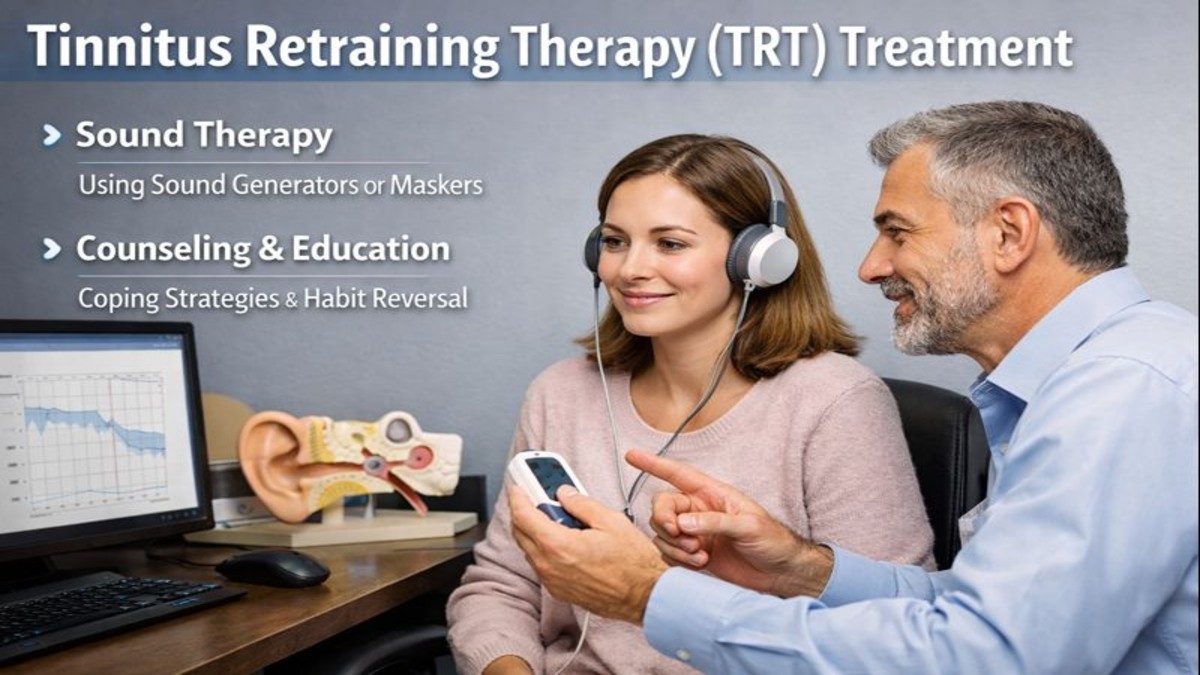
TRT combines two main components:
1. Directive Counseling
This isn’t just casual conversation. It’s structured education about tinnitus and how the auditory system works.
The goal? To reduce fear.
When you understand that tinnitus isn’t dangerous, your stress response decreases. And stress is often what makes tinnitus worse.
2. Sound Therapy
Patients use low-level background sounds to decrease the contrast between tinnitus and silence.
This may include:
- White noise generators
- Hearing aids
- Environmental sound machines
- Nature sounds
The sound isn’t meant to drown out tinnitus. It’s meant to blend with it.
Over time, your brain learns that tinnitus isn’t important.
The Science Behind TRT
TRT is based on the neurophysiological model of tinnitus. This model suggests tinnitus becomes distressing when it activates the limbic system (emotion center) and autonomic nervous system (fight-or-flight response).
When tinnitus triggers anxiety, your brain pays more attention to it. That heightened attention makes the sound seem louder.
TRT interrupts that cycle.
By reducing emotional distress and providing consistent sound stimulation, the brain gradually deprioritizes tinnitus.
Who Is a Good Candidate for TRT?
TRT may be beneficial if:
- Tinnitus causes anxiety or distress
- You struggle with sleep due to ringing
- You constantly focus on the sound
- Hearing loss accompanies tinnitus
It’s often recommended for chronic tinnitus lasting longer than six months.
However, TRT is not typically used for:
- Pulsatile tinnitus caused by vascular issues
- Tinnitus linked to treatable medical conditions
A thorough evaluation by an audiologist or ENT specialist is essential.
How Long Does Tinnitus Retraining Therapy Take?
TRT is not a quick fix.
Most programs last 12 to 24 months.
Why so long?
Because habituation takes time. Your brain needs consistent exposure and retraining to reclassify tinnitus as a neutral signal.
Many patients begin noticing improvement within 3–6 months.
What to Expect During Treatment
Here’s a typical TRT process:
- Comprehensive hearing evaluation
- Detailed tinnitus assessment
- Counseling sessions (often monthly)
- Sound therapy device fitting (if needed)
- Follow-up adjustments
Consistency is key. Daily use of sound therapy is essential for best results.
Conclusion
Tinnitus Retraining Therapy treatment isn’t about silencing the ringing. It’s about retraining your brain to stop reacting to it.
And that changes everything.
Through structured counseling and consistent sound therapy, TRT helps reduce the emotional burden of tinnitus. Over time, the sound fades into the background—like a distant hum you barely notice.
It requires patience. It requires commitment. But for many, it restores peace.
If tinnitus is controlling your thoughts, TRT may help you regain control.
FAQs
1. Does Tinnitus Retraining Therapy cure tinnitus?
No. TRT helps reduce awareness and distress but does not eliminate the sound.
2. How long does TRT take to work?
Most patients notice improvement within 3–6 months, with full therapy lasting up to 24 months.
3. Is TRT covered by insurance?
Coverage varies. Some plans may cover counseling or hearing devices.
4. Can TRT make tinnitus worse?
When guided properly, TRT is safe. However, improper sound levels could cause discomfort.
5. What is the difference between TRT and CBT?
TRT includes sound therapy and habituation training, while CBT focuses on changing emotional responses.

How Much Water Should I Drink Daily? Exact Amount Based on Your Body (2026 Guide)

Why Am I Always Tired Even After Sleeping (Honestly, This Is More Common Than You Think)

How to Sleep Better at Night Naturally (Honestly, It’s Not as Complicated as You Think)

Torcia: Lighting the Way From Ancient Flames to Modern Innovation

TikTok Algorithm Tips 2026 – Best TikTok Algorithm Tips 2026 to Grow Fast in USA

How to Go Viral on Instagram Reels – Honestly, It’s Not Just Luck

Social Media Trends USA 2026 – What’s Actually Changing (And What Still Works)

How to Build Personal Brand Online – Honestly, It’s Less About Perfection and More About Showing Up

Best Posting Times for Social Media USA – Honestly, Timing Matters More Than You Think

Instagram Growth Tips 2026 USA – Honestly, It’s Not About Tricks, It’s About Smart Work

Snifies: Redefining the World of Casual Connections and LGBTQ+ Social Discovery

Smut Book Meaning: Everything You Need to Know About This Steamy Genre

Dobutamine: Uses, Mechanism, Dosage, and Side Effects

Ishraq Time in Delhi: What It Is, When It Happens, and Why It Matters
Sarkari Network: Everything You Need to Know

Beton Celular Autoclavizat: The Future of Lightweight, Eco-Friendly Construction
Torcia: Lighting the Way From Ancient Flames to Modern Innovation

Read OPM Manga Online: Where and How to Enjoy One Punch Man Legally

Why Every Small Business Needs a Digital Marketing Agency

Goblets: A Timeless Symbol of Elegance and Celebration
How Much Water Should I Drink Daily? Exact Amount Based on Your Body (2026 Guide)
Why Am I Always Tired Even After Sleeping (Honestly, This Is More Common Than You Think)
How to Sleep Better at Night Naturally (Honestly, It’s Not as Complicated as You Think)
Torcia: Lighting the Way From Ancient Flames to Modern Innovation
TikTok Algorithm Tips 2026 – Best TikTok Algorithm Tips 2026 to Grow Fast in USA
How to Go Viral on Instagram Reels – Honestly, It’s Not Just Luck
Social Media Trends USA 2026 – What’s Actually Changing (And What Still Works)
How to Build Personal Brand Online – Honestly, It’s Less About Perfection and More About Showing Up
Best Posting Times for Social Media USA – Honestly, Timing Matters More Than You Think
Instagram Growth Tips 2026 USA – Honestly, It’s Not About Tricks, It’s About Smart Work

 entertainment7 months ago
PYT Telegram: A Complete Guide to Understanding, Using, and Maximizing It

 entertainment8 months ago
OnionFlix: Everything You Need to Know About This Streaming Website
- others6 months ago
Nook vs Kindle: Which E-Reader Is Right for You?
- gaming8 months ago
Melisandre: The Enigmatic Priestess of Game of Thrones