education
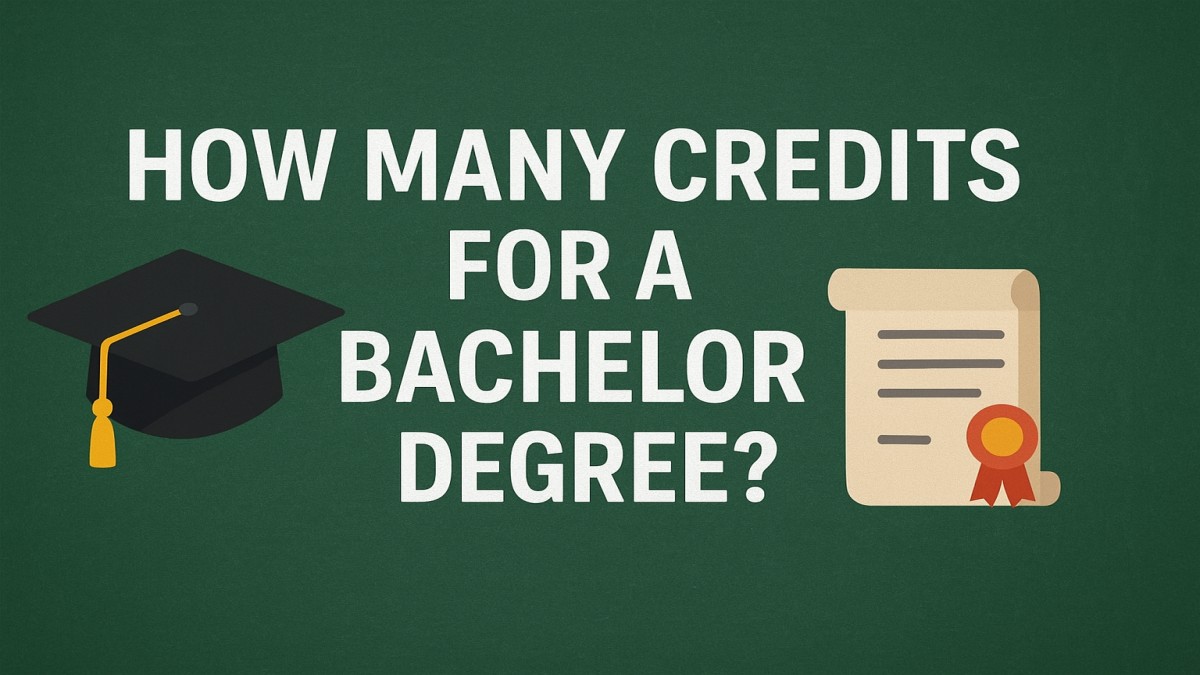
How Many Credits for a Bachelor Degree? A Complete Guide

Introduction
How Many Credits for a Bachelor Degree. If you’re planning to pursue a bachelor’s degree, you’ve probably come across the term credits. But what exactly are credits, and how many do you need to graduate? Credits are essentially units that measure the time and effort you put into a course. They determine whether you meet graduation requirements and vary depending on your major, institution, and country. Let’s break down how many credits you’ll need, what they mean, and why they matter.
What Are College Credits?
College credits represent the academic value assigned to a course. Typically, one credit equals one hour of classroom instruction per week plus two hours of self-study. For example, a 3-credit course usually requires three classroom hours and six study hours weekly.
How Many Credits for a Bachelor Degree in the U.S.?
In the United States, most bachelor’s degrees require 120 credits to graduate. This usually takes four years of full-time study, with students completing 30 credits per academic year.
- General Education Courses: ~40–60 credits
- Major Courses: ~30–40 credits
- Electives: ~20–30 credits
Credit Requirements in Other Countries
Credit systems vary worldwide:
- United Kingdom: Uses the Credit Accumulation and Transfer Scheme (CATS). A bachelor’s degree typically requires 360 credits (equivalent to 120 U.S. credits).
- Europe (ECTS System): A bachelor’s degree usually requires 180–240 ECTS credits.
- Canada: Similar to the U.S., most bachelor’s degrees require 90–120 credits.
- Australia: Uses “units” instead of credits, with requirements depending on the university.
Full-Time vs. Part-Time Study
- Full-Time Students: Typically take 12–15 credits per semester, graduating in about four years.
- Part-Time Students: Take fewer credits each term, which extends the time needed to complete the degree.
How Credits Are Distributed
1. General Education (Core Curriculum)
These courses include English, math, science, and social sciences. They ensure a well-rounded education.
2. Major-Specific Courses
Focused on your chosen field, such as engineering, business, or psychology.
3. Electives
Courses outside your major that allow you to explore different subjects.
Can You Graduate Faster?
Yes! Students can speed up graduation by:
- Taking Advanced Placement (AP) or International Baccalaureate (IB) credits in high school.
- Enrolling in summer or winter classes.
- Transferring credits from another institution.
- Taking a heavier course load if permitted.
What Happens If You Don’t Earn Enough Credits?
If you fall short of the required credits:
- You won’t be eligible to graduate.
- You may need to take extra courses.
- Financial aid eligibility could be affected.
Why Credits Matter Beyond Graduation
- Employability: Employers value degrees earned with consistent academic effort.
- Graduate Programs: Master’s and PhD programs often check your credit history.
- Transferability: Credits allow students to switch universities without starting over.
Conclusion
On average, a bachelor’s degree requires 120 credits in the U.S., but this can differ internationally. These credits are spread across general education, major-specific courses, and electives. Understanding credit requirements helps you plan your academic journey effectively, stay on track, and even accelerate graduation if desired. Whether you study full-time or part-time, keeping an eye on your credits is the key to successfully earning your degree.
FAQs
Q1. How many credits do you need per semester to graduate in 4 years?
Usually, 15 credits per semester are needed to complete 120 credits in four years.
Q2. Do transfer students lose credits?
Not always. Many universities accept transfer credits, though policies differ.
Q3. Can I graduate with fewer than 120 credits?
In most U.S. institutions, 120 is the minimum. However, some programs may require more.
Q4. Do online degrees require the same credits?
Yes, online bachelor’s programs typically follow the same credit requirements.
Q5. How many credits equal a master’s degree?
Most master’s degrees require 30–60 credits, depending on the field and institution.

Consultative Selling Techniques: A Complete Guide to Building Customer Trust in 2026

Sales Objection Handling: A Complete Guide to Closing More Deals in 2026

Customer Closing Techniques: A Complete Guide to Converting Prospects into Buyers (2026)

Customer Conversion Process: A Complete Guide to Turning Visitors into Loyal Customers (2026)

Sales Funnel Examples: A Complete Guide to Converting More Customers (2026)

Lead Qualification Framework: A Complete Guide to Finding High-Quality Customers (2026)

Website Credibility Factors: A Complete Guide to Building Trust Online (2026)

Online Reputation Monitoring: A Complete Guide to Protecting Your Brand in 2026

Customer Testimonial Strategy: A Complete Guide to Building Trust and Increasing Sales (2026)

Business Storytelling Framework: A Complete Guide to Building Strong Brand Connections (2026)
Consultative Selling Techniques: A Complete Guide to Building Customer Trust in 2026
Sales Objection Handling: A Complete Guide to Closing More Deals in 2026
Customer Closing Techniques: A Complete Guide to Converting Prospects into Buyers (2026)
Customer Conversion Process: A Complete Guide to Turning Visitors into Loyal Customers (2026)
Sales Funnel Examples: A Complete Guide to Converting More Customers (2026)
Lead Qualification Framework: A Complete Guide to Finding High-Quality Customers (2026)
Website Credibility Factors: A Complete Guide to Building Trust Online (2026)
Online Reputation Monitoring: A Complete Guide to Protecting Your Brand in 2026
Customer Testimonial Strategy: A Complete Guide to Building Trust and Increasing Sales (2026)
Business Storytelling Framework: A Complete Guide to Building Strong Brand Connections (2026)

 entertainment1 year ago
PYT Telegram: A Complete Guide to Understanding, Using, and Maximizing It

 entertainment1 year ago
OnionFlix: Everything You Need to Know About This Streaming Website
- education1 year ago
How to Become a Software Engineer: A Complete Guide
- others12 months ago
Nook vs Kindle: Which E-Reader Is Right for You?