education
Stomatocytes: Causes, Characteristics, and Clinical Importance

Introduction to Stomatocytes
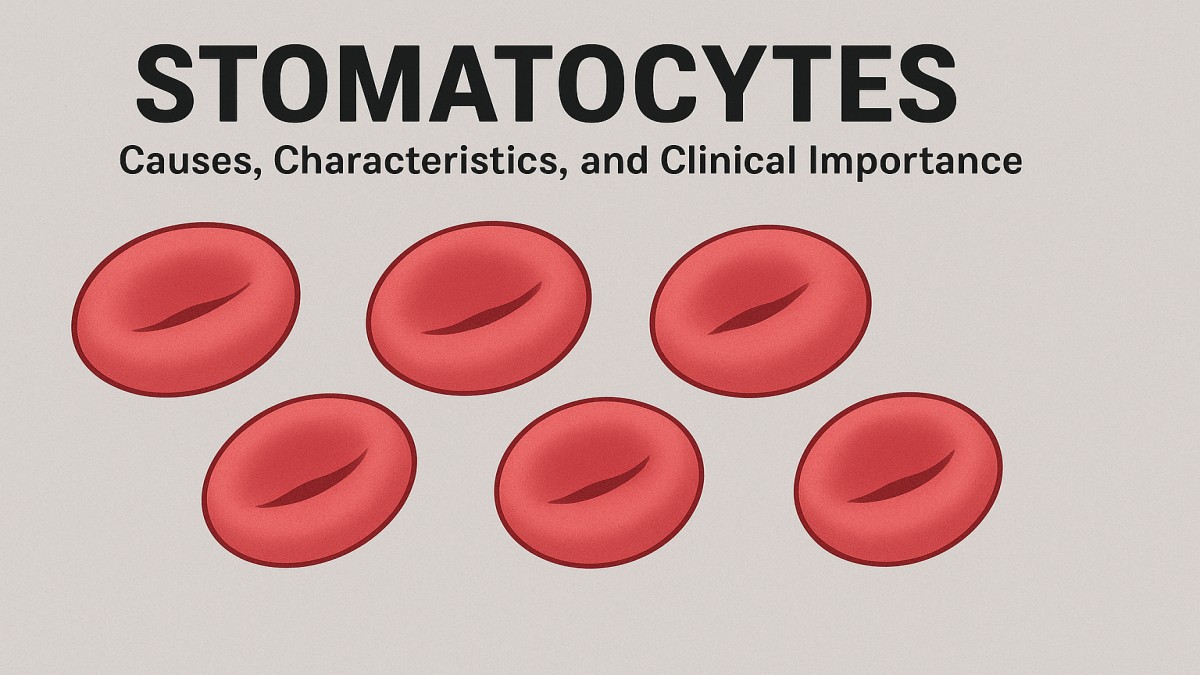
Stomatocytes are a type of abnormally shaped red blood cell (RBC) characterized by a slit-like or mouth-shaped central pallor. While normal red blood cells have a round, biconcave disc appearance, stomatocytes deviate from this structure due to alterations in cell membrane or hydration status. Their presence often hints at underlying medical conditions, making them clinically important in hematology.
Normal Red Blood Cells vs. Stomatocytes
Normal red blood cells are designed to efficiently carry oxygen through their flexible, biconcave shape. This shape maximizes surface area and allows smooth passage through tiny capillaries. Stomatocytes, however, appear with a central slit instead of the usual round pallor, indicating structural changes within the cell membrane or cytoplasmic volume.
Morphology of Stomatocytes
Stomatocytes are typically slightly larger than normal RBCs. Their defining feature is the elongated, slit-like central pallor resembling a “smiling mouth.” Microscopically, this shape is the key to identifying them during a blood smear analysis.
Causes of Stomatocytosis
The presence of stomatocytes can be hereditary or acquired.
- Hereditary stomatocytosis arises from genetic mutations affecting ion channels.
- Acquired stomatocytosis develops from external factors like alcohol abuse, liver disease, or certain medications.
Hereditary Stomatocytosis
Hereditary stomatocytosis is a rare genetic disorder. Mutations in genes that regulate red cell membrane proteins lead to altered ion transport. As a result, the cell swells or dehydrates, producing the abnormal stomatocyte shape. Patients often present with chronic hemolytic anemia, jaundice, and splenomegaly.
Acquired Stomatocytosis
Acquired cases are more common and often linked to:
- Liver disease – cirrhosis frequently shows stomatocytes in blood smears.
- Alcoholism – heavy alcohol intake disrupts red cell membranes, creating reversible stomatocytes.
- Medications – certain drugs, including vinblastine and chlorpromazine, may cause stomatocyte formation.
Pathophysiology of Stomatocytes
The abnormal shape stems from imbalances in sodium and potassium movement across the red cell membrane. Depending on the defect, cells may become overhydrated or dehydrated. This shift disrupts the usual biconcave structure, producing the signature “mouth-shaped” cells.
Stomatocytes in Peripheral Blood Smear
Under the microscope, stomatocytes are easily spotted by their slit-like pallor. However, it’s essential to differentiate them from other red cell abnormalities, such as target cells or spherocytes, to avoid misdiagnosis.
Clinical Manifestations
Patients with stomatocytosis may experience:
- Fatigue due to anemia
- Jaundice from excess bilirubin
- Enlarged spleen (splenomegaly) from increased red cell destruction
Laboratory Diagnosis
Diagnosis relies on several approaches:
- Blood smear – visual confirmation of stomatocytes
- Osmotic fragility test – determines red cell resistance to bursting
- Genetic testing – confirms hereditary stomatocytosis cases
Associated Disorders
Stomatocytes often appear in conjunction with:
- Hemolytic anemia – premature destruction of RBCs
- Liver cirrhosis – impaired liver function alters cell membranes
- Alcohol-related hematological changes – reversible stomatocytosis common in heavy drinkers
Management and Treatment
Treatment depends on the underlying cause:
- Hereditary cases – managed with supportive care, sometimes splenectomy
- Acquired cases – improve when triggers (alcohol, drugs, liver disease) are addressed
- Severe anemia – may require blood transfusion or folic acid supplementation
Prognosis of Stomatocytosis
- Hereditary stomatocytosis – lifelong but manageable with monitoring
- Acquired stomatocytosis – often reversible when the underlying factor is corrected
Prevention and Lifestyle Considerations
- Limit alcohol consumption to reduce risk
- Monitor and maintain healthy liver function
- Seek genetic counseling if hereditary stomatocytosis runs in the family
Future Directions in Research
Genetic research continues to uncover new mutations responsible for stomatocytosis. Future therapies may target ion channel regulation, offering more precise treatment for hereditary cases.
Conclusion
Stomatocytes may look like tiny “smiling mouths” under the microscope, but their presence carries serious clinical weight. They act as a warning sign of hereditary conditions, liver disease, or lifestyle-related factors such as alcohol use. With proper diagnosis and management, many cases are treatable or reversible, ensuring better outcomes for patients.
FAQs
1. Are stomatocytes always pathological?
Not always—small numbers may appear in healthy individuals, but large numbers usually indicate disease.
2. Can stomatocytosis be reversed?
Yes, in acquired cases like alcohol-induced or medication-related stomatocytosis, the condition often reverses once the cause is removed.
3. What percentage of stomatocytes is normal?
A very small percentage (<3%) can be seen normally, but higher counts suggest pathology.
4. How do doctors detect stomatocytes?
Through microscopic examination of a blood smear and additional lab tests.
5. Is hereditary stomatocytosis rare?
Yes, it is a rare genetic disorder compared to acquired forms linked to lifestyle or other diseases.

Consultative Selling Techniques: A Complete Guide to Building Customer Trust in 2026

Sales Objection Handling: A Complete Guide to Closing More Deals in 2026

Customer Closing Techniques: A Complete Guide to Converting Prospects into Buyers (2026)

Customer Conversion Process: A Complete Guide to Turning Visitors into Loyal Customers (2026)

Sales Funnel Examples: A Complete Guide to Converting More Customers (2026)

Lead Qualification Framework: A Complete Guide to Finding High-Quality Customers (2026)

Website Credibility Factors: A Complete Guide to Building Trust Online (2026)

Online Reputation Monitoring: A Complete Guide to Protecting Your Brand in 2026

Customer Testimonial Strategy: A Complete Guide to Building Trust and Increasing Sales (2026)

Business Storytelling Framework: A Complete Guide to Building Strong Brand Connections (2026)
Consultative Selling Techniques: A Complete Guide to Building Customer Trust in 2026
Sales Objection Handling: A Complete Guide to Closing More Deals in 2026
Customer Closing Techniques: A Complete Guide to Converting Prospects into Buyers (2026)
Customer Conversion Process: A Complete Guide to Turning Visitors into Loyal Customers (2026)
Sales Funnel Examples: A Complete Guide to Converting More Customers (2026)
Lead Qualification Framework: A Complete Guide to Finding High-Quality Customers (2026)
Website Credibility Factors: A Complete Guide to Building Trust Online (2026)
Online Reputation Monitoring: A Complete Guide to Protecting Your Brand in 2026
Customer Testimonial Strategy: A Complete Guide to Building Trust and Increasing Sales (2026)
Business Storytelling Framework: A Complete Guide to Building Strong Brand Connections (2026)

 entertainment1 year ago
PYT Telegram: A Complete Guide to Understanding, Using, and Maximizing It

 entertainment1 year ago
OnionFlix: Everything You Need to Know About This Streaming Website
- education1 year ago
How to Become a Software Engineer: A Complete Guide
- others12 months ago
Nook vs Kindle: Which E-Reader Is Right for You?