others
Receive Signal Level: A Complete Guide

Introduction
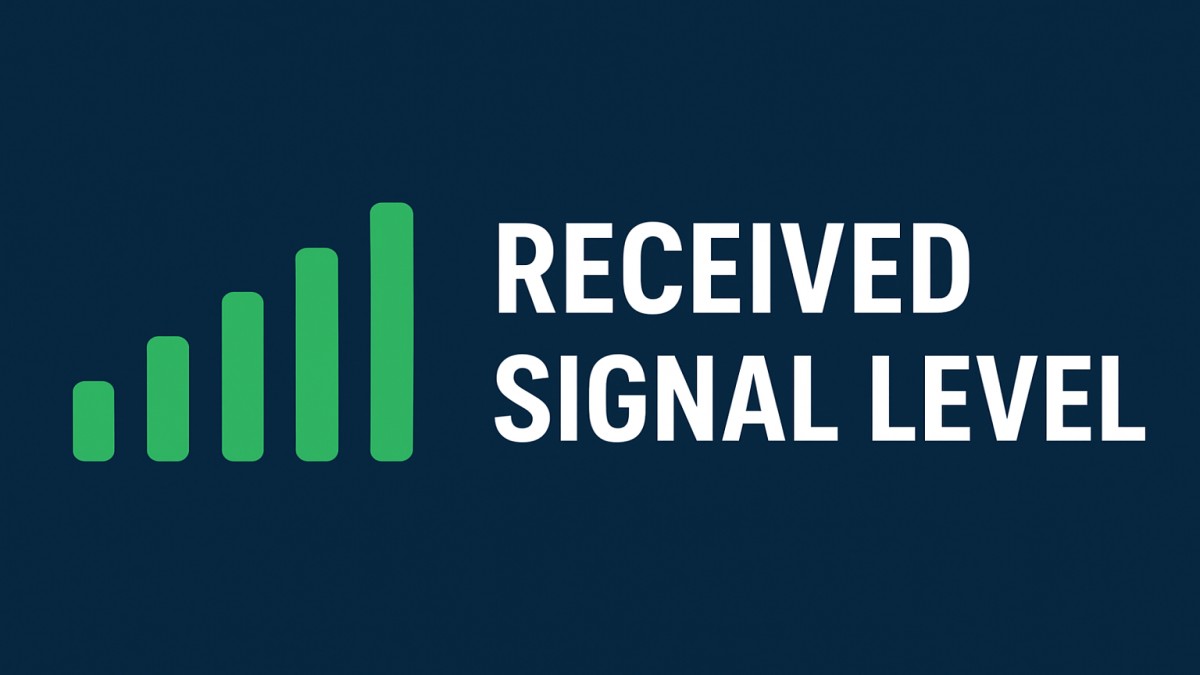
Have you ever noticed your phone signal drop from full bars to none in seconds? That’s the power of Receive Signal Level (RSL) in action. It’s one of the most important metrics in telecommunications, helping us measure how strong (or weak) a signal is when it arrives at your device. Whether it’s your smartphone, Wi-Fi router, or satellite connection, RSL directly influences the quality of communication.
In this article, we’ll break down everything about Receive Signal Level—what it is, why it matters, how it’s measured, and tips to optimize it for better connectivity.
What is Receive Signal Level (RSL)?
Receive Signal Level refers to the strength of a signal when it reaches a receiver, usually expressed in dBm (decibels relative to one milliwatt). It essentially tells us how powerful the transmitted signal is by the time it travels through air, cables, or obstacles and lands at the receiving end.
Think of it like your voice traveling across a noisy room: the louder and clearer your voice is at the listener’s ear, the stronger the “RSL” is.
Why is RSL Important?
- Connectivity Quality: A weak RSL means dropped calls, buffering videos, and poor audio.
- Network Optimization: Engineers rely on RSL values to design mobile towers and wireless networks.
- Troubleshooting: It helps detect whether poor service is due to weak signals or device issues.
- Energy Efficiency: Stronger RSL means devices use less battery power for communication.
How is Receive Signal Level Measured?
RSL is typically measured using specialized tools such as spectrum analyzers, field strength meters, and network analyzers. In mobile devices, diagnostic apps can also show real-time dBm values.
Understanding dBm Scale
- -50 dBm to -70 dBm → Excellent signal
- -70 dBm to -85 dBm → Good signal
- -85 dBm to -100 dBm → Weak but usable
- Below -100 dBm → Very poor signal (likely unusable)
Unlike normal numbers, the closer to zero, the stronger the signal. So, -60 dBm is much better than -90 dBm.
Factors Affecting RSL
Several elements influence the Receive Signal Level:
1. Distance from Transmitter
The further you are from a cell tower, router, or satellite, the weaker the received signal will be.
2. Physical Obstacles
Walls, buildings, mountains, and trees all absorb or block signals. That’s why indoor coverage often feels worse.
3. Interference
Other wireless devices, such as microwaves or Bluetooth gadgets, can cause interference and lower signal strength.
4. Weather Conditions
Rain, snow, and storms weaken radio and satellite signals, especially at higher frequencies.
5. Frequency Band
Lower frequencies (like 700 MHz) travel further and penetrate walls better, while higher frequencies (like 5 GHz Wi-Fi) provide faster speeds but weaker range.
Receive Signal Level in Different Technologies
1. Cellular Networks
Mobile operators constantly monitor RSL to ensure coverage. If your RSL is too low, you’ll face dropped calls or failed data connections.
2. Wi-Fi
Your router’s RSL determines how fast and reliable your Wi-Fi feels. Weak RSL can cause lags in video calls or slow downloads.
3. Satellite Communication
In satellite systems, RSL is critical because signals travel thousands of kilometers. Engineers use RSL data to adjust antenna sizes and alignment.
4. Broadcasting
TV and radio broadcasters check RSL at different receiver points to maintain clear transmission across regions.
Ideal RSL Ranges for Common Systems
- Cell Phones: -65 to -85 dBm is considered good.
- Wi-Fi: -50 to -70 dBm provides smooth internet.
- Satellite TV: Around -65 dBm or stronger ensures stable viewing.
Conclusion
Receive Signal Level is more than just numbers—it’s the backbone of reliable communication. From mobile networks to satellites, RSL ensures that the signals we depend on every day reach us with enough strength to make communication seamless. By understanding and optimizing RSL, you can boost your connectivity and enjoy better performance from your devices.
FAQs
Q1. What is a good RSL for mobile phones?
A good RSL is usually between -65 dBm and -85 dBm for clear calls and smooth data usage.
Q2. How can I check my RSL on a smartphone?
Many phones have hidden “field test” modes or apps that display real-time RSL values in dBm.
Q3. Does weather really affect RSL?
Yes, especially for satellite and high-frequency signals where rain or snow causes attenuation.
Q4. Can Wi-Fi boosters always improve RSL?
They help in many cases, but poor placement or interference can limit their effectiveness.
Q5. Is RSL the same as signal quality?
Not exactly. RSL measures strength, while signal quality depends on both strength and noise levels.

Consultative Selling Techniques: A Complete Guide to Building Customer Trust in 2026

Sales Objection Handling: A Complete Guide to Closing More Deals in 2026

Customer Closing Techniques: A Complete Guide to Converting Prospects into Buyers (2026)

Customer Conversion Process: A Complete Guide to Turning Visitors into Loyal Customers (2026)

Sales Funnel Examples: A Complete Guide to Converting More Customers (2026)

Lead Qualification Framework: A Complete Guide to Finding High-Quality Customers (2026)

Website Credibility Factors: A Complete Guide to Building Trust Online (2026)

Online Reputation Monitoring: A Complete Guide to Protecting Your Brand in 2026

Customer Testimonial Strategy: A Complete Guide to Building Trust and Increasing Sales (2026)

Business Storytelling Framework: A Complete Guide to Building Strong Brand Connections (2026)
Consultative Selling Techniques: A Complete Guide to Building Customer Trust in 2026
Sales Objection Handling: A Complete Guide to Closing More Deals in 2026
Customer Closing Techniques: A Complete Guide to Converting Prospects into Buyers (2026)
Customer Conversion Process: A Complete Guide to Turning Visitors into Loyal Customers (2026)
Sales Funnel Examples: A Complete Guide to Converting More Customers (2026)
Lead Qualification Framework: A Complete Guide to Finding High-Quality Customers (2026)
Website Credibility Factors: A Complete Guide to Building Trust Online (2026)
Online Reputation Monitoring: A Complete Guide to Protecting Your Brand in 2026
Customer Testimonial Strategy: A Complete Guide to Building Trust and Increasing Sales (2026)
Business Storytelling Framework: A Complete Guide to Building Strong Brand Connections (2026)

 entertainment1 year ago
PYT Telegram: A Complete Guide to Understanding, Using, and Maximizing It

 entertainment1 year ago
OnionFlix: Everything You Need to Know About This Streaming Website
- education1 year ago
How to Become a Software Engineer: A Complete Guide
- others11 months ago
Nook vs Kindle: Which E-Reader Is Right for You?