Health
Ectatic Aorta: Causes, Risks, and Treatment Explained

Introduction
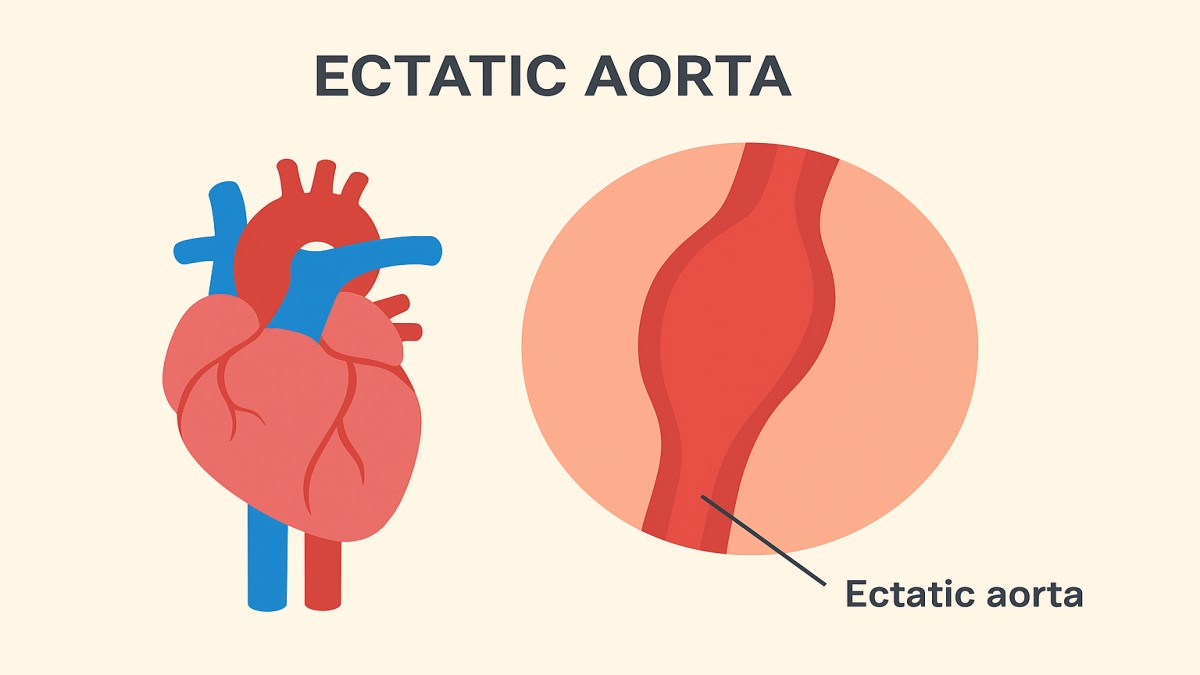
Ectatic Aorta. The aorta is the body’s largest artery, carrying oxygen-rich blood from the heart to the rest of the body. When the aorta becomes abnormally widened or dilated, but not enough to be classified as an aneurysm, it is known as an ectatic aorta. While it might sound less severe than an aneurysm, this condition is not something to be ignored. Understanding what an ectatic aorta means, its causes, risks, and management options can help you or your loved ones take timely precautions.
What is an Ectatic Aorta?
An ectatic aorta refers to an enlargement of the aortic diameter beyond normal limits but below the threshold for an aneurysm. In simpler terms, it’s when the aorta is slightly wider than normal but not dangerously stretched.
- Normal aortic diameter: Around 2–3 cm in adults.
- Ectasia definition: 2.6–2.9 cm in abdominal aorta (borderline enlargement).
- Aneurysm threshold: 3 cm or more.
Think of it as a balloon being filled with air — ectasia is when the balloon is expanding but hasn’t yet reached the point of potentially bursting.
Aorta Anatomy and Function
To understand ectasia better, let’s quickly break down the aorta’s structure:
- Ascending aorta: Carries blood upward from the heart.
- Aortic arch: Curves and distributes blood to the head, arms, and upper body.
- Descending thoracic aorta: Runs down through the chest.
- Abdominal aorta: Supplies blood to abdominal organs and legs.
Any part of this artery can become ectatic, but the abdominal aorta is the most common site.
Causes of Ectatic Aorta
Several factors can lead to the gradual enlargement of the aorta:
1. Age-related Changes
As we age, the elasticity of the aortic wall decreases, leading to stretching and dilation.
2. High Blood Pressure (Hypertension)
Constant pressure on the aortic wall makes it prone to weakening and widening.
3. Atherosclerosis
The buildup of fatty plaques damages vessel walls, reducing their strength and resilience.
4. Genetic Disorders
Conditions like Marfan syndrome or Ehlers-Danlos syndrome affect connective tissues, making the aorta weaker.
5. Smoking
Nicotine and other chemicals directly damage blood vessels and accelerate dilation.
6. Infections or Inflammation
Rarely, infections like syphilis or autoimmune diseases may cause aortic enlargement.
Risk Factors to Watch
If you fall into any of these categories, your chances of developing an ectatic aorta are higher:
- Male gender
- Age above 60
- Family history of aneurysm
- High cholesterol levels
- Diabetes
- Chronic lung disease
Ectatic Aorta vs Aneurysm
It’s important not to confuse ectasia with aneurysm:
| Feature | Ectatic Aorta | Aneurysm |
|---|---|---|
| Diameter | 2.6–2.9 cm | ≥ 3 cm |
| Risk Level | Moderate | High |
| Management | Monitoring, lifestyle changes | Surgery may be required |
Ectasia can be seen as a warning sign if ignored, it may progress to a full-blown aneurysm.
Symptoms of Ectatic Aorta
Here’s the tricky part: most people don’t have symptoms.
The condition is usually found during routine imaging (ultrasound, CT scan, or MRI).
If symptoms occur, they might include:
- Pulsating feeling in the abdomen
- Back or abdominal pain
- Fatigue or poor circulation in legs
However, these symptoms often appear later when the dilation worsens.
Diagnosis of Ectatic Aorta
Doctors use different tools to detect and measure ectasia:
- Ultrasound: First-line, non-invasive method for abdominal aorta.
- CT Scan: Provides detailed cross-sectional images.
- MRI: Helpful for precise measurement without radiation.
- Echocardiogram: For the ascending aorta near the heart.
Regular check-ups are crucial for monitoring changes in size over time.
Complications if Left Untreated
While ectasia itself may not be life-threatening, it can lead to:
- Progression to aneurysm
- Rupture risk (if aneurysm forms and enlarges)
- Blood clot formation inside the dilated area
- Compression of nearby organs or structures
Conclusion
An ectatic aorta is a red flag that shouldn’t be ignored. While it’s not as dangerous as an aneurysm, it signals potential problems ahead. Regular monitoring, healthy lifestyle choices, and medical guidance are the keys to staying safe. Think of it as catching a small leak in a pipe before it turns into a burst early action saves lives.
FAQs
1. Is an ectatic aorta the same as an aneurysm?
No. An ectatic aorta is mildly enlarged, while an aneurysm is more severe and carries higher risks.
2. Can an ectatic aorta shrink back to normal?
Unfortunately, no. But lifestyle changes and medications can slow or stop further enlargement.
3. How often should I get imaging done?
Typically every 6–12 months, but your doctor will tailor it to your case.
4. What size of aorta requires surgery?
Generally, when the abdominal aorta reaches 5.5 cm or shows rapid growth.
5. Can exercise worsen ectasia?
Heavy weightlifting or intense straining may increase pressure on the aorta. Light to moderate aerobic exercise is usually safe.

Consultative Selling Techniques: A Complete Guide to Building Customer Trust in 2026

Sales Objection Handling: A Complete Guide to Closing More Deals in 2026

Customer Closing Techniques: A Complete Guide to Converting Prospects into Buyers (2026)

Customer Conversion Process: A Complete Guide to Turning Visitors into Loyal Customers (2026)

Sales Funnel Examples: A Complete Guide to Converting More Customers (2026)

Lead Qualification Framework: A Complete Guide to Finding High-Quality Customers (2026)

Website Credibility Factors: A Complete Guide to Building Trust Online (2026)

Online Reputation Monitoring: A Complete Guide to Protecting Your Brand in 2026

Customer Testimonial Strategy: A Complete Guide to Building Trust and Increasing Sales (2026)

Business Storytelling Framework: A Complete Guide to Building Strong Brand Connections (2026)
Consultative Selling Techniques: A Complete Guide to Building Customer Trust in 2026
Sales Objection Handling: A Complete Guide to Closing More Deals in 2026
Customer Closing Techniques: A Complete Guide to Converting Prospects into Buyers (2026)
Customer Conversion Process: A Complete Guide to Turning Visitors into Loyal Customers (2026)
Sales Funnel Examples: A Complete Guide to Converting More Customers (2026)
Lead Qualification Framework: A Complete Guide to Finding High-Quality Customers (2026)
Website Credibility Factors: A Complete Guide to Building Trust Online (2026)
Online Reputation Monitoring: A Complete Guide to Protecting Your Brand in 2026
Customer Testimonial Strategy: A Complete Guide to Building Trust and Increasing Sales (2026)
Business Storytelling Framework: A Complete Guide to Building Strong Brand Connections (2026)

 entertainment1 year ago
PYT Telegram: A Complete Guide to Understanding, Using, and Maximizing It

 entertainment1 year ago
OnionFlix: Everything You Need to Know About This Streaming Website
- education1 year ago
How to Become a Software Engineer: A Complete Guide
- others12 months ago
Nook vs Kindle: Which E-Reader Is Right for You?