gaming
How to Play Gomoku: A Complete Beginner’s Guide

Introduction
How to Play Gomoku. Ever wanted to try a game that’s as strategic as chess but simpler to learn? That’s Gomoku, a classic board game that’s all about logic, patience, and clever moves. In this guide, you’ll learn how to play Gomoku, master its rules, and pick up smart strategies to win.
The Origins of Gomoku
Gomoku comes from Japan, where its name means “five pieces”. It’s also known as Five in a Row or Gobang in English. The game evolved from the ancient Chinese board game Go, using the same 19×19 grid but with a much simpler goal to get five in a row.
Understanding the Basics
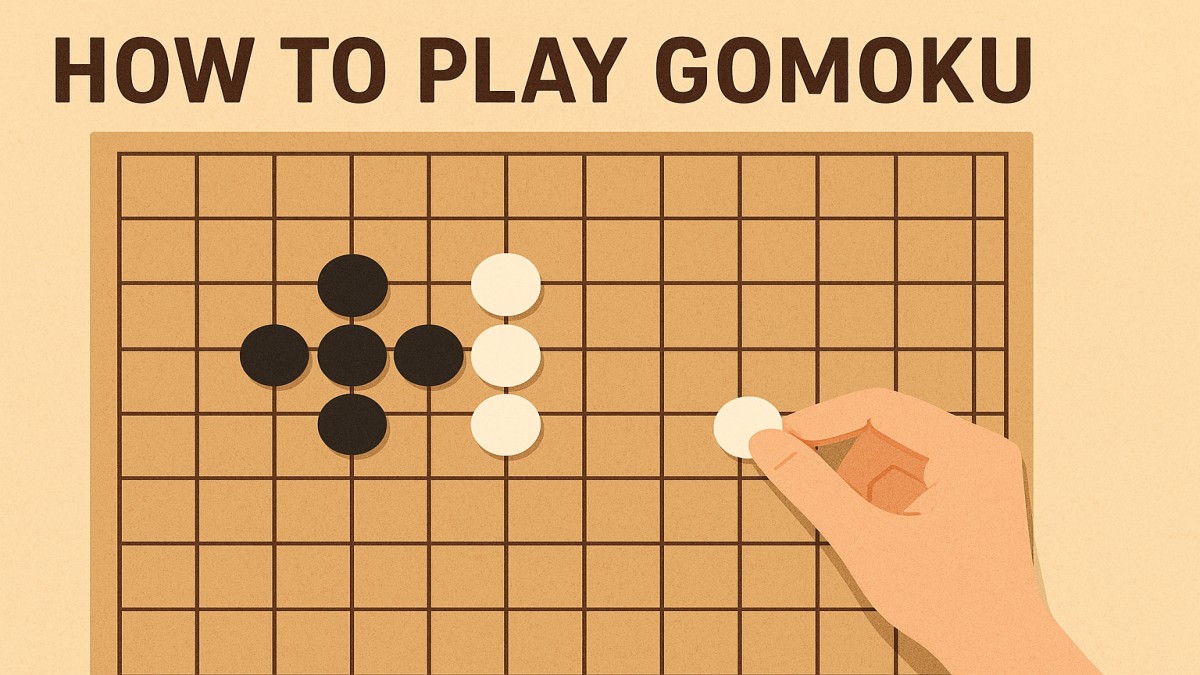
The game board is a grid of intersecting lines, traditionally 19×19, but beginners often start on 15×15. Two players use black and white stones, similar to Go pieces.
- Black always plays first.
- The goal: place five stones in a row — horizontally, vertically, or diagonally.
Gomoku Rules Explained
- Players take turns placing one stone on an empty intersection.
- Once placed, stones stay where they are — no moving or capturing.
- The first player to make five consecutive stones wins.
It’s that simple. But mastering it? That’s where the fun begins.
Board Setup
Gomoku doesn’t need any fancy setup. You just need:
- A grid board (usually 15×15 or 19×19)
- Two sets of stones (black and white)
Online and mobile versions make setup instant — just log in and play.
How to Place Stones
When you place a stone, think ahead — not just about your next move, but your opponent’s too. Good players look at patterns forming on both sides of the board.
Avoid mistakes like:
- Playing too close to the edges early on.
- Ignoring your opponent’s four-in-a-row setup.
Winning Strategies
Here’s where Gomoku becomes addictive. A few clever patterns can make you nearly unbeatable.
1. The Open Three
An open three is a line of three stones with two open ends. If left unblocked, it can easily become a winning move.
2. The Double Threat
Try creating two open-ended lines simultaneously. Your opponent can block only one, leaving you an open path to victory.
3. Stay Central
Starting near the center gives you more space to build connections in all directions.
Advanced Tips
Once you’re comfortable with basic tactics, it’s time to think like a pro.
- Create traps. Make moves that look harmless but force your opponent into defensive positions.
- Control symmetry. Keep the board balanced so you can pivot between offense and defense.
- Predict patterns. Experienced players visualize future moves, much like in chess.
Common Mistakes Beginners Make
Even new players can fall into predictable traps. Watch out for:
- Ignoring defense. Always check if your opponent is close to five.
- Overextending. Don’t spread your stones too far apart.
- Tunnel vision. Focus on the entire board — not just one direction.
Gomoku Variants
Over time, players have developed different styles of Gomoku:
Freestyle Gomoku
No restrictions — the first player to align five stones wins, even if it’s part of a longer line.
Renju
A more competitive version from Japan. It includes rules preventing the first player (black) from having too much advantage.
Omok (Korean Gomoku)
Popular in Korea, often played on Go boards with slight rule variations.
Gomoku for Kids and Families
Gomoku isn’t just fun — it’s educational. It improves:
- Strategic thinking
- Pattern recognition
- Patience and focus
Families love it because games are quick, easy to learn, and competitive.
Conclusion
Gomoku proves that simplicity can hide depth. Easy to learn, hard to master — it’s a timeless strategy game that anyone can enjoy. Whether you play casually with friends or dive into online tournaments, Gomoku challenges your mind in the best way possible.
FAQs
1. Is Gomoku the same as Go?
No. While both use the same board, Go involves capturing territory, while Gomoku focuses on aligning five stones.
2. Can more than two people play Gomoku?
Traditionally, it’s for two players only.
3. What’s the best opening move in Gomoku?
Starting near the center gives you the most flexibility.
4. Can you play Gomoku without a board?
Yes, you can draw a grid on paper or use a digital version.
5. Is Gomoku easy to learn?
Absolutely! It takes minutes to understand, but mastering it can take a lifetime.

Consultative Selling Techniques: A Complete Guide to Building Customer Trust in 2026

Sales Objection Handling: A Complete Guide to Closing More Deals in 2026

Customer Closing Techniques: A Complete Guide to Converting Prospects into Buyers (2026)

Customer Conversion Process: A Complete Guide to Turning Visitors into Loyal Customers (2026)

Sales Funnel Examples: A Complete Guide to Converting More Customers (2026)

Lead Qualification Framework: A Complete Guide to Finding High-Quality Customers (2026)

Website Credibility Factors: A Complete Guide to Building Trust Online (2026)

Online Reputation Monitoring: A Complete Guide to Protecting Your Brand in 2026

Customer Testimonial Strategy: A Complete Guide to Building Trust and Increasing Sales (2026)

Business Storytelling Framework: A Complete Guide to Building Strong Brand Connections (2026)
Consultative Selling Techniques: A Complete Guide to Building Customer Trust in 2026
Sales Objection Handling: A Complete Guide to Closing More Deals in 2026
Customer Closing Techniques: A Complete Guide to Converting Prospects into Buyers (2026)
Customer Conversion Process: A Complete Guide to Turning Visitors into Loyal Customers (2026)
Sales Funnel Examples: A Complete Guide to Converting More Customers (2026)
Lead Qualification Framework: A Complete Guide to Finding High-Quality Customers (2026)
Website Credibility Factors: A Complete Guide to Building Trust Online (2026)
Online Reputation Monitoring: A Complete Guide to Protecting Your Brand in 2026
Customer Testimonial Strategy: A Complete Guide to Building Trust and Increasing Sales (2026)
Business Storytelling Framework: A Complete Guide to Building Strong Brand Connections (2026)

 entertainment1 year ago
PYT Telegram: A Complete Guide to Understanding, Using, and Maximizing It

 entertainment1 year ago
OnionFlix: Everything You Need to Know About This Streaming Website
- education1 year ago
How to Become a Software Engineer: A Complete Guide
- others11 months ago
Nook vs Kindle: Which E-Reader Is Right for You?