others
Manila Clams: The Ocean’s Hidden Gem of Flavor and Nutrition

Introduction to Manila Clams
When it comes to seafood delicacies, Manila clams stand out as one of the most versatile and flavorful shellfish available. These small, tender clams are not only loved for their sweet, briny taste but also for their incredible nutritional value and eco-friendly farming practices. Whether in a bowl of pasta, a pot of chowder, or steamed with garlic and white wine, Manila clams have become a global favorite among chefs and home cooks alike.
Origin and Scientific Classification
The Manila clam (scientific name: Ruditapes philippinarum) is a species of bivalve mollusk originally native to the coastal regions of the Philippines, Japan, and the Western Pacific. The name “Manila” comes from the Philippine capital, reflecting its early discovery and trade origin.
Today, these clams have spread to Europe, North America, and other regions, thanks to aquaculture and accidental introduction during oyster farming.
Scientific classification:
- Kingdom: Animalia
- Phylum: Mollusca
- Class: Bivalvia
- Order: Venerida
- Family: Veneridae
- Genus: Ruditapes
- Species: Ruditapes philippinarum
Physical Characteristics of Manila Clams
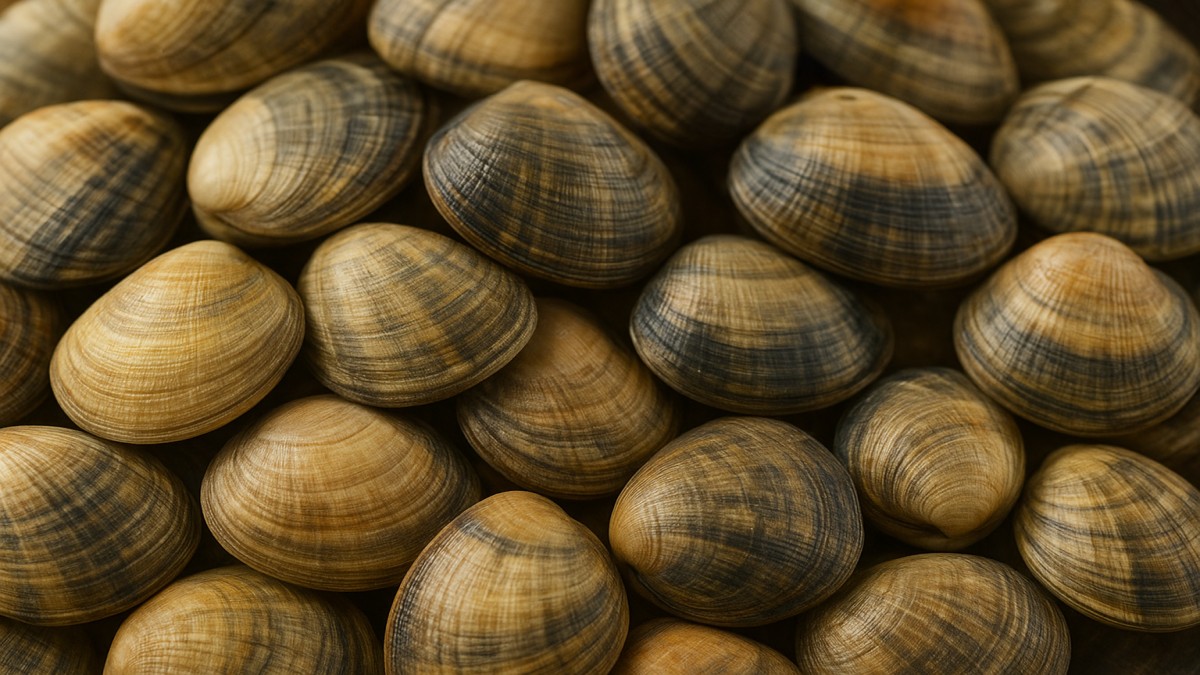
Manila clams are small to medium-sized bivalves, typically 4–6 cm in length. Their shells are oval, with radiating ridges and beautiful color patterns ranging from cream and brown to gray and violet streaks.
The shells are smooth and symmetrical, making them easy to identify. Inside, the flesh is pale, tender, and slightly sweet — a trait that sets them apart from other clams with stronger briny flavors.
Natural Habitat and Distribution
Manila clams thrive in sandy or muddy coastal areas, where they burrow shallowly under the surface. They are intertidal species, meaning they live between high and low tide zones.
Originally found in the Indo-Pacific region, Manila clams have now established populations in:
- Japan and China (major producers)
- Italy, France, and Spain (Mediterranean aquaculture)
- United States and Canada (Pacific Northwest coasts)
Their adaptability to various water temperatures and salinity levels makes them one of the most widely farmed clams in the world.
The Life Cycle of Manila Clams
The life of a Manila clam begins as a free-swimming larva, which later settles on the seabed and develops into a juvenile clam. These clams reach market size in about 1 to 2 years and can live up to 10 years in the wild.
They are filter feeders, drawing in seawater to extract plankton and nutrients — a process that naturally helps purify the ocean and maintain ecosystem balance.
Farming and Aquaculture of Manila Clams
Manila clams are among the most successfully farmed shellfish in the world. Aquaculture techniques involve:
- Seeding young clams in tidal flats or sandy coastal regions.
- Allowing them to grow naturally by filtering nutrients from the water.
- Using minimal human intervention, making clam farming one of the most sustainable aquaculture practices.
Countries like Japan, China, Italy, and the U.S. lead in commercial clam farming, contributing to global seafood supply while protecting wild populations.
How Manila Clams Are Harvested
Harvesting typically occurs during low tide, when clams can be easily collected from the substrate using rakes or by hand. In aquaculture farms, clams are often gathered with minimal disturbance to the seabed, ensuring environmental sustainability.
After harvesting, clams undergo purification (depuration) — a process that allows them to purge sand and impurities before reaching the market.
Nutritional Value of Manila Clams
Manila clams pack a nutrient-dense profile with low calories and high protein.
Nutritional values per 100g (cooked):
- Calories: ~74 kcal
- Protein: 12g
- Fat: 1g
- Carbohydrates: 2g
- Iron: 14 mg (more than beef!)
- Vitamin B12: 98 µg
- Omega-3 fatty acids: ~250 mg
They are also rich in zinc, selenium, and iodine, supporting thyroid and immune health
Conclusion
Manila clams are more than just a delicious seafood delicacy — they’re a symbol of sustainable aquaculture and nutritional excellence. Their sweet flavor, tender texture, and versatility make them a staple in kitchens worldwide. Whether you’re a seafood lover or a health-conscious eater, these small bivalves deliver big on taste, health, and environmental goodness.
So next time you crave something from the sea, let Manila clams steal the spotlight — fresh, flavorful, and full of oceanic charm.
FAQs
1. Where do Manila clams come from originally?
They originated from the Indo-Pacific region, particularly around Japan and the Philippines.
2. How can you tell if Manila clams are fresh?
Fresh clams have tightly closed shells and emit a mild ocean scent. If they’re open and don’t close when tapped, discard them.
3. Are Manila clams safe to eat raw?
While they can be eaten raw, it’s safer to steam or cook them to eliminate potential bacteria.
4. Do Manila clams contain mercury?
No, clams are generally low in mercury and considered safe for regular consumption.
5. What’s the best way to cook Manila clams?
Steaming them with garlic, butter, and white wine brings out their natural sweetness perfectly.

Consultative Selling Techniques: A Complete Guide to Building Customer Trust in 2026

Sales Objection Handling: A Complete Guide to Closing More Deals in 2026

Customer Closing Techniques: A Complete Guide to Converting Prospects into Buyers (2026)

Customer Conversion Process: A Complete Guide to Turning Visitors into Loyal Customers (2026)

Sales Funnel Examples: A Complete Guide to Converting More Customers (2026)

Lead Qualification Framework: A Complete Guide to Finding High-Quality Customers (2026)

Website Credibility Factors: A Complete Guide to Building Trust Online (2026)

Online Reputation Monitoring: A Complete Guide to Protecting Your Brand in 2026

Customer Testimonial Strategy: A Complete Guide to Building Trust and Increasing Sales (2026)

Business Storytelling Framework: A Complete Guide to Building Strong Brand Connections (2026)
Consultative Selling Techniques: A Complete Guide to Building Customer Trust in 2026
Sales Objection Handling: A Complete Guide to Closing More Deals in 2026
Customer Closing Techniques: A Complete Guide to Converting Prospects into Buyers (2026)
Customer Conversion Process: A Complete Guide to Turning Visitors into Loyal Customers (2026)
Sales Funnel Examples: A Complete Guide to Converting More Customers (2026)
Lead Qualification Framework: A Complete Guide to Finding High-Quality Customers (2026)
Website Credibility Factors: A Complete Guide to Building Trust Online (2026)
Online Reputation Monitoring: A Complete Guide to Protecting Your Brand in 2026
Customer Testimonial Strategy: A Complete Guide to Building Trust and Increasing Sales (2026)
Business Storytelling Framework: A Complete Guide to Building Strong Brand Connections (2026)

 entertainment1 year ago
PYT Telegram: A Complete Guide to Understanding, Using, and Maximizing It

 entertainment1 year ago
OnionFlix: Everything You Need to Know About This Streaming Website
- education1 year ago
How to Become a Software Engineer: A Complete Guide
- others12 months ago
Nook vs Kindle: Which E-Reader Is Right for You?