others
Nuclearization of Family

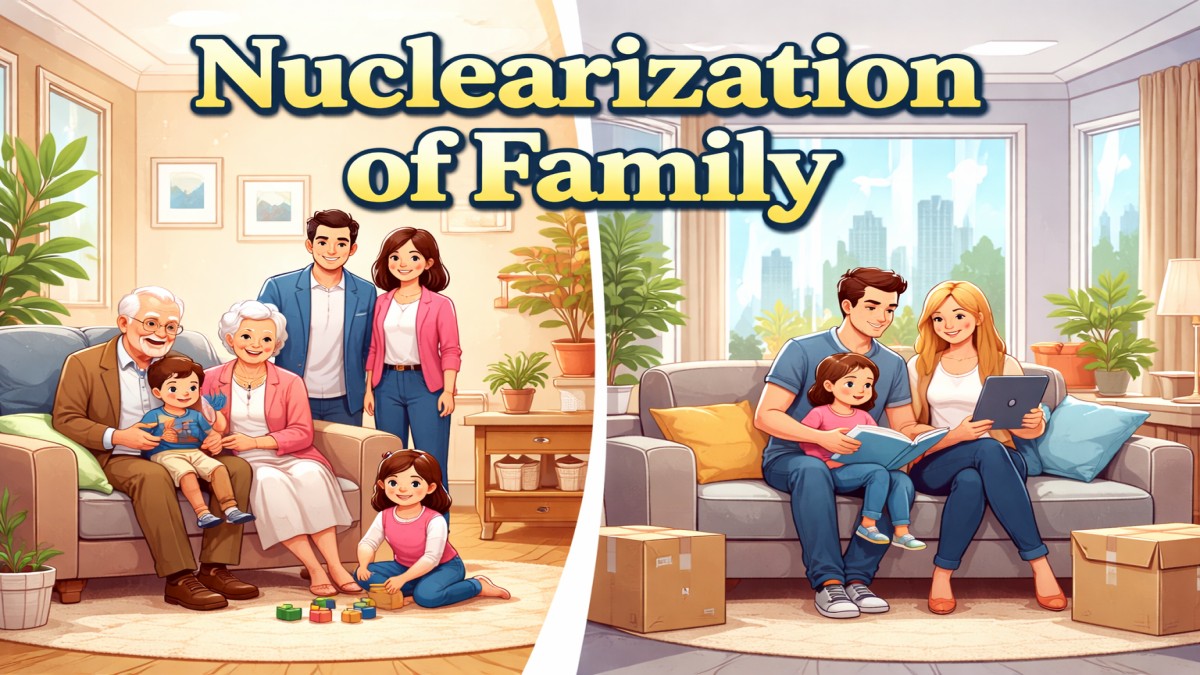
The nuclearization of family is one of the most significant social changes of the modern era. Simply put, it refers to the shift from large joint or extended families to smaller units consisting of parents and their children. This transformation didn’t happen overnight. It evolved slowly, shaped by economic changes, urban lifestyles, education, and shifting values. Today, the nuclear family is considered the norm in many parts of the world—but is it all good news?
Let’s break it down in a simple, relatable way.
Meaning of Nuclearization of Family
Nuclearization of family means the process through which traditional joint families break into smaller, independent nuclear families. In a nuclear family, parents and their children live separately from grandparents, uncles, aunts, and cousins.
Think of it like this: earlier, family life was a big shared house with many voices; now it’s more like a private apartment where decisions are personal and space is limited—but peaceful.
Historical Background
Traditional Joint Family System
In traditional societies, especially in Asia and Africa, joint families were common. Several generations lived under one roof, sharing income, responsibilities, and emotional support. Elders guided decisions, and family bonds were strong.
Shift Toward Nuclear Families
With modernization, this system started to change. Jobs moved to cities, education spread, and people began valuing independence. Slowly, families started separating—not emotionally, but physically.
Key Features of a Nuclear Family
A nuclear family has some clear characteristics:
- Small family size
- Independent decision-making
- Separate residence
- Limited but close relationships
- Financial independence
This structure gives couples more control over their lives, but also more responsibility.
Causes of Nuclearization of Family
Industrialization and Urbanization
Factories, offices, and businesses are usually located in cities. As people move for jobs, living with a large extended family becomes impractical. Small homes and busy schedules naturally support nuclear families.
Education and Modern Values
Education changes mindsets. People start prioritizing personal goals, careers, and privacy. Modern values promote individual freedom rather than collective control.
Economic Factors
Rising living costs make it difficult to support large families. Nuclear families often find it easier to manage expenses, plan budgets, and improve their quality of life.
Women Empowerment
As women become educated and financially independent, traditional family roles change. Couples prefer setting up their own households where responsibilities are shared more equally.
Advantages of Nuclearization of Family
Privacy and Independence
One of the biggest benefits is privacy. Couples can make decisions without interference, whether it’s about careers, finances, or parenting.
**Better Decision-M### Better Decision-Making
With fewer people involved, decisions are quicker and clearer. This reduces conflicts and misunderstandings.
Improved Standard of Living
Smaller families can focus resources on education, healthcare, and comfort. Children often get better opportunities and attention.
Disadvantages of Nuclearization of Family
Weak Family Support System
In joint families, help was always available. In nuclear families, couples must manage everything on their own, which can be stressful.
Loneliness and Isolation
Elderly parents may feel neglected, and children may miss the warmth of grandparents and cousins. Emotional loneliness is a growing concern.
Impact on Children and Elderly
Children may lack guidance from elders, while older people may face insecurity and neglect. This emotional gap is one of the biggest challenges of nuclearization.
Nuclearization of Family in Modern Society
Today, nuclear families dominate urban life. Technology keeps families connected, but virtual connections can’t fully replace daily interactions. While independence is empowering, it also demands emotional strength and balance.
Many families now try to blend both systems—living separately but staying closely connected.
Impact on Culture and Social Values
Nuclearization has changed traditions, celebrations, and social responsibilities. Festivals are smaller, family rituals are simpler, and cultural transmission is weaker. However, it has also encouraged equality, flexibility, and personal growth.
Future of Family Structure
The future may not belong strictly to joint or nuclear families. Hybrid models—where families live independently but support each other emotionally and financially—are becoming popular. Balance is the key.
Conclusion
The nuclearization of family is a natural outcome of modernization, education, and economic change. It offers freedom, privacy, and better living standards, but also brings challenges like loneliness and reduced support systems. Neither system is perfect. The real solution lies in maintaining strong emotional bonds while embracing modern lifestyles. After all, family isn’t just about living together—it’s about staying connected.
Frequently Asked Questions (FAQs)
1. What is nuclearization of family?
It is the process of shifting from joint families to small nuclear families.
2. What are the main causes of nuclearization?
Urbanization, education, economic factors, and women empowerment.
3. Is nuclear family better than joint family?
Both have advantages and disadvantages; balance matters most.
4. How does nuclearization affect children?
Children may get more attention but less guidance from elders.
5. Can joint and nuclear systems coexist?
Yes, through strong emotional ties and mutual support.

Consultative Selling Techniques: A Complete Guide to Building Customer Trust in 2026

Sales Objection Handling: A Complete Guide to Closing More Deals in 2026

Customer Closing Techniques: A Complete Guide to Converting Prospects into Buyers (2026)

Customer Conversion Process: A Complete Guide to Turning Visitors into Loyal Customers (2026)

Sales Funnel Examples: A Complete Guide to Converting More Customers (2026)

Lead Qualification Framework: A Complete Guide to Finding High-Quality Customers (2026)

Website Credibility Factors: A Complete Guide to Building Trust Online (2026)

Online Reputation Monitoring: A Complete Guide to Protecting Your Brand in 2026

Customer Testimonial Strategy: A Complete Guide to Building Trust and Increasing Sales (2026)

Business Storytelling Framework: A Complete Guide to Building Strong Brand Connections (2026)
Consultative Selling Techniques: A Complete Guide to Building Customer Trust in 2026
Sales Objection Handling: A Complete Guide to Closing More Deals in 2026
Customer Closing Techniques: A Complete Guide to Converting Prospects into Buyers (2026)
Customer Conversion Process: A Complete Guide to Turning Visitors into Loyal Customers (2026)
Sales Funnel Examples: A Complete Guide to Converting More Customers (2026)
Lead Qualification Framework: A Complete Guide to Finding High-Quality Customers (2026)
Website Credibility Factors: A Complete Guide to Building Trust Online (2026)
Online Reputation Monitoring: A Complete Guide to Protecting Your Brand in 2026
Customer Testimonial Strategy: A Complete Guide to Building Trust and Increasing Sales (2026)
Business Storytelling Framework: A Complete Guide to Building Strong Brand Connections (2026)

 entertainment1 year ago
PYT Telegram: A Complete Guide to Understanding, Using, and Maximizing It

 entertainment1 year ago
OnionFlix: Everything You Need to Know About This Streaming Website
- education1 year ago
How to Become a Software Engineer: A Complete Guide
- others12 months ago
Nook vs Kindle: Which E-Reader Is Right for You?