
business
First Pour to Full Crew: How to Start a Concrete Business

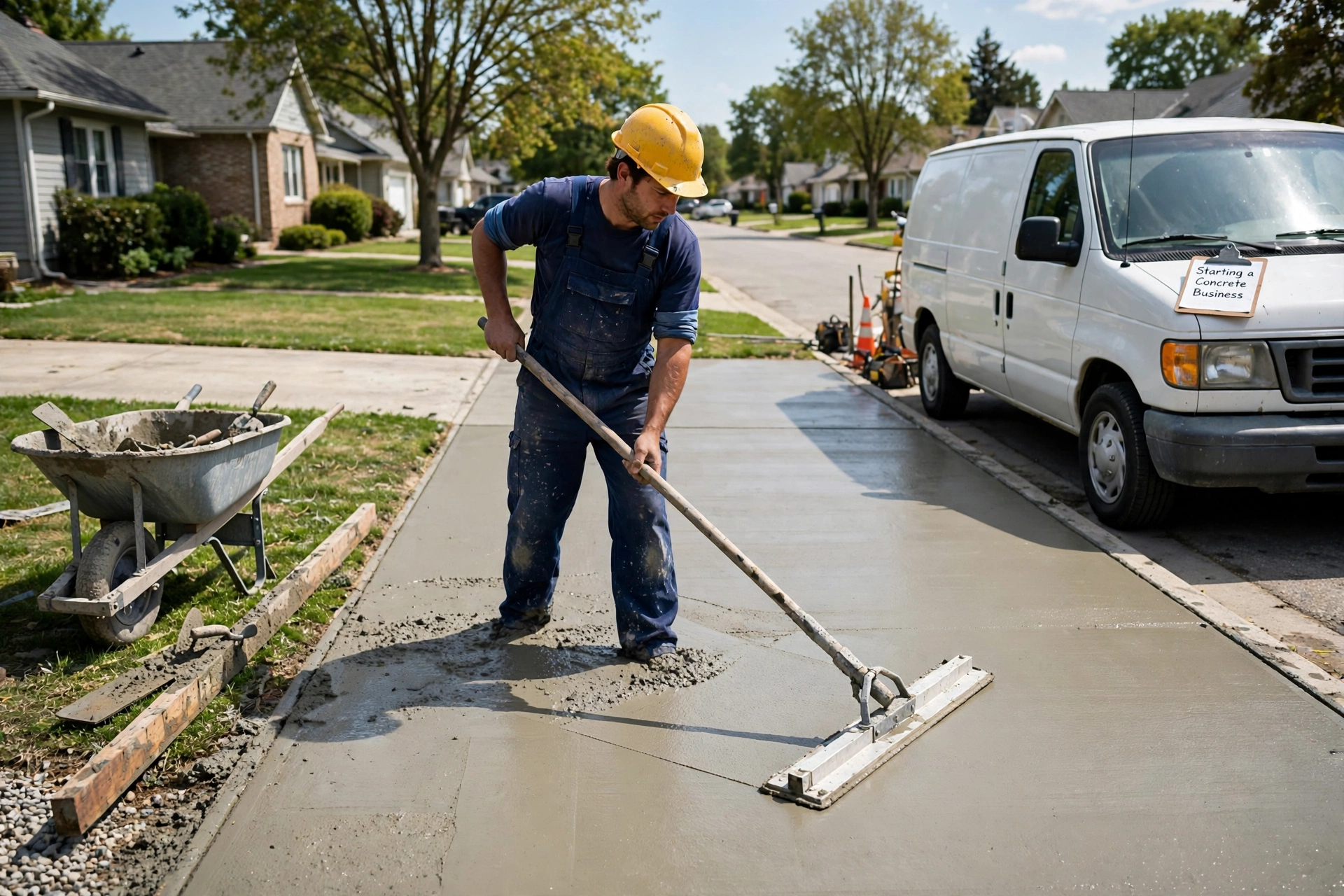
If you know your way around a mixer, a screed and a trowel, learning how to start a concrete business is one of the most practical ways to turn trade skills into a company of your own. Driveways crack, patios age, foundations get poured on every new build, and homeowners and builders alike always need a reliable crew they can trust. Concrete work cannot be done by a YouTube video alone, which is exactly why good contractors stay busy.
A concrete business is also a business you can start small. Many owners begin with a truck, a portable mixer and a couple of regular helpers, then grow into bigger pours as their reputation spreads. This guide walks through the whole launch in ten steps, from the skills you need to the first paying job, plus the mistakes that catch out new starters.
Step 1: Learn the Trade Before You Pour Your First Slab
Concrete looks simple until you are standing over a load that is setting faster than you expected. Before you take a single paid job, you need real hands-on experience with mixing, placing, screeding, floating and finishing. If you have spent a few years working for another contractor, you probably have it. If you have only done a garden path at home, get more time on real jobs first.
Work as a labourer or finisher for an established crew for at least a season. You will learn how different mixes behave in hot and cold weather, how to read a slump, how to set formwork square, and how fast a crew needs to move once the truck arrives. You will also see how jobs are priced, how customers are handled, and what happens when a pour goes wrong. That education is worth more than any course.
Certification strengthens your position with customers and on bigger jobs. Programmes through the American Concrete Institute (ACI) cover field testing and flatwork finishing, and many municipal and commercial clients ask for certified finishers. A trade school course in cement masonry is another solid route, especially if you want to offer decorative or stamped concrete later. Keep copies of every certificate: they go on your website and in your quotes.
Step 2: Write a Concrete Business Plan That Actually Helps
A concrete business plan does not need to be a fifty-page document. It needs to answer five questions: what services will you offer, who will you serve, what will it cost to start, what will you charge, and how will you find customers? Write the answers down before you spend any money, because the plan stops you buying equipment you do not need and chasing jobs that do not pay.
Start with your services. Most new businesses begin with flatwork: driveways, patios, walkways and slabs. These jobs are common, the skills transfer well, and the materials are easy to source. Foundations, decorative concrete and commercial floors can come later once you have the crew and the kit. List the services you will offer in year one and the ones you will add in year two, so every purchase has a reason.
Then work out your numbers. A basic launch usually costs between $11,000 and $20,000, covering a used truck, hand tools, a portable mixer, insurance and your first round of marketing. Add your monthly running costs: fuel, phone, ready-mix deposits, tool replacement and any software. Finally, set a realistic first-year target, such as two jobs a week in the first three months, growing to four. A plan built on real local prices is the difference between a business and an expensive hobby.
Step 3: Register the Business — How to Start a Concrete Company Properly
This is the step where a side job becomes a real company, and it matters more than most beginners think. Choose a business structure first. Many concrete contractors set up as an LLC because it separates your personal assets from the business, which matters in a trade where a cracked slab or a damaged driveway can turn into a claim. A sole proprietorship is cheaper and simpler, but it leaves you personally exposed. Check the filing fees and rules in your state, since costs and paperwork vary widely.
Next, register the business name and get an EIN from the IRS, which is free and needed for tax and hiring. Getting the paperwork right is the unglamorous half of how to start a concrete company properly, but it is what lets you bid on bigger jobs with confidence. Open a separate business bank account on the same day. Money for materials, fuel and wages must never mix with household money, or your bookkeeping will become a mess by the second month.
Choosing from the many possible concrete company names is worth an evening of thought. Pick something short, easy to spell over the phone, and clearly about concrete. Names that include your town or county help with local search, while a name that is too clever can confuse customers. Before you commit, check that the name is free in your state register, that the matching domain is available, and that no other local contractor already uses it. The best concrete company names are plain, memorable and professional, and they look just as good painted on a van as they do on a quote.
Step 4: Sort Your Licences, Permits and Safety Rules
Licensing is where new concrete businesses most often trip up, because the rules change from state to state and city to city. Some states require a contractor licence for structural or larger work, others ask only for a local business licence, and a few leave it to the city. Start at your state contractor board and your city clerk’s office, and get the answer in writing before you bid on any job.
Driveway aprons, sidewalks and curb cuts usually need a city permit, so ask about permits when you quote, not after you have started digging. If a job needs a permit, build the fee and the waiting time into your price and your schedule. Customers respect a contractor who mentions permits upfront; they do not respect one who discovers them halfway through.
Safety is not optional on a concrete site. Cutting and grinding concrete raises silica dust, which is controlled by the federal OSHA silica rule for construction. That means water on the blade or a shroud with dust collection, plus a respirator where the rules call for one. Budget for proper PPE, a first-aid kit and a short safety talk at the start of every job. Safe crews work faster, because nobody is nursing an injury or an avoidable fine.
Step 5: Get Concrete Business Insurance Before Your First Job
Insurance is the biggest fixed cost of a concrete business, and it is also the one you must never skip. General liability cover protects you if a slab cracks, a fence gets damaged, or a visitor is hurt on your site. Concrete contractors typically pay a median of around $1,423 a year for general liability, though your premium depends on your location, turnover and claims history. Workers’ compensation is required in most states once you hire employees, and commercial vehicle cover protects the truck that earns your living.
Talk to an insurance broker who understands construction rather than buying the cheapest policy online. Ask exactly what is covered: does the policy include faulty workmanship, damage to underground services, and hired plant? A policy that excludes the risks you actually face is wasted money. Get your concrete business insurance in place before your first job, not after, and keep the certificate handy, since builders and commercial clients will ask for it before they let you on site.
Bonding is a separate question worth asking about. Some states require a surety bond for licensed contractors, and some commercial clients ask for one on larger jobs. A bond protects the customer, not you, and the annual cost should sit in your overhead from the start.
Step 6: Buy the Tools You Need — and Rent the Big Machines
Equipment is where beginners overspend. Start with the hand tools and the vehicle, and rent everything else until the work justifies buying it. Your essential kit is a concrete mixer or a reliable ready-mix supplier, a wheelbarrow, shovels, screed boards, trowels, floats, an edger, a groover, a spirit level, a tape measure and full safety gear. New tools for a basic setup cost roughly $3,000 to $8,000, while good used tools cost far less.
You probably own most of your hand tools already if you have worked in the trade, so spend your money where it earns: a dependable truck or van and a portable mixer you can trust. Ready-mix delivery suits larger pours, while a portable mixer gives you freedom on small jobs and repairs. A reliable vehicle matters more than a shiny one, because a breakdown on pour day costs you the job and the customer.
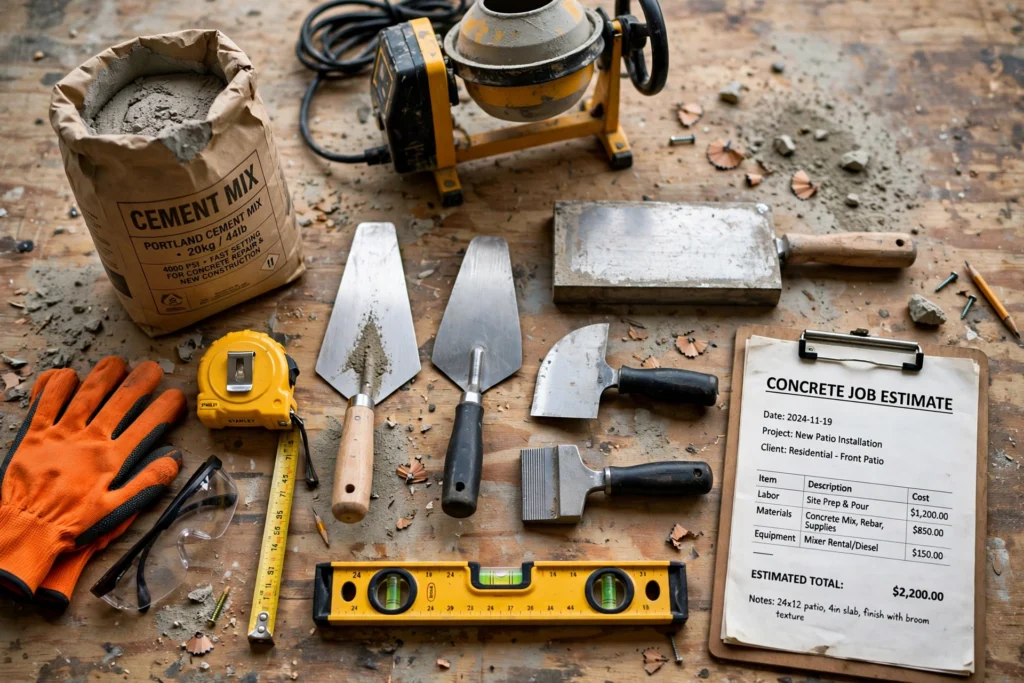
The big machines are almost always better rented by the day: a walk-behind saw, a plate compactor, a power trowel or a mini excavator. Renting keeps your cash free, avoids maintenance costs, and lets you try different machines before committing. Buy a machine only when you are hiring it so often that the rental bill beats the purchase price. Keep a simple log of what you rent and what it costs, and review it every quarter.
Step 7: How to Price Concrete Jobs Without Losing Money
Underpricing is the number one killer of new concrete businesses, so learning how to price concrete jobs properly is a skill worth as much as finishing. Concrete flatwork is commonly quoted per square foot, but that number must be built from your real costs, not copied from a competitor. Start with materials, add labour, add equipment and overhead, then add your profit margin. If the total looks high, the answer is to cut costs or find better customers, never to work for free.
Typical pricing gives you a starting point, not a quote. A plain concrete driveway runs about $5 to $8 per square foot, while decorative work runs about $8 to $21, and a new driveway averages around $6,400 in the US. Patios usually sit at $6 to $12 per square foot, and foundations at $10 to $20, depending on complexity and region. Your local rates will differ, so ring three local suppliers and two competing contractors before you set your price list.
Always quote in writing, and always visit the site before you price. A sloped garden, poor access, tree roots or an old slab to remove can double the labour on a job that looks simple from the road. Break the quote into materials, labour, equipment and extras so the customer can see what they are paying for, and state your payment terms clearly. In some states there are legal limits on deposits for home improvement work, so check the rule before you take money upfront. A clear written quote protects you and reassures the customer.
Step 8: Pick Your Services — Residential and Commercial Work
Most new concrete businesses start with homeowners, because the jobs are plentiful and the decisions are quick. Residential concrete services cover driveways, patios, walkways, steps, garage floors and small extensions. Homeowners choose on trust and reputation, so photos of finished work, honest reviews and a tidy site matter enormously. One finished driveway done well usually leads to the next job on the same street.
Commercial concrete services are a different game: warehouse floors, car parks, loading bays, foundations and retail fit-outs. The jobs are bigger and the margins can be better, but the clients expect certificates, insurance documents, method statements and strict schedules. You will usually need a bigger crew, more equipment and a track record before a main contractor trusts you with commercial work. Many owners run both sides of the business, using residential jobs to keep cash flowing between larger commercial projects.
The smartest move is to pick one side to master first. If you start residential, build a gallery of finished driveways and patios and collect reviews from every happy customer. If you start commercial, invest early in certification and paperwork, and build relationships with two or three local builders. Either way, say no to work you cannot do well: a bad job in the wrong sector costs far more than the job was worth.
Step 9: Win Your First Customers
Your first customers will not come from an expensive advert. They come from people who have seen your work, or from someone who trusts the person recommending you. Tell everyone you know that you have started, including builders, plumbers, electricians, estate agents and hardware store staff. A single builder who passes you two jobs a month is worth more than a month of paid ads.
Set up a free Google Business Profile on day one, with photos of your work, your service area and your phone number. Ask every satisfied customer for a review, and reply to each one. Local search is where most homeowners start, and a profile with ten genuine reviews beats a blank one every time.
Then make it easy for customers to say yes. Answer the phone, turn up when you say you will, send the written quote within a day, and leave the site clean. Word of mouth is slow at first and then unstoppable, and in a local trade it is the cheapest marketing you will ever buy. A simple one-page website with photos, services and a phone number is enough to start; you can add more pages as the business grows.
Step 10: Run the Business Day to Day with Concrete Business Software
A concrete business is won or lost on organisation as much as on finishing skill. Quotes, bookings, supplier orders, invoices and wage records multiply fast, and a notebook stops working after the first month. That is where concrete business software earns its keep. Even a simple setup, a shared calendar for bookings, a spreadsheet for costs and a basic invoicing tool, will save hours a week and stop jobs from slipping through the cracks.
As you grow, a field-service app can bring quoting, scheduling, invoicing and customer messages into one place. Look for software that handles job photos, lets customers approve quotes on their phone, and reminds you about unpaid invoices. The right setup does not need to be expensive; it needs to be used every single day. Set aside one hour a week for paperwork, every week, no exceptions. That hour is what turns a busy finisher into a business owner.
Scaling comes after the systems work. Hire your first employee only when you are turning down jobs, and hire for attitude and reliability as much as skill, since you can teach finishing but not punctuality. Keep a small cash reserve for quiet months, especially winter, when outdoor pours slow down. Growth that is steady and paid for beats growth funded by debt every time.
Mistakes That Sink New Concrete Businesses
The same mistakes sink new concrete businesses again and again. The first is underpricing to win work, which leaves no margin for a bad pour, a broken tool or a slow week. The second is skipping the paperwork: no written quote, no licence check, no insurance certificate, and then a dispute with no evidence. The third is overbuying equipment before the work exists, which ties up cash that should have gone to marketing and wages.
Another common mistake is saying yes to every job. A basement floor you have never done, a commercial slab beyond your crew’s capacity, or a customer who wants it done in half the time it takes, all of these can cost you your reputation. And finally, many beginners forget the customer after the pour. A quick visit a week later to check the curing, a thank-you message, and a request for a review turn one job into three. Concrete is permanent, so the impression you leave is permanent too.
FAQs About How to Start a Concrete Business
What does it cost to start a concrete business?
A basic launch usually costs between $11,000 and $20,000, covering a used truck, hand tools, a portable mixer, insurance and first marketing. Bigger machines are normally rented by the day at first, which keeps the starting cost down.
Do I need a licence to pour concrete?
It depends on where you work. Some states require a contractor licence for structural or larger jobs, others ask only for a local business licence, and cities often require permits for driveways and sidewalks. Check with your state contractor board and your city office before you bid.
How much do concrete business owners earn?
Earnings vary with size, location and project type. Many concrete business owners in the US make between $70,000 and $145,000 a year, with top earners making far more. Owner income depends on how many jobs you complete and how tightly you control costs, not on turnover alone.
Should I focus on residential work or commercial concrete services?
Start with whichever side you know best. Residential concrete services bring steady, quick jobs from homeowners, while commercial work brings bigger contracts with stricter paperwork. Many owners begin residential, then add commercial jobs once they have the crew, certificates and track record.
How do I get my first concrete job?
Start with your own network: builders, tradespeople, friends and family. Set up a free Google Business Profile, ask every happy customer for a review, and consider a small job at a fair price to build your photo gallery. A good first job on a visible street is the best advert you will ever have.
Final Word
Learning how to start a concrete business is only the beginning. The trade rewards people who turn up, pour well, price honestly and leave a clean site. Start small, learn the trade properly, keep your paperwork straight, and let one good job lead to the next. The first pour is the hardest; after that, your reputation does the heavy lifting.

First Pour to Full Crew: How to Start a Concrete Business

Sparks to Success: How to Start an Electrical Business

Cool Air, Warm Profits: How to Start an HVAC Business

Wrenches to Wealth: How to Start a Plumbing Business

Shingles to Success: How to Start a Roofing Business

Posts, Panels and Profit: How to Start a Fencing Business

First Cut, Full Crew: How to Start a Tree Trimming Business

Ladder to Lights: How to Start a Christmas Light Business

Clear Water, Steady Pay: Starting a Pool Cleaning Business

Green Thumb to Paycheck: Starting a Landscaping Business

How to Repurpose Blog Content for Social Media Without Starting From Scratch

How to Write a Simple Business Plan for Your Small Business: A Practical Guide That Gets You Started

How to Get More Clients for Your Business: Simple Ways That Actually Work

How to Create a Small Business Content Marketing Plan That Actually Gets Results

How to Write a Professional Business Email That Gets a Reply

Branding Tips for Small Businesses: A Simple Guide That Makes You Memorable
How to Handle Customer Complaints in a Small Business: A Calm, Practical Guide That Turns Problems Into Loyalty
How to Create a Content Calendar for a Small Business
How to Set Up a Simple Referral Program for Your Small Business: A Beginner’s Guide That Brings in New Customers

How to Set SMART Goals for a Small Business: A Practical Guide That Actually Works
First Pour to Full Crew: How to Start a Concrete Business
Sparks to Success: How to Start an Electrical Business
Cool Air, Warm Profits: How to Start an HVAC Business
Wrenches to Wealth: How to Start a Plumbing Business
Shingles to Success: How to Start a Roofing Business
Posts, Panels and Profit: How to Start a Fencing Business
First Cut, Full Crew: How to Start a Tree Trimming Business
Ladder to Lights: How to Start a Christmas Light Business
Clear Water, Steady Pay: Starting a Pool Cleaning Business
Green Thumb to Paycheck: Starting a Landscaping Business

 entertainment1 year ago
PYT Telegram: A Complete Guide to Understanding, Using, and Maximizing It

 entertainment1 year ago
OnionFlix: Everything You Need to Know About This Streaming Website
- education1 year ago
How to Become a Software Engineer: A Complete Guide
- entertainment10 months ago
Brainrot Memes: The Unhinged Humor of the Internet Generation





