business
Focus to Fortune: How to Start a Photography Business

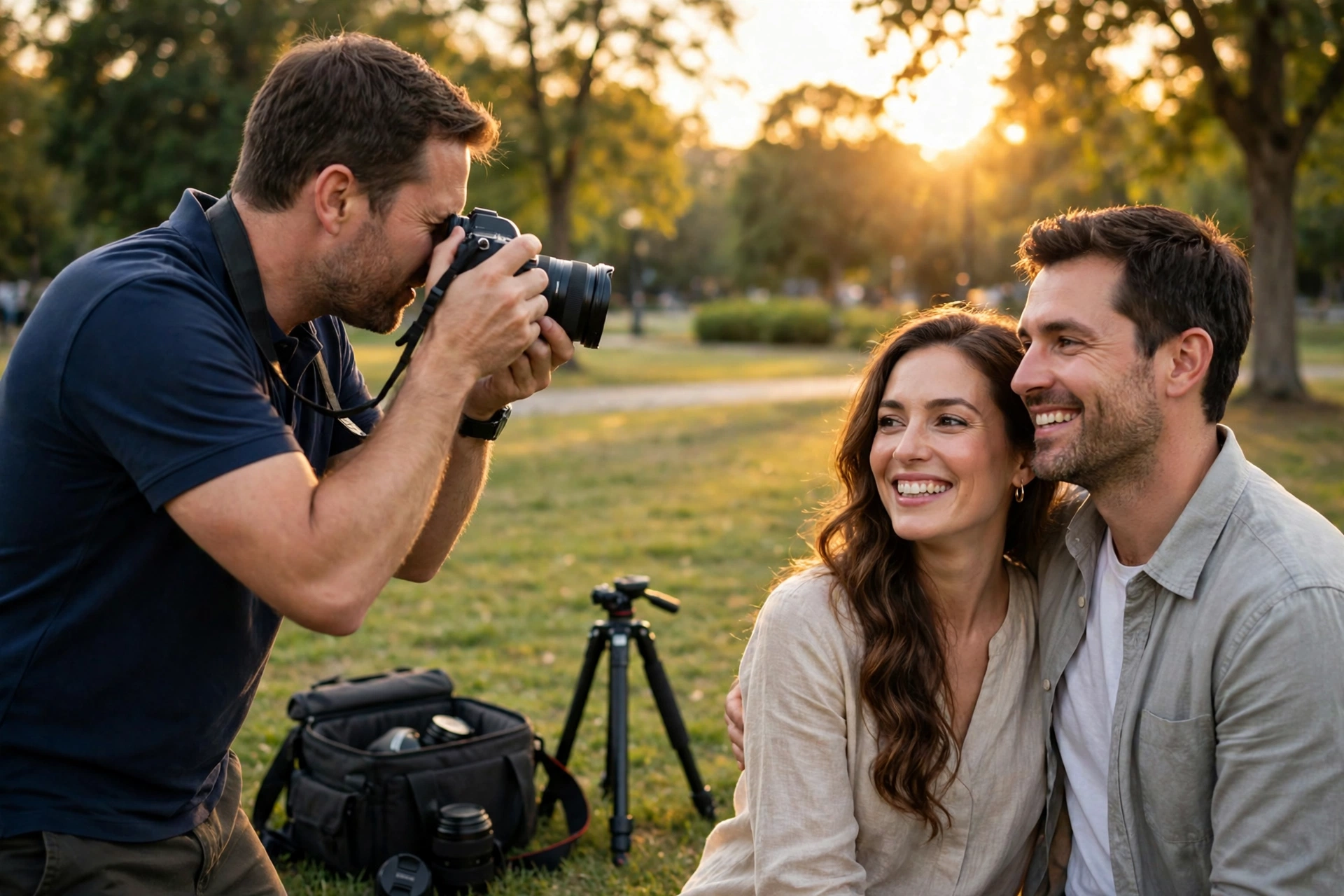
Every week, somebody in your town needs a wedding photographed, a family portrait taken, a house listed for sale, a product shot for an online shop, or a headshot for a job application. Most of them would happily pay a skilled photographer rather than risk it themselves. If you love taking pictures and you are ready to treat it like a real trade, learning how to start a photography business is one of the most rewarding service businesses you can build. You need a camera you know well, a small set of lenses, and a way for clients to find you — and every shoot teaches you something about the next one.
This guide walks you through the whole launch in thirteen steps, from picking a niche to booking your first paying clients.
Step 1: Pick Your Niche and Study Your Local Market
Before you buy another lens, decide what kind of pictures you want to be paid for. A photo outfit can serve weddings, family portraits, newborns, real estate, products, food, events, headshots or pets — but trying to serve all of them on day one spreads your money and your practice too thin. Pick one or two niches where demand is steady in your town and build your first portfolio around them.
A few photography business ideas that work in most towns are wedding packages, family portrait sessions, real estate shoots for estate agents, and product photos for small online shops. Weddings pay the most per job but need the steadiest nerves and the longest days; portrait sessions book the most often but at lower prices; real estate shoots repeat every week and pay on time. Talk to local wedding planners, estate agents and shop owners and ask what they struggle to find. If three planners tell you they cannot find a reliable second shooter in June, you have found your niche. Photography business ideas are easy to list, but the right one is the one your town actually needs. The same niche-first thinking applies if a friend ever asks how to start a wedding photography business — the client comes before the camera.
When you learn how to start a photography business, the first decision is never the camera — it is the client. Write down who they are, what they need photographed, what they pay, and which months are busiest. In most places the season runs from spring to autumn, with weddings peaking in summer and family portraits spiking before Christmas. Count the competing photographers in a 30-mile radius, look at their websites, and note what they charge and what they do not offer. A gap — nobody shoots newborns, nobody offers same-week headshots, nobody covers small business events — is your opening.
Step 2: Write Your Photography Business Plan
A photography business plan does not need to be forty pages long, but it does need to answer five questions: what will you shoot, who will hire you, what will you charge, what will it cost you, and how will clients find you. One page per question is enough for a first draft, and a lender will take you far more seriously with it in hand.
Start with your service list and prices. List every service, what it costs you to deliver, what you will charge per session, and how many sessions it takes to cover your monthly costs. A $200 portrait session that costs you $40 in travel, editing time and gallery delivery leaves $160 before tax; a $1,500 wedding that costs $400 leaves $1,100. Then add your fixed costs: insurance, editing software, website, and gear maintenance. The plan should show the month you expect to break even, and it should be honest about winter — in cold climates, outdoor sessions can slow from November to March, so your plan needs a slow-season strategy, such as studio headshots, product work or mini sessions.
Step 3: Register the Business and Choose a Name
Register your business with your state or local authority and pick a structure — most photographers start as a sole trader or an LLC, and an LLC is worth considering because it separates your personal assets from the business if a client ever sues over a lost or damaged shoot. Get an employer identification number if your country requires one, open a separate business bank account, and keep every receipt from day one.
Shortlist three or four photography business names that are easy to spell over the phone, easy to remember, and free on social media and as a domain name. Names that say what you do — something with “photo”, “portrait” or “studio” in it — help strangers understand the business in two seconds. Check the name against your local business register and trademark database before you print it on a card. A clear, friendly name beats a clever one every time, because most of your first clients will find you by searching, not by guessing. The best photography business names are short, local and honest about the work.
Step 4: How Much Does It Cost to Start a Photography Business?
Your startup cost depends almost entirely on the gear you already own. A lean start — a camera you already have, one versatile lens, a memory card, a spare battery and a basic website — can come in around $500 to $2,000 if you buy sensibly. A fuller launch with a second camera body, two more lenses, lighting, editing software and a first round of advertising can run $5,000 to $12,000. Most photographers start lean and reinvest every dollar of profit into better glass for the first year.
Here is a realistic starter budget:
| Item | Typical cost | Notes |
|---|---|---|
| Camera body (use yours first) | $0 to start | Buy a second body later |
| Versatile lens (24–70mm) | $400–$1,200 | The one lens that earns |
| Memory cards + spare batteries | $80–$200 | Never shoot with one card |
| Basic lighting (one flash + stand) | $150–$400 | Learn it before you buy more |
| Editing software (monthly) | $10–$30 a month | — |
| Website and booking page | $100–$300 a year | — |
| Insurance (first year) | $300–$800 a year | — |
| Business cards and sample prints | $50–$150 | — |
So, how much does it cost to start a photography business in practice? If you already own a camera, you can take your first paid session for under $500 of extra spending. If you need to buy the camera too, budget $2,000 to $5,000 for a lean launch. Do not borrow heavily to buy gear you have not tested — shoot a full season first. The bookings will tell you what to buy next: if every client asks for wedding coverage, buy a second body; if nobody asks for studio work, stop buying lights.
Step 5: Get Your Photography Business License and Permits
A photography business license usually means a general business license from your city or county, plus any permits your area requires for working as a photographer. In most places there is no special “photography licence” — what you need is to operate as a proper registered business, pay tax on what you earn, and follow local rules for shooting in public places and on private property. Call your local licensing office before you spend money — a ten-minute call can save you a fine later.
Check whether your area limits where you can shoot for money. Some parks, historic sites and private venues charge a fee or require a permit for commercial shoots, and some shopping centres forbid tripods without permission. Write down the rules for your town and keep them with your kit. If a client asks you to shoot somewhere that needs a permit, get it before the day, not on the day. That registration is the paperwork that lets you say yes with confidence.
Step 6: Sort Out Photography Business Insurance Before Your First Client
Photography business insurance is not optional. You are carrying thousands of dollars of gear into other people’s weddings, homes and workplaces, and a dropped lens, a lost memory card or a client who trips over your tripod can wipe out a month of earnings if you are uninsured. At minimum, you need general liability cover and gear cover for your camera and lenses. If you shoot weddings, ask about professional indemnity cover for lost or corrupted images.
Get three quotes and compare them properly — the cheapest policy is rarely the best if it excludes the very jobs you do. Ask each insurer whether the policy covers gear stolen from a car, gear damaged on location, and a reshoot if your images are lost. Most photographers pay $300 to $800 a year for a starter policy, and the price falls as you build a clean claims record. Keep the certificate of insurance in your kit bag and on your website: wedding planners and venues will ask for it before they book you, and clients who are trusting you with their one big day want to see it. Good cover is a selling point, not just a cost.
Step 7: Build Your Kit Without Overspending
Your camera is your workshop, but the camera you already own is almost always good enough to start. For most new photographers, one reliable body and one versatile lens is the right start: cheap to carry, fast to learn, and good enough for most portrait and event work. A second body matters at weddings, where a failure has no second chance, but it can wait until the bookings pay for it. A backup plan matters more than a backup camera on day one — spare cards, spare batteries, and a habit of copying every shoot twice before you sleep.
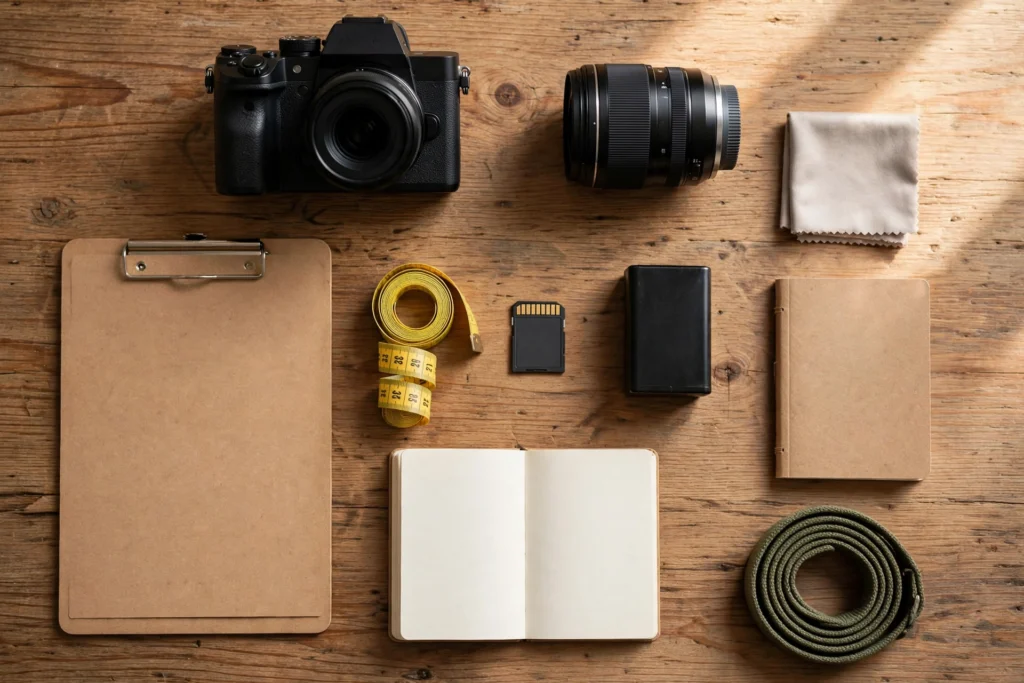
You can run this trade from home if you have somewhere to edit, store the gear and meet clients — a spare room, a quiet corner, or a rented desk. What you cannot do is invite clients into a cluttered living room and call it a studio; meet them in a café, at the shoot location, or on a video call instead. Buy the photography equipment essentials first: a second memory card, a spare battery, a lens cloth, a comfortable strap and a good bag. Add a second lens and a flash before you add anything fancy.
Step 8: Set Your Prices So Every Shoot Pays
Your startup cost is only half the maths — the other half is pricing every session so it covers your time, your editing, your travel and a margin. Most photographers price by package: a portrait session fee plus prints, a half-day wedding rate, or a per-listing rate for real estate. Learn how long each job really takes — shooting plus editing plus delivery — and price the whole job, not just the hour with the camera.
Write your prices down and stick to them. Check the going photography prices in your town before you fix your price list — if every portrait photographer charges $250 a session, quoting $80 leaves money on the table. A clear price list — portrait session $200, mini session $95, half-day wedding $900, full-day wedding $1,800, for example — helps clients say yes faster than a vague “it depends”. Adjust the numbers to your town and your experience, but never quote a job below what your time is worth. Keep a simple record of every shoot: what you charged, how long the editing took, and what it cost you. After fifty shoots you will know exactly which jobs make money and which ones only look busy.
Step 9: Build a Portfolio That Sells
A portfolio is your shop window, and it must show the work you want to be hired for — not everything you have ever shot. Pick your twenty best images in your niche, no more, and put them on your website in the order a client should see them: the strongest image first, then the variety, then the closer. If you want wedding work, show weddings; if you want product work, show products. Clients hire what they can already see you doing well.
Shoot the work you want before anyone pays you for it. Offer a free portrait session to a friend, photograph a local café’s menu for a small fee, or second-shoot a wedding for an established photographer. Every free shoot that fills a gap in your portfolio is an investment, but set a limit: three portfolio shoots, then you charge. A portfolio with no paying clients behind it is a hobby; a portfolio that grows with every paid job is a business.
Step 10: Build a Website and Booking System That Works on the Phone
Most clients will find you on their phone, so your website must work on a phone. A simple site with your best twenty images, your services, your prices, your service area and a big contact button is enough to start. Add a form where clients can tell you the date, the occasion and the location, and reply the same day — a fast reply wins more bookings than a fancy gallery. Good photography business software handles the booking, the gallery and the invoice in one place, so the admin never eats your shooting time.
Answer enquiries fast and answer messages faster. In this trade, the first photographer to reply usually gets the job, because the client wants their date secured today, not next week. Keep a paper diary as a backup to your phone calendar, confirm every booking in writing, and send a reminder the day before the shoot. When you learn how to start a photography business, remember that half the job is taking pictures and the other half is showing up when you said you would.
Step 11: Get Your First Paying Clients Without Spending a Fortune
Your first ten clients will come from people who already know you — friends, family, colleagues, and anyone who has seen your pictures. Many of your later clients will simply search photography near me and call the first photographer with good reviews — which is why those reviews matter so much. Tell everyone you know what you do, leave a card at every wedding venue, florist and estate agent in town, and ask every happy client to leave a review on Google the same day. Reviews are the cheapest advertising in this trade, and five good ones will bring more work than a month of paid ads.
For promotion, start with the free channels. Your photography business marketing starts with an Instagram account that shows your best work three times a week, a Google Business Profile with real session photos, and posts in local community groups. Put your website on every card, every email and every gallery delivery — it is your shopfront, and it works while you sleep. Once the bookings are steady, spend a little on local search ads for your town name plus “photographer”, and track which channel brings each client so you know where the money goes.
Step 12: Deliver, Edit and Keep Clients Happy
The shoot is only half the job. Clients judge you on what arrives after it: how fast the gallery comes, how the images look, and how easy it is to order prints. Set a delivery promise you can keep — two weeks for portraits, four to six weeks for weddings — and beat it by a day whenever you can. Cull ruthlessly, edit consistently, and deliver a gallery that feels like a finished product, not a folder of files.
Protect every shoot like it is irreplaceable, because it is. Copy the memory cards to two places before you sleep, back up the edited gallery off site, and never delete the originals until the client has the images. A lost wedding is a lost reputation. If something does go wrong — a card corrupts, a lens fails — tell the client at once, explain what you are doing about it, and offer a reshoot. Honesty after a problem keeps more clients than silence ever will.
Step 13: Know When to Expand, Franchise or Sell
Once your weekends are booked a month ahead, you have three ways to grow. The first is a second shooter and an assistant, which doubles what you can cover and frees you to take bigger jobs. The second is a photography franchise — buying into an established brand gives you their name, their booking system and their training, but you pay a franchise fee and a share of every job, and you follow their rules. The third is to sell: a tidy, profitable photo outfit with a client list, a strong portfolio and good reviews is a genuine asset, and a photography business for sale with clean books will always find a buyer.
Do not rush any of the three. Shoot well for a full year first, keep honest books from day one, and keep your client list clean and up to date. A buyer will pay for records, not for promises — and a franchisor will want to see a year of steady bookings before they talk to you. Growth is a decision, not an accident, and the right moment is when the work is already there, not when you hope it will be.
Frequently Asked Questions
Do I need a licence to take paid photos?
In most towns, you need a general business registration rather than a special photography licence, but the rules vary by area, so call your local licensing office and ask what applies to paid photography before your first client. Some parks and venues also charge a fee or require a permit for commercial shoots.
What gear do I need to start?
A camera you know well, one versatile lens, spare memory cards, a spare battery, and a computer with editing software. That is enough for portraits, headshots and small events. Add a second body and lighting once weddings and bigger jobs are paying for them — not before.
Can I run this business from home?
Yes, if you have somewhere to edit, store the gear and handle the admin, and your area allows a home-based trade. A spare room or a quiet corner works well. Meet clients in a café, at the shoot location or on a video call rather than inviting them into a cluttered living room.
How much can I earn in the first year?
A part-time photographer who shoots weekends can realistically take home $10,000 to $25,000 in the first year after costs, and a full-time portrait or wedding photographer in a busy town can reach $30,000 to $60,000. The profit grows when you raise your prices and book repeat clients, but so do the costs — keep your books honest and watch the margin on every shoot.
Do I need a studio to start?
No. Most new photographers start on location — parks, clients’ homes, wedding venues and offices — and rent a studio by the hour only when a job needs it. A home studio suits headshots and newborns, but only if the space looks professional on camera and in person.
How do I price a session fairly?
Price the whole job — shooting, editing, travel and delivery — not just the hour with the camera. Ask the client what they need, quote a package in writing, and confirm it before the shoot day. If the job grows on the day, explain the new price before you shoot the extra work, not after.
Should I buy a photography franchise or go independent?
A franchise gives you a known name, training and a booking system, but it costs a franchise fee plus a share of every job and you follow their rules. Going independent costs less and keeps every decision yours, but you build the brand yourself. Most new photographers start independent, learn the trade for a year, and only then weigh up a franchise.
Can I sell my photography business later?
Yes. A photography business for sale with a strong portfolio, a clean client list, good reviews and honest books is a real asset. Keep your records tidy from day one — a buyer pays for what they can verify, and a year of clean books is worth more than a year of promises.
Final Word
Starting a photo outfit is not just about owning a good camera — it is about showing up, keeping promises, and delivering pictures people treasure. You help people keep their best days, you give small businesses images that sell, and you get paid for work you love. Learn how to start a photography business properly — pick a niche, write the plan, register the business, build a portfolio that sells, and price every shoot so it pays — and the work will find you. The first client is the hardest one to win; after that, every happy client is your next advert.

Sparkling Start: How to Start a Cleaning Business

Focus to Fortune: How to Start a Photography Business

Tables to Bookings: How to Start a Party Rental Business

Bouncing to Profit: How to Start a Bounce House Business

Driveway Dollars: How to Start a Mobile Car Wash Business

Coins to Cash Flow: How to Start a Vending Machine Business

Soot to Success: How to Start a Chimney Sweep Business

Wrenches on Wheels: How to Start a Mobile Mechanic Business

Foundations First: How to Start a Home Inspection Business

Stamps on the Move: How to Start a Mobile Notary Business

How to Get More Clients for Your Business: Simple Ways That Actually Work

Branding Tips for Small Businesses: A Simple Guide That Makes You Memorable

How to Start Freelancing With No Experience: A Simple Guide That Gets You Your First Client

How to Do a Small Business Competitive Analysis: A Simple Guide That Finds Your Edge

Networking Tips for Small Business Owners: A Simple Guide That Turns Conversations Into Customers

How to Keep Customers Coming Back: Simple Ways That Actually Work

Christmas Marketing Ideas for Small Businesses: Simple Ways to Win Festive Customers

How to Create a Budget for a Small Business: A Simple Guide That Keeps Your Money in Order

How to Promote Your Blog Posts: Simple Ways That Actually Work

Pricing Strategies for Small Business: A Simple Guide That Protects Your Profit
Sparkling Start: How to Start a Cleaning Business
Focus to Fortune: How to Start a Photography Business
Tables to Bookings: How to Start a Party Rental Business
Bouncing to Profit: How to Start a Bounce House Business
Driveway Dollars: How to Start a Mobile Car Wash Business
Coins to Cash Flow: How to Start a Vending Machine Business
Soot to Success: How to Start a Chimney Sweep Business
Wrenches on Wheels: How to Start a Mobile Mechanic Business
Foundations First: How to Start a Home Inspection Business
Stamps on the Move: How to Start a Mobile Notary Business

 entertainment1 year ago
PYT Telegram: A Complete Guide to Understanding, Using, and Maximizing It

 entertainment1 year ago
OnionFlix: Everything You Need to Know About This Streaming Website
- education1 year ago
How to Become a Software Engineer: A Complete Guide
- entertainment10 months ago
Brainrot Memes: The Unhinged Humor of the Internet Generation