business
Sparkling Start: How to Start a Cleaning Business

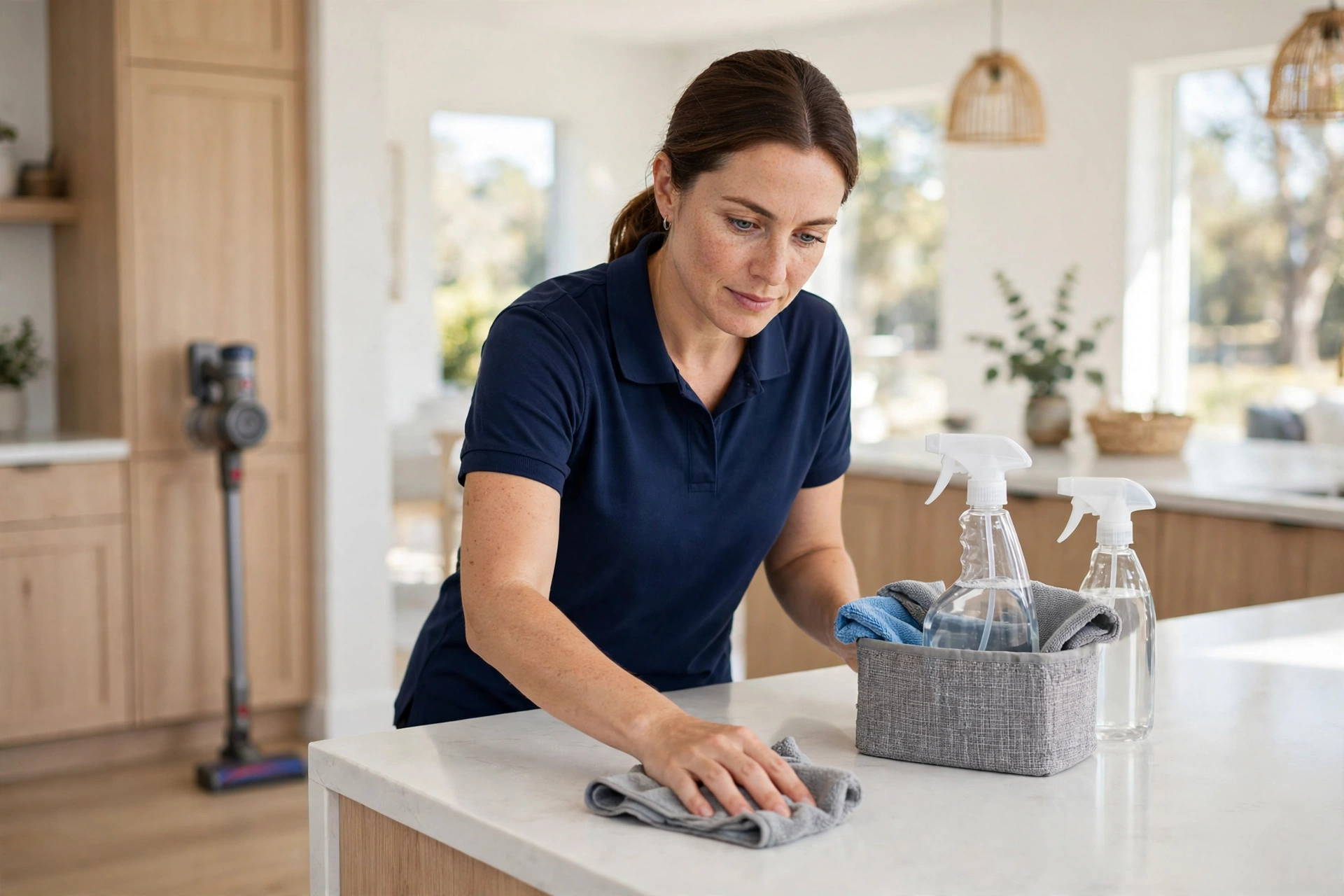
Most people notice a clean home the moment they walk in — and they will happily pay someone else to keep it that way. If you enjoy turning a messy room into a spotless one, learning how to start a cleaning business could be one of the cheapest ways to become your own boss. You do not need a shop, a degree or a big loan. A small kit, a reliable routine and a few happy clients are enough to get going.
This guide walks you through the whole launch in 13 practical steps, from picking a niche and sorting your paperwork to pricing jobs, winning your first clients and growing into a small team. Everything here is written for a beginner starting from scratch, with realistic costs and no jargon.
Step 1: Pick Your Cleaning Niche
Every cleaning job looks the same from the outside, but the niche you pick shapes your prices, your hours and your customers. Residential cleaning means regular weekly or fortnightly cleans in family homes. Commercial cleaning means offices, shops and small workplaces, usually after hours. Then there are specialist jobs: end-of-tenancy cleans, deep cleans, builders’ cleans after renovation work, and holiday-let turnovers.
When you weigh up cleaning business ideas, start with what fits your life. If you have school-run hours, residential work and holiday lets fit neatly around them. If you prefer evenings and bigger contracts, offices are a better match. The steps for how to start a commercial cleaning business are the same, but the clients, hours and contracts look different. A narrow niche also makes your marketing much easier: a flyer that says “weekly home cleaning in your area” beats a vague “we clean everything” every time. If homes are your niche, the steps for how to start a house cleaning business are the same ones in this guide — pick your area, set your prices and win your first five clients.
Do not try to serve everyone in week one. Pick one niche, learn its routines, and add a second service only when the first one is bringing in steady bookings. Whatever niche you pick, the rest of this guide on how to start a cleaning business follows the same 13 steps. Shortlist two or three cleaning business ideas, then commit to the one with the steadiest local demand. Specialists charge more than generalists, because clients trust someone who does their exact job every day.
Step 2: Research Your Local Market
Before you spend a penny, find out who already cleans in your area and what they charge. Search online for local cleaners, read their reviews, and note their prices, their minimum booking and the services they list. Look at community noticeboards and local social media groups too — that is where most small cleaning jobs are won and lost.
Visit a few estate agents and letting agents and ask what they pay for end-of-tenancy cleans. Ring two or three offices and ask who cleans for them and how often. This is not spying; it is basic market research, and it tells you where the gaps are. Maybe nobody offers eco-friendly cleaning, or nobody works weekends, or nobody serves the new housing estate on the edge of town.
Write down three things: the going hourly rate, the busiest services, and the complaints that keep appearing in reviews — late arrivals, missed spots, poor communication. Your new business wins by fixing exactly those complaints. If you can run the business from home with low overheads, you can undercut the bigger firms on price while still earning a good hourly rate.
Step 3: Write Your Cleaning Business Plan
A cleaning business plan does not need to be a 40-page document. One page is enough, as long as it answers the questions that matter: who are your customers, what will you charge, what will it cost you each month, and how many jobs do you need to cover your bills?
Start with your monthly target. If you want to earn £2,000 a month and you charge £20 an hour, you need 100 cleaning hours — roughly 25 hours a week. Then list your monthly costs: supplies, fuel, insurance, phone and advertising. Subtract the costs from the income and you have your real profit. This simple maths stops you from taking on work that looks busy but pays badly.
Your plan should also say how you will find clients, what you will do if a client cancels, and when you will hire your first helper. One honest page, reviewed every month, beats a glossy plan that sits in a drawer. If you are weighing up a cleaning franchise instead of going independent, put the franchise fee and royalty into the same maths — the brand helps with trust, but the monthly royalty eats into every job, so compare it fairly against building your own name from scratch.
Step 4: Work Out Your Startup Costs
Cleaning is one of the cheapest businesses to start, but you still need honest numbers before you begin. The question every beginner asks is how much does it cost to start a cleaning business, and the honest answer is: somewhere between £300 and £1,500 if you start small and grow from your own earnings.
Your startup cost depends mostly on the kit you buy and the niche you pick. A residential cleaner needs far less gear than a commercial cleaner with floor machines. Buy the basics first, earn from real jobs, and upgrade your kit from profit rather than from a loan. Here is a realistic first-month budget for a solo residential cleaner:
| Item | Typical cost |
|---|---|
| Vacuum cleaner | £120–£250 |
| Mops, buckets and cloths | £40–£70 |
| Sprays, disinfectants and solutions | £30–£60 |
| Gloves, aprons and safety gear | £20–£40 |
| Caddy and carry bag | £25–£50 |
| Business registration and licence fees | £30–£150 |
| Insurance (first month) | £25–£60 |
| Flyers and basic advertising | £30–£80 |
That puts your total startup cost at roughly £320–£760 for a sensible first kit. A second-hand vacuum in good condition can cut that further. Another way in is buying a cleaning business for sale in your area — an existing round of clients with equipment included — but check the client list carefully, because a few loyal customers are worth more than a long list of one-off jobs.
Step 5: Choose Your Cleaning Business Names
Your name is the first thing a customer sees, so make it easy to say, easy to spell and easy to remember. Short names work best: two or three words, no clever spelling, no word that a customer has to guess how to pronounce. “Sparkle Home Cleaning” beats “Kleen-4-U Sparkle Solutions” because people can find it, say it and recommend it without thinking.
When you shortlist cleaning business names, check three things before you fall in love with one. First, search online to make sure no other cleaner nearby uses it. Second, check that a matching social media handle and a simple web address are free. Third, say it out loud as if you are answering the phone — if it sounds awkward, drop it.
Avoid names that lock you into one service. A name built around homes makes it harder to take on offices later, and a name tied to one town makes it harder to expand. Pick a name that can grow with you, then use it everywhere: your flyers, your uniform, your invoices and your online profiles.
Step 6: Register Your Business and Get a Cleaning Business License
Paperwork is the least exciting step, but it protects you and it makes clients trust you. First, choose a business structure. Most solo cleaners start as a sole trader because it is simple and cheap; a limited company gives you more protection once you hire staff or take on bigger contracts, so get advice from an accountant before you decide.
Next, register with your local authority and the tax office, and keep your business money in a separate bank account from day one. Mixing the two makes tax time miserable and makes it hard to see whether the business is actually earning.
Then sort out your cleaning business license and any permits your area requires. Rules vary by town and country, so check with your local council or licensing office rather than guessing. Most residential cleaners need only a basic business licence, while commercial work sometimes needs extra permits. Keep copies of every document in one folder — digital and paper — so you can show a client or an agent proof in seconds. Getting the paperwork right early also helps when you apply for insurance, because insurers ask for your registration details before they quote.
Step 7: Buy Your Cleaning Kit
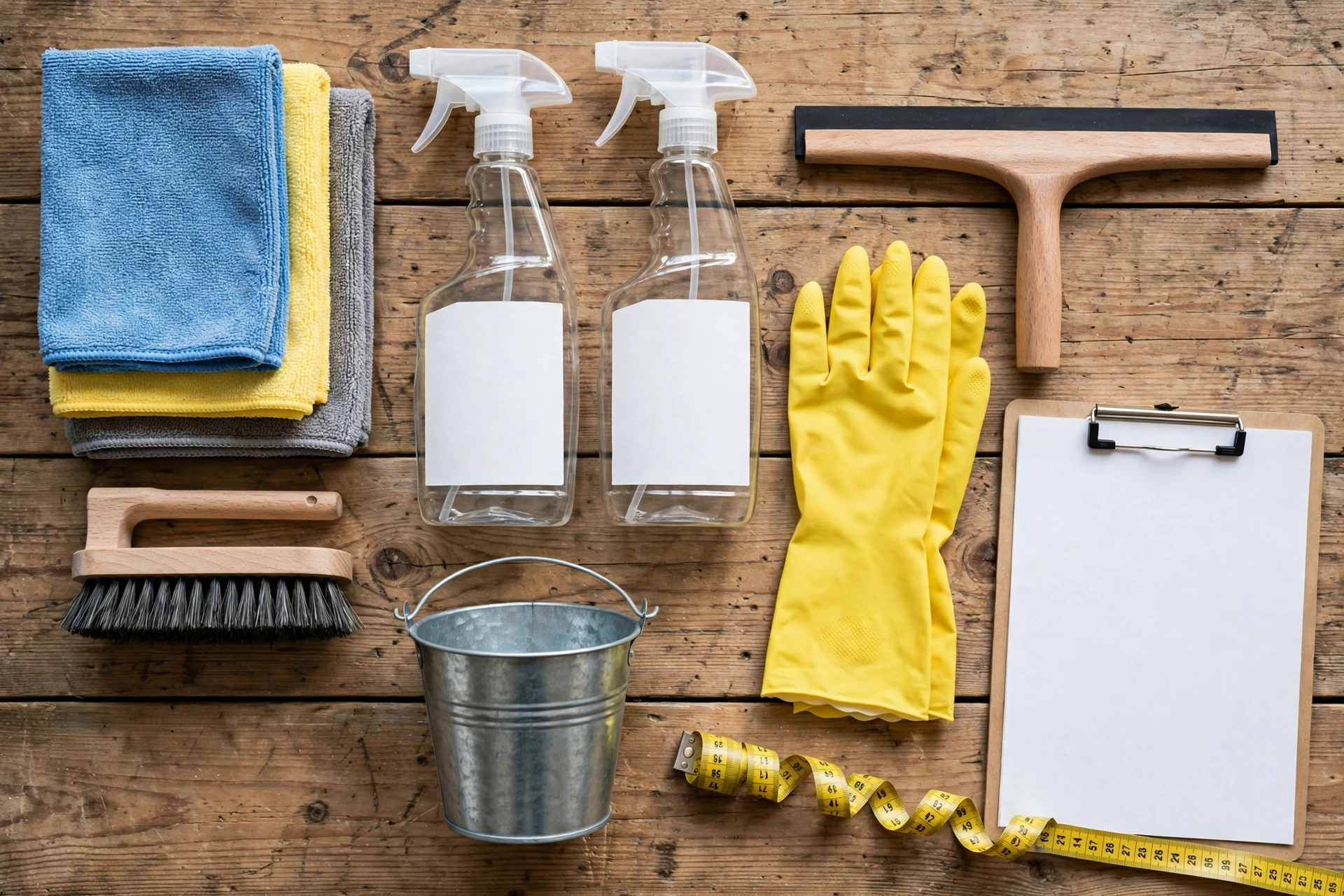
Your kit is your workshop, and clients judge you by it. Start with the essentials: a reliable vacuum, a mop and bucket, microfiber cloths in different colours, an all-purpose spray, a bathroom cleaner, a glass cleaner, gloves, a scrub brush and a sturdy caddy to carry it all. Colour-coded cloths stop you using the bathroom cloth in the kitchen, which is a small detail clients notice and remember.
Good cleaning equipment pays for itself quickly, so buy quality on the items you use every day and save money on the rest. A good vacuum earns its price back in weeks, while fancy branded sprays rarely clean better than a solid own-brand one. Keep a checklist in your caddy and restock the night before a job, never on the morning of it. Running out of cloths halfway through a client’s home is the kind of mistake that costs you a regular booking.
If you run the business from your own home, set aside one shelf or cupboard just for your kit. Keeping supplies tidy means you can grab your caddy and go, and it stops cleaning chemicals mixing with household items. As you grow, add one specialist tool at a time — a steam cleaner, a carpet machine or a window kit — and charge extra for the jobs that need them.
Step 8: Set Your Prices
Pricing is where most new cleaners either undercharge or scare clients away, so do it with numbers, not guesses. The three common models are hourly, flat rate per job, and per-room pricing. Hourly is simplest when you start: you charge for the time you spend, and the client knows exactly what they are paying for. Flat rates work better once you know how long a standard clean takes, because you earn more as you get faster.
Compare local cleaning prices before you set your own, then price yourself in the middle — not the cheapest and not the dearest. If the local rate is £18 to £25 an hour, start at £20 and raise it after your first ten five-star reviews. Offer a clear list of what a standard clean includes, and charge extra for ovens, fridges, windows and deep cleans. Clients accept extras happily when they are listed upfront; they resent them when they appear as a surprise on the bill.
Review your rates every three months. Your costs rise, your speed improves, and your reputation grows — your prices should keep up. A small rise for existing clients, explained politely with a month’s notice, rarely loses anyone.
Step 9: Get Cleaning Business Insurance
Insurance is not optional, even if you clean only two homes a week. One knocked-over vase, one scratched wooden floor or one slip on a wet surface can cost more than a year’s earnings, and without cover you pay it yourself. Clients also ask about insurance before they hand you their keys, so having it wins you work.
Your cleaning business insurance should start with public liability cover, which protects you if you damage a client’s property or someone is hurt because of your work. If you hire anyone, even part-time, you also need employer’s liability cover. Add cover for your kit if you carry expensive machines, and consider personal accident cover for yourself.
Get three quotes and read what each one excludes — cheap policies often leave out the very accidents cleaners have most. Keep your certificate where you can send it in a minute: many clients and letting agents will ask for it before your first job. Renew it on time every year and update it the moment you hire staff or add a new service.
Step 10: Build Your Brand and Get Found Online
You do not need a big website to start, but you do need to be findable. Set up a free business profile on the main search and maps services, with your name, your area, your phone number and a few photos of your work. Ask every happy client to leave a review there — five short reviews beat a glossy advert, because people trust their neighbours more than they trust ads.
A simple one-page website helps too: who you are, what you clean, your prices and how to book. Later, simple cleaning business software can handle bookings and reminders for you, but a phone and a diary are enough for your first month. Keep the words plain and the photos real — pictures of your own kit and your own finished rooms beat stock photos every time. Add your phone number at the top of the page so a busy parent can ring you in one tap.
For promotion, start with the free channels: local social media groups, community boards, a flyer through letterboxes on streets you want to work in, and a short message to friends and family asking them to share your details. A little cleaning business marketing, done consistently, keeps that stream flowing. Paid adverts can wait until you know which jobs earn you the most. One steady stream of enquiries from a free profile and word of mouth is worth more than a hundred clicks that never book.
Step 11: Win Your First Clients
Your first five clients matter more than your next fifty, because they become your reviews, your referrals and your proof. Start with people you already know: friends, family, neighbours and work colleagues. Offer the first clean at a friendly rate in exchange for an honest review and permission to use before-and-after photos. One genuine review from a real neighbour opens more doors than any advert.
Then work the local channels. Join neighbourhood groups and answer cleaning questions helpfully before you ever mention your services. Leave a flyer with estate agents, letting agents and local shops. Offer a free hallway or kitchen clean as a taster for a busy office manager — once they see the result, the weekly contract often follows.
The fastest way to learn how to start a cleaning business well is to do the first twenty jobs yourself and listen hard. Ask every client two questions when you finish: what did you like, and what would you change? Their answers shape your checklist, your prices and your reputation. Never buy a list of leads before you have reviews — a warm recommendation always beats a cold call.
Step 12: Deliver a Spotless First Clean, Every Time
A great clean is a system, not a talent. Work top to bottom and left to right in every room, so dust falls onto floors you have not cleaned yet and nothing gets missed. Carry a printed checklist for each job type — standard clean, deep clean, end-of-tenancy — and tick it off as you go. Clients notice the small things: straightened cushions, a polished tap, a bin with a fresh liner.
Arrive on time, every time. If you are delayed, message the client before they have to ask. Wear your uniform, bring your own kit unless the client prefers theirs, and leave a short note saying what you cleaned and when you will be back. These habits cost nothing and they are exactly what turns a one-off booking into a weekly slot.
Handle problems fast and honestly. If something breaks, tell the client straight away, apologise, and sort it through your insurance. One honest mistake handled well can earn more loyalty than ten perfect cleans, because it proves you can be trusted in someone’s home.
Step 13: Hire Help and Grow
Once you are turning away work, it is time to hire. Start with one part-time helper and train them on your own checklist, working alongside them for the first few jobs. Pay fairly and on time — good cleaners are in demand, and a happy helper stays. Agree in writing what the job pays, which hours are expected and how quality is checked.
Growth can come from more clients, more services or more staff. Add deep cleans and end-of-tenancy work for higher rates, offer a regular slot to offices you already clean, or take on a second area once your first one is full. Another route is buying a cleaning business for sale with an established client list, which can double your bookings overnight — but check the contracts, meet the clients and make sure the seller’s reputation matches what they claim.
Whatever route you take, grow one step at a time. A small, well-run outfit with happy clients and reliable staff earns more, with less stress, than a big one built too fast.
Frequently Asked Questions
How Much Does It Cost to Start a Cleaning Business?
Most beginners start for £300 to £1,500, covering a vacuum, cloths, sprays, gloves, a caddy, registration fees, first-month insurance and a few flyers. You can start at the low end with basic supplies and upgrade from your earnings. The biggest cost is usually your time, not your kit, because you can begin with jobs booked around your current schedule.
Do I Need a Licence to Start a Cleaning Business?
In most areas you need at least a basic business licence or registration, and the exact rules depend on your town or country. Check with your local council or licensing office before your first job. Commercial work sometimes needs extra permits, and letting agents may ask to see your paperwork before they recommend you.
Can I Run This Business From My Own Home?
Yes. Most solo cleaners start from home, storing their kit in a cupboard and doing their admin at the kitchen table. Keep your supplies separate from household items, and keep business records apart from personal spending. As you grow, a small storage unit or a van may make sense, but it is not needed on day one.
How Much Can I Earn in the First Year?
It depends on your hours and your rates. At £20 an hour for 25 hours a week, you bill about £2,000 a month before costs. After supplies, fuel, insurance and advertising, a solo cleaner often keeps 60 to 70 percent of that. Earnings rise as you add regular clients, raise your rates and take on higher-priced deep cleans.
What Insurance Do I Need for a Cleaning Business?
Public liability cover is the essential one — it protects you if you damage a client’s property or someone is hurt because of your work. If you hire anyone, you also need employer’s liability cover. Many clients and agents will ask to see your certificate before they book, so keep it handy.
How Do I Price a House Clean?
Start with the local hourly rate, then quote a flat fee once you know how long a standard clean takes. List exactly what the price includes and charge extra for ovens, fridges and windows. Always visit or ask for photos before quoting a deep clean, because a home that has not been cleaned for months takes far longer than a tidy one.
Should I Buy a Franchise or Start My Own Cleaning Business?
A cleaning franchise gives you a known name, training and a proven system, but you pay a joining fee and a monthly royalty on every job. Starting your own outfit costs far less and keeps all the profit with you, but you build your reputation from zero. If you have a tight budget and time to learn, independent usually wins; if you want a ready-made brand and can afford the fees, a franchise can be a shortcut.
What Supplies Do I Need for My First Job?
A vacuum, a mop and bucket, microfiber cloths, an all-purpose spray, a bathroom cleaner, a glass cleaner, gloves, a scrub brush and a caddy to carry it all. That is enough for most standard home cleans. Add specialist tools — a steam cleaner or a carpet machine — only when clients start asking for those jobs.
Final Word
Starting a cleaning business is one of the simplest routes into self-employment: low costs, steady demand and work you can be proud of. The steps are not complicated — pick a niche, learn your market, keep your paperwork straight, price fairly and show up on time. If you follow this guide on how to start a cleaning business and give your first clients a spotless result, the second and third bookings usually follow on their own. Your first clean could be next week, so pick your niche today and make a start.

Sparkling Start: How to Start a Cleaning Business

Focus to Fortune: How to Start a Photography Business

Tables to Bookings: How to Start a Party Rental Business

Bouncing to Profit: How to Start a Bounce House Business

Driveway Dollars: How to Start a Mobile Car Wash Business

Coins to Cash Flow: How to Start a Vending Machine Business

Soot to Success: How to Start a Chimney Sweep Business

Wrenches on Wheels: How to Start a Mobile Mechanic Business

Foundations First: How to Start a Home Inspection Business

Stamps on the Move: How to Start a Mobile Notary Business

How to Get More Clients for Your Business: Simple Ways That Actually Work

Branding Tips for Small Businesses: A Simple Guide That Makes You Memorable

How to Start Freelancing With No Experience: A Simple Guide That Gets You Your First Client

How to Do a Small Business Competitive Analysis: A Simple Guide That Finds Your Edge

Networking Tips for Small Business Owners: A Simple Guide That Turns Conversations Into Customers

How to Keep Customers Coming Back: Simple Ways That Actually Work

Christmas Marketing Ideas for Small Businesses: Simple Ways to Win Festive Customers

How to Create a Budget for a Small Business: A Simple Guide That Keeps Your Money in Order

Small Business Bookkeeping Tips: A Simple Guide That Keeps Your Money in Order

How to Promote Your Blog Posts: Simple Ways That Actually Work
Sparkling Start: How to Start a Cleaning Business
Focus to Fortune: How to Start a Photography Business
Tables to Bookings: How to Start a Party Rental Business
Bouncing to Profit: How to Start a Bounce House Business
Driveway Dollars: How to Start a Mobile Car Wash Business
Coins to Cash Flow: How to Start a Vending Machine Business
Soot to Success: How to Start a Chimney Sweep Business
Wrenches on Wheels: How to Start a Mobile Mechanic Business
Foundations First: How to Start a Home Inspection Business
Stamps on the Move: How to Start a Mobile Notary Business

 entertainment1 year ago
PYT Telegram: A Complete Guide to Understanding, Using, and Maximizing It

 entertainment1 year ago
OnionFlix: Everything You Need to Know About This Streaming Website
- education1 year ago
How to Become a Software Engineer: A Complete Guide
- entertainment10 months ago
Brainrot Memes: The Unhinged Humor of the Internet Generation