business
ACCA vs CPA: IT Control Gaps in Global Accounting

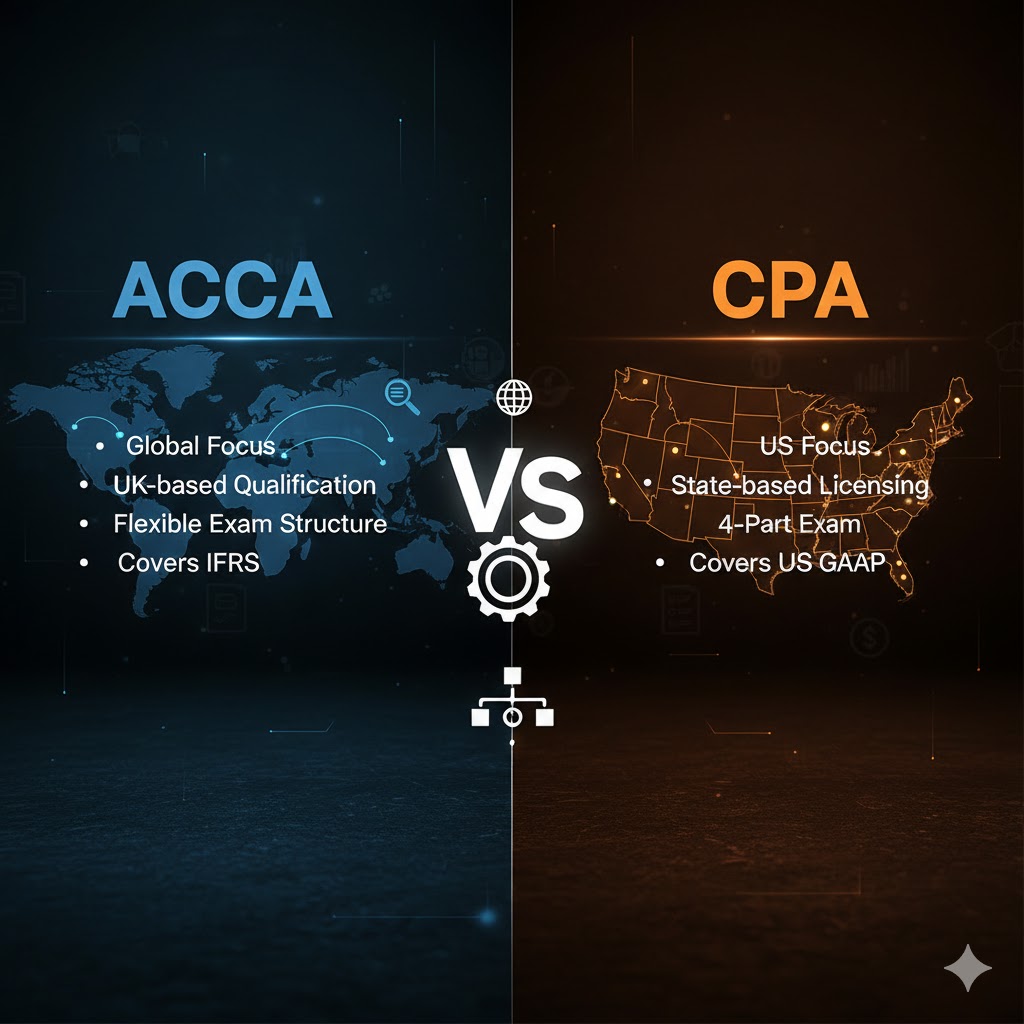
The diverging areas of ACCA (IFRS, worldwide) and CPA (US GAAP, SOX) cause serious control risks in international companies. CPA gives priority to detailed IT controls, while ACCA gives importance to overall governance. It is very important to bridge this gap. Realising the value proposition, apart from the ACCA course fees, permits professionals to combine IT audit strategies and avoid global systemic compliance failures.
The Global IT Control Divide: Is Your Organisation Exposed?
| Qualification Focus | Primary IT Control Standard | Core Risk in Global Audit |
| CPA (US) | Prescriptive SOX/PCAOB ITGCs. | CPA training may overlook critical non-US local regulatory IT risks like GDPR compliance in international subsidiaries, creating a significant exposure gap. |
| ACCA (Global) | Principles-based IFRS/Governance. | ACCA training may lack the prescriptive, mandated rigour required to document and test controls for US SOX compliance, risking SEC non-adherence. |
You manage a multinational firm’s finances. Your controls are “fine”. But are they? When your finance team includes both CPA and ACCA expertise, you’re dealing with two different philosophies on IT risk. This isn’t just academic; it creates real, dangerous control gaps in your global accounting system. Do you know where your greatest compliance risk is hiding? It’s often where these two professional worlds collide.
The Standardisation Gap: SOX vs. Principles
The core difference lies in regulatory framework training. This directly impacts how IT General Controls (ITGCs) are designed and tested.
CPA’s Prescriptive SOX Mandate
The CPA certification goes deep into the Sarbanes-Oxley Act (SOX) for public companies in the U.S.A. It demands a very prescriptive, meticulous, and checklist-orientated approach to IT controls, particularly in such areas as program change management and user access.
- You Must: Present documents that prove each IT control test satisfies the exact requirements of the AICPA and PCAOB.
- Avoid: Thinking that just using the general “good practice” guidelines is enough for U.S. subsidiaries. It is not.
Those professionals who are paid a high CPA salary know well that SOX compliance is very strict and there is almost no room left for interpretation.
The Scope Gap: IFRS, GDPR, and Local Law
The ACCA, because of its IFRS and global approach, educates its students to see risk in a wider perspective. Although this provides various options, it might result in a deficiency of in-depth testing when compared to the CPA method.
ACCA’s Principles-Based IT Governance
The ACCA curriculum highlights the use of principles-based governance and risk frameworks’ which are applicable in all fifteen countries. This basic concept is very significant in the process of meeting local regulations like the GDPR or local tax rules, for instance.
- Never forget: Internal auditors, no matter how skilled they are, should always tackle local IT regulatory risks (e.g., data residency) as carefully as they do financial reporting risks.
- The insight you can act on is the fact that the understanding acquired from paying ACCA course fees is very helpful in identifying regulatory risks that are outside the jurisdiction of the US.
This is the major trade-off: in-depth, uniform compliance versus wide, standards-based governance.
Bridging the Divide: Three Critical Action Points
The true control gap occurs in the shared space especially systems connecting US and non-US entities or third-party cloud solutions.
| IT Control Area | CPA Focus (Detail/SOX) | ACCA Focus (Scope/IFRS) | The Unified Global Mandate |
| User Access | Segregation of Duties (SoD) enforcement in ERP/GL. | Identity management across multi-site HR/payroll systems. | You must enforce SoD globally and verify it quarterly. |
| Cloud Vendors | Reliance on detailed SOC 1 reports (US standard). | Reliance on ISO 27001 or local assurance reports. | Always ensure your vendor reports are translated into a common control language. |
| Change Mgt | Documented user acceptance testing (UAT) for every change. | Assessing the business impact of change on IFRS reporting. | Avoid implementing code changes without dual (financial/IT) sign-off. |
Actionable Conclusion: Invest in Unified Risk Mastery
You cannot afford to let the differences in professional training create vulnerabilities. A single IT control failure in a remote subsidiary can compromise the entire group’s financial statements and severely impact your future CPA salary. You must actively unify your IT audit approach.
Whether you’re weighing the benefit of a higher potential CPA salary or the global career mobility gained from the ACCA course fees, remember this: the ultimate value comes from combining both the prescriptive rigour of US standards and the expansive global scope of ACCA. Invest in professionals who can bridge this gap your bottom line and compliance status depend on it.

Freelance Jobs for Beginners USA (Start with No Experience)

Side Hustle Ideas from Home USA (No Experience Needed) – Beginner’s Guide

Online Jobs from Home USA (Daily Pay) – Start Earning Instantly

Beton Celular Autoclavizat: The Future of Lightweight, Eco-Friendly Construction

Goblets: A Timeless Symbol of Elegance and Celebration

AI Tools for Making Money Online Free (Best 2026 Guide)

Passive Income Apps USA Free: Earn Money Effortlessly in 2026

How to Earn Money from Home Without Investment

ChatGPT Alternatives Free No Login (2026 Guide)

Everything You Need to Know About Koeas

Ishraq Time in Delhi: What It Is, When It Happens, and Why It Matters
Beton Celular Autoclavizat: The Future of Lightweight, Eco-Friendly Construction

Read OPM Manga Online: Where and How to Enjoy One Punch Man Legally

Technisches Gymnasium: Your Gateway to Engineering and Technology

Why Every Small Business Needs a Digital Marketing Agency
Goblets: A Timeless Symbol of Elegance and Celebration

Gold Shower: Nature’s Cascading Yellow Wonder

The Indian Bow: A Legacy of Precision, Power, and Tradition

Robert Provost: A Life of Leadership, Community, and Vision
Are Political Donations Tax Deductible?
Freelance Jobs for Beginners USA (Start with No Experience)
Side Hustle Ideas from Home USA (No Experience Needed) – Beginner’s Guide
Online Jobs from Home USA (Daily Pay) – Start Earning Instantly
Beton Celular Autoclavizat: The Future of Lightweight, Eco-Friendly Construction
Goblets: A Timeless Symbol of Elegance and Celebration
AI Tools for Making Money Online Free (Best 2026 Guide)
Passive Income Apps USA Free: Earn Money Effortlessly in 2026
How to Earn Money from Home Without Investment
ChatGPT Alternatives Free No Login (2026 Guide)
Everything You Need to Know About Koeas

 entertainment7 months ago
PYT Telegram: A Complete Guide to Understanding, Using, and Maximizing It

 entertainment7 months ago
OnionFlix: Everything You Need to Know About This Streaming Website
- others6 months ago
Nook vs Kindle: Which E-Reader Is Right for You?
- gaming7 months ago
Melisandre: The Enigmatic Priestess of Game of Thrones