others
Banana Fiber: Properties, Uses, and Sustainable Future

Introduction to Banana Fiber
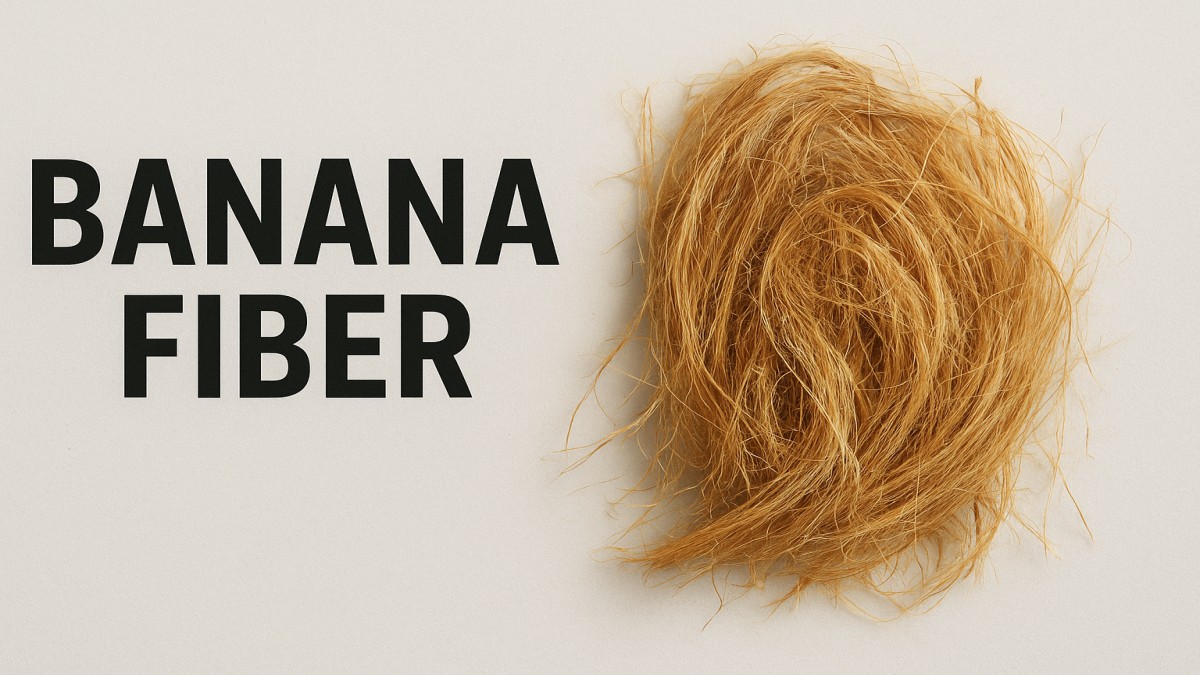
Banana fiber, also known as banana silk fiber or Musa fiber, is one of the strongest natural fibers derived from the pseudo-stem of banana plants. Though bananas are mainly cultivated for their fruit, the stalks and stems left behind are rich in fiber, making it an eco-friendly resource. Its strength, durability, and natural shine make it highly valuable in the textile, handicraft, and paper industries.
History of Banana Fiber
The use of banana fiber dates back several centuries in Asian cultures, especially in Japan, Nepal, and India. In Japan, banana fiber was traditionally used to weave kimono and kamishimo. Today, as the world shifts towards sustainable alternatives, banana fiber has regained attention as an environmentally friendly material.
Extraction Process of Banana Fiber
The extraction of banana fiber involves:
- Harvesting the pseudostems after fruiting.
- Scraping and retting the stalks to loosen fibers.
- Manual or mechanical extraction, which separates the coarse and fine fibers.
- Washing and drying to prepare them for weaving or processing.
This process produces both coarse fibers (used in ropes, mats, and bags) and fine fibers (used in textiles and paper).
Properties of Banana Fiber
Banana fiber has unique qualities that make it stand out among natural fibers:
- Strength – It is as strong as bamboo and almost comparable to silk in durability.
- Lightweight – Despite its strength, it remains soft and light.
- Moisture absorption – It absorbs and releases moisture efficiently, making it breathable.
- Biodegradable – 100% natural and eco-friendly.
- Appearance – Natural luster similar to silk.
Types of Banana Fiber
There are two main grades of banana fiber:
- Coarse Fiber – Extracted from the outer layers of the stalk, used in mats, ropes, and sacks.
- Fine Fiber – Extracted from the inner layers, soft and shiny, suitable for garments and delicate textiles.
Uses of Banana Fiber
1. Textiles and Garments
Banana fiber is woven into fabrics for clothing, traditional dresses, and upholstery. Its natural sheen makes it comparable to silk, while its durability makes it long-lasting.
2. Ropes and Cordage
The coarse variety is ideal for ropes, twines, and fishing nets, widely used in coastal regions.
3. Handicrafts
Banana fiber is used in mats, baskets, handbags, and decorative items, supporting local artisans.
4. Paper Production
Banana fiber pulp is used for specialty papers such as tea bags, currency notes, and filter paper.
5. Eco-friendly Products
It is increasingly used in composite boards, eco-friendly packaging, and biodegradable alternatives to plastics.
Banana Fiber in Fashion Industry
The fashion industry is embracing banana fiber as part of sustainable fashion. Designers are incorporating it into eco-friendly clothing lines, blending it with cotton, jute, or silk for unique textures. It’s gaining popularity as consumers demand more green alternatives.
Banana Fiber vs. Other Natural Fibers
- Compared to Cotton – Banana fiber is stronger, more durable, and requires less water to produce.
- Compared to Jute – Banana fiber is softer and has better luster.
- Compared to Silk – It offers similar shine but at a lower cost and with plant-based sustainability.
Environmental Impact
Banana fiber is one of the most sustainable fibers available. Since banana plants are already cultivated for fruit, the fiber comes from agricultural waste, reducing environmental burden. It is biodegradable and requires minimal chemicals during processing, making it a low-impact alternative to synthetic fibers.
Economic Importance
Banana fiber production provides additional income for banana farmers. Instead of discarding the pseudo-stems after fruit harvest, farmers can sell them to industries. This supports rural economies and promotes sustainable livelihoods.
Challenges in Banana Fiber Industry
Despite its benefits, banana fiber faces challenges:
- Limited awareness among consumers.
- Labor-intensive extraction process.
- Lack of advanced processing technologies.
- Competition from cheaper synthetic fibers.
Future of Banana Fiber
With increasing demand for eco-friendly products, banana fiber has a bright future. Research is being conducted to improve fiber extraction technology, expand its use in industrial applications, and promote its adoption in global markets.
Conclusion
Banana fiber is more than just an agricultural by-product—it’s a sustainable, strong, and versatile fiber with applications ranging from fashion to paper production. Its eco-friendly nature makes it a potential game-changer in the textile industry and beyond. With innovations in processing and growing consumer demand for green alternatives, banana fiber is set to play a major role in shaping a sustainable future.
FAQs
1. What is banana fiber used for?
Banana fiber is used in textiles, ropes, paper, handicrafts, and eco-friendly products.
2. Is banana fiber eco-friendly?
Yes, it is biodegradable, sustainable, and derived from agricultural waste.
3. How strong is banana fiber?
Banana fiber is one of the strongest natural fibers, comparable to bamboo.
4. Can banana fiber be blended with other fabrics?
Yes, it can be blended with cotton, silk, or jute for unique textures.
5. Which countries produce banana fiber?
It is mainly produced in India, Nepal, Philippines, and Japan.

Freelance Jobs for Beginners USA (Start with No Experience)

Side Hustle Ideas from Home USA (No Experience Needed) – Beginner’s Guide

Online Jobs from Home USA (Daily Pay) – Start Earning Instantly

Beton Celular Autoclavizat: The Future of Lightweight, Eco-Friendly Construction

Goblets: A Timeless Symbol of Elegance and Celebration

AI Tools for Making Money Online Free (Best 2026 Guide)

Passive Income Apps USA Free: Earn Money Effortlessly in 2026

How to Earn Money from Home Without Investment

ChatGPT Alternatives Free No Login (2026 Guide)

Everything You Need to Know About Koeas

Ishraq Time in Delhi: What It Is, When It Happens, and Why It Matters
Beton Celular Autoclavizat: The Future of Lightweight, Eco-Friendly Construction

Read OPM Manga Online: Where and How to Enjoy One Punch Man Legally

Technisches Gymnasium: Your Gateway to Engineering and Technology

Why Every Small Business Needs a Digital Marketing Agency
Goblets: A Timeless Symbol of Elegance and Celebration

Gold Shower: Nature’s Cascading Yellow Wonder

The Indian Bow: A Legacy of Precision, Power, and Tradition

Robert Provost: A Life of Leadership, Community, and Vision

Are Political Donations Tax Deductible?
Freelance Jobs for Beginners USA (Start with No Experience)
Side Hustle Ideas from Home USA (No Experience Needed) – Beginner’s Guide
Online Jobs from Home USA (Daily Pay) – Start Earning Instantly
Beton Celular Autoclavizat: The Future of Lightweight, Eco-Friendly Construction
Goblets: A Timeless Symbol of Elegance and Celebration
AI Tools for Making Money Online Free (Best 2026 Guide)
Passive Income Apps USA Free: Earn Money Effortlessly in 2026
How to Earn Money from Home Without Investment
ChatGPT Alternatives Free No Login (2026 Guide)
Everything You Need to Know About Koeas

 entertainment7 months ago
PYT Telegram: A Complete Guide to Understanding, Using, and Maximizing It

 entertainment7 months ago
OnionFlix: Everything You Need to Know About This Streaming Website
- others6 months ago
Nook vs Kindle: Which E-Reader Is Right for You?
- gaming7 months ago
Melisandre: The Enigmatic Priestess of Game of Thrones