others
Cenote Mexico: The Hidden Natural Wonders Beneath the Yucatán Peninsula

Introduction
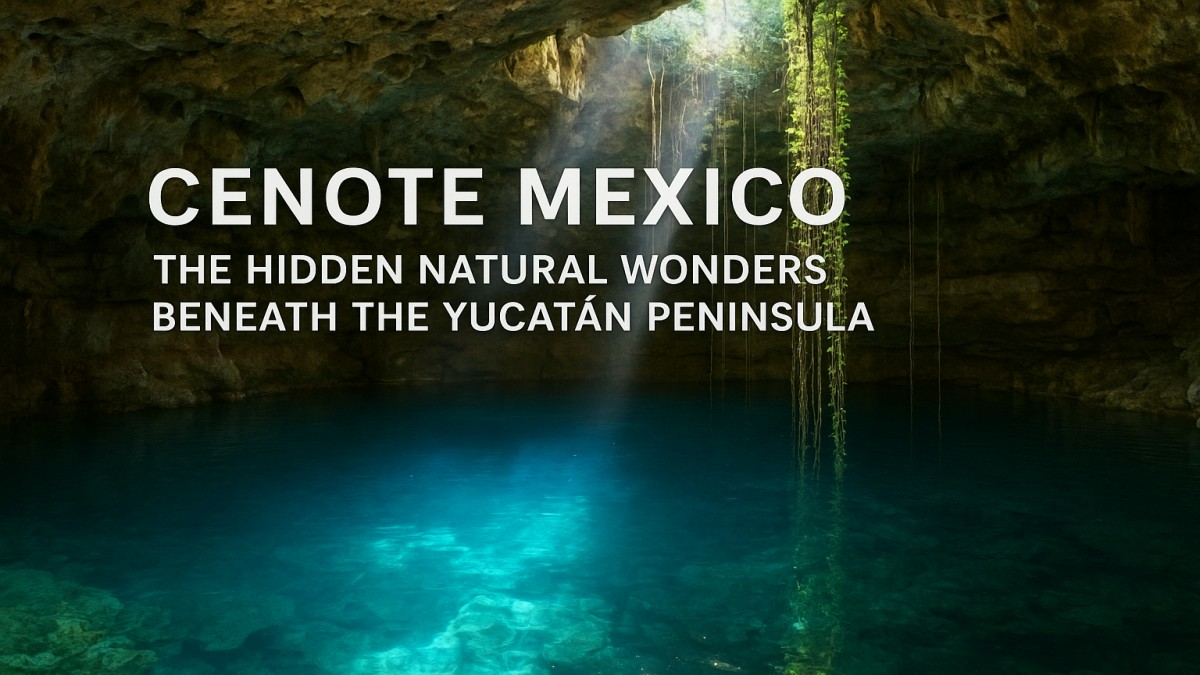
Cenote Mexico. Imagine swimming in crystal-clear, turquoise waters surrounded by limestone walls and lush jungle that’s the magic of a cenote in Mexico. These natural sinkholes are not just swimming holes; they’re windows into the Earth’s underground rivers and ancient history. Unique to the Yucatán Peninsula, cenotes are among Mexico’s most enchanting natural wonders, drawing travelers, adventurers, and photographers from all over the world.
What Is a Cenote?
A cenote (pronounced seh-NOH-tay) is a natural pit or sinkhole formed when limestone bedrock collapses, exposing groundwater beneath. These freshwater pools range from shallow open lagoons to deep underwater caves. The word cenote comes from the Mayan word dzonot, meaning “sacred well.”
The Geological Origins of Cenotes
Cenotes were formed millions of years ago as part of the Yucatán Peninsula’s unique karst landscape — a region made of porous limestone that easily erodes. When rainwater mixed with carbon dioxide, it dissolved the limestone over time, creating vast underground river systems. Eventually, parts of the ceiling collapsed, giving birth to cenotes — the gateways to these subterranean worlds.
The Mayan Connection: Sacred Waters of Life
For the ancient Maya civilization, cenotes were sacred portals to the underworld, known as Xibalba. They served as vital water sources and were used for spiritual rituals, offerings, and even sacrifices to the gods. The famous Cenote Sagrado near Chichen Itza, for example, was once a ceremonial site where artifacts, gold, and human remains were found.
Today, cenotes still carry that aura of mystery, blending natural beauty with spiritual significance.
Different Types of Cenotes
Not all cenotes look the same. They can be categorized based on how open or enclosed they are:
1. Open Cenotes
These are fully exposed to the sky, resembling natural swimming pools. Example: Cenote Azul.
2. Semi-Open Cenotes
Partially covered, with openings that allow sunlight to stream through, creating stunning light effects. Example: Cenote Ik Kil.
3. Cave Cenotes
Accessed through a cave entrance, these are underground wonders where you swim in twilight or by artificial light. Example: Cenote Dos Ojos.
4. Underground Cenotes
Completely enclosed with narrow access points, ideal for expert divers. Example: Cenote El Pit.
Where to Find Cenotes in Mexico
The highest concentration of cenotes is found in the Yucatán Peninsula, especially around:
- Tulum
- Playa del Carmen
- Valladolid
- Mérida
- Chichen Itza
There are estimated to be over 6,000 cenotes in the region, though only a fraction are accessible to the public.
Top 10 Must-Visit Cenotes in Mexico
1. Cenote Ik Kil
Located near Chichen Itza, Ik Kil is one of the most famous cenotes in Mexico. Its circular shape, hanging vines, and 130-foot-deep blue waters make it postcard-perfect.
2. Cenote Dos Ojos
Meaning “Two Eyes,” this twin cenote near Tulum is a diver’s paradise with its interconnected cave systems.
3. Cenote Suytun
Known for its iconic light beam that shines through a hole in the ceiling, it’s one of the most Instagrammed cenotes.
4. Cenote Azul
An open cenote with shallow areas perfect for families and deeper sections for cliff jumping.
5. Cenote Calavera
Nicknamed the “Temple of Doom,” this cenote has three small openings that adventurous swimmers can jump through.
6. Cenote X’Canche
Near the Ek Balam ruins, it combines Mayan history with swimming, ziplining, and rope jumping.
7. Cenote Xkeken and 8. Cenote Samulá
Located near Valladolid, these twin cenotes are famous for their dramatic stalactites and cool blue waters.
9. Cenote Zací
Right in the heart of Valladolid, this semi-open cenote offers a peaceful swimming experience.
10. Gran Cenote
Just outside Tulum, Gran Cenote features crystal-clear waters, turtles, and an extensive underwater cave system.
Conclusion
Exploring a cenote in Mexico is more than just a dip in cool water — it’s an encounter with history, nature, and the mystical heart of the Yucatán. These natural wonders remind us of the Earth’s hidden beauty and the importance of preserving it. Whether you’re seeking adventure, peace, or a glimpse into ancient Mayan culture, the cenotes of Mexico promise an unforgettable experience.
FAQs
1. Are cenotes freshwater or saltwater?
Most cenotes contain freshwater, though some near the coast mix with saltwater.
2. Are cenotes safe for children?
Yes, many are safe for kids, but always supervise them and use life jackets.
3. Can I wear sunscreen in a cenote?
Only biodegradable sunscreen is allowed to protect aquatic life.
4. Do cenotes have fish?
Yes, you’ll often spot small fish, turtles, and sometimes bats in the cave areas.
5. How deep are cenotes?
Depths vary — some are shallow at 3 meters, while others plunge over 100 meters deep.

Shop Easter Basket: The Ultimate Guide to Perfect Easter Gifts

Best Apps to Make Money Online USA (2026 Guide)

How to Start Affiliate Marketing with No Money

Freelance Jobs for Beginners USA (Start with No Experience)

Side Hustle Ideas from Home USA (No Experience Needed) – Beginner’s Guide

Online Jobs from Home USA (Daily Pay) – Start Earning Instantly

Beton Celular Autoclavizat: The Future of Lightweight, Eco-Friendly Construction

Goblets: A Timeless Symbol of Elegance and Celebration

AI Tools for Making Money Online Free (Best 2026 Guide)

Passive Income Apps USA Free: Earn Money Effortlessly in 2026

Ishraq Time in Delhi: What It Is, When It Happens, and Why It Matters
Beton Celular Autoclavizat: The Future of Lightweight, Eco-Friendly Construction

Read OPM Manga Online: Where and How to Enjoy One Punch Man Legally

Technisches Gymnasium: Your Gateway to Engineering and Technology

Why Every Small Business Needs a Digital Marketing Agency
Goblets: A Timeless Symbol of Elegance and Celebration

Gold Shower: Nature’s Cascading Yellow Wonder

The Indian Bow: A Legacy of Precision, Power, and Tradition

Robert Provost: A Life of Leadership, Community, and Vision

Are Political Donations Tax Deductible?
Shop Easter Basket: The Ultimate Guide to Perfect Easter Gifts
Best Apps to Make Money Online USA (2026 Guide)
How to Start Affiliate Marketing with No Money
Freelance Jobs for Beginners USA (Start with No Experience)
Side Hustle Ideas from Home USA (No Experience Needed) – Beginner’s Guide
Online Jobs from Home USA (Daily Pay) – Start Earning Instantly
Beton Celular Autoclavizat: The Future of Lightweight, Eco-Friendly Construction
Goblets: A Timeless Symbol of Elegance and Celebration
AI Tools for Making Money Online Free (Best 2026 Guide)
Passive Income Apps USA Free: Earn Money Effortlessly in 2026

 entertainment7 months ago
PYT Telegram: A Complete Guide to Understanding, Using, and Maximizing It

 entertainment7 months ago
OnionFlix: Everything You Need to Know About This Streaming Website
- others6 months ago
Nook vs Kindle: Which E-Reader Is Right for You?
- gaming7 months ago
Melisandre: The Enigmatic Priestess of Game of Thrones