Health
Understanding Dentinas: Structure, Function, and Importance in Oral Health

Introduction to Dentinas
Ever wondered what lies beneath your tooth’s shiny white enamel? That hidden layer is called dentinas (or dentin). It’s the foundation that gives your teeth strength, resilience, and sensitivity. Let’s dive deep into this fascinating substance that keeps your smile strong.
What Is Dentinas?
Dentinas is the calcified tissue located beneath the enamel and cementum in a tooth. Unlike enamel, which is brittle and prone to cracking, dentinas is flexible. This flexibility helps absorb chewing forces and protect the delicate pulp at the core of your tooth.
The Composition of Dentinas
Organic Components
Dentinas is made up of about 20% organic matter, mainly collagen fibers. These fibers create a strong yet elastic framework that helps dentin withstand daily stress.
Inorganic Components
Around 70% of dentinas consists of hydroxyapatite crystals, the same mineral found in bones. The remaining 10% is water, which allows fluid movement inside the tooth—key for sensitivity and nutrient transport.
How Dentinas Is Formed
Role of Odontoblasts
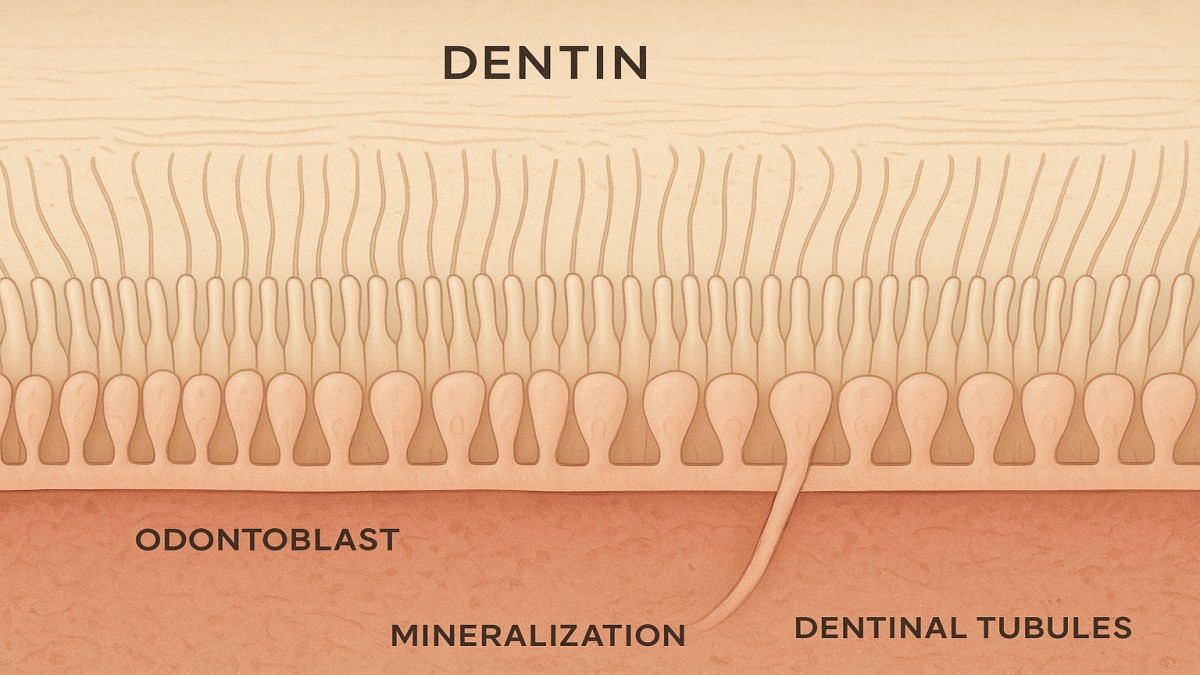
The formation of dentinas, or dentinogenesis, is carried out by specialized cells called odontoblasts. These cells line the outer layer of the tooth pulp and continuously produce dentin throughout life.
Stages of Dentinogenesis
Dentinogenesis happens in stages:
- Predentin formation – a soft collagen-rich matrix.
- Mineralization – hydroxyapatite crystals harden the matrix.
- Maturation – the dentin fully develops, forming tiny tubules for communication and defense.
Different Types of Dentinas
Primary Dentin
This is the first layer formed during tooth development and makes up most of the dentin in a mature tooth.
Secondary Dentin
Produced after tooth eruption, secondary dentin forms slowly and reduces the size of the pulp chamber over time.
Tertiary Dentin
Also known as reparative dentin, this forms in response to injury or decay—essentially the tooth’s natural defense mechanism.
The Microscopic Structure of Dentinas
Dentinal Tubules
Dentinas is filled with microscopic channels known as dentinal tubules. These tiny tubes run from the pulp to the enamel, allowing nutrients and signals to pass through.
Peritubular and Intertubular Dentin
The peritubular dentin surrounds each tubule, while intertubular dentin fills the spaces between. Together, they create a strong, dynamic network that supports tooth function.
The Relationship Between Enamel and Dentinas
Think of dentinas as the backbone that supports enamel. While enamel provides hardness, dentinas provides flexibility—preventing enamel from shattering under pressure.
The Role of Dentinas in Tooth Sensitivity
Have you ever felt a sharp sting when drinking something cold? That’s dentinas at work. When enamel wears down or gums recede, dentinal tubules get exposed, allowing sensations to reach the nerve inside the pulp.
How Dentinas Protects the Tooth Pulp
Dentinas acts as a barrier around the pulp, defending it from bacteria and temperature changes. When a cavity forms, dentinas slows the infection’s progress giving dentist time to intervene.
Common Dental Problems Related to Dentinas
Dentin Hypersensitivity
This occurs when dentinal tubules are exposed due to enamel loss or gum recession. Brushing too hard or consuming acidic foods can make it worse.
Dentin Caries
Once decay penetrates enamel, it spreads faster through dentinas because it’s softer. Early detection is crucial to prevent pulp infection.
Conclusion
Dentinas may be hidden, but its role in oral health is massive. It strengthens your teeth, protects your nerves, and even repairs itself when damaged. Taking good care of your dentin ensures your smile stays healthy, functional, and pain-free for life.
FAQs
1. What is the main function of dentinas?
It supports enamel, protects the pulp, and helps absorb chewing forces.
2. Can dentinas regenerate naturally?
To a degree, yes—through tertiary dentin formation when the tooth faces irritation or injury.
3. How do I know if my dentinas is exposed?
You might feel sharp pain from hot, cold, or sweet foods. Sensitivity toothpaste can help.
4. What causes dentin hypersensitivity?
Enamel erosion, gum recession, or aggressive brushing often expose dentinal tubules.
5. Is dentinas harder than enamel?
No. Enamel is harder, but dentinas is more flexible and helps prevent fractures.

Freelance Jobs for Beginners USA (Start with No Experience)

Side Hustle Ideas from Home USA (No Experience Needed) – Beginner’s Guide

Online Jobs from Home USA (Daily Pay) – Start Earning Instantly

Beton Celular Autoclavizat: The Future of Lightweight, Eco-Friendly Construction

Goblets: A Timeless Symbol of Elegance and Celebration

AI Tools for Making Money Online Free (Best 2026 Guide)

Passive Income Apps USA Free: Earn Money Effortlessly in 2026

How to Earn Money from Home Without Investment

ChatGPT Alternatives Free No Login (2026 Guide)

Everything You Need to Know About Koeas

Ishraq Time in Delhi: What It Is, When It Happens, and Why It Matters
Beton Celular Autoclavizat: The Future of Lightweight, Eco-Friendly Construction

Read OPM Manga Online: Where and How to Enjoy One Punch Man Legally

Technisches Gymnasium: Your Gateway to Engineering and Technology

Why Every Small Business Needs a Digital Marketing Agency
Goblets: A Timeless Symbol of Elegance and Celebration

Gold Shower: Nature’s Cascading Yellow Wonder

The Indian Bow: A Legacy of Precision, Power, and Tradition

Robert Provost: A Life of Leadership, Community, and Vision

Are Political Donations Tax Deductible?
Freelance Jobs for Beginners USA (Start with No Experience)
Side Hustle Ideas from Home USA (No Experience Needed) – Beginner’s Guide
Online Jobs from Home USA (Daily Pay) – Start Earning Instantly
Beton Celular Autoclavizat: The Future of Lightweight, Eco-Friendly Construction
Goblets: A Timeless Symbol of Elegance and Celebration
AI Tools for Making Money Online Free (Best 2026 Guide)
Passive Income Apps USA Free: Earn Money Effortlessly in 2026
How to Earn Money from Home Without Investment
ChatGPT Alternatives Free No Login (2026 Guide)
Everything You Need to Know About Koeas

 entertainment7 months ago
PYT Telegram: A Complete Guide to Understanding, Using, and Maximizing It

 entertainment7 months ago
OnionFlix: Everything You Need to Know About This Streaming Website
- others6 months ago
Nook vs Kindle: Which E-Reader Is Right for You?
- gaming7 months ago
Melisandre: The Enigmatic Priestess of Game of Thrones