others
Mechanical Energy: Definition, Types, Applications & Real-World Importance

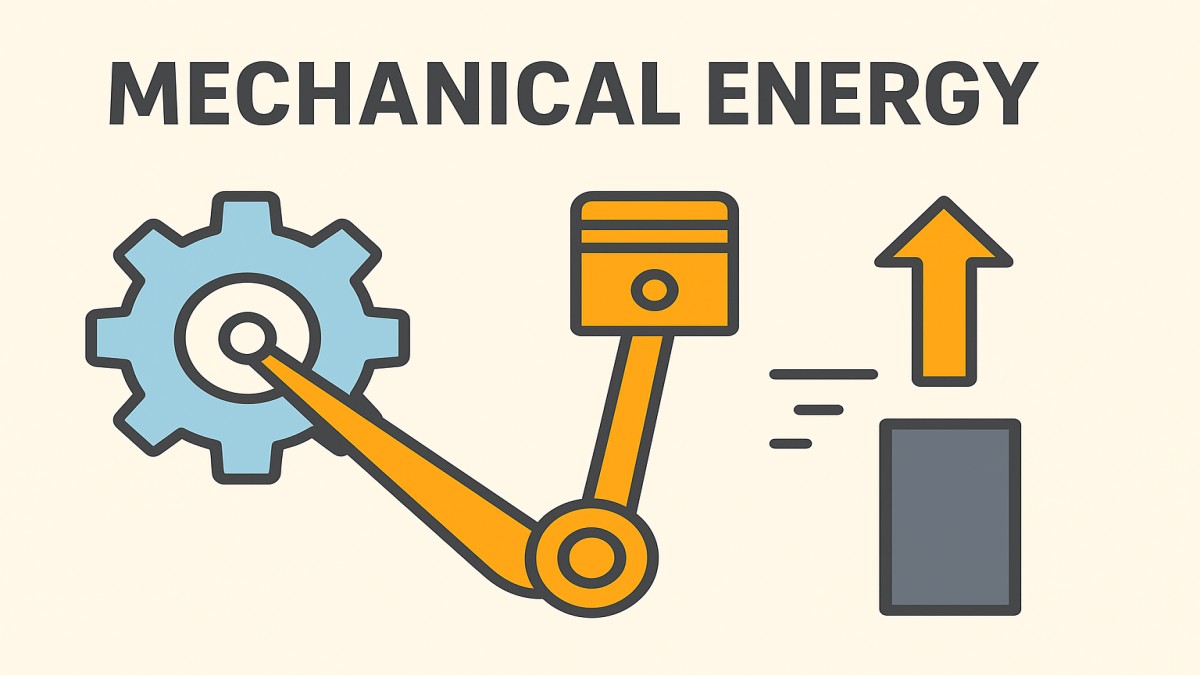
Mechanical energy is all around us powering machines, moving vehicles, and even enabling our own bodies to function. Whether it’s a car speeding down the highway or a pendulum swinging in a clock, mechanical energy is at the heart of everyday motion. In this article, we’ll break down what mechanical energy is, how it works, and why understanding it matters today more than ever.
What Is Mechanical Energy?
Mechanical energy is the energy associated with the motion and position of an object. It is the total of two major forms:
- Kinetic Energy – energy of motion
- Potential Energy – stored energy due to position or shape
A system’s mechanical energy can shift back and forth between kinetic and potential forms, but the total often remains constant in the absence of external forces like friction.
Types of Mechanical Energy
1. Kinetic Energy
Kinetic energy refers to the energy something has because it is moving.
It depends on:
- The object’s mass
- The square of its speed
Formula:
KE = ½ mv²
From a running athlete to the flow of water in a river, kinetic energy is constantly shaping how things move.
2. Potential Energy
Potential energy is stored energy that can be released later.
Common forms include:
Gravitational Potential Energy
Energy stored due to height or elevation.
Example: A book placed on a shelf.
Elastic Potential Energy
Energy stored in stretched or compressed materials.
Example: A stretched rubber band or a compressed spring.
How Mechanical Energy Works
Mechanical energy is often conserved, especially in ideal systems with no friction. For instance, when a roller coaster climbs a hill, it gains potential energy. As it rushes down, that stored energy turns into kinetic energy.
This constant conversion is what makes motion possible.
Examples of Mechanical Energy in Daily Life
1. Vehicles
Cars, bikes, and trains rely heavily on kinetic energy for movement. When brakes are applied, kinetic energy is converted into heat.
2. Human Body
Walking, running, or jumping involves converting chemical energy from food into mechanical energy.
3. Machines
Cranes lift loads using gravitational potential energy. Springs inside clocks use elastic potential energy to run gears.
4. Sports
Every kick, throw, jump, or swing uses mechanical energy.
Mechanical Energy in Nature
Wind
Wind turbines convert the kinetic energy of moving air into electricity.
Waterfalls
Flowing water carries massive kinetic and potential energy, used in hydropower plants.
Waves
Ocean waves transfer mechanical energy that can be tapped for wave power technologies.
Mechanical Energy Conversion
Energy conversion systems often change mechanical energy into other forms:
Mechanical to Electrical
- Wind turbines
- Hydroelectric generators
Mechanical to Thermal
- Braking systems
- Machinery friction
Mechanical to Sound
- Musical instruments
- Vibrating surfaces
These conversions follow the law of conservation of energy, which states that energy cannot be created or destroyed, only transformed.
Why Mechanical Energy Is Important
1. Foundation of Engineering
Mechanical energy is crucial in designing engines, machines, and structures.
2. Drives Transportation
Every vehicle depends on mechanical energy to move people and goods.
3. Enables Renewable Energy
Wind and hydropower are based on converting mechanical energy into electricity.
4. Critical in Robotics and Automation
Robots, conveyor belts, and automated systems all use mechanical motion to perform tasks.
Mechanical Energy in Modern Technology
Electric Cars
Although electric cars run on electrical energy, that electricity eventually becomes mechanical energy used to rotate the wheels.
Smart Machines
Actuators in modern appliances use mechanical energy to create motion.
Drones
They rely on the kinetic energy generated by their spinning propellers.
Factors Affecting Mechanical Energy
1. Mass
The heavier an object, the more kinetic energy it can have at the same speed.
2. Velocity
Even small increases in speed dramatically increase kinetic energy.
3. Height
Greater height means more gravitational potential energy.
4. Elasticity
More elastic objects store more potential energy.
Conclusion
Mechanical energy plays a vital role in our world. From the movement of machines to the flow of wind and water, mechanical energy powers countless systems around us. Understanding how it works helps us appreciate the mechanics of everyday life and inspires new ways to harness energy for a more efficient future.
FAQs
1. What is mechanical energy in simple words?
It is the energy an object has due to its motion or position.
2. Is mechanical energy always conserved?
No, only in ideal systems without friction.
3. How is mechanical energy used in machines?
Machines convert stored mechanical energy into motion to perform tasks.
4. What is the difference between kinetic and potential energy?
Kinetic is energy of motion; potential is stored energy.
5. Can mechanical energy be converted to electricity?
Yes, technologies like wind turbines and hydropower plants do exactly that.

Dobutamine: Uses, Mechanism, Dosage, and Side Effects

Nopdle Magazine: Redefining Creative Culture Through Curated Innovation

Shop Easter Basket: The Ultimate Guide to Perfect Easter Gifts

Best Apps to Make Money Online USA (2026 Guide)

How to Start Affiliate Marketing with No Money

Freelance Jobs for Beginners USA (Start with No Experience)

Side Hustle Ideas from Home USA (No Experience Needed) – Beginner’s Guide

Online Jobs from Home USA (Daily Pay) – Start Earning Instantly

Beton Celular Autoclavizat: The Future of Lightweight, Eco-Friendly Construction

Goblets: A Timeless Symbol of Elegance and Celebration
Dobutamine: Uses, Mechanism, Dosage, and Side Effects

Ishraq Time in Delhi: What It Is, When It Happens, and Why It Matters
Beton Celular Autoclavizat: The Future of Lightweight, Eco-Friendly Construction

Read OPM Manga Online: Where and How to Enjoy One Punch Man Legally

Technisches Gymnasium: Your Gateway to Engineering and Technology

Why Every Small Business Needs a Digital Marketing Agency
Goblets: A Timeless Symbol of Elegance and Celebration
Nopdle Magazine: Redefining Creative Culture Through Curated Innovation

Gold Shower: Nature’s Cascading Yellow Wonder

The Indian Bow: A Legacy of Precision, Power, and Tradition
Dobutamine: Uses, Mechanism, Dosage, and Side Effects
Nopdle Magazine: Redefining Creative Culture Through Curated Innovation
Shop Easter Basket: The Ultimate Guide to Perfect Easter Gifts
Best Apps to Make Money Online USA (2026 Guide)
How to Start Affiliate Marketing with No Money
Freelance Jobs for Beginners USA (Start with No Experience)
Side Hustle Ideas from Home USA (No Experience Needed) – Beginner’s Guide
Online Jobs from Home USA (Daily Pay) – Start Earning Instantly
Beton Celular Autoclavizat: The Future of Lightweight, Eco-Friendly Construction
Goblets: A Timeless Symbol of Elegance and Celebration

 entertainment7 months ago
PYT Telegram: A Complete Guide to Understanding, Using, and Maximizing It

 entertainment7 months ago
OnionFlix: Everything You Need to Know About This Streaming Website
- others6 months ago
Nook vs Kindle: Which E-Reader Is Right for You?
- gaming7 months ago
Melisandre: The Enigmatic Priestess of Game of Thrones